



The Unexpected Rival
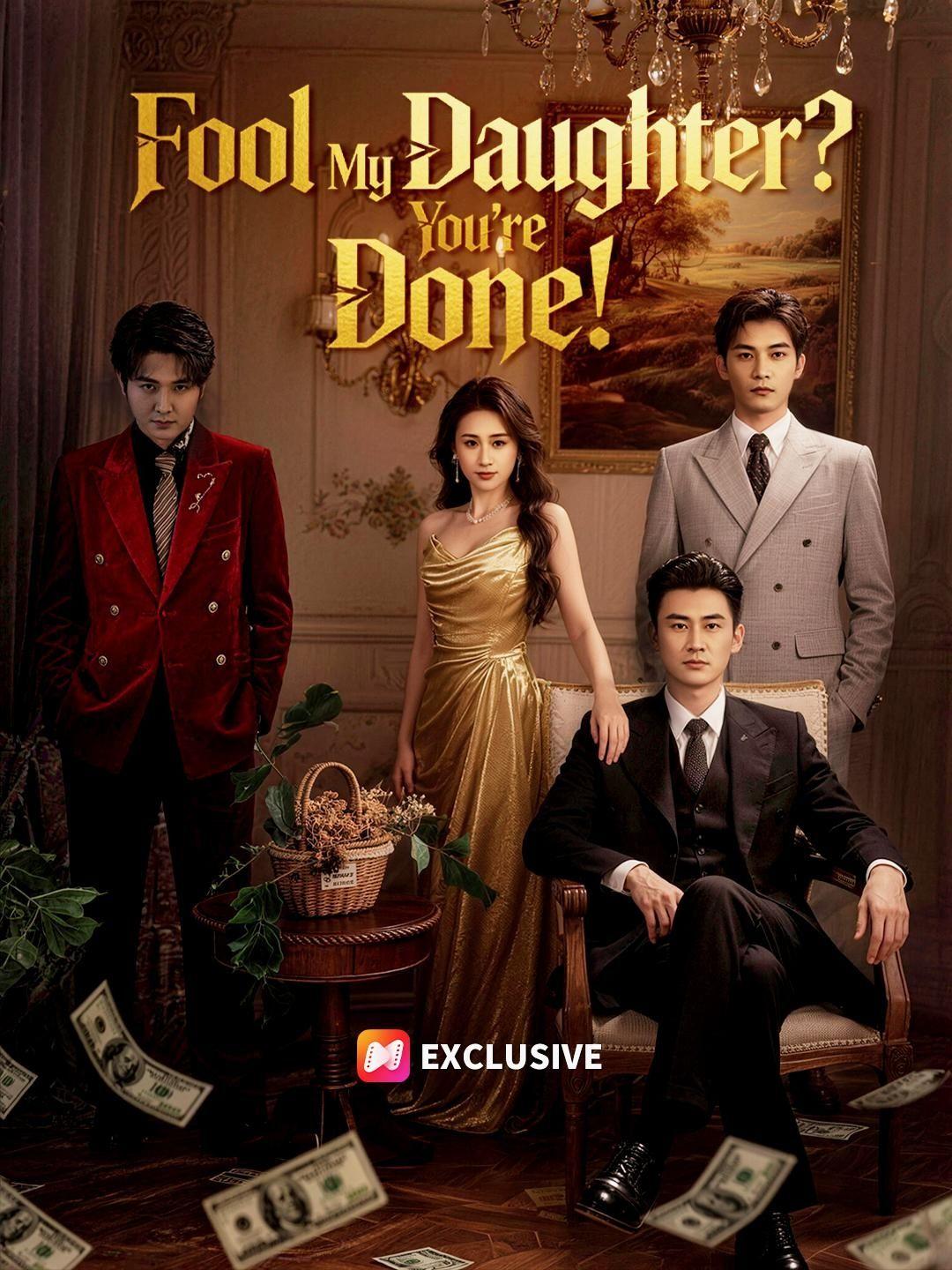
Sophia Scott, who had been waiting for Ethan Jackson's return, opens her own embroidery store, First-Class Embroidery, right across from the Jackson Family’s Golden Thread Embroidery. On Ethan's big day, he discovers that all his regular customers have deserted him for Sophia's store, and she sends him a mysterious message.What message did Sophia send to Ethan, and how will he respond to this unexpected challenge?


Recommended for you


First-Class Embroiderer: When the Bouquet Hides a Knife
Let’s talk about the red bouquet. Not the kind you toss into a crowd of giggling bridesmaids, but the one Li Zeyu clutches like a shield—crushed silk, tightly wound, its ribbons knotted in a pattern that mimics the double happiness symbol, yet twisted just enough to suggest imbalance. In the opening frames of *The Crimson Thread*, it’s presented as ceremonial flourish: a groom’s offering, a visual anchor in a sea of crimson. But by minute two, it becomes something else entirely—a weapon disguised as devotion, a lie wrapped in satin. That bouquet is the central metaphor of the entire sequence, and First-Class Embroiderer knew it. Every fold, every pleat, was calculated not for aesthetics alone, but for psychological resonance. The silk is thick, almost stiff—like the expectations placed upon Li Zeyu, rigid and unyielding. When he shifts his grip, the fabric groans faintly, a sound lost beneath the ambient wind, but audible to those who know how to listen. Su Ruyue’s unveiling is not a climax—it’s a detonation. She lifts the veil not with grace, but with the sharp motion of someone tearing off a bandage. Her face, revealed in slow motion, registers not joy, but the dawning horror of a puzzle snapping into place. Her makeup is flawless—pale base, rose-tinted cheeks, lips stained the exact shade of the temple’s banners—but her eyes are raw, unguarded. For a split second, she looks directly into the lens, and in that gaze, we see everything: the years of training, the whispered lessons on obedience, the dreams she buried beneath layers of silk and silence. Her hairpiece, a masterpiece of floral metalwork and dyed silk blossoms, trembles as she breathes. Each dangling bead catches the light like a tear she refuses to shed. First-Class Embroiderer didn’t just design her attire; they encoded her rebellion into the very stitches. Notice the hem of her inner robe—subtle silver threads form a vine that curls inward, not outward. A motif of containment. Until now. The courtyard is alive with unspoken narratives. At the far table, Yuan Qing and Lin Meiyue exchange a glance—one that says more than a soliloquy ever could. Yuan Qing’s hand rests on the edge of the table, knuckles white. Lin Meiyue’s teacup remains untouched, steam long gone cold. They are not shocked; they are *waiting*. Waiting to see if Su Ruyue will break, if Li Zeyu will confess, if the world will implode or simply adjust its posture and continue. Their presence is crucial: they represent the collective audience, the society that enables these rituals, that demands perfection even as it ignores the rot beneath. When Wang Dacheng enters, they don’t rise. They don’t gasp. They simply lean forward, as if drawn by gravity toward the inevitable. Wang Dacheng’s entrance is understated, yet seismic. He wears no insignia, carries no title, yet commands the space with the quiet authority of a man who has seen too much. His robes are practical, undecorated—unlike the ornate finery surrounding him, his clothing speaks of function over facade. He kneels, but his shoulders remain level, his spine unbroken. This is not submission; it is positioning. He knows the power dynamics better than anyone present. When he produces the pouch, the camera zooms in on his fingers—rough, scarred, the nails trimmed short, the skin darkened by sun and labor. These are the hands of a man who has dug graves, delivered letters, and buried truths. The pouch itself is lined with faded blue silk, the kind used for storing relics or oaths. Inside: the jade pendant, split cleanly down the middle, its surface worn smooth by years of handling. One half bears Su Ruyue’s name in elegant script; the other, partially obscured, reads *Chen Yufeng*—a name absent from the guest list, absent from the marriage contract, absent from every official record. Yet here it is, undeniable, held in the palm of the man who was sworn to secrecy. Li Zeyu’s reaction is masterful in its restraint. He does not drop the bouquet. He does not shout. He simply stares at the pendant, then at Su Ruyue, then back again—as if trying to reconcile two versions of reality. His brow furrows, not in anger, but in grief. He loved her. He *does* love her. And that is what makes this unbearable. The tragedy isn’t that he betrayed her—it’s that he believed he could love her *and* honor a prior vow, that he could stitch two lives together without tearing either apart. First-Class Embroiderer understood this paradox intimately: the most beautiful garments are often sewn from conflicting threads. The gold embroidery on Li Zeyu’s robe is not merely decorative; it forms a mandala of interlocking circles—unity, continuity, eternity. Yet the central motif is fractured, a tiny imperfection only visible upon close inspection. A flaw by design. A reminder that perfection is a myth sold to the desperate. Su Ruyue’s silence after the reveal is her loudest statement. She does not accuse. She does not demand answers. She simply stands, her posture regal, her chin lifted, the red silk of her robe catching the breeze like a flag raised in quiet defiance. Her attendants—especially the older woman in peach silk, who had stood dutifully beside her—now look stricken, hands clasped tight, as if praying for the ground to swallow them whole. They knew. Of course they knew. Servants always know more than masters admit. Their loyalty is not to truth, but to survival. And in this moment, survival means staying silent, watching, waiting to see which side the wind favors. The final shot lingers on Li Zeyu’s hands: one still gripping the red bouquet, the other now holding the broken pendant. The contrast is brutal. One object represents public performance; the other, private truth. He opens his palm, lets the pendant rest there, exposed. The crack runs straight through the center, mirroring the division in his soul. Su Ruyue turns away—not toward the temple, not toward escape, but toward the courtyard gate, where sunlight filters weakly through the trees. She does not look back. And in that refusal to engage, she reclaims agency. The wedding is over. Not because vows were broken, but because she refused to pretend they were ever whole. This is where *The Crimson Thread* transcends period drama and becomes something sharper: a study in the architecture of deception. First-Class Embroiderer didn’t just dress the characters—they dressed the lie. Every seam, every tassel, every embroidered leaf was a node in a web of expectation. And when Su Ruyue walks away, the web doesn’t collapse; it rewires itself around her absence. The red banners still hang. The tables remain set. Life continues. But nothing is the same. Because once you see the thread that holds the tapestry together, you can never unsee it. And sometimes, the bravest thing a person can do is to let the fabric fall—and step into the light, barefoot and unbound.
First-Class Embroiderer: The Veil That Never Fell
In the courtyard of a temple adorned with vermilion banners and tiled eaves, a wedding ritual unfolds—not with joyous fanfare, but with the quiet tension of a clock ticking toward revelation. The groom, Li Zeyu, stands rigid in his crimson robe, its golden embroidery—a blooming lotus at the chest—symbolizing purity and fate, yet his eyes betray unease. He holds a red silk bouquet, not as a token of affection, but as a prop in a performance he did not rehearse. Beside him, Su Ruyue, the bride, lifts her veil with trembling hands, revealing not the demure smile expected of a new wife, but a face caught between shock and dawning comprehension. Her hair is coiled high, studded with crimson flowers and dangling beads that tremble with each breath; her sleeves shimmer with silver-threaded vines, delicate yet defiant. This is no ordinary betrothal. This is the moment when tradition cracks under the weight of truth. The setting itself whispers subtext: low wooden tables scattered across the stone plaza, plates of steamed buns and wine jars left half-attended, as if guests have paused mid-bite to witness what they were never meant to see. Two women in pastel robes sit frozen at one table—Yuan Qing and Lin Meiyue—eyes wide, fingers clutching teacups like shields. Their stillness speaks louder than any dialogue could. They are not mere bystanders; they are witnesses to a rupture in the social fabric, and their silence is complicity—or fear. Behind them, the temple’s painted lintel bears faded characters, perhaps blessings long since hollowed out by time and hypocrisy. Red ribbons hang limp, no longer festive but funereal in their stillness. Then enters the messenger—Wang Dacheng, a man in coarse indigo robes and a folded cloth cap, who kneels without being asked. His entrance is not heralded by drums or gongs, but by the sudden hush of birds overhead. He does not speak first. Instead, he unfastens a small pouch from his belt, its drawstring frayed, its fabric stained with dust and something darker—perhaps ink, perhaps blood. The camera lingers on his hands: calloused, precise, the fingers of a man who has handled secrets for years. When he offers the pouch to Li Zeyu, the groom hesitates—not out of reluctance, but because he already knows what lies inside. The pouch contains a jade pendant, cracked down the middle, its surface etched with two names: Su Ruyue and another, erased but still legible beneath the wear. A token of a prior vow. A betrayal buried under layers of protocol. Su Ruyue watches this exchange, her expression shifting like light through stained glass: confusion, then recognition, then a cold clarity that chills more than winter wind. She does not cry. She does not scream. She simply exhales, and in that breath, the entire ceremony unravels. Her embroidered sleeves, once symbols of bridal grace, now seem like armor she’s been forced to wear. The gold thread along her collar catches the light—not as ornament, but as accusation. First-Class Embroiderer did not merely stitch silk and thread; they wove fate into fabric, and now the seams are splitting open. Every stitch on Su Ruyue’s robe tells a story: the peony at her waist signifies prosperity, yet its petals are slightly asymmetrical—intentional? Or a flaw only visible when the truth is held up to daylight? Li Zeyu takes the pendant. His fingers trace the fracture. He looks at Su Ruyue—not with guilt, but with something worse: resignation. He knew. He always knew. And yet he walked forward anyway, robes rustling like falling leaves, holding that absurd red bouquet as if it could absolve him. The irony is thick enough to choke on: the very garment that declares him worthy of union is the same one that hides his duplicity. The golden lotus on his chest blooms outward, but its roots are tangled in deceit. First-Class Embroiderer chose every motif with intention—the phoenix motifs on the hem of Su Ruyue’s outer robe were meant to signify rising fortune, yet here she stands, grounded, un-risen, her wings clipped by expectation. Wang Dacheng remains kneeling, head bowed, but his posture is not submissive—it is strategic. He knows the power he holds in that small pouch. He is not a servant; he is a fulcrum. In ancient courts, such men were called ‘silent scribes’—they carried truths too dangerous to speak aloud. His tassels sway slightly as he shifts, the pale threads catching the grey light of an overcast sky. No sun today. No divine blessing. Just stone, silk, and the unbearable weight of choice. Su Ruyue finally speaks—not to Li Zeyu, but to the air itself: “You thought the veil would hide it all.” Her voice is low, steady, devoid of tremor. It is the voice of a woman who has just rewritten her own narrative. The attendants flinch. Yuan Qing drops her spoon. Lin Meiyue covers her mouth, but her eyes are alight—not with pity, but with something fiercer: recognition. What follows is not chaos, but recalibration. Li Zeyu does not deny it. He does not beg. He simply closes his fist around the pendant, the crack pressing into his palm. A silent vow renewed—not to her, but to himself. Su Ruyue turns away, not in defeat, but in reclamation. Her steps are measured, her back straight, the red silk of her robe whispering against the stone like a promise being rewritten. The camera pulls back, revealing the full courtyard: the temple doors still open, the red banners still hanging, the world unchanged—except for the three people at its center, now irrevocably altered. First-Class Embroiderer understood this better than anyone: clothing does not define identity; it reveals the fractures within it. The most intricate embroidery is often hiding the deepest tear. And sometimes, the most powerful act is not to rip the fabric—but to walk away wearing it, knowing exactly where the seam will give. This scene from *The Crimson Thread* is not about marriage. It is about the moment a woman stops waiting for permission to exist. Su Ruyue’s silence is louder than any protest. Li Zeyu’s stillness is more damning than any confession. And Wang Dacheng? He is the quiet architect of collapse—proof that truth doesn’t need fanfare to shatter illusion. In a world where every gesture is choreographed and every word measured, the most radical act is to simply *see*, and then choose what to do with that sight. First-Class Embroiderer stitched beauty into obligation—and in doing so, made the unraveling inevitable. Because no thread, however fine, can hold forever when the heart refuses to be bound.