



A Family's Betrayal and a Plea for Truth
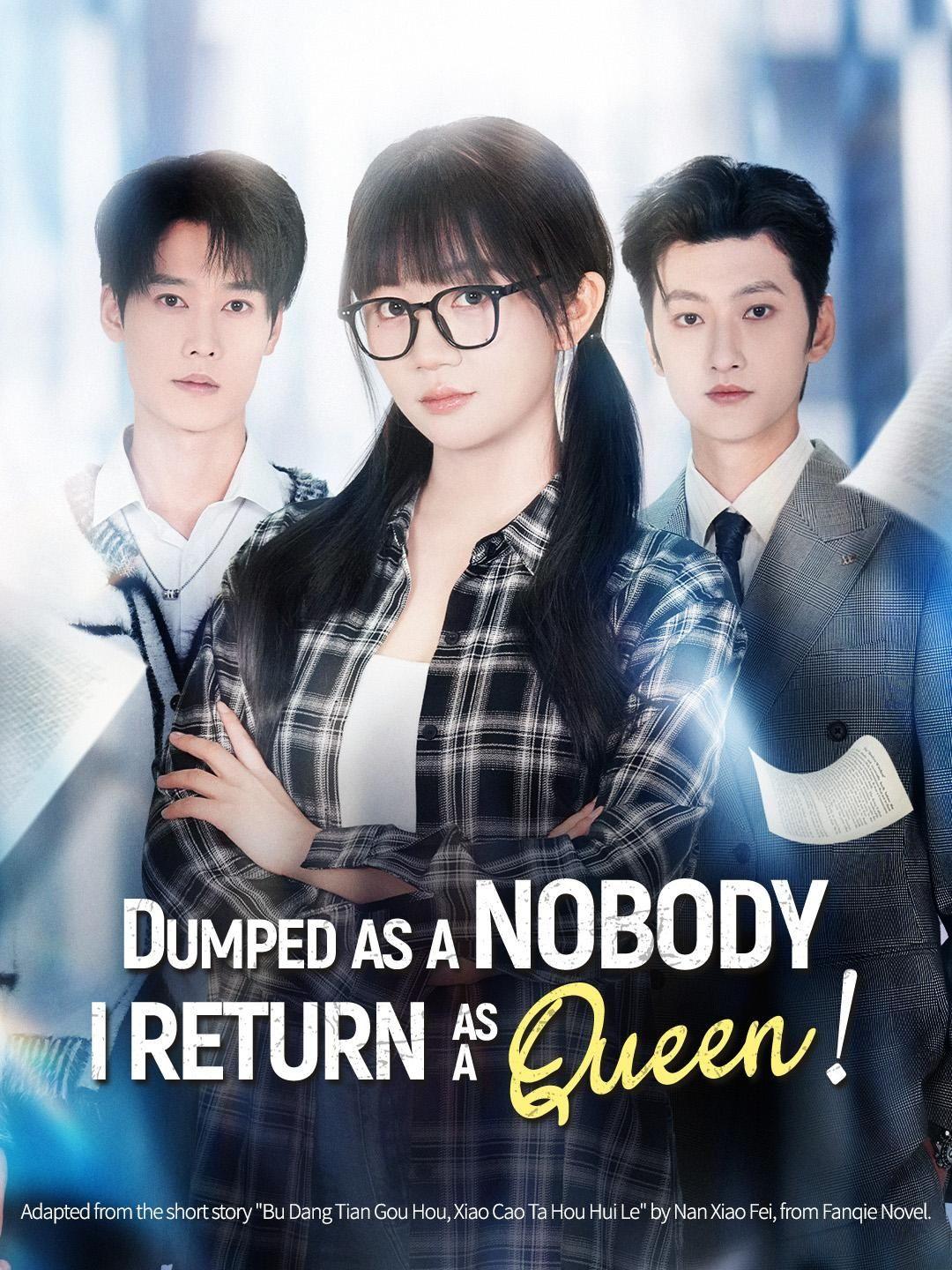
Owen faces severe accusations and betrayal from the Weston family, who label him as unforgivable scum and praise Jack's righteousness. Vivian is set to marry Jack, leaving Owen humiliated and beaten. Hannah Miller, whom Owen once helped, steps forward to defend him, swearing on her daughter's life that Owen is innocent and urging others to check the CCTV footage for the truth.Will the CCTV footage reveal Owen's innocence and change the Weston family's perception of him?


Recommended for you


Honor Over Love: When the Mother’s Kneel Rewrote the Family Script
Let’s talk about the woman in mint green. Not the bride. Not the matriarch in jade blue. But *her*—the one with the bandage on her forehead, the embroidered blouse, the trembling hands clasped like she was praying to a god who’d already turned away. Her name isn’t given in the footage, but her actions speak louder than any dialogue ever could. In the grand ballroom of the *Ding Hun Yan*, where red silk banners proclaimed celebration and golden clouds swirled beneath crystal chandeliers, she committed the most radical act of the entire sequence: she knelt. Not once. Not twice. But *repeatedly*, with increasing desperation, until her knees pressed into the plush carpet like anchors sinking into quicksand. And in doing so, she didn’t just beg for mercy—she rewrote the rules of the game. The scene opens with Li Wei—yes, *Li Wei*, the groom-elect—already injured, already subdued, his beige suit rumpled, his lip split, blood drying in thin rivulets near his jawline. He’s being held by two men, one in a leather jacket, the other in a navy blazer, their grips firm but not cruel. They’re not punishing him; they’re containing him. Like a wild animal that’s wandered into sacred space. Around them, the guests stand in stunned clusters: some whispering, some filming, some simply staring, mouths slack, as if waiting for someone to yell *cut*. But no one does. Because this isn’t rehearsal. This is real. And the real horror isn’t the blood—it’s the silence that follows it. Enter Xiao Yu. The bride. White gown. Pearl jewelry. Hair perfectly coiffed. She stands beside an older man—likely her father—whose grip on her arm is less protective, more possessive. Her expression is unreadable. Not cold. Not sad. *Detached*. As if she’s watching a play she’s already seen. When Li Wei’s eyes find hers, she doesn’t blink. She doesn’t look away. She just *holds* his gaze, and in that exchange, something dies. Not love—something older. Something deeper. Trust? Hope? The belief that fate would be kind. No. It’s the death of *expectation*. She expected a future. Now she sees only consequence. But the true turning point arrives when the mother enters—not from the side door, but from the back, as if she’d been waiting in the wings, rehearsing her lines. Her entrance isn’t dramatic. It’s quiet. She walks with the weight of years in her shoulders, her mint-green blouse slightly wrinkled, her pants pale beige, practical, unadorned. The bandage on her forehead isn’t decorative; it’s evidence. Of what? A fall? A confrontation? We don’t know. And that ambiguity is the point. She doesn’t explain. She *acts*. She kneels. First, slowly, deliberately, as if lowering herself before an altar. Then, she bows—deeply—palms together, eyes lifted not to heaven, but to the man in the black pinstripe suit: the architect of this collapse. His name? Unknown. His presence? Unmistakable. He watches her with detached curiosity, like a scientist observing a specimen. He doesn’t move. Doesn’t speak. Just lets her hang there—in supplication, in shame, in raw, unvarnished maternal terror. And then—here’s the genius of it—she raises her right hand. Not in surrender. In *signaling*. Two fingers extended. A peace sign. But in this context, it’s not peace. It’s a cipher. A plea wrapped in irony. A reminder: *I am still human. I still choose.* Honor Over Love thrives on these micro-rebellions. While the men shout and point and drag bodies across the floor, the women operate in subtext. The matriarch in jade blue—let’s call her Aunt Lin—doesn’t kneel. She *gestures*. Her fingers snap like a conductor’s baton, directing the chaos without touching it. She holds her clutch like a shield, her jade bangle glinting under the lights. She’s not shocked. She’s *managing*. Every tilt of her head, every slight purse of her lips, signals approval or correction to the men around her. She’s the unseen CEO of this emotional crisis. And when she finally speaks—her voice low, measured, carrying effortlessly across the room—it’s not to condemn Li Wei. It’s to redirect the narrative: *‘This is not how we handle family matters.’* Note the phrasing. Not *‘This is wrong.’* But *‘This is not how we do it.’* There’s a protocol. A method. And Li Wei violated it. Meanwhile, the younger women—two in black dresses, one in brown—stand near the banquet tables, arms crossed, eyes sharp. They’re not victims. They’re observers. Analysts. One points, not at Li Wei, but at Xiao Yu. A subtle shift in allegiance. A silent transfer of loyalty. In this world, alliances aren’t declared; they’re *performed*. And Xiao Yu’s stillness is the loudest performance of all. She doesn’t defend him. She doesn’t denounce him. She simply *exists* beside the wreckage, her white dress a stark contrast to the blood on the floor. That whiteness isn’t purity—it’s erasure. She’s already editing him out of her story. What makes Honor Over Love so gripping is how it exposes the lie at the heart of traditional ceremonies: that they celebrate unity. They don’t. They expose fracture. The *Ding Hun Yan* isn’t about two people joining—it’s about two *families* negotiating power. And when Li Wei failed to meet the unspoken terms—perhaps financial, perhaps political, perhaps moral—the contract was voided. His injury wasn’t punishment. It was *notification*. A physical receipt for a breach of trust. The most chilling moment comes when the man in the pinstripe suit finally moves. He steps over Li Wei’s prone body—not carelessly, but with deliberate disdain—and crouches beside him. Not to help. To *inspect*. His hand brushes Li Wei’s hair, his thumb smears a drop of blood near his temple. He leans in, lips moving, and though we can’t hear the words, Li Wei’s eyes widen. Not in fear. In *recognition*. He understands now. This wasn’t personal. It was procedural. The man in the pinstripe suit isn’t his enemy. He’s the executor of a will Li Wei never signed. And the mother? She rises—slowly, painfully—her knees protesting, her breath uneven. She doesn’t look at Li Wei. She looks at *Xiao Yu*. And in that glance, decades of unspoken history pass between them. A warning. A plea. A surrender. Because she knows what comes next: the annulment, the whispers, the reassignment of dowry, the quiet burial of a future that never truly began. Honor Over Love doesn’t glorify sacrifice. It dissects it. Shows how mothers become martyrs not through heroism, but through exhaustion. How they kneel not because they’re weak, but because standing would mean admitting the system is broken—and no one wants to be the one who says it aloud. The final wide shot lingers: the hall, still opulent, still lit, still filled with people who will return to their lives tomorrow as if nothing happened. Li Wei lies on the floor, breathing. Xiao Yu stands upright, composed. The mother walks away, head high, bandage askew, her back telling a story her mouth never will. And somewhere in the crowd, a phone screen glows—recording, saving, archiving the moment honor chose itself over love. Again. Always again. Because in this world, love is fragile. Honor is iron. And iron bends only when it’s forged in fire—and someone else holds the hammer.
Honor Over Love: The Bloodstained Engagement That Shattered the Hall
In a grand banquet hall draped in crimson and gold, where chandeliers shimmered like frozen constellations and the carpet bore swirling cloud motifs—symbols of prosperity and celestial harmony—the air should have hummed with joy. Instead, it crackled with betrayal, panic, and the metallic tang of blood. This was not a wedding, but a *ding hun yan*—an engagement banquet—yet the chaos that unfolded felt more like a courtroom drama staged on velvet. At its center stood Li Wei, the groom-to-be, dressed in a beige double-breasted suit, his tie patterned with geometric diamonds, his face smeared with fresh blood from a gash above his left eyebrow and another trickle escaping his split lip. He knelt, then collapsed, then lay supine on the ornate floor, eyes wide, breath ragged—not dead, but broken. His expression wasn’t one of pain alone; it was disbelief, as if he’d just realized the script had been rewritten without his consent. And indeed, it had. The bride, Xiao Yu, stood rigid beside him, her off-the-shoulder white gown immaculate, her pearl necklace catching the light like scattered stars. Her hair, styled in a long, elegant wave pinned with a feathered accessory, framed a face frozen between shock and silent fury. She didn’t scream. She didn’t rush to his side. She simply watched—her fingers clasped tightly before her, knuckles white—as men in dark suits swarmed Li Wei like vultures circling carrion. One man, tall and sharp-featured, wearing a black pinstripe suit adorned with a silver chain brooch and a paisley tie, moved with unnerving calm. He didn’t raise his voice. He didn’t strike. He merely stepped forward, paused, then kicked Li Wei’s shoulder—not hard enough to injure further, but hard enough to send a message: *You are no longer standing in this world.* That moment, captured in slow motion across three cuts, became the pivot of the entire sequence. It wasn’t violence that shocked the audience—it was the *theatrical precision* of it. Every gesture, every glance, every stumble was choreographed like a dance of disgrace. Then came the mother—Li Wei’s mother, dressed in pale mint-green embroidered pajamas, a bandage starkly pasted across her forehead, as if she’d already endured her own trial before entering the hall. She didn’t cry at first. She stared, mouth slightly open, as though trying to reconcile the boy she raised with the man now bleeding on the floor. When she finally moved, it wasn’t toward her son. She walked straight to the center of the room, knelt—not in grief, but in supplication—and pressed her palms together, bowing low. Her lips moved silently at first, then formed words: *‘Please… spare him.’* But who was she pleading to? The man in the pinstripe suit? The older gentleman in the teal shirt and charcoal blazer, whose face twisted with rage as he pointed toward the door? Or perhaps, to the invisible gods of family honor? Her posture screamed desperation, yet her eyes held a flicker of calculation. Was this performance for the guests—or for the man who now held the reins of power? Honor Over Love isn’t just a title; it’s a thesis statement. In this world, love is negotiable. Loyalty is conditional. But *honor*—that brittle, ancient currency—is non-refundable. When Li Wei’s father, a man whose belt buckle gleamed with a Gucci logo and whose brows furrowed like storm clouds, shouted something unintelligible yet unmistakably final, the room didn’t flinch. They *listened*. Because in this hierarchy, blood doesn’t bind families—it *exposes* them. The woman in the jade-blue qipao-style coat, clutching a cream-colored clutch and wearing a jade bangle that matched her earrings, didn’t intervene. She observed, her lips pursed, her gaze darting between Xiao Yu’s stoic silence and the mother’s abject kneeling. She represented the old guard—the women who knew how to wield silence like a blade. Her presence alone suggested that this wasn’t the first time such a scene had played out behind closed doors. The red banners reading *Ding Hun Yan*—Engagement Banquet—hung like ironic graffiti over the carnage. What kind of union begins with a man on the floor and a mother on her knees? What made this sequence so devastating wasn’t the physical violence—it was the emotional dissonance. Li Wei, even as he lay helpless, kept looking up at Xiao Yu. Not with accusation. Not with plea. With *recognition*. As if he saw, for the first time, the woman he thought he loved—and realized she was already gone. Her stillness wasn’t indifference; it was resignation. She had chosen her side before the first blow landed. Meanwhile, the man in the brown double-breasted jacket—the one with the floral lapel pins and wire-rimmed glasses—watched with a smirk that never quite reached his eyes. He wasn’t enjoying the spectacle. He was *auditing* it. Every reaction, every gasp, every whispered comment among the guests seated at long tables lined with wine glasses and untouched appetizers—he cataloged them. He was likely the cousin, the business partner, the ‘trusted advisor’ who had orchestrated the fall. His role wasn’t to act, but to ensure the narrative held. And it did. When Li Wei’s younger brother—or perhaps his rival—was dragged in, also bruised, also silenced, the symmetry became chilling. Two sons. One crime. One verdict. Honor Over Love forces us to ask: What does it mean to be honorable when the system itself is rotten? Is it honorable to protect your child—even if he’s guilty? Is it honorable to kneel, or is that the ultimate surrender? The mother’s final gesture—raising two fingers in a peace sign while still on her knees—wasn’t irony. It was defiance disguised as submission. A signal. A code. In that moment, she reclaimed agency, however small. The guests, previously frozen, began shifting. Some looked away. Others pulled out phones—not to call help, but to record. This wasn’t private shame anymore. It was public theater. And the audience? They were complicit. Every gasp, every exchanged glance, every sip of champagne taken after the fall—they all fed the machine. The cinematography heightened the tension: low-angle shots made the ceiling feel oppressive, as if the chandelier might crash down at any moment. Close-ups lingered on trembling hands, on the blood pooling near Li Wei’s temple, on the way Xiao Yu’s earrings caught the light each time she turned her head—just slightly—away from the ruin at her feet. Sound design muted the ambient music, leaving only the rustle of fabric, the scrape of shoes on carpet, the wet sound of breath through split lips. Silence became the loudest character in the room. This isn’t just a melodrama. It’s a sociological autopsy. Honor Over Love reveals how tradition, when weaponized, turns love into collateral damage. Li Wei didn’t lose the engagement because he cheated or lied—he lost it because he failed to perform the role expected of him. His injury wasn’t the cause; it was the symptom. The real wound was inflicted long before he entered the hall: in boardrooms, in ancestral temples, in whispered conversations over tea. The blood on his face was merely the visible proof of an invisible contract breach. And Xiao Yu? She remains the most haunting figure. No tears. No outbursts. Just a quiet, terrifying composure. In the final shot, as the camera pulls back to reveal the full tableau—the fallen man, the kneeling mother, the standing accusers, the indifferent guests—she lifts her chin. Not in pride. In acceptance. She knows what comes next. The annulment. The rumors. The rebuilding of a life that never included him. Honor Over Love doesn’t end with reconciliation. It ends with recalibration. The banquet continues—just not for them. The red flowers remain. The banners stay hung. The world moves on, polished and pristine, while one man lies broken on the floor, wondering how love became the price of survival.