



Daring Rescue in the Flames
Richard risks everything to save Orly from a dangerous situation, defying all odds and facing potential consequences for his reckless bravery.Will Richard's daring rescue bring them closer together or ignite even greater dangers?


Recommended for you


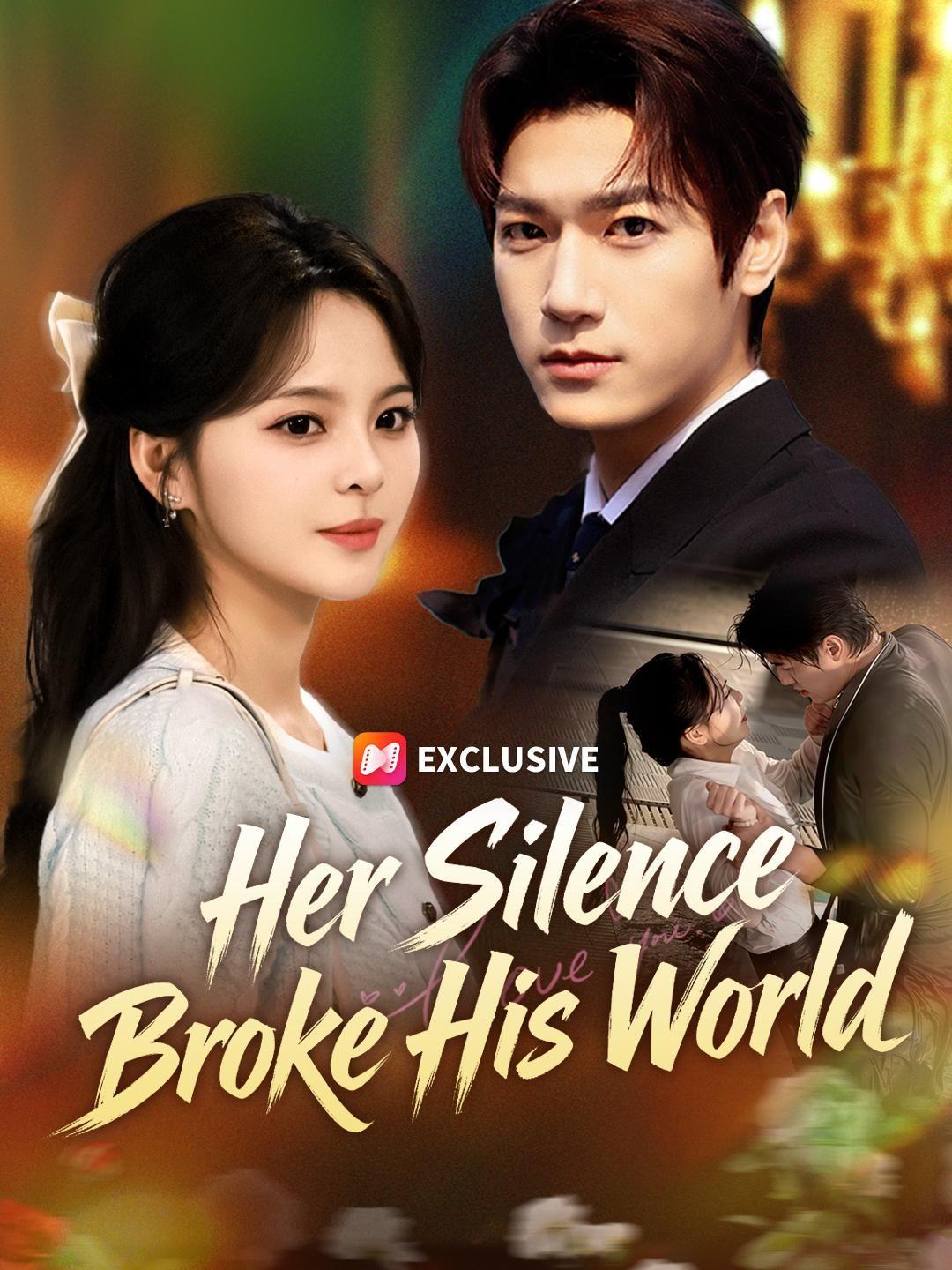
Hot Love Above the Clouds: The Fur Coat and the Fractured Mirror
Let’s talk about the fur coat. Not as costume, but as character. In *Hot Love Above the Clouds*, that brown mink shawl isn’t just fashion—it’s armor, inheritance, and indictment, all wrapped in dyed fox hair. The woman wearing it—Eleanor, though the credits never confirm it—doesn’t enter the scene. She *materializes*, stepping out of shadow like a figure from a noir painting, her pearl choker gleaming like a collar. Her first words aren’t ‘Help!’ or ‘Stop!’ They’re ‘Richard, are you insane?’ That question isn’t rhetorical. It’s diagnostic. She’s not shocked by his behavior; she’s disappointed by his regression. There’s history here. Years of polished dinners, shared secrets, maybe even unspoken affection—all buried under layers of propriety and perfectly applied lipstick. And now, in this smoky, red-drenched corridor, Richard is tearing it all down with one reckless step forward. The fur coat rustles as she grabs his arm, not to restrain, but to *reconnect*. Her fingers tremble—not from fear, but from the effort of holding onto a man who’s already dissolving into someone else’s gravity. Watch how the lighting treats her versus how it treats Richard. When he’s alone, the red is aggressive, invasive—like blood under skin. When Eleanor speaks, the light softens, turning amber at the edges, as if the world is trying to give her a moment of dignity before it collapses. Her earrings catch the glow, refracting it into tiny prisms of doubt. She knows what’s coming. She’s seen this before. Maybe not with Orly, but with other women, other obsessions, other versions of Richard who thought love meant annihilation. Her line—‘You’re risking your life if you go in there’—isn’t hyperbole. It’s prophecy. Because in *Hot Love Above the Clouds*, the ‘there’ isn’t a place. It’s a state of mind. A psychological threshold. Once crossed, there’s no map back. And Richard? He doesn’t hesitate. He yells ‘Fuck off!’ and shoves her aside—not cruelly, but dismissively, like swatting away a fly that’s reminding him he’s human. That moment is the pivot. Not when he enters the room. Not when he finds Orly. But when he chooses to ignore the only person who still sees him as *Richard*, not just Orly’s devotee. Then comes the bed scene. Red light, yes—but this time, it’s not urgent. It’s reverent. Orly lies still, her face half in shadow, her lips parted not in fear, but in exhaustion. She’s not a damsel. She’s a vessel. A silent oracle. And Richard? He doesn’t burst in like a knight. He *slides* through the doorway, as if entering a temple. His suit is rumpled now, his tie loose, his watch askew—symbols of a man who’s shed his public self like a snakeskin. ‘Orly, I’m here,’ he whispers. Not ‘I came for you.’ Not ‘I defied them all.’ Just ‘I’m here.’ That phrase is the core of *Hot Love Above the Clouds*: presence as penance. He believes showing up is enough. That his mere existence in her space will heal whatever wound made her retreat into that bed. When he says ‘Come on,’ it’s not a command. It’s a beg. A plea to the universe. And when he lifts her, his hands cradling her ribs like they’re fragile glass, the camera lingers on her wrist—thin, pale, veins visible beneath skin stretched too tight by grief or guilt or something far older. She doesn’t resist. She doesn’t embrace him. She simply *allows*. And that allowance is more damning than any scream. Eleanor watches from the hallway, arms crossed, fur coat pulled tighter around her shoulders. Her expression shifts—not from anger to sadness, but from disbelief to resignation. ‘You’re really giving up everything for her,’ she says, voice low, almost conversational. That’s the knife twist. She’s not jealous. She’s *grieving*. Grieving the man who used to debate Kant over espresso, who remembered her mother’s birthday, who once held her hand during a thunderstorm and said, ‘Lightning can’t strike twice in the same place.’ Now? He’s chasing a ghost in red light. The fur coat, once a symbol of status, now reads as obsolete—a relic of a world where consequences mattered, where love required reciprocity, where ‘forever’ wasn’t just a word whispered into a dying woman’s ear. *Hot Love Above the Clouds* forces us to ask: Is Richard heroic or hollow? Is Orly victim or architect? And what does it say about Eleanor—that she stays, that she speaks, that she *witnesses*—even as he walks away from her, from sense, from himself? The final shot isn’t of Richard carrying Orly out. It’s of the empty hallway, the door swinging shut behind them, the red glow bleeding into the gold of the corridor like wine spilled on linen. Eleanor doesn’t follow. She turns, walks back the way she came, her heels clicking a rhythm that sounds like a countdown. The fur coat sways with each step, heavy with unsaid things. In that moment, *Hot Love Above the Clouds* reveals its true subject: not the lovers, but the ones left standing in the wreckage, holding the pieces of a life that no longer fits. Richard thinks he’s choosing Orly. But he’s really choosing oblivion—and Eleanor, in her pearls and her fur, is the last witness to his vanishing act. The tragedy isn’t that he loses himself. It’s that he never realized he had a self to lose. And the most haunting line of the entire sequence? Not ‘What the fuck!’ or ‘Fuck off!’—but Eleanor’s quiet, broken whisper as the door closes: ‘Richard.’ Just his name. No title. No plea. Just the sound of a man being erased, spoken by the woman who knew him best. *Hot Love Above the Clouds* doesn’t end with a kiss or a crash. It ends with silence—and the weight of a fur coat hanging on a hook, waiting for a man who will never come back to claim it.
Hot Love Above the Clouds: Richard’s Descent Into Obsession
The opening frames of *Hot Love Above the Clouds* hit like a punch to the gut—darkness, a flicker of red light, and then Richard stumbles into view, disheveled but sharply dressed in a beige suit that looks increasingly absurd against the ominous backdrop. His eyes are wide, his mouth open mid-scream: ‘What the fuck!’ The raw panic in his voice isn’t theatrical—it’s visceral, the kind you feel in your sternum. He’s not just startled; he’s unraveling. The camera lingers on his face as red light bleeds across his features, casting shadows that seem to pulse with his heartbeat. This isn’t a man reacting to a surprise party gone wrong. This is someone who’s just crossed a threshold he can’t uncross. And yet, even in chaos, he repeats ‘Orly! Orly!’ like a mantra, like a prayer, like a plea for salvation from something he himself invited in. That name—Orly—hangs in the air like smoke, thick and dangerous. It’s not just a person; it’s a trigger. A switch flipped. A point of no return. When the woman in the fur coat appears—her hair pinned high, pearls coiled around her neck like a noose—she doesn’t scream. She *accuses*. ‘Richard, are you insane?’ Her tone isn’t fear. It’s betrayal. Disgust. She knows what he’s doing, or at least she thinks she does. But here’s the twist: she’s not trying to stop him. She’s trying to *reason* with him, as if logic still applies. ‘You’re risking your life if you go in there.’ That line isn’t a warning—it’s a confession. She knows the danger isn’t external. It’s internal. It’s *her*. Or rather, it’s what he’s willing to do for her. The way she grips his arm, fingers digging in—not to hold him back, but to anchor herself to him—suggests she’s already complicit. She’s not the voice of reason; she’s the echo chamber of his obsession. And when he snaps ‘Fuck off!’ and shoves past her, it’s not anger. It’s surrender. He’s choosing the fire over the cold comfort of sanity. The scene shifts. Red light again—but now it’s softer, more intimate, almost sacred. A different woman lies in bed, bathed in crimson glow, her dark hair spilling over the pillow like ink in water. Her expression is quiet, haunted. Not afraid—resigned. This is Orly. The name finally given flesh. She doesn’t speak. She doesn’t need to. Her stillness speaks louder than any dialogue. And then Richard enters—not through a door, but through a rupture in reality itself. The hallway behind him is warm, golden, normal. The room where Orly lies is drenched in red, like a womb or a wound. He kneels beside the bed, whispering, ‘Orly, I’m here.’ Not ‘I found you.’ Not ‘I saved you.’ Just ‘I’m here.’ As if presence alone is enough to rewrite fate. His hands move toward her—not violently, but with desperate tenderness. ‘Come on,’ he murmurs. ‘I’ll get you out of here.’ But here’s the chilling truth: she’s not trapped in a room. She’s trapped in *him*. His love is the cage. His devotion, the lock. When he lifts her, cradling her like a relic, the camera tilts, disorienting us—because we’re no longer watching a rescue. We’re watching a ritual. A sacrifice. Richard isn’t saving Orly. He’s offering himself to her, body and soul, in a transaction only the two of them understand. *Hot Love Above the Clouds* doesn’t traffic in clichés about forbidden romance. It’s about the terrifying magnetism of self-destruction disguised as devotion. Richard isn’t a hero. He’s a man who’s forgotten how to choose himself. Every gesture—his frantic pacing, his repeated invocation of Orly’s name, his violent dismissal of the woman in fur—is a symptom of a deeper sickness: the belief that love must be proven through suffering. That to love deeply is to bleed publicly. The fur-coated woman—let’s call her Eleanor, since the script never names her, but her jewelry and posture scream old money, old rules—represents the world outside the fever dream. She pleads, ‘You’re really giving up everything for her.’ And she’s right. But the tragedy isn’t that he’s sacrificing his life, his reputation, his safety. It’s that he doesn’t see it as sacrifice. To him, it’s *fulfillment*. The red lighting isn’t just mood—it’s physiology. It’s the flush of adrenaline, the heat of obsession, the color of blood pooling under skin stretched too thin by desire. When Richard says ‘Come on’ for the third time, it’s not encouragement. It’s incantation. He’s summoning a version of reality where love erases consequence. Where Orly’s silence means consent. Where his choices aren’t choices at all—they’re inevitabilities written in fire. What makes *Hot Love Above the Clouds* so unnerving is how familiar it feels. We’ve all known a Richard. Maybe we’ve *been* a Richard. The moment when love stops being mutual and starts being unilateral—the slow creep of possessiveness masked as protection, the way concern curdles into control, the delusion that intensity equals authenticity. Eleanor’s final line—‘This is your choice’—is the most devastating because it’s true. Richard *could* walk away. He *could* listen. But he doesn’t. Because in that red-lit room, with Orly’s breath shallow against his chest, walking away would mean admitting he was wrong. And for people like Richard, being wrong is worse than dying. So he chooses the fall. He chooses the fire. He chooses Orly—not because she loves him back, but because loving her lets him believe he’s still capable of grandeur, of mythmaking, of becoming the protagonist in a story where his pain has meaning. *Hot Love Above the Clouds* isn’t a love story. It’s an autopsy of love’s corpse, laid bare under surgical red light, with Richard holding the scalpel and smiling through tears. The real horror isn’t that he might lose her. It’s that he already has—and he hasn’t noticed yet.