



Revelation and Retribution
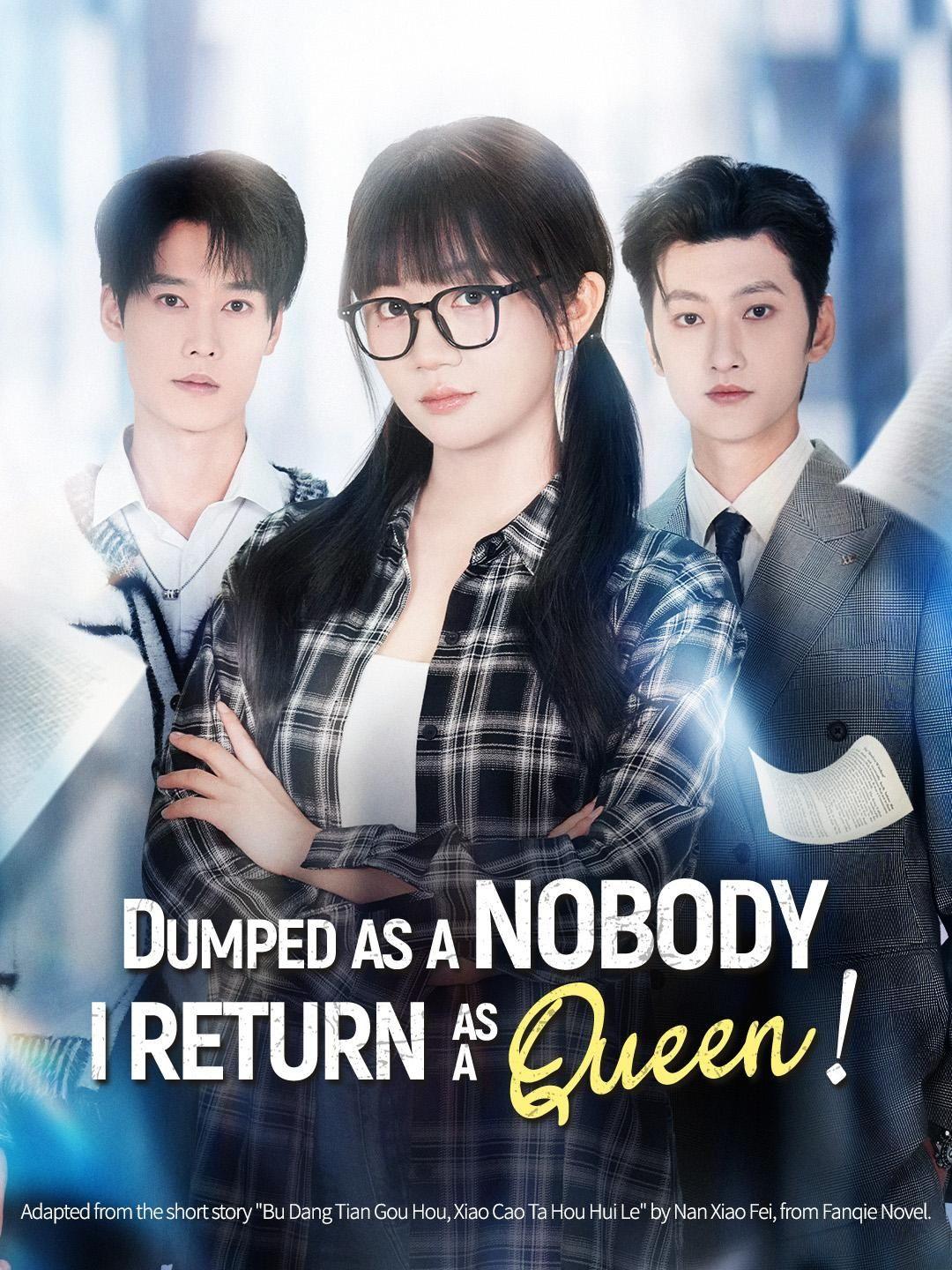
Sanugi's greedy son and daughter-in-law publicly humiliate her, unaware that the man they're mocking is actually William Turner, a powerful figure. When William reveals his identity and stands up for Sanugi, the couple panics and begs for forgiveness, realizing they've made a grave mistake.Will William's wrath bring justice for Sanugi, or will her family find a way to escape the consequences of their actions?


Recommended for you


Reborn in Love: The Qipao and the Velvet Dress Speak Louder Than Words
In the hushed, glittering cathedral of high society that serves as the setting for this pivotal scene in *Reborn in Love*, dialogue is almost secondary to the language of clothing, posture, and the silent, seismic shifts in eye contact. The room is a study in controlled chaos, a symphony of silk, satin, and suppressed emotion, where every gesture carries the weight of decades of family history and personal betrayal. Forget the speeches; the real narrative unfolds in the space between Lin Jian’s clenched jaw and Chen Wei’s trembling hand, in the way Madame Zhang’s pearls catch the light as a single tear traces a path down her cheek, and in the defiant set of Li Na’s shoulders as she steps forward, her emerald velvet dress a beacon of rebellion against the sea of somber black and grey. This isn’t just a confrontation; it’s a forensic examination of a broken dynasty, conducted under the unforgiving gaze of a thousand crystal droplets. Lin Jian, the patriarch-in-waiting, is the embodiment of curated perfection. His pinstripe suit is immaculate, the burgundy pocket square a deliberate splash of color against the monochrome seriousness, the ship-wheel brooch a talisman of authority he clings to even as his world tilts. But his stillness is a performance. Watch his eyes—they dart, they narrow, they widen in increments too small for the casual observer but screaming volumes to anyone attuned to the frequency of deception. He’s not listening to Chen Wei’s words; he’s calculating the fallout, the damage control, the narrative he’ll spin to salvage his reputation. His entire being is a fortress, and Chen Wei, with his rumpled grey suit and earnest, almost naive, intensity, is the battering ram. Chen Wei’s discomfort is palpable, a physical thing. He adjusts his tie not out of vanity, but out of sheer, visceral anxiety. His glasses fog slightly with his quickened breath, a tiny, human detail that grounds the scene in reality. He’s not a villain; he’s a man who has carried a truth for too long, and the act of speaking it is physically exhausting. His courage isn’t loud; it’s the quiet, stubborn refusal to look away, to let the lie stand another minute. And the room reacts in kind. The guests don’t gasp; they *freeze*. A man in a navy suit turns his head slowly, his smile frozen in place, a mask of polite indifference that cracks at the edges. A woman in a cream tweed jacket (a modern echo of Madame Zhang’s traditionalism) clasps her hands together, her knuckles white, her eyes fixed on Li Na, as if seeking confirmation that what she’s witnessing is real. This collective holding of breath is the true soundtrack of the scene. Then there’s Li Na. Oh, Li Na. Her entrance into the emotional fray is not announced by fanfare, but by a subtle shift in the room’s energy. Her green dress isn’t just beautiful; it’s *alive*. The velvet absorbs the light, creating depths and shadows that mirror the complexity of her character. The pearl-embellished straps are a nod to tradition, a concession to the world she’s trying to navigate, but the cut of the dress, the confident drape, screams autonomy. She doesn’t need a throne; she commands the space simply by occupying it. Her initial reaction to Chen Wei’s revelation is a masterpiece of layered emotion: first, the shock, a slight intake of breath, her eyes widening; then, the dawning realization, a flicker of understanding that quickly hardens into resolve; finally, the anger, not hot and explosive, but cold and precise, like ice forming over a deep, dark well. When she speaks, her voice is steady, her words chosen with lethal care. She doesn’t attack Lin Jian directly; she dismantles the foundation of his argument, exposing the hypocrisy, the double standards, the years of emotional neglect disguised as protection. Her gaze, when it meets Lin Jian’s, is not pleading; it’s challenging. It says, ‘I see you. I see the man behind the title.’ And in that moment, the power dynamic irrevocably shifts. Madame Zhang, standing beside her son, is the tragic counterpoint. Her qipao, a work of art in faded blue silk, is a testament to a different era, one where a woman’s worth was measured in her ability to maintain harmony, to smooth over cracks with grace. Her tears are not weakness; they are the accumulated sorrow of a lifetime spent managing other people’s crises, of loving a son who is becoming a stranger. Her hand on Lin Jian’s arm is a lifeline, a desperate attempt to anchor him to the identity he’s always worn. But her eyes, when they meet Li Na’s, hold a complex mix of pity, fear, and a grudging, terrified respect. She recognizes the fire in Li Na, the same fire she may have once possessed and been forced to extinguish. The scene’s brilliance lies in its refusal to simplify. *Reborn in Love* doesn’t paint Lin Jian as a monster or Chen Wei as a hero. Lin Jian is a product of his environment, trapped by expectations he never questioned until now. Chen Wei is brave, but his timing is brutal, his method potentially destructive. Li Na is righteous, but her pursuit of truth comes at a cost—to herself, to her relationship, to the fragile peace of the entire gathering. The visual composition reinforces this ambiguity. The camera often frames them in trios: Lin Jian, Madame Zhang, and Li Na; or Lin Jian, Chen Wei, and the observing crowd. The space between them is charged, a vacuum waiting to be filled with either reconciliation or annihilation. The chandeliers above, those magnificent, intricate structures, become symbols of the elaborate, fragile construct these characters inhabit. One wrong move, one harsh word, and the whole thing could come crashing down, scattering glass and secrets everywhere. The final shot, lingering on Lin Jian’s stunned face as he processes the full weight of the truth, isn’t an ending; it’s a beginning. It’s the moment the old story dies, and the painful, uncertain, but ultimately honest story of *Reborn in Love* truly begins. The velvet dress and the qipao, the grey suit and the pinstripes—they are no longer just clothes. They are the uniforms of a war being fought not with swords, but with silence, with glances, with the unbearable weight of finally being seen. And in that seeing, there is the first, fragile spark of rebirth.
Reborn in Love: The Silent Betrayal at the Chandelier
The grand ballroom, draped in icy white and shimmering crystal, feels less like a celebration and more like a stage set for emotional detonation. Every detail—the cascading chandeliers, the geometric light patterns on the ceiling, the pristine marble floor reflecting anxious faces—screams opulence, yet beneath that polished surface, tension simmers like steam under pressure. This isn’t just a wedding reception or gala; it’s the climax of *Reborn in Love*, where social decorum is a thin veneer over raw, unspoken truths. At the center stands Lin Jian, impeccably dressed in his double-breasted pinstripe suit, the silver ship-wheel brooch pinned to his tie not just an accessory but a symbol of control, of navigation through treacherous waters. His posture is rigid, his gaze sharp, scanning the room with the practiced calm of a man who believes he holds all the cards. Yet his eyes betray him: a flicker of uncertainty when he locks eyes with Chen Wei, the bespectacled man in the grey suit whose nervous fidgeting—adjusting his tie, swallowing hard, darting glances—suggests he’s about to drop a grenade into this carefully curated world. Chen Wei isn’t just a guest; he’s the catalyst, the quiet storm brewing in a tailored storm cloud. His presence alone disrupts the equilibrium Lin Jian has spent years constructing. The camera lingers on his hands, trembling slightly as he speaks, his voice likely low but carrying the weight of revelation. He doesn’t shout; he *accuses* with precision, each word a scalpel. And the room? It freezes. Not in shock, but in the awful, suspended animation of collective complicity. People turn away, sip champagne with forced nonchalance, but their eyes are wide, their postures stiff. They know. They’ve always known, perhaps, but now it’s out in the open, hanging in the air like the scent of expensive perfume mixed with panic. Then there’s Li Na, the woman in the emerald velvet dress, her pearl necklace a stark contrast to the fire in her eyes. She’s not passive; she’s calculating. Her initial expression—part disbelief, part simmering fury—is a masterclass in restrained emotion. She doesn’t scream; she *observes*, her gaze moving from Chen Wei to Lin Jian, then to the older woman beside him, Madame Zhang, whose traditional qipao and pearl strands speak of old money and older secrets. Li Na’s transformation is subtle but devastating. She shifts from spectator to participant, her posture straightening, her chin lifting. When she finally speaks, her voice is clear, cutting through the murmurs, and her words aren’t directed at Lin Jian alone—they’re aimed at the entire ecosystem of lies that surrounds him. She embodies the new generation’s refusal to be collateral damage in the old guard’s games. Her green dress, rich and deep, feels like a declaration of independence against the monochrome backdrop of the elite’s conformity. Meanwhile, Madame Zhang, Lin Jian’s mother, is the picture of wounded dignity. Her tears aren’t performative; they’re the genuine ache of a matriarch whose world is crumbling. Her grip on Lin Jian’s arm isn’t possessive; it’s desperate, a plea for him to *stop*, to preserve the facade, to protect the legacy she’s built. Her qipao, with its intricate floral pattern, feels like a relic, beautiful but out of step with the modern chaos erupting around her. She represents the past’s insistence on silence, on saving face at all costs, while Li Na and Chen Wei represent the future’s demand for truth, however ugly. The visual storytelling here is exquisite: the contrast between Madame Zhang’s traditional elegance and Li Na’s bold, contemporary glamour isn’t just aesthetic; it’s thematic. It’s the clash of eras, of values, of what love and loyalty truly mean. *Reborn in Love* doesn’t shy away from the messiness of human connection. It shows how a single moment—a pointed question, a withheld truth, a sudden confession—can unravel years of careful construction. The lighting, cool and clinical, enhances the sense of exposure, as if the characters are under a microscope. There are no shadows to hide in; every micro-expression is visible, every flinch captured. The scene’s power lies not in grand gestures, but in the unbearable weight of what’s left unsaid, and then, finally, said. When Lin Jian points his finger, it’s not just an accusation; it’s the shattering of his own illusion of control. His face, usually so composed, fractures, revealing the fear beneath the arrogance. That moment—his finger extended, his mouth open, his eyes wide with dawning horror—is the heart of *Reborn in Love*. It’s the moment the rebirth begins, not through joy, but through the violent, necessary rupture of a lie. The audience isn’t just watching a drama; we’re witnessing the painful, beautiful, terrifying process of becoming real. The chandeliers glitter, the guests hold their breath, and in that suspended second, everything changes. *Reborn in Love* understands that true rebirth isn’t a gentle sunrise; it’s a lightning strike in the middle of a perfectly arranged banquet, illuminating every flaw, every secret, every hidden wound. And the most devastating part? No one walks away unscathed. Not Lin Jian, not Chen Wei, not Li Na, and certainly not Madame Zhang, whose world, once so solid, now feels as fragile as the crystal hanging above them. The aftermath won’t be tidy. It will be messy, complicated, and utterly human. That’s the genius of *Reborn in Love*: it doesn’t offer easy answers, only the raw, unvarnished truth of what happens when the mask finally slips.
The Silent Power Play in Reborn in Love
That moment when the man in pinstripes locks eyes with the woman in emerald—tension thick as crystal chandeliers. His grip on his mother’s hand? A shield. Her trembling lips? A confession. Every pearl, every brooch, whispers legacy vs rebellion. 🌹 #RebornInLove hits hard when silence speaks louder than vows.
Glasses Guy Steals the Emotional Spotlight
While everyone’s busy judging the black-velvet queen, the guy in gray pinstripes & round glasses is the real emotional barometer—adjusting his tie like he’s recalibrating his soul. His micro-expressions? Pure narrative gold. In Reborn in Love, the side character often holds the key to the main drama’s heartbeat. 🔍✨