



Watch Dubbed
The Unexpected Savior
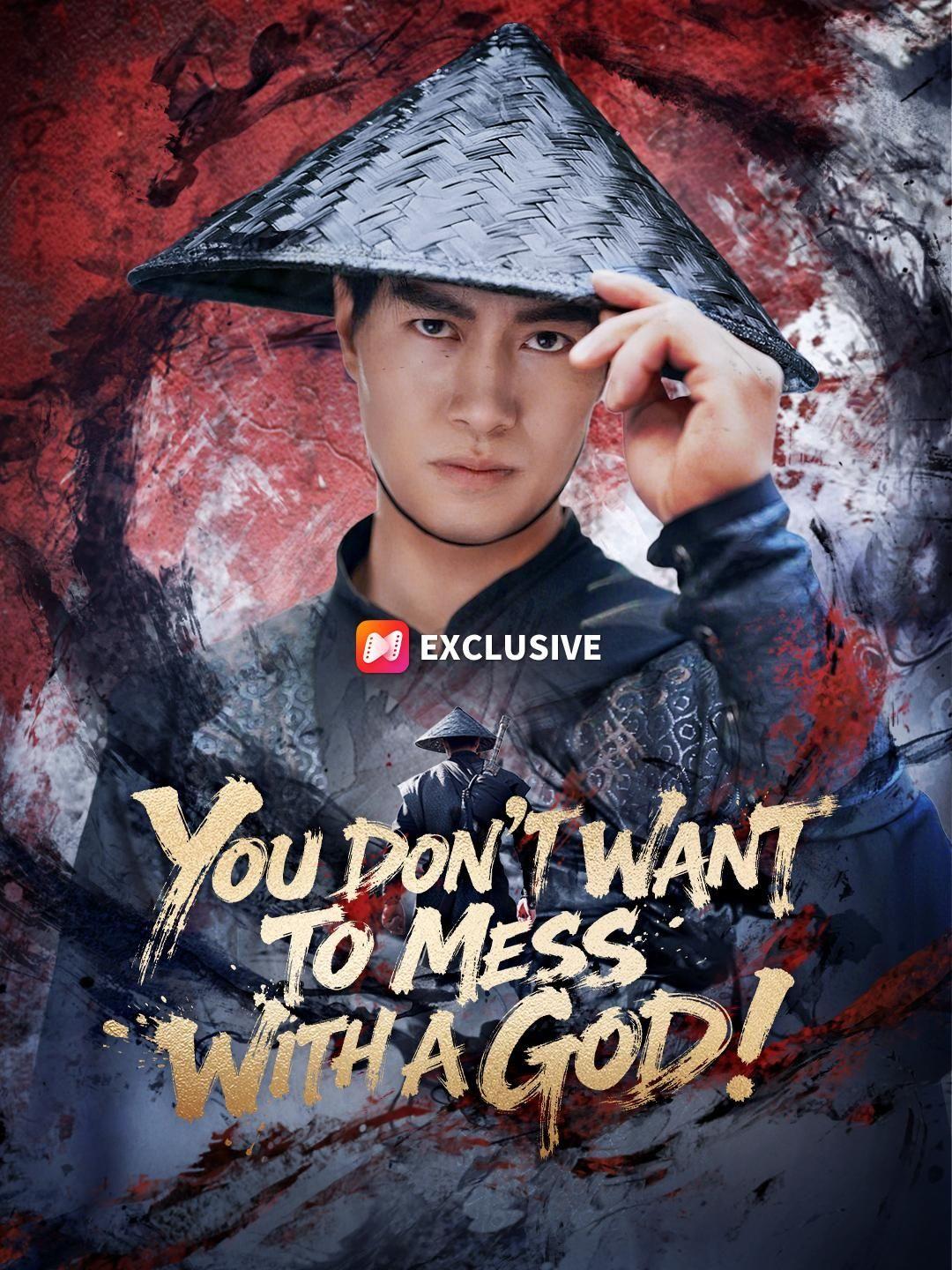
General Ryan Yan refuses to submit to the first prince's tyranny, leading to a deadly confrontation. Just as his life is about to be taken, Luna Bai, the mysterious leader of the Mystery Pavilion, intervenes, revealing her true identity and power.What secret past does Luna Bai share with General Ryan Yan that compelled her to save him?


Recommended for you


Return of the Grand Princess: When Guqin Strings Cut Deeper Than Swords
If you’ve ever wondered what happens when wuxia meets psychological realism—and not the kind that leans on monologues, but the kind that lives in the tremor of a hand, the dilation of a pupil, the way a man clutches his side not because he’s hurt, but because he’s *remembering*—then you need to rewatch the bamboo grove sequence from Return of the Grand Princess. Because this isn’t just action. It’s archaeology. Every slash, every parry, every grunt of exertion is digging up bones buried under fifteen years of silence. Start with Ryan Yan. Forget the armor for a second. Look at his *hair*—gray at the temples, tied back in a loose knot that keeps slipping, strands escaping like secrets he can’t quite contain. That’s not aging; that’s *haunting*. When the Phantom Goslian General steps forward, his name flashing on screen like a curse, Ryan Yan doesn’t tense—he *still*. His breath catches, just once, and in that micro-second, you see the boy he was before the war, before the betrayal, before the title ‘Danrian General’ became a cage. His sword stays sheathed longer than it should. Not out of fear, but hesitation. He’s not sure if he wants to fight—or if he wants to beg. Now contrast that with the Demon Top Goslian General. Bald, yes, but more importantly: *unburdened*. His face paint isn’t decoration; it’s armor of a different kind—psychic shielding. Those black lines aren’t scars; they’re sigils, drawn to keep the past from speaking too loudly. When he speaks—his voice low, almost amused—you realize he’s not here to kill Ryan Yan. He’s here to *remind* him. Every taunt is a mirror. Every step forward is a question: *Do you still believe the lie you told yourself?* His scimitar isn’t raised in threat; it’s held like a pointer, directing attention to the wound that never closed. Then there’s Iron Hammer. Oh, Iron Hammer. Let’s be honest—he’s the emotional anchor of the whole sequence. While the generals trade glances and subtext, he’s busy cracking skulls with maces that look like they were forged in a blacksmith’s dream. But watch his eyes when Ryan Yan stumbles. Not triumph. Not pity. *Recognition*. He knows what it costs to carry that armor—not just the weight on the shoulders, but the weight in the chest. When he roars mid-fight, it’s not bravado; it’s release. A man who’s spent years swallowing his grief finally lets it out in sound, raw and unfiltered. And yet—he never strikes a killing blow. Not against Ryan Yan. Not even when he has him pinned. Why? Because Iron Hammer understands something the others haven’t grasped yet: this isn’t about victory. It’s about *witnessing*. Which brings us to Luna Bai. And here’s where Return of the Grand Princess transcends genre. She doesn’t drop in with a sword. She arrives with a *sound*. The first green pulse from her hands isn’t magic—it’s *memory made visible*. The bamboo leaves shiver not from wind, but from resonance. When she lifts the guqin, it’s not an instrument; it’s a loom, weaving threads of time, guilt, and grace into a single, unbearable chord. Her expression isn’t serene—it’s *determined*. She’s not playing for beauty. She’s playing for *truth*. And the truth, as the scene unfolds, is brutal: Ryan Yan didn’t abandon the Mystery Pavilion. He *protected* it—by becoming the villain the world needed him to be. The real brilliance lies in the editing. Notice how the cuts between ground-level combat and Luna Bai’s aerial perspective aren’t just stylistic—they’re *structural*. Every time the camera tilts up to her, the violence below slows, as if the world is holding its breath. When Tessa Yu and Wu Jitian enter—not together, but in staggered harmony—they don’t join the fight. They *frame* it. Tessa Yu’s stance is defensive, yes, but her eyes are locked on Luna Bai, not the enemy. Wu Jitian’s staff remains grounded, a silent pillar of stability. They’re not reinforcements. They’re *witnesses*, like the bamboo itself. And that final shot—the one where Luna Bai lowers the guqin, her fingers brushing the last string, and the green light fades into golden afternoon sun? That’s not closure. It’s invitation. The fallen warriors stir. Iron Hammer pushes himself up, wiping blood from his lip, and for the first time, he doesn’t look at Ryan Yan. He looks *past* him—to the horizon, where the grove ends and the world begins anew. The Demon Top Goslian General sheathes his blade without a word. Not defeat. Acceptance. He knew the moment he saw Luna Bai that the old rules no longer applied. Return of the Grand Princess doesn’t give us heroes or villains. It gives us *people*, cracked open by time, standing in a forest that remembers everything. The swords may rust, but the guqin? The guqin sings on. And if you listen closely—really closely—you’ll hear the faint echo of fifteen years ago, whispering: *We’re still here. We’re still waiting.*
Return of the Grand Princess: The Bamboo Grove Showdown That Rewrote Fate
Let’s talk about that bamboo grove scene—not just another wuxia skirmish, but a masterclass in narrative compression, where every swing of a blade, every gasp of a wounded general, and every silent glance from the treetops carries the weight of fifteen years of buried history. The opening title—‘(15 Years Later)’—isn’t filler; it’s a detonator. It tells us this isn’t about who wins the fight, but who *survives* the reckoning. And oh, how the characters do survive—some barely, some gloriously, and one, Luna Bai, not by sword or shield, but by sheer, unshakable presence. Ryan Yan, the Danrian General, enters like a man already half-buried in regret. His armor—gold-embossed, ornate, heavy—is less protection than prison. You can see it in his eyes: he’s not fighting to win, he’s fighting to atone. When the Phantom Goslian General steps forward, bald head gleaming under dappled light, face etched with black ritual lines like cracks in porcelain, the tension doesn’t spike—it *settles*, like dust after an earthquake. This isn’t a duel; it’s a confession staged in blood and bamboo. The Demon Top Goslian General, with his curved scimitar slung over his shoulder like a second spine, doesn’t smirk—he *savors*. His lips part not in mockery, but in anticipation, as if he’s been waiting for this moment since the last time Ryan Yan turned his back on the oath they swore beneath the same grove. And then there’s Iron Hammer—yes, *Iron Hammer*, the man who wields two maces like they’re extensions of his knuckles, fur draped across his chest like a war banner. He doesn’t speak much, but when he does, it’s gravel in a silk pouch: low, resonant, and utterly unapologetic. His entrance isn’t flashy; it’s *inevitable*. He steps into frame, and the ground seems to tilt slightly toward him. You don’t question why he’s here—you just accept that if chaos is coming, he’ll be the first to greet it with a swing. His loyalty isn’t to a cause or a crown; it’s to the rhythm of the fight itself. When he lunges at Ryan Yan mid-combat, you don’t flinch—you lean in, because you know this isn’t betrayal; it’s *balance*. The old general needs to be broken before he can be remade. But the real pivot—the moment the entire sequence shifts from martial drama to mythic opera—is when Luna Bai appears. Not from behind a bush, not from a hidden path, but *from above*, suspended between heaven and earth, her white-and-blue robes catching the wind like sails on a ghost ship. She holds the guqin—not as weapon, not as ornament, but as *witness*. Her fingers don’t strum; they *invoke*. The green energy that erupts from her hands isn’t CGI fluff—it’s the visual manifestation of a truth no sword can cut: power isn’t always loud. Sometimes, it’s the silence before the storm, the breath held just long enough to change everything. What makes Return of the Grand Princess so compelling here isn’t the choreography—though the fight sequences are crisp, grounded, and brutally kinetic—but the *emotional geography* of the space. The bamboo forest isn’t just backdrop; it’s a character. Its verticality frames every confrontation like a scroll painting come alive. When Tessa Yu, First Guardian of the Mystery Pavilion, drops from the canopy in that black-and-red ensemble, her sword a silver thread in the chaos, she doesn’t land—she *arrives*. Her entrance isn’t about surprise; it’s about *timing*. She knows exactly when the tide turns, and she rides it not with fury, but with precision. Meanwhile, Wu Jitian, the other Guardian, stands slightly apart, his grip on his staff steady, his gaze fixed on Luna Bai—not out of deference, but recognition. He sees what the others miss: that the battle isn’t being fought on the ground. It’s being conducted *through* the air, through sound, through memory. Watch Ryan Yan’s face when he looks up at Luna Bai. It’s not awe. It’s *recognition*. A flicker of something older than war—perhaps love, perhaps guilt, perhaps the quiet horror of realizing the person you thought was lost has returned not to forgive, but to *judge*. His mouth moves, but no words come out. His hand tightens on his sword hilt, then relaxes—not in surrender, but in surrender *to the moment*. That’s the genius of this scene: it refuses catharsis. No one gets a clean victory. Iron Hammer takes a blow to the ribs and staggers, spitting blood but still grinning like he’s been handed a gift. The Demon Top Goslian General laughs—not because he’s winning, but because he finally understands the game was never about territory. It was about *who remembers*. And Luna Bai? She doesn’t descend until the last warrior falls. She sits atop that rock, guqin resting across her lap like a sleeping dragon, and the camera lingers—not on her face, but on her hands. One rests lightly on the strings; the other holds a single blue ribbon, frayed at the end. That ribbon? It’s the same one Ryan Yan wore fifteen years ago, tied around his wrist the day he walked away from the Mystery Pavilion. She didn’t need to say it. The ribbon said it all. Return of the Grand Princess isn’t just about a woman reclaiming her throne—it’s about a world remembering its own heartbeat. The bamboo sways. The dust settles. And somewhere, deep in the grove, a single note hangs in the air, unresolved, waiting for the next movement.
When the Guqin Plays, the Villains Drop Like Flies
Luna Bai on that rock, serene as moonlight, while chaos erupts below—genius visual irony. The bald villain’s shock face? Iconic. Tessa Yu and Wu Jitian arrive not with fanfare, but *precision*. *Return of the Grand Princess* turns wuxia tropes into emotional rollercoasters. 10/10 would watch again. 🎵💥
The Bamboo Forest Showdown That Broke My Heart
Ryan Yan’s General Yan Yingzhou, battered but unbroken, clings to hope as the Phantom Goslian General sneers—until Luna Bai descends like divine wrath. The green energy surge? Pure cinematic catharsis. *Return of the Grand Princess* knows how to make you gasp, then cry. 🌿⚔️