



A Royal Revelation
Anna Stacy, after being wronged and kicked out by her biological family, is comforted and taken in by her adoptive brother Bruce. In a shocking turn of events, Bruce reveals that their adoptive family is actually the wealthiest in Oceancity, changing Anna's perception of her life and future.How will Anna adjust to her new life as part of Oceancity's richest family?


Recommended for you


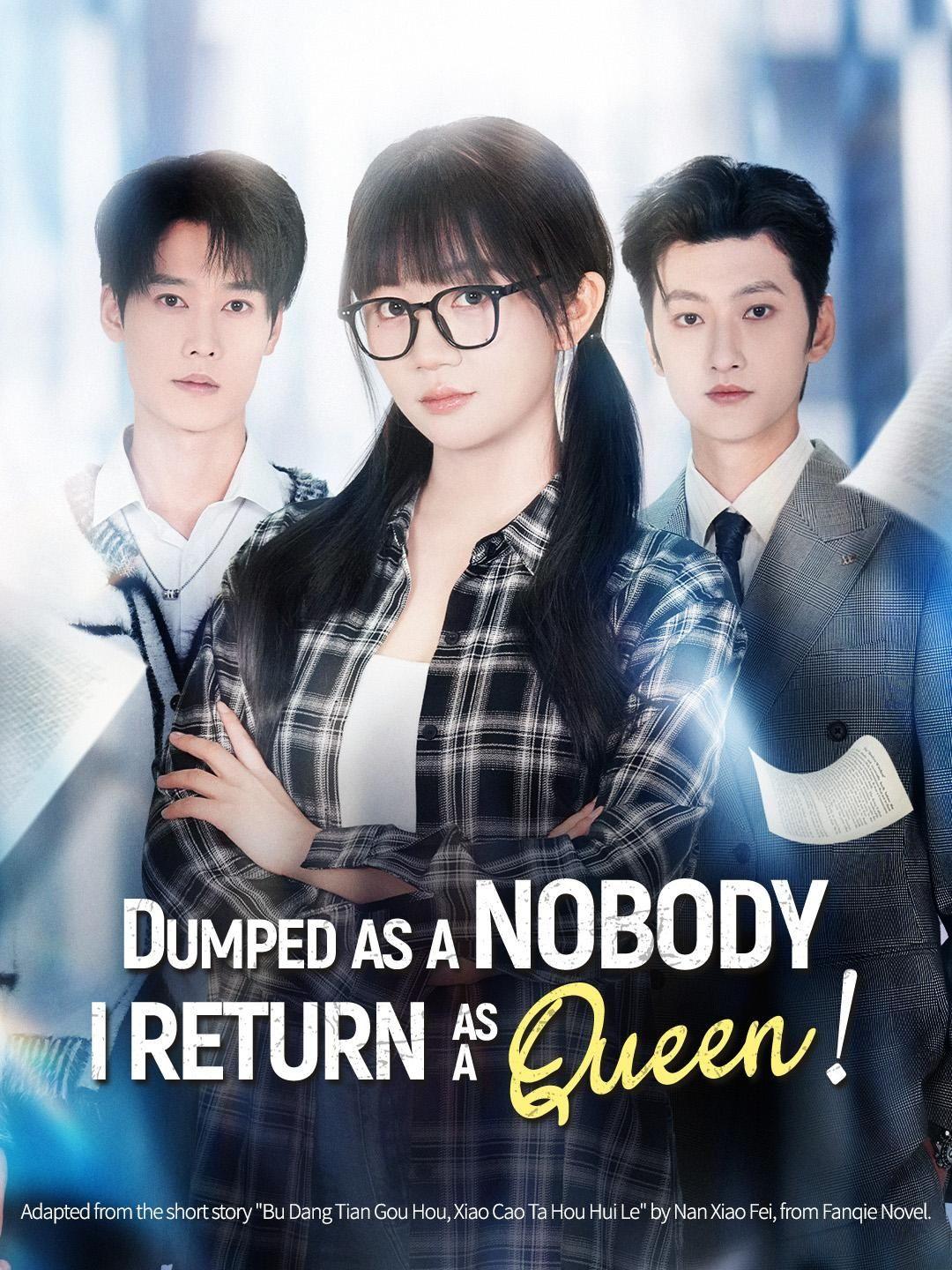
Runaway Princess and Her Spoiled Brothers: When the Trench Coat Meets the Checkered Shirt
Let’s talk about clothing as character. Not metaphor. Not symbolism. Literal, tactile, *worn* identity. In *Runaway Princess and Her Spoiled Brothers*, fashion isn’t costume—it’s confession. Take Xiao Yu’s outfit: a blue-and-white plaid shirt, sleeves rolled to the elbow, jeans faded at the knees, white sneakers scuffed at the toe. It’s the uniform of someone who’s tried to disappear—not into poverty, but into anonymity. The shirt is buttoned all the way up, not primly, but defensively. Her backpack, pale yellow with a tiny plush cloud charm dangling from the zipper, is both childlike and defiant. It says: *I’m still young. I’m still mine.* Now contrast that with Shen Han’s entrance: a tailored beige trench coat, double-breasted, worn over a ribbed ivory turtleneck, paired with cream trousers and minimalist white sneakers. No logo. No flash. Just precision. His coat isn’t armor—it’s architecture. It shapes the space around him, defines the boundaries of his presence. When he steps out of the Maybach, the wind catches the lapel just so, and for a second, he looks less like a brother and more like a figure carved from marble: serene, unshakable, inevitable. That’s the visual thesis of *Runaway Princess and Her Spoiled Brothers*: two people dressed in opposing philosophies of survival. The sidewalk scene is where this tension crystallizes. Xiao Yu walks with her head slightly bowed, her gaze fixed on the pavement—not out of shame, but out of habit. She’s learned to navigate the world by minimizing herself. Then the car stops. Not with a screech, but with a sigh of hydraulics. The door opens. And Shen Han emerges, not stepping *toward* her, but *into* her field of vision. He doesn’t call her name. He doesn’t raise his voice. He simply stands there, sunlight catching the silver thread in his hair, and waits. That’s the power dynamic in a single frame. She has to look up. Literally. Physically. Emotionally. And when she does, her expression fractures—not into anger, but into something far more complex: grief, relief, betrayal, longing. All at once. Her lips part. She tries to speak. Nothing comes out. That’s when he moves. Not fast. Not slow. Just *right*. He closes the distance in three strides, and the moment his arms wrap around her, the camera tilts upward, framing them against the sky—golden, hazy, indifferent. Her tears soak into his coat, and he doesn’t flinch. He holds her tighter. This isn’t performative comfort. It’s ritual. A reclamation. In that embrace, you see the history they share: the bedtime stories he read, the scraped knees he bandaged, the nights he sat outside her door when she refused to come out. But you also see the rupture—the years she spent running, the letters unanswered, the birthdays missed. *Runaway Princess and Her Spoiled Brothers* doesn’t need exposition to convey this. It uses touch. The way his thumb strokes her back, not soothingly, but *claimingly*. The way her fingers clutch his sleeve, not in desperation, but in reluctant surrender. Inside the Shen residence, the contrast intensifies. The mansion is a study in controlled opulence: floor-to-ceiling windows, travertine tiles, a spiral staircase wrapped in brushed brass. Xiao Yu walks through it like a ghost haunting her own life. Her sneakers echo too loudly. Her backpack swings awkwardly against her hip. Shen Han, meanwhile, moves with the ease of someone who owns the air he breathes. He gestures toward the living room—not inviting, but *presenting*. ‘This is where Mother used to host tea.’ His tone is neutral, but his eyes watch her reaction like a scientist observing a chemical reaction. And react she does. Her face tightens. She glances at the portrait above the fireplace—a woman with Xiao Yu’s eyes, Shen Han’s jawline, and a smile that doesn’t reach her eyes. *Their mother.* The one who vanished when Xiao Yu was twelve. The one whose will stipulated that Xiao Yu must marry before turning twenty-five—or forfeit her share of the trust fund. That’s the secret the show reveals not through dialogue, but through mise-en-scène: the framed deed on the desk, the calendar marked with red Xs, the way Shen Han’s wristwatch ticks louder than the grandfather clock in the hall. *Runaway Princess and Her Spoiled Brothers* excels at embedding narrative in environment. Every object tells a story. The potted bonsai on the side table? Pruned to perfection—just like Xiao Yu was expected to be. The abstract sculpture in the foyer? Sharp edges, asymmetrical balance—mirroring the family’s fractured dynamics. What’s fascinating is how the show subverts the ‘spoiled brother’ trope. Shen Han isn’t cruel. He’s *burdened*. His calm isn’t indifference—it’s exhaustion. When he finally speaks to her in the conservatory, his voice is low, measured, almost tender. ‘You think I wanted this?’ he asks. ‘I signed the papers the day you left. I told Father to let you go.’ But then he adds, quieter: ‘He said if I did, the merger collapses. And without the merger, the hospital shuts down. The one you volunteered at last summer.’ That’s the gut punch. Not greed. Not control. *Responsibility.* He’s not holding her back to keep her obedient—he’s holding her back to keep *others* alive. And Xiao Yu? She doesn’t scream. She doesn’t cry again. She just stares at him, her glasses fogging slightly from her breath, and says, ‘So you chose the hospital over me.’ Not accusatory. Just factual. Devastatingly so. That’s the emotional core of *Runaway Princess and Her Spoiled Brothers*: love that costs too much. Sacrifice that leaves no winners. In the final shot, Shen Han walks away, leaving her alone in the sun-drenched room. She doesn’t follow. She doesn’t collapse. She unzips her backpack, pulls out a notebook, and begins to write. The camera zooms in on the page: not a plea, not a plan—but a list. *1. Find Dr. Lin. 2. Access the old server room. 3. Retrieve the original will.* The pencil trembles slightly in her hand. But she doesn’t stop. Because in *Runaway Princess and Her Spoiled Brothers*, the real rebellion isn’t running away. It’s deciding, quietly, fiercely, to rewrite the ending yourself. And as the screen fades to black, you realize: the trench coat and the checkered shirt weren’t just clothes. They were flags. And the war has just begun.
Runaway Princess and Her Spoiled Brothers: The Moment the Car Pulled Up
There’s something quietly devastating about a girl walking alone on a sun-drenched sidewalk, her hands gripping the straps of a pale yellow backpack like lifelines. She wears a blue-and-white checkered shirt—simple, almost schoolgirl-ish—and wide-leg jeans that sway with each hesitant step. Her glasses, round and slightly oversized, frame eyes that flicker between resolve and dread. This isn’t just a walk home; it’s a pilgrimage toward an inevitable reckoning. In *Runaway Princess and Her Spoiled Brothers*, every frame is layered with subtext, and this opening sequence is no exception. The camera lingers—not in a flashy way, but with the patience of someone who knows what’s coming. Behind her, blurred cityscapes rise like indifferent giants: apartment blocks marked with the number ‘5’, distant towers shimmering in heat haze, a passing sedan that seems to glide too smoothly for coincidence. She doesn’t look back. Not yet. But her shoulders tense. Her breath hitches. You can feel the weight of unspoken history pressing down—not from trauma, but from expectation. From duty. From the kind of love that demands sacrifice before it even offers comfort. Then the car arrives. Not just any car—a Maybach, gleaming under golden-hour light, its license plate reading ‘HA·66666’. The number isn’t random. In Chinese numerology, 66666 is the ultimate symbol of prosperity, smoothness, and divine favor. It’s the kind of plate you’d see on a patriarch’s vehicle—or, in this case, on the car of Shen Han, introduced with elegant calligraphy floating beside him like a halo: ‘Shen Han, the eldest brother of the Shen family’. He sits in the back seat, wearing a beige trench coat over a cream turtleneck, his posture relaxed but alert, his gaze fixed not on the road, but on *her*. When he rolls down the window, it’s not with urgency—it’s with quiet authority. He doesn’t shout. He doesn’t gesture wildly. He simply watches, and in that watching, he commands the entire scene. The girl—let’s call her Xiao Yu, though the title never names her outright—freezes mid-step. Her expression shifts from weary resignation to stunned disbelief, then to something rawer: recognition mixed with fear. That’s the genius of *Runaway Princess and Her Spoiled Brothers*: it refuses melodrama. There are no sudden screams, no dramatic music swells. Just silence, broken only by the soft whir of the window motor and the rustle of her shirt as she turns. What follows is one of the most emotionally precise reunions in recent short-form storytelling. Shen Han steps out—not rushing, not hovering—but meeting her at eye level. His smile is gentle, almost apologetic, but his eyes hold a steel core. He says little, yet everything. When Xiao Yu finally breaks, when tears spill over and her knees nearly buckle, he doesn’t let her fall. He pulls her into his arms, and for a long moment, the world dissolves. The camera circles them slowly, catching how her face presses into his coat, how his hand cradles the back of her head like she’s still the little sister he once carried on his shoulders. But here’s the twist: this isn’t a rescue. It’s a reckoning disguised as comfort. Because as she sobs, he whispers something we don’t hear—but we see her flinch. A micro-expression. A tightening of the jaw. That’s when you realize: Shen Han isn’t here to bring her home. He’s here to bring her *back*—to the gilded cage of the Shen estate, visible later in a breathtaking aerial shot: a European-style manor with turrets, manicured gardens, and white trellises arching over pathways like invitations to a fairy tale that’s already gone sour. The text ‘Shen Residence’ appears in delicate script, and the irony is thick enough to choke on. This isn’t a princess returning to her castle. It’s a runaway being gently, irrevocably, re-contained. Inside the mansion, the contrast deepens. Xiao Yu walks through marble-floored halls, her sneakers squeaking softly against polished stone, her backpack suddenly absurdly small against the scale of luxury. She glances around—not with awe, but with suspicion. Every chandelier, every abstract painting, every potted olive tree feels like surveillance. Shen Han walks beside her, calm, composed, occasionally placing a hand on her shoulder—not possessively, but *reassuringly*, as if reminding her: *I’m still here. I’m still in control.* And yet, there’s tenderness in his touch. That’s the heart of *Runaway Princess and Her Spoiled Brothers*: the blurred line between protection and possession, between love and legacy. When he removes her backpack for her—his fingers brushing hers as he lifts the straps—you catch the hesitation in her eyes. Is this kindness? Or is it another subtle assertion of dominance? The show never answers outright. It lets you sit with the discomfort. Later, when she finally speaks—her voice trembling but clear—she asks, ‘Why now?’ And Shen Han smiles, not evasively, but with the weariness of someone who’s rehearsed this conversation a hundred times. ‘Because the contract expires in three days,’ he says. Three days. Not three weeks. Not three months. Three days. The clock is ticking, and the audience realizes: this isn’t just about family. It’s about inheritance. About bloodlines. About a marriage clause buried in legal documents older than she is. *Runaway Princess and Her Spoiled Brothers* thrives in these silences, in these loaded gestures. The way Xiao Yu touches the railing as she ascends the staircase—not for support, but to ground herself. The way Shen Han’s watch catches the light, a Rolex Submariner, engraved with initials that match the crest on the manor’s gate. These details aren’t decoration. They’re evidence. And as the episode ends with Xiao Yu standing at the threshold of a sunlit conservatory, her reflection split between the glass and the garden beyond, you understand: she hasn’t escaped. She’s been brought to the edge of a choice. Stay and play the role they’ve written for her—or run again, knowing this time, the consequences won’t be so forgiving. The brilliance of *Runaway Princess and Her Spoiled Brothers* lies not in its plot twists, but in its emotional authenticity. It understands that the most powerful dramas aren’t shouted—they’re whispered, held in the space between a hug and a handshake, in the pause before a sentence finishes. And in that pause, everything changes.