



The Power Play
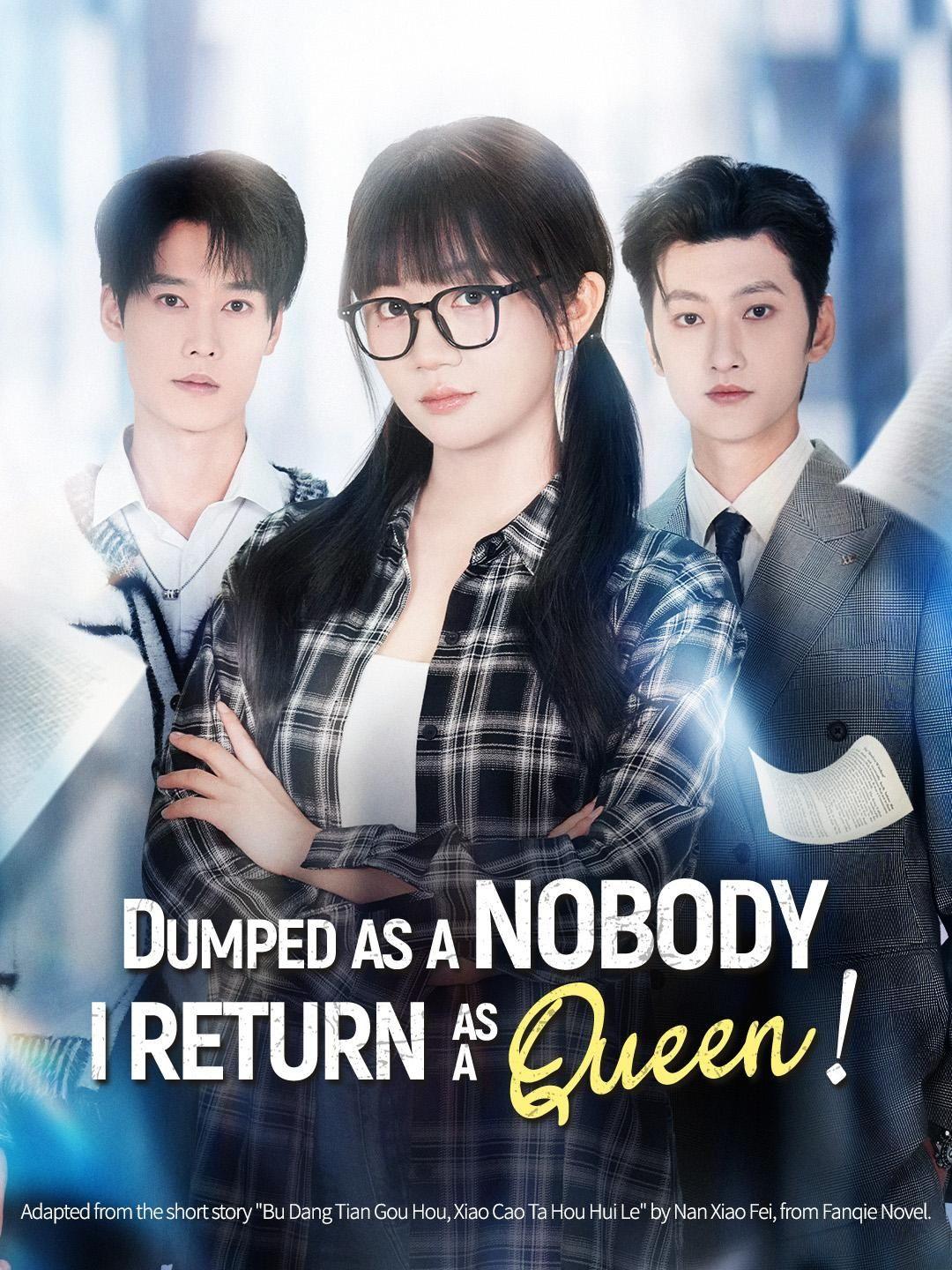
Yolanda Wood, the Duchess of the North, intervenes when her daughter Stella is harassed by Clyde Lee and his uncle, showcasing her authority by confronting General Blaze and asserting her dominance.Will General Blaze side with Yolanda, or will this confrontation escalate into a bigger conflict?


Recommended for you


The Silent Mother: The Couch, the Sword, and the Unspoken Oath
Let’s talk about the couch. Not just any couch—this one, cracked leather, stained armrests, positioned like a throne in the middle of a derelict factory floor, bathed in the sickly glow of a bar counter that shouldn’t exist in this setting but does, defiantly. On it sits Li Xue, one leg crossed over the other, black boots planted firmly, a tanto blade upright between her thighs like a silent vow. She isn’t posing. She isn’t waiting. She’s *occupying*. The space around her contracts, not because she commands it, but because no one dares expand into it. This is the opening thesis of The Silent Mother: authority isn’t declared. It’s assumed—and maintained through stillness. While others rush, stumble, gesticulate, bleed theatrically, Li Xue remains a fixed point in a storm of motion. Her hair is tied back, strands escaping like stray thoughts she’s chosen to ignore. Her coat is immaculate, even as the world around her frays at the edges. That contrast—order amid decay—is the visual motif that defines the entire piece. Enter Zhou Feng and Wang Da, two men whose very presence feels like a malfunction in the narrative’s operating system. Zhou Feng, in his distressed jacket and leopard-print scarf, moves like a man trying to outrun his own guilt. His bloodied mouth isn’t a wound—it’s a costume piece, hastily applied, smudging at the corners when he grins too wide. He touches Wang Da’s shoulder not for comfort, but for leverage, as if borrowing credibility from proximity. Wang Da, bald, floral shirt straining at the buttons, plays the role of the weary boss—but his eyes betray him. They flicker toward the armed men behind him, then back to Li Xue, calculating odds, exit strategies, betrayal probabilities. He speaks in clipped tones, his hands clasped low, fingers interlaced like he’s praying to a god he doesn’t believe in. When he kneels later—not once, but twice—it’s not humility. It’s recalibration. He’s resetting his internal compass after realizing the magnetic north has shifted without warning. The real magic, though, happens in the silences between actions. Watch Li Xue’s hands. When Zhou Feng lunges forward, feigning collapse, her fingers don’t tighten on the sword. They *relax*. A subtle shift, barely perceptible, but it tells you everything: she saw it coming. She allowed it. The sword isn’t her weapon of choice here—it’s her anchor. She uses it to ground herself while the world spins. Later, when Chen Yu arrives—her entrance marked by the soft click of her boots on concrete, the sway of her double-breasted coat, the silver chain belt that looks less like decoration and more like a binding ritual—Li Xue doesn’t stand. She doesn’t nod. She simply turns her head, just enough for their eyes to meet. That exchange lasts half a second. In that half-second, decades of history pass. Alliances are reviewed. Betrayals are forgiven—or filed for later. Chen Yu’s expression never changes, but her posture softens, infinitesimally, as if acknowledging a debt long overdue. This is where The Silent Mother transcends genre: it’s not action. It’s archaeology. Every gesture is a layer of sediment, revealing who held power, who lost it, and who quietly buried the evidence. The armed men—faceless, uniformed, moving in perfect sync—are not guards. They’re punctuation. They exist to emphasize the gravity of what’s unsaid. When they draw their blades in unison, the camera doesn’t linger on the steel. It cuts to Zhou Feng’s face, his pupils dilating, his breath hitching. The threat isn’t in the weapons—it’s in the fact that no one shouted an order. They moved because they *knew*. That’s the hallmark of true hierarchy: obedience without instruction. And yet, even they pause when Chen Yu raises her hand—not in command, but in cessation. The blades lower. Not because she said stop. Because she *was* stop. That’s the core philosophy of The Silent Mother: power isn’t loud. It’s the space between heartbeats where decisions crystallize. What’s fascinating is how the environment mirrors the psychology. The warehouse is half-industrial, half-nightclub—a dissonant blend that reflects the characters’ fractured loyalties. Neon signs buzz overhead, casting colored shadows on grimy walls. A Route 66 sign hangs crookedly, symbolizing paths not taken, roads abandoned. Bottles line the bar, untouched. No one drinks here. This isn’t a place of release. It’s a courtroom with no judge, only witnesses who’ve already cast their votes. When Li Xue finally rises—not abruptly, but with the slow inevitability of tide turning—she doesn’t walk toward Chen Yu. She walks *past* her, toward the center of the room, where the two men stand frozen. She stops a foot away from Zhou Feng. He flinches. She doesn’t touch him. She simply looks down, then up, and says nothing. And in that silence, he breaks. Not crying. Not shouting. He exhales, shoulders collapsing, and whispers something too low to hear—but we see Wang Da’s face twist in recognition. Whatever she didn’t say, he understood. That’s the genius of The Silent Mother: the most devastating lines are the ones never spoken aloud. Later, in the final tableau, Chen Yu stands alone at the front, Li Xue slightly behind her, the armed men forming a loose semicircle—not protective, but ceremonial. Zhou Feng and Wang Da are gone from frame, but their absence is louder than their earlier chaos. The camera pans up to the ceiling, where exposed pipes crisscross like veins, and for a moment, you wonder: who built this place? Who let it decay? Who decided it would become the stage for this particular reckoning? The answer, of course, is no one. Or rather—everyone. The Silent Mother doesn’t need villains. It thrives on complicity. Every character here made choices, however small, that led them to this warehouse, this couch, this sword. Li Xue didn’t rise to power by defeating others. She rose by outlasting their noise. And Chen Yu? She didn’t seize control. She simply stepped into the void left when the shouting stopped. That’s the lesson The Silent Mother leaves us with: in a world drowning in sound, the most revolutionary act is to sit down, hold your weapon loosely, and wait for the truth to come to you—because it always does. Eventually. And when it does, you won’t need to speak. You’ll just need to be ready to listen.
The Silent Mother: When the Sword Rests, the Truth Rises
In a dimly lit industrial warehouse—its concrete pillars scarred by time, its ceiling strung with rusted steel beams and flickering neon signs advertising phantom garages and Route 66 relics—a scene unfolds that feels less like fiction and more like a confession whispered in blood and leather. The air hums with tension, not just from the armed men in black tactical gear who flank every corridor, but from the silence itself—the kind that settles when power shifts without a word. At the center of it all sits Li Xue, her posture deceptively relaxed on a worn leather sofa, one hand resting lightly on the hilt of a tanto blade planted vertically into the floor. Her black trench coat gleams under the bar’s red backlighting, its lapels sharp as judgment; beneath it, camouflage cargo pants and chunky combat boots speak of readiness, not fashion. She doesn’t move much. She doesn’t need to. Every micro-expression—the slight narrowing of her eyes as she watches the two men approach, the faint twitch at the corner of her mouth when the bald man in the tan blazer stumbles mid-sentence—is calibrated precision. This is not a woman waiting for violence. This is a woman who has already decided its terms. The two men—Zhou Feng and Wang Da—enter like characters from a noir comic book gone slightly off-script. Zhou Feng, in his faded gray jacket over a leopard-print shirt, wears fake blood smeared across his lower lip like a clown’s failed attempt at tragedy. His gestures are frantic, theatrical: hands flailing, knees buckling, voice rising then dropping to a wheeze. He clutches his chest as if wounded, though no wound is visible—only the performance of pain. Wang Da, bald, gold chain glinting against his floral-patterned shirt, plays the foil: calm at first, then increasingly unhinged, his laughter too loud, his posture too stiff, his eyes darting between Li Xue and the armed men behind him like a gambler watching the dice roll. Their dynamic isn’t rivalry—it’s codependency. They feed off each other’s panic, their dialogue (though unheard) written plainly in their body language: Zhou Feng pleads, Wang Da negotiates, both ultimately beg. And yet, neither dares raise their voice above a whisper when Li Xue finally lifts her gaze. That moment—when her eyes lock onto theirs—is the pivot of the entire sequence. It’s not fear they feel. It’s recognition. Recognition that they’ve misread the room, the player, the stakes. What makes The Silent Mother so unnerving isn’t the swords or the guns—it’s the absence of noise where noise should be. No dramatic monologues. No last-minute saves. Just Li Xue, seated, still, holding a weapon not as a threat, but as punctuation. When the squad of masked enforcers advances in synchronized formation, their blades drawn, the camera tilts upward—not to glorify them, but to emphasize how small Zhou Feng and Wang Da suddenly appear. One shot lingers on their boots scuffing the concrete, the sound muffled, almost apologetic. Another cuts to Li Xue’s fingers tightening on the sword’s grip—not in aggression, but in confirmation. She knows what comes next. And she’s already moved past it. Then enters Chen Yu. Not with fanfare, but with inevitability. Her entrance is framed from behind, long black coat swaying, silver chain belt catching the light like a restraint turned ornament. Her hair is pulled high, severe, framing a face that carries no anger—only assessment. She walks through the ranks of armed men as if they’re part of the scenery, her pace unhurried, her expression unreadable. When she stops before Li Xue, there’s no greeting. No handshake. Just a shared glance—two women who understand the weight of silence better than most men understand speech. Chen Yu doesn’t speak either. She simply extends her palm, open, waiting. Li Xue, after a beat, places the tanto’s pommel into it. Not surrender. Transfer of authority. The gesture is so quiet, so deliberate, that the surrounding men freeze mid-step. Even Zhou Feng forgets to pantomime injury. For a full three seconds, the warehouse holds its breath. This is where The Silent Mother reveals its true architecture: it’s not about who wields the blade, but who decides when it’s sheathed. Li Xue could have ended Zhou Feng and Wang Da right there. She had the angle, the cover, the support. But she didn’t. Why? Because violence, in this world, is never the end—it’s the punctuation before the real sentence begins. The blood on Zhou Feng’s lip isn’t evidence of defeat; it’s proof he’s still breathing, still useful. The dirt smudges on Wang Da’s blazer aren’t stains—they’re receipts. Every detail in this scene is curated to suggest a hierarchy built not on force, but on information, timing, and the unbearable weight of unspoken consequences. When Wang Da finally drops to one knee—not in submission, but in exhausted realization—and Zhou Feng covers his face with both hands, trembling, it’s not shame they’re hiding from. It’s the dawning horror that they were never the main characters. They were props. Set dressing. A test case. The final wide shot confirms it: Chen Yu stands at the center of the warehouse, flanked by her loyalists, while Li Xue remains seated, now holding a different sword—one sleeker, older, wrapped in black silk. Behind them, the bar glows with false warmth, bottles lined up like trophies no one dares touch. The neon signs blink out one by one, not in defeat, but in deference. The Silent Mother doesn’t roar. It exhales. And in that exhale, empires shift. What’s chilling isn’t the threat of death—it’s the certainty that survival will cost far more. Zhou Feng will live, yes. But he’ll remember the exact shade of Li Xue’s lipstick when she looked away from him. Wang Da will keep his gold chain, but he’ll never wear it the same way again. Power, in The Silent Mother, isn’t taken. It’s inherited—quietly, irrevocably, through the simple act of not speaking when everyone else is screaming. And that, perhaps, is the most dangerous weapon of all.