



Forbidden Love
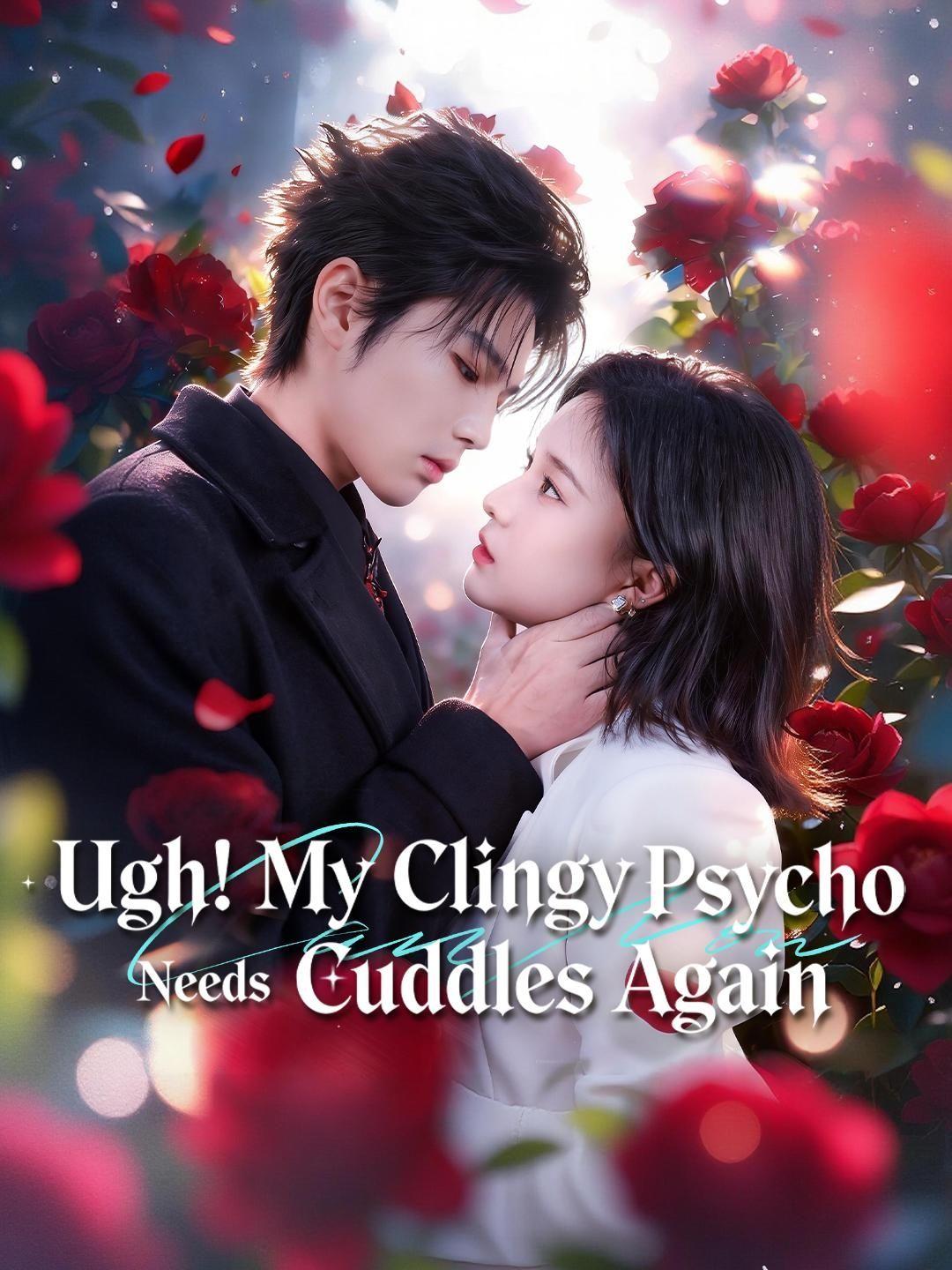
Avery Loo shocks his mother and Jose Koo by declaring his love for Zan Shen, a divorced woman with a child, defying the expectations of their noble families.Will Avery's bold confession tear apart the Loo family's prestigious reputation?


Recommended for you


You Are Loved: When Silence Screams Louder Than Words
If cinema were a language, this sequence from *The Unspoken Agreement* would be written in semicolons and ellipses—pauses that hang heavier than monologues, glances that carry more weight than confessions. We are not watching a family meeting. We are witnessing the slow-motion detonation of a carefully constructed lie, and the four people in that room are both architects and casualties of the blast. The setting—a modern, almost clinical living area with curved architecture and muted tones—feels less like a home and more like a stage set for emotional autopsy. Every object is placed with intention: the calligraphy scroll on the side table (a symbol of tradition), the ceramic figurine held loosely by Jiang Lan (a relic of past innocence), the sheer curtains diffusing daylight into a soft, forgiving haze that does nothing to soften the truth being unearthed. Let’s talk about Lin Mei first—not as a character, but as a force of habit. Her ivory jacket is immaculate, each button aligned like soldiers on parade. Her hair is pulled back with surgical precision, a few silver strands at the temples not signs of age, but of endurance. She holds Xiao Yu’s hands not to comfort, but to *contain*. Watch her fingers: they don’t stroke, they clamp. When Zhou Wei stands, her eyes widen—not with surprise, but with the dawning horror of a chess player realizing the board has been flipped. Her mouth opens, closes, opens again. She’s rehearsed this speech a hundred times in her head, but never with *this* configuration of players. Xiao Yu was supposed to be the compliant daughter, Jiang Lan the forgotten footnote, Zhou Wei the dutiful son-in-law. But now? Now the script has been torn up, and no one handed her a new one. Xiao Yu, for all her designer threads and practiced poise, is trembling inside. You can see it in the slight tremor of her lower lip when Zhou Wei addresses Jiang Lan directly. Her gaze flickers downward—not out of shame, but out of calculation. She’s measuring risk. If she speaks now, she aligns with Lin Mei and loses Zhou Wei. If she stays silent, she betrays her own intuition. Her outfit, though luxurious, feels like armor that’s beginning to crack at the seams. The pearls along her cuffs glint like tiny weapons. When she finally rises, it’s not with defiance, but with resignation—a surrender to inevitability. Her voice, when it comes (we infer from her jawline tightening, her nostrils flaring), is quiet, but it cuts through the room like glass. She doesn’t say ‘I love him.’ She says, ‘I choose him.’ And in that distinction lies the entire tragedy of the scene. Love is passive. Choice is active. And in this family, choice has always been forbidden. Zhou Wei is the quiet earthquake. He wears black like a vow—turtleneck, coat, shoes, all monochrome, as if he’s already mourning something. His glasses reflect the light, obscuring his eyes just enough to keep his intentions ambiguous. But his body tells the truth. When he stands, he doesn’t loom. He *occupies*. He takes up space not to dominate, but to assert presence. His turn toward Jiang Lan is not sudden; it’s inevitable, like gravity pulling a falling leaf to earth. And then—the touch. Not on her hand. Not on her shoulder. On her *wrist*. A place where pulse meets skin, where life is most visibly measured. He doesn’t squeeze. He doesn’t release. He just *holds*. That’s the moment the audience gasps. Because in that contact, we understand: this isn’t about romance. It’s about recognition. He sees her—not as the ‘other woman,’ not as the ‘intruder,’ but as the only person in the room who hasn’t lied to herself. You Are Loved isn’t shouted here. It’s whispered in the pressure of a thumb against a vein. Jiang Lan, the woman in the trench coat, is the emotional anchor of the scene. Her braid is loose, a sign she didn’t prepare for this confrontation. Her jeans peek out beneath the coat—not rebellious, but *real*. She doesn’t wear armor; she wears lived-in clothes. When Zhou Wei approaches, she doesn’t stand. She lets him come to her. That’s power. Not the kind that shouts, but the kind that waits. Her expression shifts subtly across the sequence: from wary neutrality to startled recognition, then to a quiet sorrow that settles deep in her chest. When she finally looks up at Lin Mei—not with anger, but with pity—her eyes say everything: *You built this cage, and you’re the one who can’t find the key.* She doesn’t need to speak to win. Her stillness is her argument. Her refusal to flinch is her testimony. The editing is masterful in its restraint. No dramatic music swells. No quick cuts to heighten tension. Instead, the camera lingers—on Lin Mei’s pearl earring catching the light, on Xiao Yu’s painted nails digging slightly into her own palm, on Zhou Wei’s sleeve brushing Jiang Lan’s coat as he leans in. These are the details that betray the heart. The room itself becomes a character: the circular niche behind them feels like an eye, watching, remembering. The blue pillow beside Xiao Yu is the only splash of color—a reminder that emotion still exists, even in this monochrome standoff. What elevates *The Unspoken Agreement* beyond typical melodrama is its refusal to resolve. The scene ends not with a kiss, not with a slap, but with four people frozen in the aftermath of a truth that cannot be unspoken. Lin Mei’s face is a map of crumbling certainty. Xiao Yu’s shoulders have dropped—not in defeat, but in relief, as if she’s finally allowed herself to stop pretending. Zhou Wei’s gaze is fixed on Jiang Lan, not with desire, but with gratitude. And Jiang Lan? She exhales. Just once. A small, almost imperceptible release of breath that says: *I’m still here. I’m still me.* You Are Loved is not a slogan in this context. It’s a dare. A test. A lifeline thrown across a chasm of years of silence. And the most devastating thing about this scene is that no one says it aloud. They don’t need to. The weight of those three words hangs in the air, thick as the scent of the bonsai tree—alive, persistent, impossible to ignore. Love, in this world, isn’t given. It’s reclaimed. Piece by piece. Breath by breath. Handhold by handhold. And sometimes, the loudest declaration is the one you make by refusing to look away.
You Are Loved: The Silent Tug-of-War in the Living Room
In this tightly framed domestic drama—likely a pivotal scene from the short series *The Unspoken Agreement*—every gesture, every glance, and every pause speaks louder than dialogue ever could. What unfolds is not merely a conversation but a psychological ballet, where power shifts like tectonic plates beneath polished marble floors. Four characters occupy a minimalist, high-end living space: soft white sofas, a circular backlit niche housing a bonsai tree, shelves lined with curated objects that whisper wealth and restraint. The atmosphere is sterile yet charged—like a courtroom where no one has been formally accused, yet everyone feels indicted. Let us begin with Lin Mei, the older woman in the ivory tweed jacket with gold-button detailing—a costume that screams ‘established matriarch’. Her posture is upright, her hands clasped over those of Xiao Yu, the younger woman beside her, whose long wavy hair and pearl-embellished beige suit suggest both elegance and vulnerability. Lin Mei’s grip on Xiao Yu’s hands is not comforting; it is possessive, almost ritualistic—as if she’s anchoring the girl to a version of reality she herself has authored. When Lin Mei speaks (though we hear no words), her mouth moves with practiced precision, her eyebrows lifting just enough to signal disbelief or disappointment. Her pearl earrings catch the light like tiny sentinels, watching, judging. She does not blink often. That’s telling. In human behavior, reduced blinking correlates with cognitive load and emotional suppression. Lin Mei is holding something back—perhaps grief, perhaps fury, perhaps the weight of a secret she’s carried for years. Xiao Yu, meanwhile, is a study in contained collapse. Her eyes dart—not nervously, but strategically—between Lin Mei, the standing man (Zhou Wei), and the seated woman in the trench coat (Jiang Lan). Her lips part slightly when Zhou Wei rises, as if she’s about to interject, but then she swallows the words. That hesitation is critical. It reveals she knows the stakes are higher than mere opinion; this is about legitimacy, inheritance, identity. Her outfit—structured, expensive, yet subtly frayed at the hem of the skirt—mirrors her internal state: polished on the surface, unraveling underneath. When she finally stands, her posture stiffens, her shoulders pulling back as if bracing for impact. You Are Loved, the phrase that haunts this scene like a refrain, feels bitterly ironic here—not a declaration of affection, but a demand for proof. Who loves whom? And more importantly, who is *allowed* to be loved? Zhou Wei, the man in black wool and wire-rimmed glasses, is the fulcrum of this tension. He doesn’t sit for long. His rise is deliberate, unhurried, yet it changes the entire geometry of the room. He doesn’t shout. He doesn’t gesture wildly. He simply *stands*, and the others adjust their breathing accordingly. His gaze is steady, his expression unreadable—not because he lacks emotion, but because he’s mastered the art of withholding it until the precise moment it will do the most damage. When he turns toward Jiang Lan—the woman in the trench coat, whose braid hangs like a rope of unresolved history—his voice (again, unheard but implied by lip movement and micro-expressions) carries a quiet authority. He leans down slightly, not to intimidate, but to *include*. That’s the key. He’s not excluding Lin Mei or Xiao Yu; he’s expanding the circle just enough to let Jiang Lan step into it. And when he reaches for Jiang Lan’s wrist—yes, that close-up shot, fingers wrapping around her forearm, thumb pressing lightly against her pulse point—it’s not aggression. It’s calibration. He’s checking if she’s still there. Still real. Still willing to fight. Jiang Lan, for her part, is the quiet storm. Her trench coat is practical, unadorned—unlike Xiao Yu’s couture or Lin Mei’s ceremonial attire. She wears jeans beneath it, a subtle rebellion against the performative elegance of the room. Her eyes, when they lift to meet Zhou Wei’s, hold no fear, only exhaustion and resolve. She doesn’t pull away from his touch. She doesn’t lean in. She *accepts*. That acceptance is the turning point. Because in this world, where love is conditional and loyalty is transactional, consent—not passion, not declaration—is the rarest currency. When she finally speaks (her mouth forming words we can’t hear but feel in our bones), her voice is low, steady, and laced with a sorrow that has long since hardened into steel. She doesn’t defend herself. She states facts. And in doing so, she dismantles the narrative Lin Mei has spent decades constructing. The camera work reinforces this subtext. Notice how the shots alternate between tight close-ups—Lin Mei’s knuckles whitening as she grips Xiao Yu’s hand, Zhou Wei’s Adam’s apple bobbing as he swallows—and wide angles that emphasize spatial hierarchy. When Lin Mei stands, the frame widens to show her towering over Xiao Yu, but Zhou Wei’s entrance immediately re-balances the composition. The bonsai in the circular niche remains untouched, serene, indifferent—a silent witness to human chaos. The rug beneath them is abstract, blue and gray swirls mimicking storm clouds. Nothing in this room is accidental. What makes *The Unspoken Agreement* so compelling here is its refusal to moralize. There is no clear villain. Lin Mei isn’t evil; she’s terrified—terrified of losing control, of being replaced, of her legacy dissolving like sugar in hot tea. Xiao Yu isn’t weak; she’s trapped between filial duty and self-preservation, her silence a survival tactic. Zhou Wei isn’t heroic; he’s strategic, using empathy as a tool, not a virtue. And Jiang Lan? She’s the ghost who walked back into the house—not to haunt, but to testify. You Are Loved is not a promise in this scene. It’s a question. A challenge. A plea buried under layers of decorum and denial. The final shot—Zhou Wei’s hand still resting on Jiang Lan’s wrist, Lin Mei’s mouth open mid-sentence, Xiao Yu looking down at her own empty hands—freezes time. We don’t know what happens next. Does Lin Mei collapse? Does Xiao Yu speak at last? Does Jiang Lan walk out, or step forward? The ambiguity is the point. Love, in this universe, isn’t found in grand declarations. It’s negotiated in the space between breaths, in the pressure of a hand on a forearm, in the courage to stand when every instinct says sit and suffer quietly. You Are Loved—if you’re willing to earn it, to fight for it, to redefine what it even means. This isn’t romance. It’s revolution, whispered over tea in a room too beautiful to contain the truth.