



Identity Revelation
Julia discovers Grayson's true identity as Mr. Weston, a billionaire, while he reveals he was fired from his job, leaving both in a precarious situation as they contemplate their next steps.Will Julia trust Grayson after learning he's been hiding his true identity?


Recommended for you



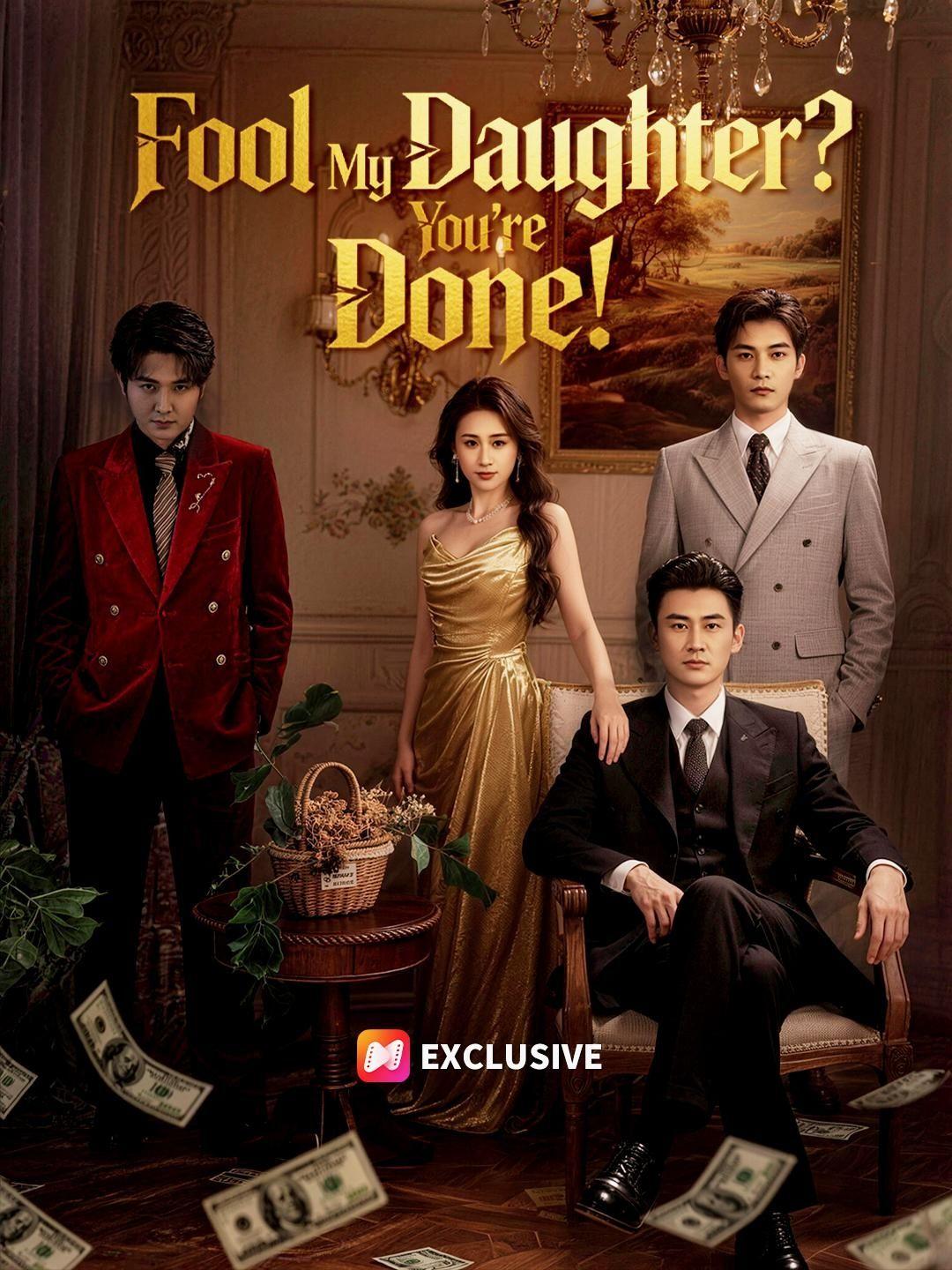

Here comes Mr.Right: When the Fiancé Is a Stranger
Imagine walking down a leaf-strewn street in late autumn, your wedding dress whispering against your legs, your heart beating in time with the distant chime of church bells—and then, a man in a hoodie steps into your path, holding an ID that says *Ryan Carter*. You don’t recognize him. But he knows your name. And suddenly, the world tilts. That’s the opening gambit of *Here Comes Mr. Right*, a short film that weaponizes awkwardness, turns identity into currency, and forces us to confront the terrifying possibility that the person we think we’re marrying might not exist—at least, not in the way we imagined. This isn’t a rom-com. It’s a psychological thriller disguised as a wedding-day mishap, and every frame pulses with the tension of a secret about to detonate. Let’s talk about Ryan Carter—the name, not the man. The ID badge is crisp, laminated, official-looking. The photo shows a younger version of the man in the navy suit, hair neater, smile tighter, eyes less haunted. But the real Ryan Carter doesn’t arrive until the third minute, jogging toward the scene like a man who’s just remembered he left the oven on. His entrance is deliberately anti-climactic: no music swell, no dramatic pause. Just footsteps on asphalt, a slight catch in his breath, and that look—the one people get when they’ve rehearsed a speech but the audience has already changed the rules. He doesn’t shout. He doesn’t accuse. He simply says, “Mr. Weston,” and the air crackles. Because *Mr. Weston*—the man in the hoodie, the man with the lanyard, the man who just introduced himself as Ryan Carter—is now exposed. Not as a criminal, but as a man who ran out of options. The Hoodie Man’s performance is a masterclass in micro-expression. Watch how he touches his nose when questioned—classic stress tell. Notice how his shoulders hunch when the bride speaks, not out of shame, but out of instinctive self-protection. His clothing tells a story too: the hoodie is soft, worn, comforting; the cardigan underneath is structured, almost formal; the lanyard is corporate, alien. He’s trying to straddle three worlds at once—street, office, ceremony—and failing beautifully. When he says, “Didn’t get a chance,” it’s not an excuse. It’s a confession wrapped in resignation. He didn’t lie to hurt her. He lied because he had no other script. And when he admits, “I don’t really have any money,” the words hang in the air like smoke—thick, visible, dangerous. This isn’t poverty porn. It’s realism stripped bare. He’s not asking for sympathy. He’s stating facts, like a weather report: *High chance of eviction. Low chance of employment. Moderate risk of emotional collapse.* The bride—let’s call her *Lena*, though the film never does—is the quiet engine of the piece. Her lace dress is immaculate, her makeup flawless, her posture regal. Yet her eyes tell a different story: they dart, they narrow, they soften, they harden—all within seconds. She doesn’t scream when the truth drops. She *processes*. That’s the genius of *Here Comes Mr. Right*: it trusts its audience to read silence better than dialogue. When she asks, “So, you know Mr. Weston?” her voice is steady, but her fingers tighten on the ID badge. She’s not testing him. She’s testing herself. Can she still believe in love when the foundation is built on sand? Her offer—“You could come and live with me”—isn’t impulsive. It’s deliberate. It’s a lifeline thrown not out of pity, but out of recognition: she sees in him the same fragility she’s tried to bury in herself. And when she adds, “I could arrange a job for you,” it’s not naivety. It’s rebellion. Against Hawkins. Against systems. Against the idea that worth must be earned, not given. Mr. Weston—the actual Ryan Carter’s colleague, the man who *did* come to fire him—adds the final layer of moral ambiguity. He’s not a villain. He’s a functionary. His suit is expensive, his tie perfectly knotted, his demeanor polished to a shine. But his eyes? They’re tired. He’s seen this before. When he asks, “What? You’ve only just found her and you’ve already confessed?” he’s not shocked. He’s disappointed—in the system, in humanity, in the sheer inefficiency of emotional honesty. His line, “Look, don’t worry,” is the most chilling in the film. Because he’s not reassuring the Hoodie Man. He’s reassuring *himself*. He needs this to end cleanly. No drama. No loose ends. Just another file closed, another employee terminated, another identity erased. The setting is crucial. This isn’t a grand estate or a cathedral—it’s a residential street, lined with parked cars and modest brick homes. A red hatchback blurs past in the background, indifferent. A green bicycle leans against a fence, forgotten. These details ground the absurdity in reality. This could happen anywhere. To anyone. The wedding venue is visible in the distance—a white building with arched windows—but it feels miles away. The real ceremony isn’t happening inside. It’s happening right here, on the pavement, among fallen leaves and unspoken truths. *Here Comes Mr. Right* isn’t about the wedding. It’s about the moment *before* the vows, when everything is still negotiable. What makes this short unforgettable is its refusal to moralize. It doesn’t tell us whether the Hoodie Man is right or wrong. It shows us how easy it is to become someone else when the world gives you no room to be yourself. Ryan Carter’s ID isn’t stolen—it’s *borrowed*, like a coat on a cold day. And Lena doesn’t reject him. She redefines what “fiancé” means. Not a title. Not a role. A choice. Every time she looks at him—not with suspicion, but with curiosity—she’s rewriting the script. And when the Hoodie Man finally walks away, sunglasses in hand, the camera lingers on his back, not his face. We don’t see his expression. We don’t need to. The weight of what he’s carrying is visible in the slump of his shoulders, the hesitation in his step. *Here Comes Mr. Right* succeeds because it understands that the most dramatic moments aren’t the explosions—they’re the silences after the bomb drops. The pause before the answer. The breath before the lie. The glance that says more than a monologue ever could. It’s a film about identity theft, yes—but not of documents. Of hope. Of future. Of the self we present to the world versus the one we’re trying to become. And in the end, when Lena watches him disappear down the street, her expression isn’t sadness. It’s resolve. She’s not waiting for Mr. Right to arrive. She’s becoming him. *Here Comes Mr. Right*—except he’s not coming. He’s already here. And he’s wearing someone else’s name.
Here comes Mr.Right: The Identity Swap at the Wedding Gate
There’s something deeply unsettling—and yet irresistibly magnetic—about watching a man walk into a wedding venue wearing someone else’s ID badge, only to be intercepted by the very person he’s impersonating. That’s the precise moment where *Here Comes Mr. Right* stops being just another romantic short film and becomes a psychological tightrope walk between deception, desperation, and unexpected grace. Ryan Carter—the name on the laminated badge, the face in the grainy photo—is not the man standing before the bride in the white lace gown. He’s not even close. The real Ryan Carter, dressed in a navy suit with a slightly rumpled tie and eyes that flicker between guilt and resolve, arrives mid-scene like a deus ex machina who forgot to bring his script. And yet, instead of confrontation, what unfolds is a quiet unraveling of identity, class, and the fragile scaffolding of trust. Let’s begin with the visual language. The autumn street—golden leaves drifting like forgotten promises, brick walls softened by ivy, a black sedan parked like a silent witness—sets the tone: this isn’t a grand tragedy, but a small, intimate crisis unfolding in broad daylight. The bride, whose name we never learn but whose presence dominates every frame she occupies, wears a dress that whispers elegance but screams vulnerability. Her lace sleeves are delicate, her posture poised, yet her eyes betray a woman who has spent too long waiting for someone to show up—not just at the altar, but in her life. When she lifts the ID badge, her fingers tremble just enough to register as human, not performative. She doesn’t scream or cry; she simply states, “I thought your name was Ryan Carter.” That line, delivered with calm disbelief, lands harder than any accusation. It’s not anger—it’s the dawning horror of realizing you’ve been speaking to a ghost wearing a borrowed face. The impostor—let’s call him *the Hoodie Man*, since that’s how he introduces himself to the world (and to us)—is played with astonishing nuance. His outfit is a study in contradictions: a brown ribbed cardigan under a gray sleeveless hoodie, a blue lanyard dangling like a misplaced school badge, a silver ring on his right hand that looks both sentimental and suspiciously new. He fidgets. He glances over his shoulder. He touches his nose when lying—or perhaps when remembering how to lie. His confession isn’t theatrical; it’s halting, fragmented, almost apologetic: “No, he was just here to fire me.” Not “I stole his identity,” not “I’m a con artist”—just a raw admission of economic collapse. He’s not trying to seduce her. He’s trying to survive. And that’s what makes *Here Comes Mr. Right* so devastatingly modern: the villain isn’t evil. He’s broke. He’s scared. He’s holding sunglasses like a shield, and when he finally puts them on, it’s not to look cool—it’s to hide the fact that he’s about to cry. Then there’s Mr. Weston—the man in the suit who arrives like a storm front. His entrance is cinematic in its restraint: no music swells, no slow-mo stride. He just walks, hands in pockets, jaw set, eyes scanning the scene like a security analyst assessing threat levels. His dialogue is sparse but lethal: “You didn’t tell her who you really are?” He doesn’t yell. He doesn’t gesture. He simply states the obvious, and in doing so, exposes the entire charade. What’s fascinating is how the camera treats him—not as the hero, but as the disruptor. He’s not here to save the day; he’s here to enforce reality. And yet, when the Hoodie Man mutters, “I’ve got a fiancée now,” Weston’s expression shifts—not with triumph, but with something closer to pity. He knows the weight of that lie. He’s seen it before. In that split second, *Here Comes Mr. Right* reveals its true theme: not romance, but the unbearable lightness of pretending. The bride’s reaction is the emotional core. She doesn’t run. She doesn’t slap anyone. She stands still, absorbing the information like a sponge soaking up rainwater—slow, inevitable, total. Her question—“How can someone that works for Hawkins be trustworthy?”—isn’t rhetorical. It’s existential. Hawkins, the corporate giant looming in the background like a shadow over every conversation, represents a world where loyalty is transactional and identity is fungible. To work for Hawkins is to wear a mask daily; to be fired by them is to lose not just income, but selfhood. When she offers, “You could come and live with me,” it’s not charity. It’s an act of radical empathy—a refusal to let the system define his worth. And when she adds, “I could arrange a job for you,” the irony is thick enough to choke on. She’s offering what the system denied him: dignity through connection, not contract. What elevates *Here Comes Mr. Right* beyond cliché is its refusal to resolve neatly. There’s no last-minute wedding cancellation, no dramatic kiss, no villainous reveal. The Hoodie Man walks away—not defeated, but changed. His final line—“I’m not really sure what to do here”—is the most honest thing spoken in the entire sequence. He’s not a hero. He’s not a villain. He’s a man caught between two lives, neither of which feels like his own. And the bride? She watches him go, not with relief, but with quiet determination. She’s not waiting for a savior. She’s becoming one. The cinematography reinforces this ambiguity. Close-ups linger on hands—the bride’s manicured nails gripping the ID, the Hoodie Man’s knuckles whitening around his sunglasses, Weston’s fingers tapping restlessly against his thigh. These aren’t gestures of power; they’re symptoms of anxiety. The background remains softly blurred, but the cars, the trees, the brickwork—they’re all real, grounding the surreal encounter in tangible space. Even the lighting feels intentional: golden hour, yes, but with a cool undertone, as if the warmth is fading, and winter is coming. *Here Comes Mr. Right* doesn’t ask whether love conquers all. It asks whether truth can survive rent payments. It doesn’t romanticize deception; it dissects it, layer by layer, until we see the desperation beneath the lie. Ryan Carter’s ID badge isn’t just a prop—it’s a symbol of how easily identity can be outsourced, how quickly we accept surfaces as substance. And when the Hoodie Man finally looks directly at the camera—yes, *at us*—in that final shot, his expression isn’t pleading. It’s questioning. Who are you, watching this? Would you have done the same? Would you have believed him? This is why the short stays with you. It’s not about weddings or suits or even lies. It’s about the moment you realize the person standing in front of you isn’t who you thought—and deciding, anyway, to see them. *Here Comes Mr. Right* isn’t arriving with fanfare. He’s stumbling in late, out of breath, holding someone else’s name tag, and hoping, just hoping, that someone will still let him stay.
Fiancée? More Like Fiasco
When Ryan drops ‘I’ve got a fiancée now’ like it’s a casual weather update? Brutal. The way Mr. Weston watches him—half amused, half pitying—is pure cinematic gold. Here comes Mr. Right… but nobody told him the script changed mid-scene. 🎬🔥
The ID That Started It All
Ryan Carter’s lanyard isn’t just a prop—it’s the detonator. One glance, one misheard name, and the whole wedding-day facade cracks. The tension between his panic and her quiet disbelief? Chef’s kiss. Here comes Mr. Right—except he’s already running late. 😅