



The Mysterious Order
James, struggling with financial difficulties, is surprised by his wife's concern about his rented suit and their strained financial situation. Meanwhile, Mr. Hamilton delivers a mysterious order to take care of a new employee, Liana Miller, hinting at a deeper connection or hidden agenda.Why is Mr. Hamilton so invested in Liana Miller's well-being?


Recommended for you



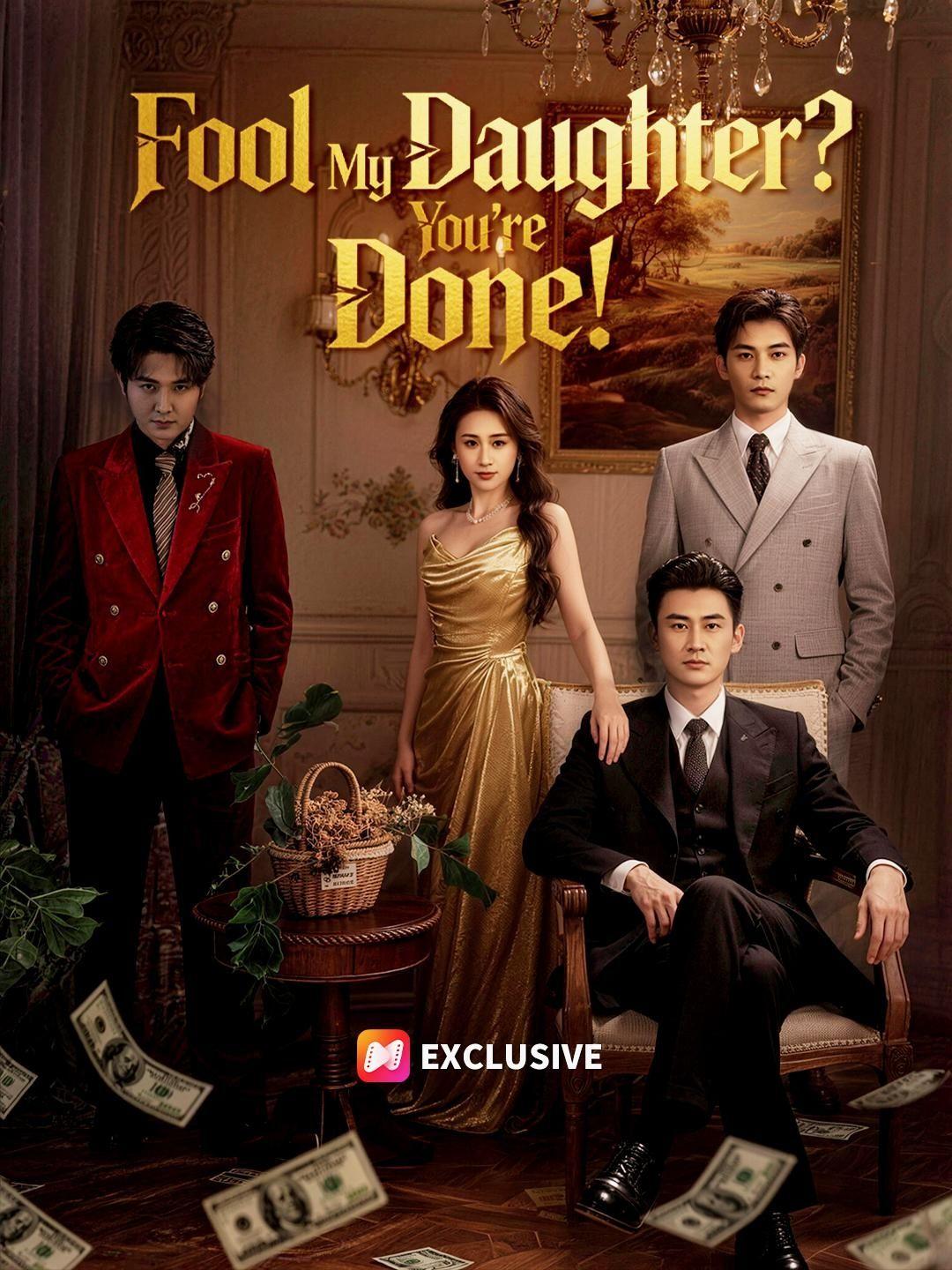
Runaway Billionaire Becomes My Groom: When the Heir Walks Out, the Truth Walks In
Let’s talk about the moment James Hamilton leaves—not just the office, but the narrative he’s been constructing for himself. He doesn’t slam the door. He doesn’t mutter excuses. He simply turns, smiles faintly at Liana, and says, ‘I have to get back to work.’ It’s such a banal phrase, so utterly corporate, that it lands like a punch to the gut. Because we all know: he’s not going back to work. He’s going back to the lie. And that’s what makes *Runaway Billionaire Becomes My Groom* so devastatingly human—it doesn’t villainize James. It *pities* him. He’s not evil. He’s terrified. Terrified that without the suit, without the title, without the curated image of the self-made heir, he’ll be nothing. And Liana knows it. That’s why her confrontation isn’t loud. It’s quiet. Intimate. She stands close enough to smell his cologne—something expensive, probably Italian—and instead of recoiling, she reaches for his lapel. Not to push him away. To *anchor* him. Her question—‘Where’d you get it?’—isn’t about the suit. It’s about the story behind it. She’s asking: Who are you now? And when he admits, ‘I rented it,’ the silence that follows isn’t judgmental. It’s mournful. Like watching someone remove their own mask in slow motion. What’s fascinating is how the film uses space to mirror this internal collapse. The entrance scene—glass doors, woven mat, soft lighting—feels like a stage set. But once Liana steps outside with him, the world opens up: trees, parked cars, a sign that reads ‘HOUSE OF…’ (cut off, deliberately). The unfinished sign mirrors James’s unfinished identity. He’s still building himself, still assembling the pieces, and Liana is the only one who sees the scaffolding. Her line—‘I’m the reason we’re in this situation’—isn’t self-flagellation. It’s ownership. She’s claiming responsibility for the rupture, not because she caused it, but because she refuses to let him off the hook. She won’t let him disappear into the role of ‘the heir.’ She demands he remain *James*. And that’s the central thesis of *Runaway Billionaire Becomes My Groom*: legacy isn’t inherited. It’s negotiated. Every generation must renegotiate what it means to belong, to succeed, to love. James thinks he’s stepping into his father’s shoes. But Liana reminds him: shoes can be rented. Character can’t. Later, when Grant Warner enters—flustered, disheveled, holding his jacket like a child holding a blanket—the tonal shift is masterful. He’s not the antagonist. He’s the counterpoint. Where James performs competence, Grant embodies humility. Where James avoids eye contact, Grant stares directly into the void of uncertainty. And when he asks, ‘Where’s the Hamilton heir?’ it’s not sarcasm. It’s genuine confusion. Because to Grant, ‘heir’ isn’t a title. It’s a responsibility. A burden. A promise. And James just walked out on it. The real kicker? The man in the blue suit—the one who stays behind, who calmly informs Grant that ‘Mr. Hamilton said to take good care of her’—isn’t a rival. He’s a mirror. He’s what James could be if he stopped pretending. His smile isn’t smug. It’s sad. He knows the cost of loyalty in a world that rewards performance over presence. And when he adds, ‘Your job is on the line,’ it’s not a threat. It’s a warning. A plea. Because in *Runaway Billionaire Becomes My Groom*, the most dangerous thing isn’t losing money. It’s losing yourself in the process of becoming someone else. Liana doesn’t need financial assistance. She needs honesty. She needs James to stop renting his life and start living it—even if it’s messy, even if it’s broke, even if it’s just her and him and a shared coffee cup in a dingy apartment. The suit was never the problem. The refusal to be seen was. And as James walks away, phone pressed to his ear, the camera catches his reflection in the glass door—not the man in the suit, but the boy beneath, wide-eyed and afraid, wondering if he’ll ever be enough. That’s the haunting beauty of *Runaway Billionaire Becomes My Groom*: it doesn’t give us a happy ending. It gives us a *possible* one. And sometimes, that’s all we deserve.
Runaway Billionaire Becomes My Groom: The Suit That Unraveled Everything
There’s a quiet kind of devastation in the way Liana Miller touches the lapel of James Hamilton’s rented suit—not with admiration, but with the practiced precision of someone who knows fabric like a surgeon knows anatomy. She doesn’t just *see* the suit; she dissects it. Her fingers trace the seam, her eyes narrow at the lining, and in that moment, the entire illusion of James’s polished executive persona begins to fray at the edges. This isn’t just a fashion critique—it’s an interrogation. And what makes *Runaway Billionaire Becomes My Groom* so compelling is how it weaponizes class anxiety through something as mundane as a blazer. Liana, in her brown cable-knit vest and pearl necklace—preppy, earnest, painfully sincere—isn’t jealous. She’s *grieved*. She’s mourning the version of James she thought she knew: the college buddy who borrowed textbooks, not tuxedos. When she says, ‘I can’t even afford to make ends meet,’ it’s not a plea for sympathy—it’s a declaration of moral bankruptcy. She’s not accusing him of lying; she’s accusing him of *betrayal*, of choosing spectacle over substance, of letting his ambition eclipse their shared history. And yet—here’s the genius of the scene—James doesn’t flinch. He smiles. Not defensively, not arrogantly, but with the weary grace of a man who’s already accepted his own hypocrisy. His ‘I’ll do better’ isn’t a promise; it’s a surrender. He knows he’s been caught, and worse—he knows she’s right. The real tragedy isn’t that he rented the suit. It’s that he thought it would fool her. Because Liana doesn’t care about the brand. She cares about the man who used to eat ramen in her dorm room and still call her ‘Li.’ The office setting—clean, minimalist, glass-walled—only amplifies the emotional claustrophobia. There’s no place to hide here. Every gesture is visible, every micro-expression magnified. When she finally says, ‘Get out of here,’ it’s not anger. It’s exhaustion. She’s done performing forgiveness. And when James turns away, the camera lingers on his back—not his face—as if to say: the damage is already done. He walks out, but he doesn’t leave. Not really. Because minutes later, we see him on the phone, calling *her* name—‘James?’—as if testing whether the identity still fits. That’s the core tension of *Runaway Billionaire Becomes My Groom*: identity isn’t inherited or earned. It’s *rented*, and sometimes, the lease expires before you’re ready to return the keys. The irony? The very suit that was meant to signal his arrival into power becomes the evidence of his moral eviction. Liana sees through it because she remembers the boy who didn’t need armor to feel worthy. And that memory—that unvarnished truth—is the one thing James can’t afford to replace. Later, when Grant Warner bursts into the office, tie askew, hair in a messy bun, clutching a jacket like a shield, the contrast is brutal. He’s not polished. He’s *real*. And yet, he’s the one who asks, ‘Speak freely.’ Not James. Not the heir. The General Manager—the man who still wears his shirt sleeves rolled up, who hasn’t forgotten how to apologize. That’s where the show pivots: from performance to accountability. Because *Runaway Billionaire Becomes My Groom* isn’t about wealth. It’s about who gets to define worth. Is it the man in the rented suit, or the woman who knows the price tag by heart? The answer, whispered in every glance, every hesitation, every unspoken apology, is clear: authenticity doesn’t come in a dry-clean bag. It comes with wrinkles, with stains, with the courage to say, ‘I’m sorry,’ without a script. And James? He’s still learning how to wear that.