



Money or Love?
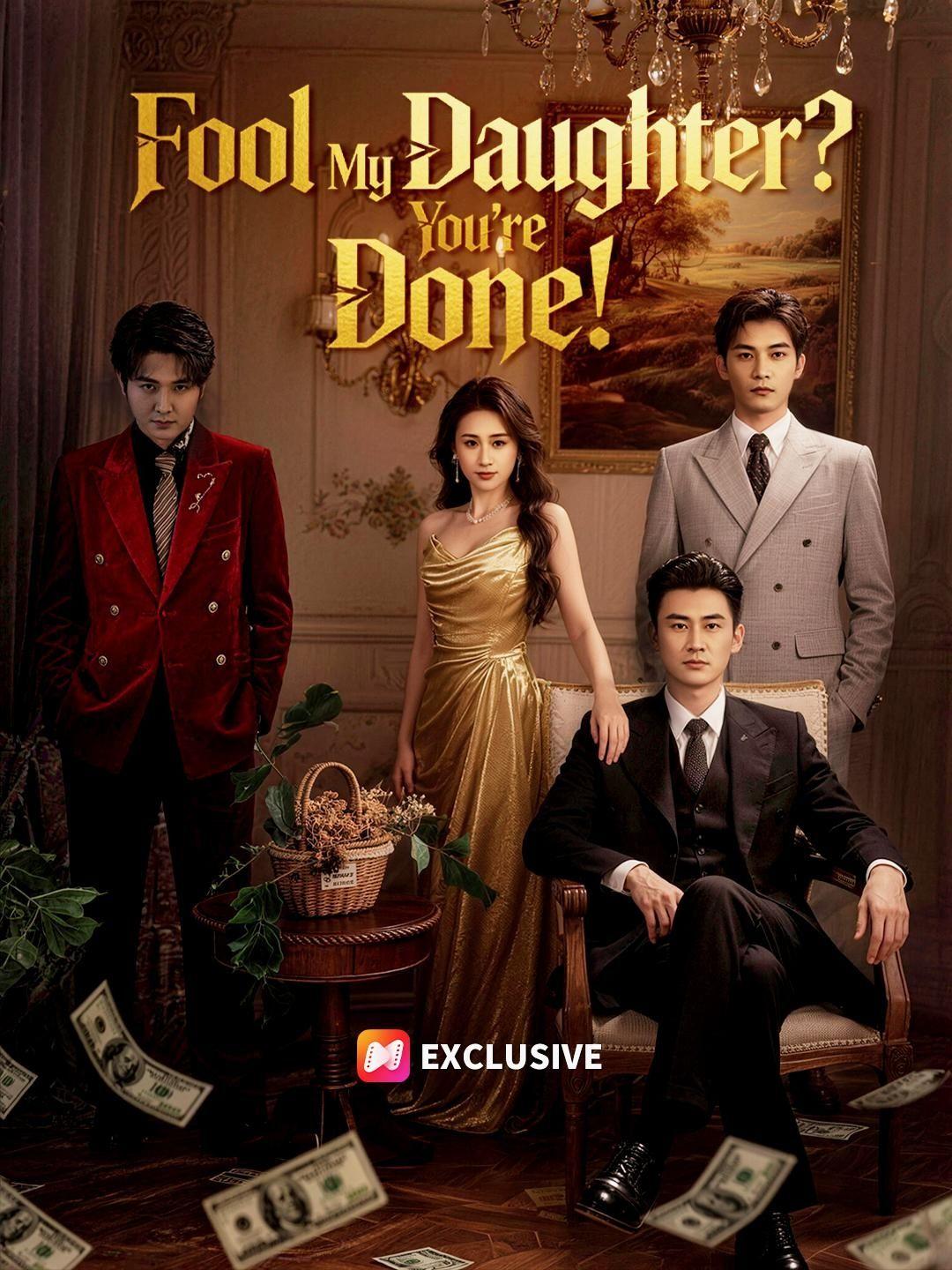
Liana faces accusations of marrying Jacob for his money from his family, who threaten her and plot to reveal the 'truth' to Jacob, escalating tensions between her and the Hamilton family.Will Jacob's family succeed in driving a wedge between him and Liana?


Recommended for you



Runaway Billionaire Becomes My Groom: When 'Orphan' Becomes a Weapon
The phrase ‘fifty million for an orphan’ doesn’t just land—it detonates. Spoken by Eleanor Hamilton in the opulent foyer of the Hamilton estate, it’s delivered not as a question, but as an accusation wrapped in disbelief. And it’s this single line that crystallizes the central moral rot of *Runaway Billionaire Becomes My Groom*: the way wealth distorts empathy, turning human dignity into a negotiable line item. Eleanor, still in her black lace jumpsuit, hands on hips, eyes narrowed like a hawk spotting prey, utters those words with chilling casualness—as if Olivia’s origins were a flaw in a diamond appraisal. But what’s remarkable isn’t just the cruelty of the statement; it’s how quickly Isabella, standing beside her in that rich burgundy gown, leans in and *agrees*. ‘Fifty million isn’t enough for her,’ she adds, voice smooth as poisoned honey. In that moment, the two women aren’t mother and daughter-in-law. They’re co-owners of a worldview where love is leveraged, lineage is currency, and vulnerability is leverage. Let’s unpack the staging. The setting is no accident: a grand staircase with wrought-iron balusters, marble steps polished to mirror-like sheen, sunlight filtering through tall arched windows. This isn’t a home—it’s a monument. And within it, Olivia is the only person who doesn’t belong to the architecture. She wears beige trousers and a blue top that reads ‘approachable,’ not ‘intimidating.’ Yet she’s the one who holds the moral high ground—not because she’s perfect, but because she refuses to play the game on their terms. When Eleanor threatens, ‘I will make sure you regret it,’ Olivia doesn’t flinch. She doesn’t counter with threats of her own. She simply says, ‘I don’t know why you think so low of me. I have nothing to hide.’ That line isn’t naive. It’s radical. In a world where everyone is hiding *something*—inheritance clauses, prenups, secret trusts—Olivia’s transparency is her weapon. And it unnerves them. The dynamic between Eleanor and Isabella is where the episode truly shines. At first glance, Isabella seems like the loyal acolyte—standing silently, nodding, echoing Eleanor’s disdain. But watch closely: when Eleanor calls Olivia ‘stubborn as a mule,’ Isabella’s lips twitch—not in amusement, but in calculation. She’s not just agreeing; she’s *testing*. And when she finally leans in to whisper her ‘idea,’ the camera lingers on Eleanor’s face as it shifts from irritation to dawning realization. That’s the pivot. That’s where the plot fractures open. Because Isabella doesn’t suggest hiring a PI or leaking rumors. She suggests something far more insidious: manipulating perception. She implies that Olivia’s confidence isn’t virtue—it’s manipulation. That her refusal of money isn’t integrity—it’s greed disguised as purity. And in doing so, she reframes the entire narrative. Suddenly, Olivia isn’t the victim of elitism; she’s the architect of her own downfall. This is the genius of *Runaway Billionaire Becomes My Groom*: it understands that in high-society dramas, the real violence isn’t physical—it’s linguistic. Words are deployed like landmines. ‘Orphan’ isn’t just a descriptor; it’s a label meant to isolate. ‘Underhanded tactics’ isn’t a critique of behavior; it’s a denial of legitimacy. And ‘daughter-in-law’—when Eleanor spits it out, ‘No one… besides Olivia… will ever become my daughter-in-law’—isn’t a title. It’s a curse. It’s the sound of a door slamming shut, not just on a relationship, but on possibility itself. What’s especially compelling is how the show handles Olivia’s silence after the confrontation. She doesn’t rant. She doesn’t call Jacob. She simply stands, breathing, as the echo of Eleanor’s final threat—‘It’s not going to be a picnic’—hangs in the air. And in that silence, we see her processing not anger, but strategy. Because Olivia knows something the Hamiltons don’t: their power is brittle. It relies on consensus, on appearances, on the assumption that everyone plays by their rules. But Olivia? She’s already rewritten the rules. She returned the card. She refused the payout. She named the game for what it is. And now, as Isabella whispers her plan and Eleanor nods with grim satisfaction, we sense the shift: the hunters have become the hunted—not because Olivia struck first, but because she refused to run. The visual storytelling reinforces this subtext. When Eleanor and Isabella walk away, the camera follows them down the stairs—not from behind, but from below, making them loom larger, more imposing. Yet when Olivia is shown alone, the shot is level, intimate, almost tender. The lighting softens around her. The music—minimal, piano-based—doesn’t swell with drama; it hums with quiet resolve. This isn’t a heroine preparing for battle. It’s a woman realizing she’s already won the only war that matters: the one inside her own mind. And let’s not overlook the symbolism of the credit card. It’s not just money. It’s a symbol of transactional love—the idea that affection can be quantified, that loyalty has a price tag. By placing it on the sofa and then handing it back, Olivia performs a ritual of rejection. She’s not refusing wealth; she’s rejecting the premise that she needs to be *bought* to be accepted. In a series titled *Runaway Billionaire Becomes My Groom*, that act is revolutionary. Because Jacob isn’t the runaway—he’s the captive. Trapped by expectation, by legacy, by his mother’s iron grip. Olivia? She’s the one who walked away from the script. And in doing so, she forced the Hamiltons to reveal their true selves: not aristocrats, but accountants of the soul. The episode ends not with a bang, but with a whisper—and that whisper is Isabella’s idea. We don’t hear it. We don’t need to. The look on Eleanor’s face says it all: this isn’t over. It’s escalating. And the most terrifying part? Olivia still doesn’t know what’s coming. She thinks she’s standing her ground. She doesn’t realize she’s already stepped into a trap woven from her own honesty. That’s the cruel irony of *Runaway Billionaire Becomes My Groom*: the more truthful you are in a world built on lies, the more dangerous you become. And Olivia? She’s becoming very dangerous indeed.
Runaway Billionaire Becomes My Groom: The Credit Card That Started a War
In the latest episode of *Runaway Billionaire Becomes My Groom*, what begins as a quiet domestic confrontation escalates into a full-blown psychological siege—centered not around grand gestures or explosive revelations, but a single, unassuming credit card left on a floral-patterned sofa cushion. The scene opens with Olivia, dressed in soft sky-blue, her hair cascading in gentle waves, her pearl choker catching the daylight like a subtle armor. She speaks with calm defiance, her voice steady even as her eyes flicker with something deeper—resignation? Resolve? It’s hard to tell, because Olivia doesn’t shout. She doesn’t cry. She simply states: ‘I won’t take a dime.’ And in that moment, the entire power structure of the Hamilton household trembles. The camera lingers on her hands as she retrieves the card—not from her purse, but from the pocket of her beige trousers, as if it had been placed there deliberately, almost ceremonially. This isn’t an accident. It’s a declaration. A refusal to be bought, bribed, or erased. The card itself is purple, glossy, bearing the logo of a high-end private bank—its presence alone a provocation. When she presents it to Eleanor Hamilton, the matriarch’s face tightens like a fist clenching around a knife. Eleanor, draped in black lace and layered gold chains, stands with her hands planted on her hips, posture rigid, jaw set. Her words drip with condescension: ‘You’re the first to use such underhanded… tactics and shady moves.’ But here’s the irony—Eleanor’s outrage isn’t about ethics. It’s about control. She’s not angry that Olivia has a card; she’s furious that Olivia *chose* to reveal it. That she dared to stand in her own truth, unapologetically. What makes this sequence so gripping is how tightly the film choreographs silence and gesture. Olivia never raises her voice, yet her stillness radiates authority. Meanwhile, Eleanor’s physicality betrays her panic—her fingers twitch near her ring, her breath hitches just slightly when Olivia says, ‘If Jacob wants a divorce, he can come talk to me himself.’ That line lands like a gavel. It strips away the intermediaries—the lawyers, the family advisors, the social expectations—and returns agency to the person who’s been treated as a pawn. The camera cuts between their faces, each shot calibrated to emphasize the asymmetry of their positions: Olivia seated, grounded, centered; Eleanor standing, looming, but somehow off-balance. Then comes the exit. Not a storm-out, but a slow, deliberate departure. Eleanor turns, her ponytail swinging like a pendulum marking time, and walks toward the door—followed by Isabella, the younger woman in deep burgundy silk, whose expression shifts from judgment to calculation. Isabella watches Olivia with the intensity of someone recalibrating strategy. She’s not just a sidekick; she’s a co-conspirator, and her loyalty to Eleanor feels transactional, not emotional. As they leave, the door clicks shut behind them, and Olivia remains—alone, but not defeated. She exhales, just once, and the camera pulls back to show her full figure: blue top, cream trousers, bare arms, no jewelry except that delicate pearl strand. She looks less like a bride-to-be and more like a sovereign reclaiming her throne. Later, outside the mansion, the tension shifts gears entirely. Eleanor and Isabella descend the ornate marble staircase, iron railings curling like serpents around their descent. Here, the tone changes from confrontation to conspiracy. Isabella whispers something—her lips barely moving, her hand hovering near Eleanor’s ear like a secret being passed through bloodlines. Eleanor’s expression transforms: from fury to intrigue, then to a slow, dangerous smile. ‘You’re right,’ she murmurs. ‘That’ll work.’ The implication hangs thick in the air. Whatever plan Isabella proposed, it’s not legal. It’s not moral. It’s *effective*. And in the world of *Runaway Billionaire Becomes My Groom*, effectiveness trumps everything—even legacy. This episode masterfully uses domestic space as a battlefield. The living room, with its muted tones and tasteful decor, becomes a courtroom where testimony is given not in legalese, but in glances, pauses, and the weight of unsaid things. The floral sofa isn’t just furniture—it’s a stage. The wooden front door isn’t just an exit—it’s a threshold between two realities: one where Olivia is tolerated, and another where she’s feared. And the credit card? It’s not money. It’s proof. Proof that she’s been watching. Proof that she knows the system. Proof, perhaps, that she’s already built her own exit ramp. What’s most fascinating is how the show refuses to villainize Olivia—or sanctify her. She’s not a saint. She’s not a schemer. She’s a woman who’s been handed a script she didn’t write, and she’s quietly tearing out pages one by one. When she says, ‘I have nothing to hide,’ it’s not bravado. It’s exhaustion. It’s the weariness of being constantly suspected, constantly measured against impossible standards. And yet—she stands. She speaks. She leaves the card on the couch like a signature at the bottom of a contract she never signed. *Runaway Billionaire Becomes My Groom* continues to excel in its restraint. There are no car chases, no dramatic confrontations in rain-soaked parking lots. The drama unfolds in the space between sentences, in the way Eleanor’s knuckles whiten when she grips her handbag, in the way Isabella’s earrings catch the light as she tilts her head, assessing. This is elite warfare—fought with syntax, silences, and strategic withdrawals. And as the episode closes with Olivia standing alone in the sunlit foyer, the camera holding on her face as she blinks once, slowly, we realize: the real battle hasn’t even begun. The Hamiltons think they’re protecting their dynasty. But Olivia? She’s already building her own.