



The Grand Opening Showdown
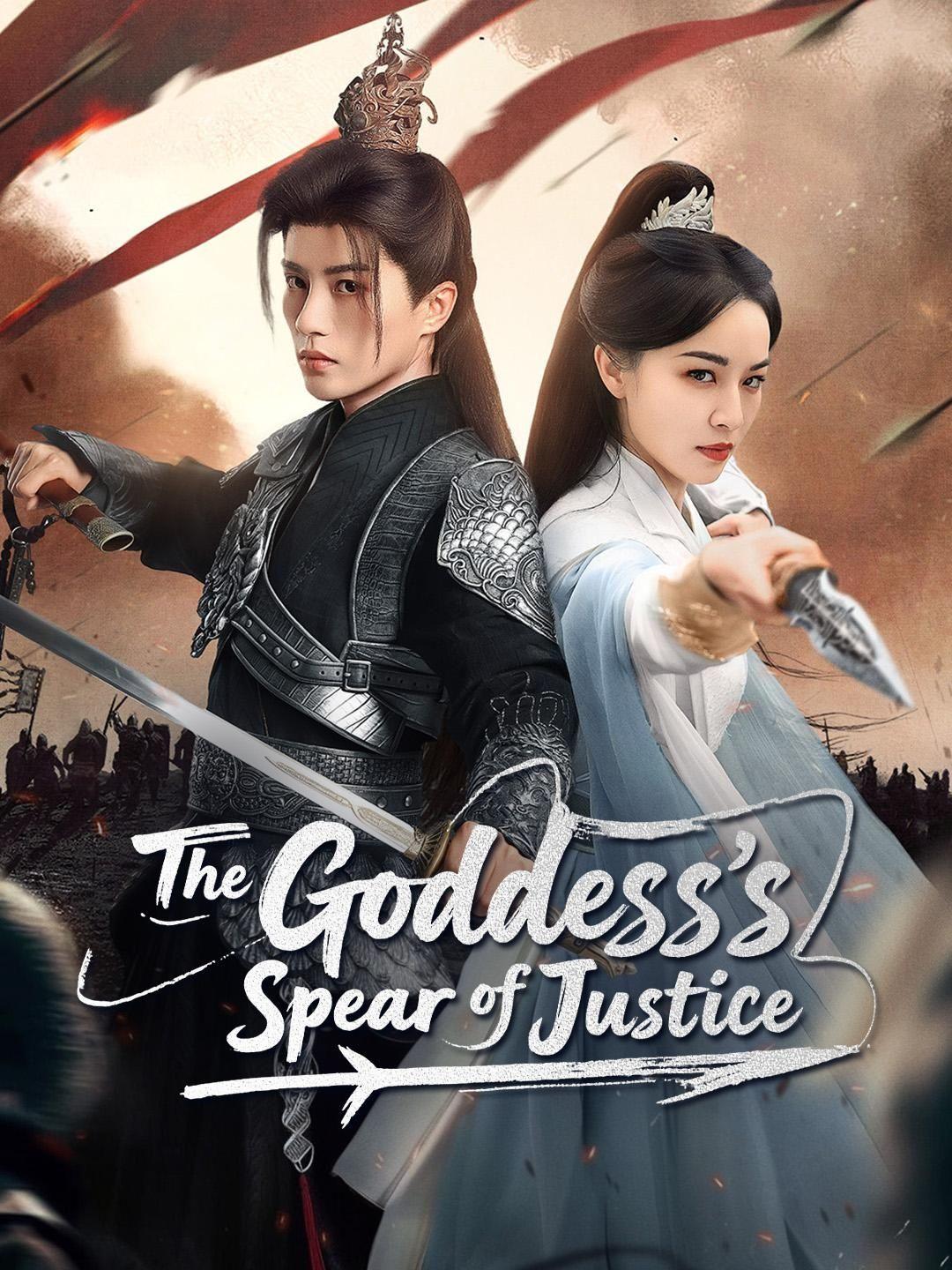
Vincent Lee's impulsive actions against the House of Lew spark tensions, but he remains defiant as the grand opening of the Seven Stars Building approaches. With the House of Sung's support, they prepare for potential trouble from the House of Lew, setting the stage for a major confrontation.Will the House of Lew's threats disrupt the grand opening of the Seven Stars Building?


Recommended for you


The Imperial Preceptor's Emergence: When Silence Speaks Louder Than Words
There’s a particular kind of silence that doesn’t feel empty—it feels loaded. Like the air before lightning strikes. In the latest episode of The Imperial Preceptor's Emergence, that silence isn’t just present; it’s the main character. Li Wei sits in his chair, posture relaxed but muscles coiled, fingers tapping once—then stopping—as Shen Yanyu enters the frame. She doesn’t announce herself. She doesn’t need to. The rustle of her satin dress against the wooden desk is louder than any greeting. The camera holds on her profile as she pauses, lips parted slightly, eyes fixed on him with an intensity that suggests she’s not seeing the man in front of her, but the version of him she remembers from three years ago—before the promotion, before the betrayal, before the silence that settled between them like dust on unused shelves. Her earrings catch the light: small ruby studs, matching the hue of her dress, matching the color of the wound neither has named aloud. What follows is less a conversation and more a choreographed duel of restraint. Shen Yanyu leans on the desk, one hip cocked, her weight distributed in a way that suggests confidence—but her left hand trembles, just once, when she reaches for a pen and doesn’t pick it up. Li Wei notices. Of course he does. He always notices. His gaze flickers downward, then back up, and for a split second, his expression cracks—not into anger, not into sorrow, but into something rawer: recognition. He sees her fear. He sees her hope. And he hates himself for seeing it. The office around them is meticulously curated: a blue flower-shaped clock ticks softly, a framed photo of a team outing sits slightly crooked, a bottle of hand sanitizer stands sentinel beside a stack of legal briefs. None of it matters. What matters is the space between them—measured in inches, in breaths, in the way her foot shifts subtly toward his, then away, then back again. The brilliance of The Imperial Preceptor's Emergence lies in its refusal to over-explain. We aren’t told why Shen Yanyu is here. We aren’t told what happened between them. Instead, we’re given micro-expressions: the way Li Wei’s throat moves when he swallows after she says, ‘You still wear the same cologne.’ The way her eyebrows lift, just a fraction, when he doesn’t deny it. The way her fingers trace the edge of the desk—not out of nervous habit, but as if mapping the boundary between professional distance and personal trespass. When she finally steps closer, the camera tilts upward, forcing us to look up at her as she looms over him—not threateningly, but dominantly, like a queen returning to claim her throne. Her dress catches the light differently now, the satin reflecting the cool blue tones of the room, making her seem both ethereal and dangerous. He doesn’t stand. He lets her tower over him. And in that surrender, he gives her everything. The kiss, when it arrives, is not romanticized. It’s messy. Her hair gets caught between them. His hand fumbles for purchase on her waist, gripping too tight for a second before easing. She pulls back first—not because she wants to, but because she needs to breathe, to remember where she ends and he begins. Her voice, when it comes, is low, almost hoarse: ‘You never answered my last message.’ He doesn’t reply immediately. He watches her, really watches her—the fine lines around her eyes that weren’t there before, the way her left earlobe bears a tiny scar she got falling off a bike at sixteen, the way she still bites her lower lip when she’s trying not to cry. In that moment, The Imperial Preceptor's Emergence reveals its true core: this isn’t about power plays or corporate intrigue. It’s about two people who loved each other deeply, broke apart violently, and are now trying to figure out if the pieces still fit. The office is just the backdrop. The real setting is memory. The real conflict is time. What elevates this scene beyond typical melodrama is the director’s use of negative space. Shots linger on empty chairs, on the space where Shen Yanyu stood moments before, on the reflection in the darkened window—showing both characters simultaneously, blurred and overlapping, as if their identities have begun to merge again. The soundtrack, minimal and atmospheric, pulses with a single cello note that vibrates in your chest long after the scene ends. And when Li Wei finally speaks—‘I was waiting for you to ask’—it’s not a confession. It’s an invitation. An opening. A thread pulled from the knot they’ve spent years tightening. Shen Yanyu doesn’t smile. She nods. And in that nod, we understand: this is only the beginning. The Imperial Preceptor's Emergence has always been about rebirth through rupture, and here, in the quiet chaos of an ordinary office after hours, rebirth begins not with a bang, but with a breath held too long, finally released. The final frame—her hand resting on the doorknob, his reflection visible in the glass behind her, mouth slightly open as if about to call her name—leaves us suspended in the most delicious kind of uncertainty. Because in The Imperial Preceptor's Emergence, the most dangerous thing isn’t what they say. It’s what they choose not to say… yet.
The Imperial Preceptor's Emergence: A Tense Dance of Power and Desire in the Office
In the dimly lit office space—where bookshelves line the walls like silent witnesses and a single potted plant breathes life into the otherwise sterile environment—the tension between Li Wei and Shen Yanyu unfolds not with shouting or grand gestures, but with glances, posture shifts, and the subtle weight of fabric against skin. The opening shot captures Li Wei adjusting his olive jacket, fingers lingering on the zipper as if bracing himself for what’s to come. His white tee is slightly rumpled, suggesting he’s been here longer than he admits; his black trousers are immaculate, a contradiction that mirrors his internal state—controlled yet fraying at the edges. Behind him, Shen Yanyu enters, draped in a rust-red satin dress that clings with quiet intention. The off-shoulder cut, the delicate ties at the sleeves, the thigh-high slit—all speak of deliberate design, not accident. She doesn’t walk toward him; she *slides* into the frame, her body angled just so, one hand resting lightly on the desk’s edge as though claiming territory. This isn’t a casual visit. This is a negotiation dressed as flirtation. What follows is a masterclass in nonverbal storytelling. Shen Yanyu leans forward—not too far, never breaking protocol—but enough to let the light catch the curve of her collarbone, the faint shimmer of her earrings, the way her hair falls across her temple when she tilts her head. Her expressions shift like smoke: concern, amusement, challenge, then something softer—almost vulnerable—before hardening again. She speaks little, but every syllable lands like a dropped coin in a silent room. When she says, ‘You always do this,’ it’s not an accusation—it’s an observation laced with history. Li Wei, seated in the leather chair that seems both throne and cage, reacts not with defensiveness but with a slow exhale, eyes flickering shut for half a second before reopening. He knows her rhythm. He knows how she uses silence as punctuation. And he knows that when she places her palm flat on the desk beside his forearm, it’s not about proximity—it’s about control. The camera lingers on their hands: hers slender, nails polished in a muted rose; his larger, knuckles slightly scarred, fingers twitching once before stilling. That tiny movement tells us everything: he wants to reach for her. He’s held back by something deeper than propriety—perhaps regret, perhaps fear of what happens if he lets go. The turning point arrives not with dialogue, but with motion. Shen Yanyu rises, skirts the desk, and steps into his personal space—not invading, but *occupying*. Her dress sways with each step, the satin catching the ambient glow from the overhead LED strip. Li Wei watches her approach, his jaw tightening, his breath shallow. Then, in a move that feels both rehearsed and spontaneous, she lifts her hand—not to touch his face, but to brush a stray lock of hair from his temple. It’s intimate, almost maternal, yet charged with something far more dangerous. He flinches—not away, but inward—as if her touch has short-circuited his composure. In that moment, the office ceases to be a workplace. It becomes a stage where two people who’ve danced around each other for years finally stop pretending they’re not already entangled. The background blurs: books, clocks, framed photos—all fade into insignificance. What remains is the heat between them, the unspoken history that hangs heavier than the air conditioning hums. Their kiss, when it comes, is not cinematic in the traditional sense. No sweeping music, no slow-motion hair flip. Instead, it’s messy, urgent, interrupted by a gasp, a stumble backward into the chair, her knee pressing against his thigh as he grips her waist—not possessively, but protectively, as if afraid she’ll vanish if he loosens his hold. The camera cuts to close-ups: her lips parting, his thumb tracing the line of her jaw, the way her fingers curl into the fabric of his jacket, pulling him closer even as her eyes remain open, searching his face for confirmation. This is not love at first sight. This is love that’s been simmering under pressure, waiting for the right spark. And in The Imperial Preceptor's Emergence, that spark is not fireworks—it’s the quiet click of a door closing behind them, the soft thud of a book sliding off the shelf, the way Shen Yanyu’s voice drops to a whisper: ‘You knew I’d come.’ What makes this sequence so compelling is how it subverts expectations. We expect the powerful man to dominate, the elegant woman to yield. But here, Shen Yanyu dictates the pace. She initiates the physical contact. She controls the emotional temperature. Li Wei, for all his calm exterior, is reactive—responding, adapting, surrendering. Their dynamic echoes the central theme of The Imperial Preceptor's Emergence: power isn’t held—it’s negotiated, traded, sometimes surrendered willingly in exchange for truth. The office setting reinforces this: shelves full of knowledge, awards on display, a tablet glowing with unread messages—all symbols of external success, yet irrelevant in the face of raw human need. When Shen Yanyu finally pulls back, her lips slightly swollen, her gaze steady, she doesn’t smile. She *assesses*. And Li Wei, still seated, looks up at her like a man who’s just realized he’s been standing on shifting ground for months. The final shot—a low angle from the floor, looking up at them as she turns to leave, her dress trailing behind her like a banner—leaves us suspended. Did she win? Did he? Or did they both lose something they can never get back? That ambiguity is the genius of The Imperial Preceptor's Emergence: it refuses to give answers, only questions wrapped in silk and shadow.