



The Unexpected Groom
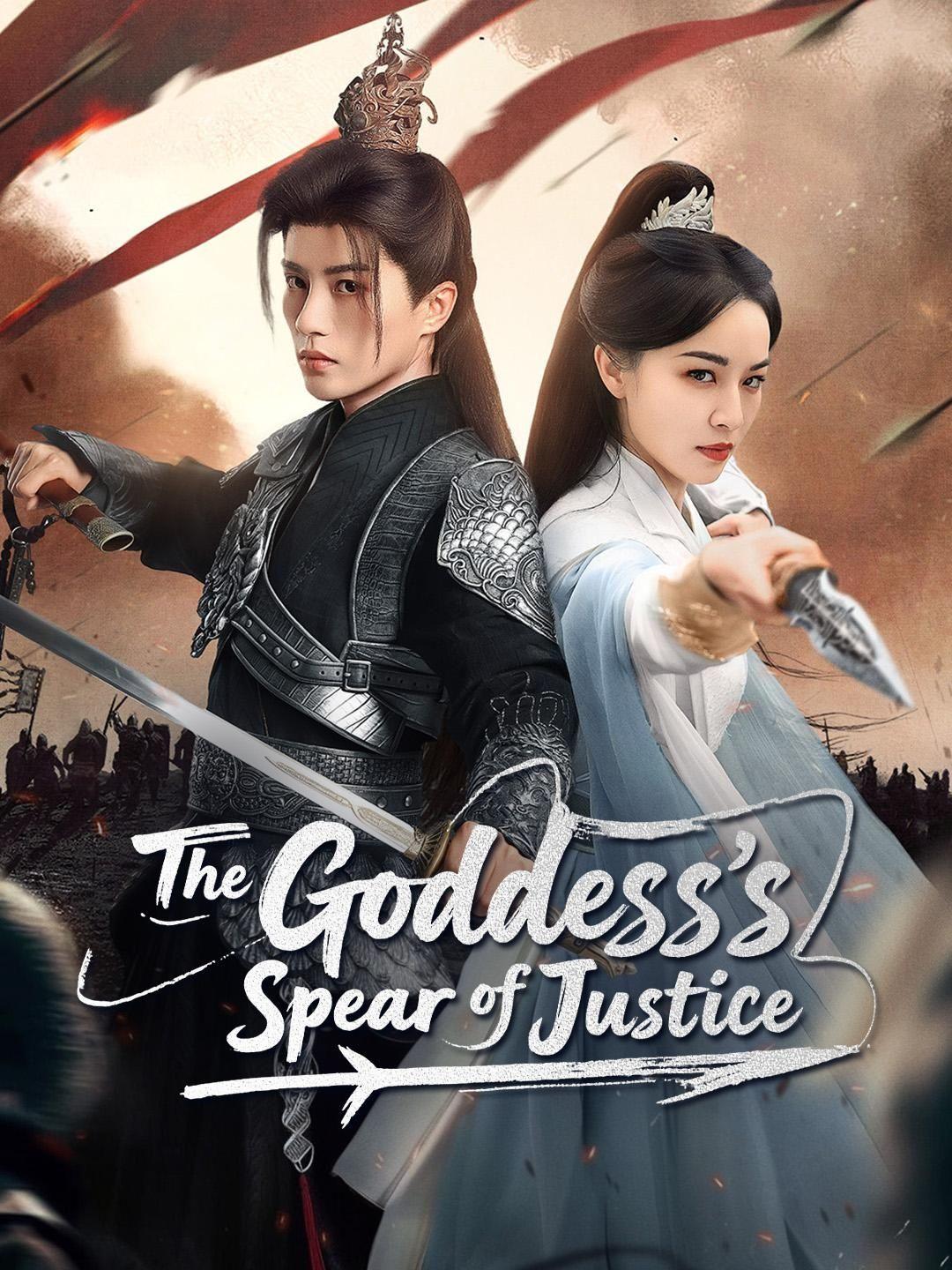
During the eagerly anticipated wedding of the Imperial Preceptor and Grace Sung, the groom revealed is unexpectedly Vincent Lee instead of Bishop Kim, shocking the attendees and altering political alliances.What secret plans does Vincent Lee have for his sudden appearance at the wedding?


Recommended for you


The Imperial Preceptor's Emergence: When the Altar Becomes a Stage for Silent Wars
There’s a particular kind of silence that settles over a wedding when everyone knows the truth but no one dares name it. It’s not awkward—it’s *charged*. Like the air before lightning strikes. That’s the atmosphere in the opening frames of *The Imperial Preceptor’s Emergence*, where the venue—a cavernous ballroom transformed into a celestial garden—shimmers with artifice so perfect it feels like a film set waiting for its director to call ‘action.’ White flowers cascade from the arch, silver unicorns flank the stage, and above, glass spheres dangle like captured stars. Yet beneath the spectacle, something trembles. Li Wei stands at the center, immaculate, her veil catching the spotlight like a second skin, but her hands—clutching the bouquet—are rigid, knuckles pale. She doesn’t sway. She doesn’t breathe deeply. She waits. And in that waiting, we sense the weight of expectation, the gravity of a role she didn’t audition for but has been cast in nonetheless. Cut to Zhang Lin, seated at Table Three, her qipao a study in controlled elegance—light blue silk, navy trim, floral embroidery that mimics the very blossoms lining the aisle. She sips tea, her movements precise, deliberate. When the MC, Xiao Mei, begins her speech, Zhang Lin’s lips part—not in surprise, but in recognition. She knows the cadence of those words. She’s heard them before, perhaps in a different context, perhaps in a letter never sent. Her eyes flick to the groom, Chen Hao, who sits with his legs crossed, one hand resting on his knee, the other absently twisting a ring on his finger—*not* the engagement ring, but an older, simpler band, hidden beneath his cuff. A detail most would miss. But Zhang Lin doesn’t miss it. Her expression tightens, just once, like a string pulled taut. In *The Imperial Preceptor’s Emergence*, jewelry is never just decoration; it’s testimony. That old ring? It belongs to someone else. Someone whose absence is felt more keenly than any presence. The flower girl, Yuanyuan, enters not with fanfare but with purpose. Her white dress is dotted with sequins that catch the light like dew, and her crown—tiny, silver, slightly askew—suggests she’s been dressed by someone who loves her fiercely but hastily. She walks beside Chen Hao, her small hand tucked into his, and for a moment, he looks down at her with genuine warmth. It’s the only unguarded expression he offers all evening. When she drops a petal deliberately near Zhang Lin’s chair, the older woman freezes—then smiles, too wide, too fast. That exchange is a language unto itself. Yuanyuan isn’t just scattering petals; she’s laying down markers. In *The Imperial Preceptor’s Emergence*, children are never mere props. They are witnesses. They remember what adults choose to forget. Then comes the pivotal moment: Chen Hao kneels. Not with flourish, but with solemnity. He lifts Li Wei’s hand, and for the first time, she looks at him—not at the ring, not at the crowd, but *at him*. Her eyes search his, and what she finds there makes her exhale, slowly, as if releasing a breath she’s held since childhood. It’s not love that passes between them in that instant. It’s understanding. An agreement. A surrender. And behind them, Xiao Mei lowers her microphone, her expression unreadable—yet her fingers tap a rhythm against her thigh, three short, two long: a Morse code of unease. She knows the script has deviated. She’s been briefed, perhaps, but not fully informed. In high-stakes ceremonies like those depicted in *The Imperial Preceptor’s Emergence*, the MC is often the last to know the truth—and the first to sense the fracture. Zhang Lin rises then, not to applaud, but to adjust her sleeve. A trivial gesture, except her wrist bears a thin scar, half-hidden by her pearl bracelet. The camera lingers on it for half a second—long enough to register, not explain. Later, when Chen Hao helps Li Wei to her feet, Zhang Lin turns away, her profile sharp against the glowing backdrop. Her lips move, silently, forming two words: *‘You lied.’* Whether she’s speaking to the past, to the present, or to the future—we don’t know. But the implication hangs heavier than the chandeliers above. The kiss is brief. Tender. Staged, perhaps—but also strangely real. Because in that moment, Li Wei closes her eyes, and for the first time, she doesn’t look like a bride. She looks like a woman choosing, consciously, to step into a life that may not be hers—but which she will make her own. Chen Hao’s hand rests on her waist, steady, protective. Yet his thumb brushes the small of her back in a motion that feels less like affection and more like reassurance—to her, or to himself? As the couple poses for photos, Yuanyuan slips behind them, placing a single red petal on Li Wei’s shoulder. No one notices. Except Zhang Lin. She watches, then turns to the man beside her—the bespectacled guest who had nearly stood earlier—and says something so softly the mic doesn’t catch it. But his face changes. His shoulders stiffen. He looks toward the exit, then back at the couple, and nods, once. A pact. A warning. A farewell. The final shot pulls wide: the aisle strewn with petals, the orbs still glowing, the unicorns gleaming coldly in the background. Li Wei and Chen Hao stand side by side, smiling for the cameras, while Yuanyuan tugs gently on Li Wei’s dress, pointing upward. The bride follows her gaze—and for the first time, she smiles not for the audience, but for herself. Because in *The Imperial Preceptor’s Emergence*, the most radical act isn’t rebellion. It’s acceptance—with eyes wide open. The wedding ends not with a bang, but with a whisper: the sound of a door closing softly behind them, and the faint echo of a song that hasn’t yet been sung.
The Imperial Preceptor's Emergence: A Veil of Expectation and a Whisper of Disquiet
The wedding hall glows like a dream suspended in crystal—hundreds of transparent orbs hang from the ceiling, refracting light into soft halos that dance across the white floral arch and mirrored pillars. Red rose petals scatter the aisle like scattered confessions, each one a silent testament to anticipation. At the altar stands Li Wei, radiant in her ivory gown, veil shimmering with delicate pearls, clutching a bouquet of peach and cream roses as if it were a shield against the weight of the moment. Her expression is serene, almost too composed—her eyes flicker downward, then upward, never quite meeting the gaze of the guests, as though she’s rehearsing a script only she can hear. Behind her, the backdrop reads ‘Sweet Love’ in elegant cursive, but the irony isn’t lost on those who’ve watched *The Imperial Preceptor’s Emergence* unfold in fragments: love here feels less like a declaration and more like a performance under pressure. Seated in the front row, Zhang Lin—dressed in a traditional qipao of pale lavender silk, embroidered with indigo plum blossoms—leans forward, fingers steepled, lips painted crimson, voice low but sharp as she murmurs something to her companion. Her pearl necklace catches the light with every subtle tilt of her head, a visual echo of the bride’s own adornments, yet her demeanor suggests she’s not merely a guest but a judge, perhaps even a ghost from a past chapter. When the MC, a poised woman in a sleek black off-shoulder dress named Xiao Mei, steps forward with microphone in hand, her tone is warm, practiced—but her eyes linger just a beat too long on Li Wei, as if measuring the tension beneath the smile. That hesitation speaks volumes. In *The Imperial Preceptor’s Emergence*, Xiao Mei isn’t just a host; she’s the narrative pivot—the one who knows what was promised, what was broken, and what must now be reassembled before the cameras stop rolling. Then comes the entrance: a small girl in a tulle dress, crown perched precariously atop braided pigtails, scattering petals with theatrical flourish. She walks beside Chen Hao, the groom, in his beige double-breasted suit—his posture upright, his smile broad, yet his eyes keep darting toward the bride, searching for confirmation. But Li Wei doesn’t look up until he reaches her. And when she does, her expression shifts—not to joy, but to something quieter, more complex: recognition, yes, but also resignation. It’s the look of someone who has already made peace with a compromise. The flower girl, Yuanyuan, watches them both with wide, knowing eyes, her tiny hand gripping the wicker basket like it holds the last thread of innocence in the room. She doesn’t speak, but her presence alone disrupts the curated elegance—she is the unscripted variable, the child who sees through the veil. Meanwhile, Zhang Lin’s reactions escalate. At first, she claps politely, lips curved in polite amusement. Then, as Chen Hao kneels—kneeling not with dramatic flourish but with quiet reverence—and offers the ring, her breath catches. Her fingers tighten around her teacup, knuckles whitening. She glances at the man beside her, a bespectacled figure in a dark suit, who suddenly rises, gesturing wildly, mouth open mid-sentence—as if he’s about to interrupt, to shout, to reveal something buried deep in the subtext of *The Imperial Preceptor’s Emergence*. But he stops. He sits. His hand trembles slightly as he adjusts his glasses. That hesitation—*that* is where the real story lives. Not in the vows, not in the kiss, but in the unsaid things hovering like smoke between the chandeliers. When Li Wei finally accepts the ring, her fingers trembling just enough to be noticeable, the room erupts in applause. Yet the camera lingers on Zhang Lin again—now standing, not clapping, but staring at the couple with an expression that blends sorrow and triumph. Is she mourning a love lost? Or celebrating a victory won? In *The Imperial Preceptor’s Emergence*, lineage and legacy are never just personal—they’re political, generational, entangled in debts no contract can dissolve. Her qipao, so traditionally elegant, becomes armor. Her pearls, symbols of purity, feel like chains. The final embrace is tender, cinematic—Chen Hao pulls Li Wei close, her veil drifting like mist over both their faces. For a moment, they are suspended in light, surrounded by flowers and floating orbs, the world reduced to this single point of contact. But the lens pulls back, revealing Yuanyuan still standing nearby, watching, smiling faintly—not with childish delight, but with the quiet wisdom of someone who understands that weddings are not endings, but transitions. And in *The Imperial Preceptor’s Emergence*, transitions are rarely gentle. They are seismic. They crack foundations. They force old truths into the open, where they glitter like those hanging orbs—beautiful, fragile, and dangerously reflective. What remains unsaid is louder than any vow. Why did Zhang Lin arrive wearing the same floral motif as Li Wei’s mother’s favorite dress? Why does Chen Hao avoid eye contact with the man in the dark suit during the toast? Why does Yuanyuan whisper something into Li Wei’s ear just before the first kiss—and why does the bride flinch, ever so slightly? These aren’t plot holes. They’re breadcrumbs. *The Imperial Preceptor’s Emergence* doesn’t rely on grand reveals; it thrives on micro-expressions, on the way a hand hovers near a pocket, on the split-second delay before a smile reaches the eyes. This wedding isn’t just a union—it’s a reckoning. And as the guests raise their glasses, the real ceremony has only just begun.