



Watch Dubbed
The Final Betrayal
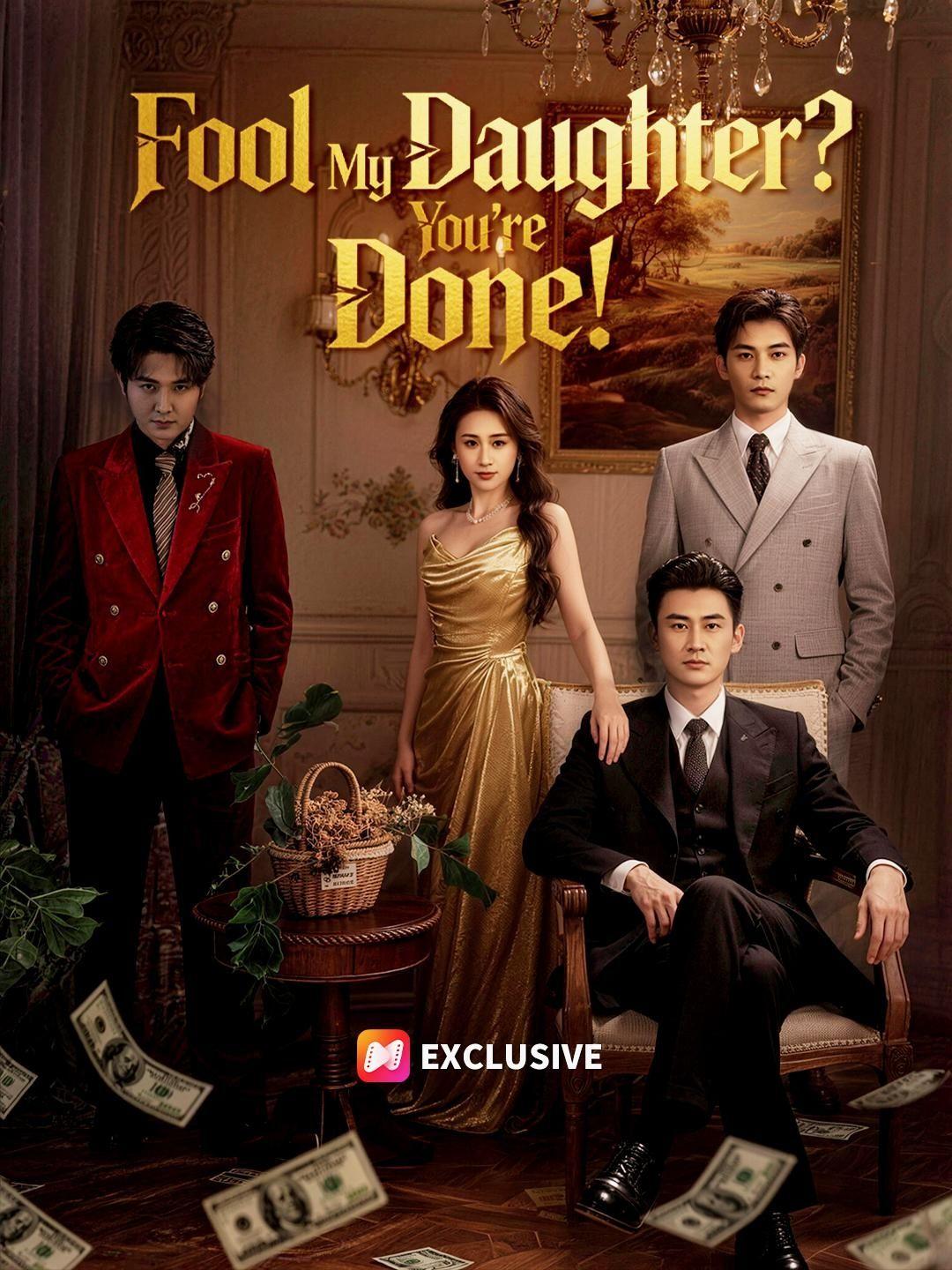
The Morris family faces a devastating loss as their crucial industries in the south of the city are taken over after a humiliating defeat in a high-stakes match against the world-renowned Leo Donald, orchestrated by Owen Rogers.Will the Morris family find a way to reclaim their legacy, or is this truly the end of their century-old business?


Recommended for you


The Little Pool God: Where Cues Crack Like Secrets
Let’s talk about the sound design in *The Little Pool God*—because if you watched the sequence without audio, you’d miss half the story. The *click-clack* of balls colliding isn’t just rhythm; it’s punctuation. Each impact echoes like a heartbeat skipping under pressure. When Zhou Miao adjusts his tie clip—a small, deliberate motion—the faint metallic *snick* cuts through the ambient hum of the lounge like a needle on vinyl. That’s not background noise. That’s narrative foreshadowing. The show treats silence as a character, and in this world, silence is never empty. It’s loaded, like a break shot held too long. The central tension isn’t between Zhou Miao and his rival Zhou Li Dong—it’s between *performance* and *presence*. Zhou Miao moves like a man rehearsing a speech he’s delivered a hundred times. His posture is textbook confidence: shoulders back, chin level, gaze fixed just above eye level—never quite meeting anyone directly. He’s not avoiding connection; he’s conserving energy. Meanwhile, Zhou Li Dong stands with his hands clasped loosely in front, weight evenly distributed, eyes scanning the room like a historian reviewing artifacts. He doesn’t need to dominate the space; he *is* the space. His brocade jacket, rich with geometric motifs, isn’t fashion—it’s armor woven from memory. Every knot on his traditional frog fastenings feels intentional, like seals on ancient scrolls. When he speaks (rarely, and always in measured tones), his voice carries the resonance of someone used to being heard without raising volume. That’s authority earned, not claimed. Then enters Leo Donald—the boy who shouldn’t be there, yet commands the room the moment he stands. His outfit is formal, yes, but it’s the *details* that unsettle: the bowtie isn’t silk, but a textured weave with subtle iridescence, catching light like fish scales. His shoes are polished black, but the soles show faint scuff marks—proof he’s walked farther than this lounge suggests. He doesn’t fidget. He doesn’t glance at the scoreboard (which, notably, displays no numbers—only shifting abstract patterns). He simply observes. And when he finally picks up a cue, he doesn’t test its balance. He *listens* to it, tapping the tip lightly against the rail. *Tap. Tap-tap.* Three beats. A code? A prayer? The camera zooms in on his fingers—small, but with calluses on the index and middle, unusual for a child his age. This isn’t his first time at the table. This is his *return*. The most fascinating figure, however, remains the man in the crocodile-skin coat—let’s call him Silas, for lack of a better name (though the credits may disagree). His entrance is pure theater: a whirl of black leather, a flare of red shirt, a tie patterned like a map of forgotten kingdoms. He leans over the table, hands planted wide, mouth open in mock horror—as if the arrangement of the balls has personally offended him. But watch his eyes. They’re not wide with shock. They’re *calculating*. Every exaggerated gasp, every theatrical slap of the thigh, is calibrated to provoke reaction. He wants Zhou Miao to flinch. He wants Zhou Li Dong to sigh. He wants Leo Donald to blink twice. And when he throws his head back and laughs—a deep, rumbling sound that vibrates the glassware behind him—he’s not celebrating. He’s testing the acoustics of the room, measuring how far his voice travels before it hits resistance. That laugh is a probe. And when it lands, the others don’t smile. They *adjust*. Zhou Miao’s left shoulder dips a fraction. Zhou Li Dong’s thumb brushes his temple. Leo Donald’s foot taps once—*not* in time with the laugh. He’s counting something else. Now consider the masked man. His introduction is masterclass in visual storytelling. He sits apart, not in shadow, but in *contrast*—lit by a single vertical strip of amber light that slices his face in half. The golden mask is smooth, featureless, yet expressive in its blankness. It reflects the room’s colors like a mirror, absorbing and distorting. When he rises, the camera stays low, forcing us to look up at him—a classic power angle. His suit is black, but the lapels and pocket square burst with embroidered dragons, coiled and watchful. This isn’t vanity; it’s heraldry. And when he removes the mask—not violently, but with the reverence of unveiling a relic—the shift is profound. His face is familiar, yet altered by time. The scar near his eye isn’t new. It’s been there. And the way Zhou Li Dong exhales, just once, through his nose—that’s the sound of a door creaking open after thirty years. *The Little Pool God* thrives on these micro-revelations. Notice how the woman in the white jacket—her name appears briefly on the backdrop as ‘Zhou Li Qing’—never takes her eyes off Leo Donald. Not with maternal concern, but with the intensity of a strategist watching a prototype activate. Her cue rests against her hip, not gripped, not surrendered. It’s a third limb, poised. When Leo stands, she doesn’t move, but her breath catches—just a hitch, barely visible. That’s the moment the audience realizes: she’s not his guardian. She’s his counterpart. Perhaps his predecessor. The show drops clues like chalk dust on the rail: her belt buckle bears the same triangular motif as the ball rack; her necklace pendant matches the logo on the pool table’s side panel. These aren’t coincidences. They’re breadcrumbs laid by a writer who trusts the viewer to follow. And let’s not overlook the environment itself. This isn’t a generic billiards hall. The walls are lined with framed photographs—not of champions, but of *moments*: a hand placing a coin on the table, a child’s shoe beside a cue case, a blurred figure walking away down a corridor. These images aren’t decoration; they’re flashbacks waiting to be triggered. The bar in the background serves drinks in etched crystal, but the bartender never looks up. He’s part of the set, a silent witness. Even the TV screen mounted high on the wall—showing abstract data streams and shifting numerals—feels like a surveillance feed, monitoring not scores, but *intentions*. What makes *The Little Pool God* unforgettable is its refusal to equate skill with morality. Zhou Miao could sink every ball in the rack blindfolded—but would he? The question lingers. Leo Donald has the stance of a prodigy, but his eyes hold the weariness of someone who’s already lost a war. Zhou Li Dong speaks sparingly, yet each sentence carries the weight of treaties signed in ink and blood. And Silas? He’s the wildcard—the joker in the deck, grinning while reshuffling the rules. When he points at the masked man and shouts (again, inaudible, but mouth forming clear syllables), the camera cuts to Zhou Miao’s hand—clenched, then slowly uncurling, as if releasing a bird he’s held too long. The climax isn’t a shot. It’s a choice. Leo Donald steps to the table, cue raised, and instead of aiming at the racked balls, he taps the tip against the *edge* of the rail—once, twice, three times. A signal. The room freezes. Zhou Li Qing lowers her cue. Zhou Li Dong closes his eyes. The masked man—now unmasked, now revealed as a man named Tang Lin, per the subtitle that flickers for half a second—nods, almost imperceptibly. That tap isn’t a mistake. It’s a password. And as the camera pulls back, revealing the full layout of the room—the spectators, the hidden cameras in the ceiling fixtures, the way the light from the ‘VS’ sign casts long, intersecting shadows across the floor—we understand: the game was never about the balls. It was about who remembers the original rules. *The Little Pool God* doesn’t end with a victory. It ends with a question, whispered in the space between two heartbeats: *Whose turn is it now?*
The Little Pool God: When the Mask Falls, the Real Game Begins
In a dimly lit, neon-drenched billiards lounge where ambition and ego collide like cue balls on a green felt battlefield, *The Little Pool God* unfolds not as a sports drama—but as a psychological opera staged around a single table. The opening shot establishes the arena: a luxurious pool table with ornate wooden legs, flanked by spectators dressed like characters from a modern wuxia film—some in tailored Western suits, others in embroidered Tang-style jackets, all radiating tension like static before a storm. At the center stands Zhou Miao, impeccably groomed in a grey vest and tie, his posture rigid, eyes scanning the room like a general assessing enemy positions. He doesn’t hold a cue yet—but he already owns the space. His stillness is louder than any shout. Behind him, a massive LED backdrop flashes ‘VS’ in golden flame-like typography, with portraits of key players—Zhou Miao, Zhou Li Dong, and a young boy named Leo Donald—framed like contenders in a gladiatorial tournament. This isn’t just a game of angles and spin; it’s a ritual of identity, power, and hidden lineage. What makes *The Little Pool God* so compelling is how it weaponizes silence. Consider the man in the olive-green brocade jacket—Zhou Li Dong, an elder whose silver-streaked hair and wire-rimmed glasses suggest wisdom, but whose clenched jaw and slow blinking betray simmering unrest. He doesn’t speak much, yet every micro-expression speaks volumes: when the flamboyant figure in the crocodile-skin coat—let’s call him ‘The Roarer’—suddenly leans over the table, mouth agape in theatrical disbelief, Zhou Li Dong’s eyes narrow just slightly, his thumb rubbing the edge of his sleeve as if polishing a memory. That gesture alone tells us he’s seen this performance before. He knows the script. And he’s waiting for the twist. Then there’s Leo Donald—the boy in the black vest and bowtie, seated like a miniature emperor on a cream leather armchair, idly rolling an orange ball between his fingers. His presence is unnerving precisely because he’s *too* composed. While adults fumble with bravado or panic, Leo watches, blinks once, then rises without urgency, stepping toward the table as if summoned by fate rather than invitation. His entrance isn’t loud, but it shifts the gravity of the room. The woman beside Zhou Miao—elegant in a white tweed cropped jacket, holding her cue like a scepter—tenses visibly. Her knuckles whiten. She’s not afraid of losing the game; she’s afraid of what winning might reveal. The camera lingers on her necklace, a delicate chain with a tiny pendant shaped like a pool triangle—perhaps a family heirloom, perhaps a symbol of inherited duty. Every detail here is curated to whisper backstory, not shout it. The true turning point arrives when the masked man enters—not with fanfare, but with eerie calm. Seated in the shadows, he wears a smooth golden mask that covers everything but his eyes and mouth, paired with a black suit adorned with dragon-embroidered lapels. His costume screams ‘mystery’, but his body language screams ‘control’. When he finally stands, the room holds its breath. Then, in one fluid motion, he lifts the mask—not fully removing it, but sliding it up to rest atop his head like a crown. The reveal is understated yet seismic: his face is sharp, intelligent, aged just enough to carry weight, with salt-and-pepper temples and a faint scar near his left eyebrow. No dramatic music swells. No gasps echo. Just the soft click of the mask settling—and the sudden realization dawning on Zhou Miao’s face: *I know you.* That moment isn’t about recognition; it’s about recontextualization. Every prior interaction—the sideways glances, the hesitant gestures, the way Zhou Li Dong kept adjusting his cufflinks whenever the masked man shifted in his seat—now snaps into focus. *The Little Pool God* isn’t about who can sink the eight-ball first. It’s about who remembers the rules of the older game: the one played in backrooms, over tea, where loyalty is measured in silence and betrayal wears a smile. The Roarer’s outbursts—his exaggerated gasps, his pointing finger, his chest-thumping laughter—are brilliant misdirection. He’s the clown in the tragedy, drawing attention away from the real chessboard. Yet even his chaos serves purpose: when he slams his palm on the table and shouts (inaudibly, but we feel the vibration), the cue balls tremble in their rack. That’s cinematic punctuation. It’s not realism—it’s emotional resonance. The director understands that in high-stakes environments, physics bends to psychology. A dropped cue isn’t just wood hitting felt; it’s a confession hitting the floor. And then there’s the lighting. Not the harsh overheads of a tournament hall, but layered ambience: cool blue strips along the ceiling, warm amber pools around the bar, magenta washes bleeding onto the backdrop. These aren’t decorative choices—they’re emotional filters. When Zhou Miao steps forward to take his shot, the light catches the gold clip on his tie, turning it into a tiny beacon. When Leo Donald walks past the camera, the pink glow catches the edge of his bowtie, making it shimmer like a warning signal. Color here is syntax. The green of the table isn’t just tradition; it’s the color of envy, of growth, of something buried waiting to surface. What elevates *The Little Pool God* beyond genre trappings is its refusal to resolve quickly. After the mask is lifted, no one rushes to confront. Instead, Zhou Li Dong turns slowly, his voice low, almost conversational: ‘So you chose to return… not as a player, but as a judge.’ The line hangs, untranscribed, but its weight is audible in the pause that follows. The younger men exchange glances—not of rivalry, but of dawning comprehension. They’re not just opponents. They’re pieces on a board set by someone who left decades ago. The pool table, once a stage for skill, becomes an altar for reckoning. The final sequence—Leo Donald stepping up, cue in hand, eyes locked on the racked balls—is shot in tight profile, the camera circling him like a satellite. His breathing is steady. His grip is relaxed. He doesn’t look at the pockets; he looks at the *space between them*. That’s when we understand: *The Little Pool God* isn’t about sinking balls. It’s about reading the voids—the silences between words, the gaps between intentions, the empty spaces where truth hides until someone dares to aim straight through the noise. And as the cue tip hovers, trembling not from nerves but from precision, the screen fades—not to black, but to the reflection in the polished rail: four faces, distorted, overlapping, each seeing a different version of the same truth. That’s the genius of this series. It doesn’t give answers. It leaves you staring at the reflection, wondering which face is yours.