



Watch Dubbed
The Disrespected Morris Family
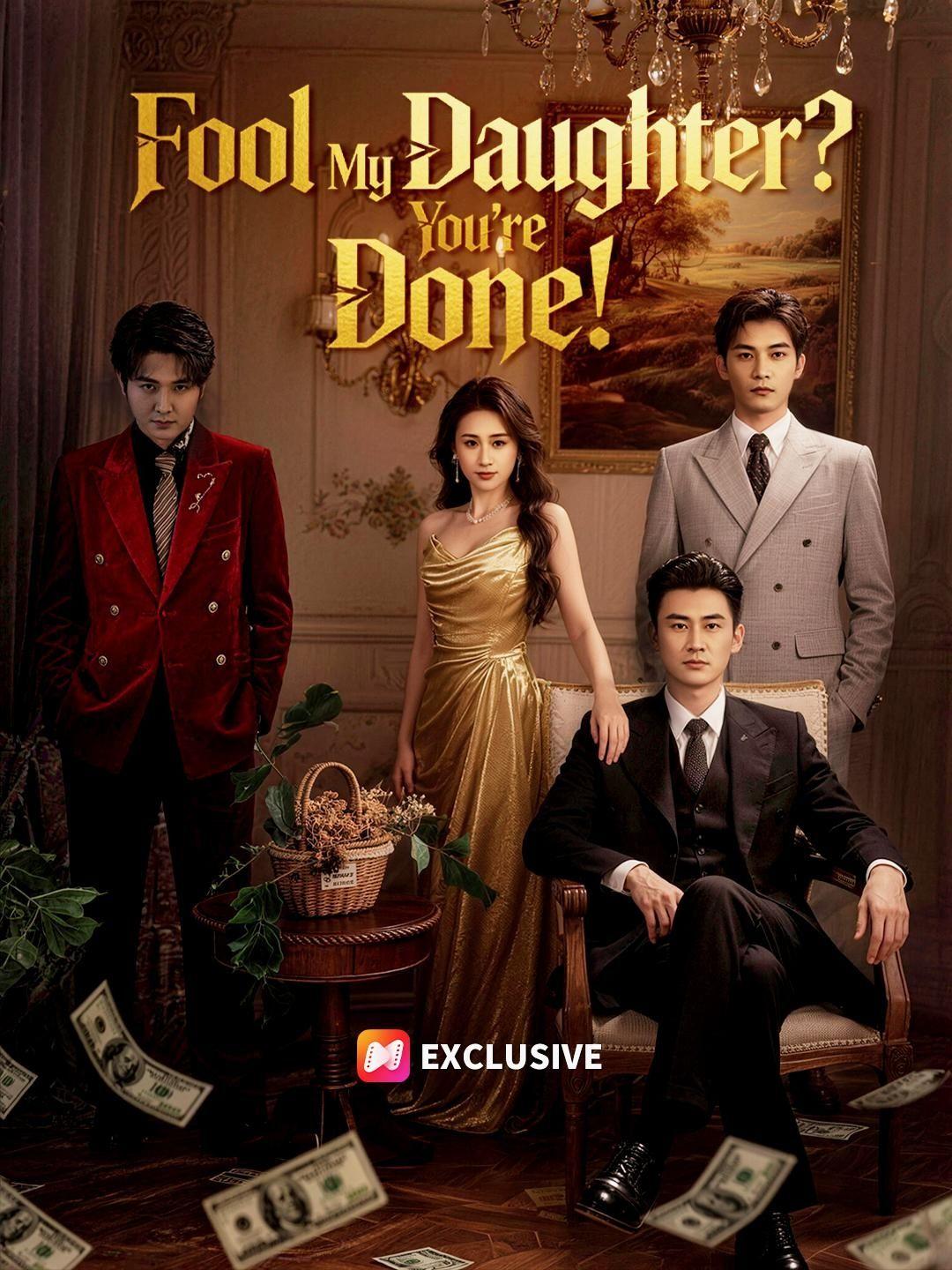
The Morris family is denied entry to an event despite having an entry pass, as their spots are taken by Master Morgan's bodyguards, highlighting their fallen status and the disrespect they face.Will the Morris family regain their lost status and respect?


Recommended for you


The Little Pool God: Where Mourning Meets Machination
If you blinked during the first ten seconds of this sequence, you missed the real funeral—the one held not in words, but in glances, in the way fingers twitch near pocket linings, in the deliberate slowness with which Chen Rui adjusts his cufflink while listening to Zhou Yan speak. This isn’t grief. It’s grand strategy disguised as solemnity. The setting—a colonnaded courtyard with moss creeping up ancient steps—feels like a stage designed by someone who studied Greek tragedy but forgot to remove the modern Wi-Fi router humming in the background. The irony is thick: everyone’s dressed for a ceremony of loss, yet their postures scream ambition. Lin Xiao stands slightly ahead of the group, not out of respect, but positioning. She’s the pivot. The fulcrum. And when Chen Rui turns toward her, his expression shifts—not to warmth, but to calculation. He sees her not as a mourner, but as a variable. Let’s talk about Wei Zhi. Ten years old. Brown coat. Black turtleneck. A white flower pinned over his heart, the ribbon bearing the characters ‘哀念’—but his eyes? They’re not wet. They’re sharp. Observant. He watches Zhou Yan’s mouth move, then glances at Chen Rui’s hands, then back to Lin Xiao’s belt. He’s mapping the room like a chessboard. In *The Little Pool God*, children aren’t props. They’re witnesses. And Wei Zhi has seen too much. His stillness isn’t obedience—it’s containment. He knows that if he speaks, the fragile equilibrium shatters. So he waits. And in that waiting, he becomes the most dangerous person in the courtyard. Now, Zhou Yan—the pinstripe suit, the YSL pin, the tie bar holding his composure together like a clamp. His dialogue is clipped, urgent, but his body language betrays him: shoulders hunched, jaw tight, one foot subtly angled toward the exit. He wants to leave. But he can’t. Because Chen Rui has him by the throat—not literally, but rhetorically. When Chen Rui raises his hand in that slow, theatrical arc, it’s not a plea for silence. It’s a reset button. A signal that the rules have changed. And Zhou Yan reacts not with anger, but with dawning horror. He realizes he’s been speaking to the wrong audience. The real decision-maker isn’t standing in front of him. It’s the man in the brocade jacket, half-hidden in shadow, whose pearl chain glints like a serpent’s eye. That man—let’s call him Li Tao, though the show never names him outright—is the ghost in the machine. He says nothing. Doesn’t gesture. Yet every time the camera cuts to him, the temperature drops. His mourning flower is identical to the others, but his is pinned higher, closer to the collarbone—as if to remind us: this isn’t about the dead. It’s about proximity to power. In *The Little Pool God*, mourning ribbons are currency. The whiter the flower, the deeper the stake. And Li Tao’s is pristine. Too pristine. Which means he wasn’t close to the deceased. He was close to the *truth*. The turning point arrives not with a shout, but with a touch. Zhou Yan reaches out—not to strike, but to steady himself. His fingers graze Chen Rui’s lapel, and for a split second, the two men lock eyes. No words. Just recognition. Zhou Yan sees the lie in Chen Rui’s calm. Chen Rui sees the fear in Zhou Yan’s pulse. And in that micro-second, the hierarchy fractures. Lin Xiao exhales—softly, almost imperceptibly—but it’s enough. She steps forward, not to intervene, but to *occupy space*. Her heel clicks on the cobblestones, a metronome counting down to rupture. The boy, Wei Zhi, finally blinks. Once. Long. As if giving permission for the dam to break. What’s masterful here is how the show uses costume as subtext. Lin Xiao’s white collar isn’t purity—it’s contrast. A visual rebellion against the monochrome uniformity of the men around her. Chen Rui’s ornate shirt collar? It’s not flamboyance. It’s armor. He dresses like a man who expects to be scrutinized, so he gives them something dazzling to look at—while his real moves happen below the frame. Zhou Yan’s pinstripes suggest order, but the slight wrinkle at his elbow tells us he slept in the suit. He’s been preparing for this moment for days. And Li Tao’s brocade? It’s traditional, yes—but the pattern is asymmetrical. Deliberately so. In Chinese symbolism, asymmetry implies imbalance. Unresolved tension. Exactly what *The Little Pool God* excels at: leaving every thread dangling, every motive ambiguous, every alliance provisional. The final exchange—Chen Rui smiling, Zhou Yan swallowing hard, Lin Xiao’s hand tightening on her bag strap—isn’t closure. It’s setup. The courtyard remains empty except for them, yet the air hums with the echo of unsaid things. Who owns the pool? (Yes, the title *is* literal—the estate includes a private koi pond, now drained, its tiles cracked underfoot.) Who altered the will? Why does Wei Zhi keep touching the pendant under his coat? *The Little Pool God* doesn’t answer. It invites you to lean in, to replay the frames, to catch the flicker of guilt in Chen Rui’s left eye when Lin Xiao mentions the lawyer’s name. This isn’t a funeral scene. It’s a coup in slow motion. And the most chilling part? No one draws a weapon. They don’t need to. Their words are sharper. Their silences, deadlier. By the time the camera pulls back to reveal the full courtyard—five figures frozen in a tableau of unresolved conflict—you realize: the real memorial isn’t for the dead. It’s for the version of themselves they’ve all just buried. *The Little Pool God* doesn’t deal in endings. It deals in thresholds. And this? This is the edge.
The Little Pool God: A Funeral That Never Was
Let’s talk about the quiet storm unfolding in that courtyard—where marble arches frame not grief, but tension, where white mourning flowers are pinned like badges of accusation rather than remembrance. The scene opens with Lin Xiao, her black tweed coat crisp as a legal brief, collar stark white against the somber palette—a visual metaphor for innocence clinging to formality. She stands rigid, clutching a program that reads ‘Memorial Service,’ yet her eyes dart sideways, lips parted mid-sentence, as if she’s just heard something that rewrote the script of her life. Behind her, young Wei Zhi—no older than ten—wears his brown overcoat like armor, his expression unreadable but his posture betraying a child who’s been told too much too soon. He doesn’t cry. He watches. And that’s what makes this moment so unnerving: this isn’t mourning. It’s surveillance. Then enters Chen Rui—the man in the navy double-breasted suit, glasses perched low on his nose, tie patterned like a map of hidden alliances. His lapel pin glints gold, and he gestures not with sorrow, but with precision, like a conductor tuning an orchestra of lies. When he points at someone off-screen, it’s not a gesture of blame—it’s a calibration. He’s testing reactions. Every micro-expression is logged: Lin Xiao’s flinch, Wei Zhi’s blink, the younger man in the pinstripe suit—Zhou Yan—who steps forward with a tremor in his voice, as if rehearsing a confession he hasn’t yet committed to. Zhou Yan’s tie clip bears the YSL logo, but his hands shake. Why? Because in *The Little Pool God*, fashion isn’t vanity—it’s camouflage. The more polished the outfit, the deeper the deception buried beneath. What’s fascinating is how the environment mirrors the emotional dissonance. The courtyard is serene—white pillars, cobblestone paths, a lone cypress tree standing sentinel—but the air crackles. No birds. No wind. Just the faint rustle of fabric as people shift weight, avoiding eye contact. Even the cross visible through the doorway behind Chen Rui feels ironic: a symbol of redemption in a space where no one seems to seek it. Instead, they’re negotiating power. When Chen Rui raises his hand—not in blessing, but in interruption—it’s clear: this gathering isn’t about honoring the dead. It’s about reassigning legacy. Who gets the will? Who controls the trust fund? Who speaks for the boy? Lin Xiao’s belt buckle catches the light—a rhinestone rectangle, almost gaudy against her otherwise restrained attire. It’s the only flash of vulnerability in her ensemble. Later, when she looks down, her fingers brush the strap of her bag, not out of habit, but hesitation. She knows something. Or suspects. And that suspicion is the engine of *The Little Pool God*’s narrative architecture: every character holds a piece of the truth, but none dare assemble it aloud. Not yet. The boy, Wei Zhi, remains silent throughout, but his gaze locks onto Zhou Yan during the confrontation—his eyes narrowing just slightly when Zhou Yan touches Chen Rui’s lapel. A flicker. A betrayal recognized before it’s spoken. That’s the genius of the show: silence speaks louder than monologues. Then comes the escalation. Zhou Yan lunges—not violently, but with the desperation of a man realizing he’s been outmaneuvered. His hand grips Chen Rui’s jacket, not to strike, but to *stop*. To say: Wait. Let me explain. But Chen Rui doesn’t flinch. He tilts his head, smiles faintly, and murmurs something we can’t hear—but the way Zhou Yan recoils tells us it was worse than an insult. It was a revelation. Meanwhile, the fourth man—the one in the black brocade jacket with pearl chains—stands apart, arms crossed, watching like a referee who already knows the outcome. His mourning flower is slightly crooked. Intentional? Perhaps. In *The Little Pool God*, even accessories are coded messages. The white ribbon on each flower bears two characters: ‘哀念’—grief and remembrance. But here, it feels less like tribute and more like a contract. Signed in ink, sealed in silence. What elevates this sequence beyond typical drama is its refusal to moralize. There’s no clear villain. Chen Rui isn’t evil—he’s pragmatic. Lin Xiao isn’t naive—she’s strategic. Zhou Yan isn’t weak—he’s trapped. And Wei Zhi? He’s the wildcard. The child who understands more than he lets on. In one shot, the camera lingers on his shoes: scuffed leather, slightly too big. He’s wearing hand-me-downs. Whose? The deceased’s? Or someone else’s? The show leaves it open, inviting us to connect dots that may not even exist. That’s the brilliance of *The Little Pool God*: it doesn’t feed you answers. It feeds you doubt—and makes you crave more. The final wide shot—five figures arranged like chess pieces on a stone board—cements the theme: this isn’t a funeral. It’s a succession ritual. The architecture around them—classical, symmetrical, unyielding—mirrors the rigidity of their roles. Yet cracks appear: Lin Xiao’s hair escapes its bun; Chen Rui’s cufflink is loose; Zhou Yan’s sleeve rides up, revealing a faded scar. Imperfection in perfection. Humanity in performance. And as the camera pulls back, the cypress tree sways ever so slightly—perhaps the first sign that something, somewhere, is about to break. *The Little Pool God* thrives in these liminal spaces: between grief and greed, loyalty and leverage, truth and the story they’ll all agree to tell tomorrow. We’re not watching a memorial. We’re witnessing the birth of a new dynasty—one built not on love, but on carefully curated silence.
When Grief Wears a Double-Breasted Suit
The man in navy with ornate collar? Chef’s kiss. His gestures—pointing, pleading, then that sudden laugh—revealed layers of tension masked by formality. Meanwhile, the kid just stood there like a silent oracle. The courtyard setting elevated every micro-expression. *The Little Pool God* knows how to weaponize stillness 💀
The Silent Funeral That Screamed Drama
Every glance in *The Little Pool God* felt loaded—especially the woman’s pouty disbelief and the boy’s wide-eyed silence. That blue mourning flower? A tiny detail screaming louder than any dialogue. The men’s postures told a whole power struggle. Pure visual storytelling 🎭 #ShortFilmVibes