



Mysterious Visitor
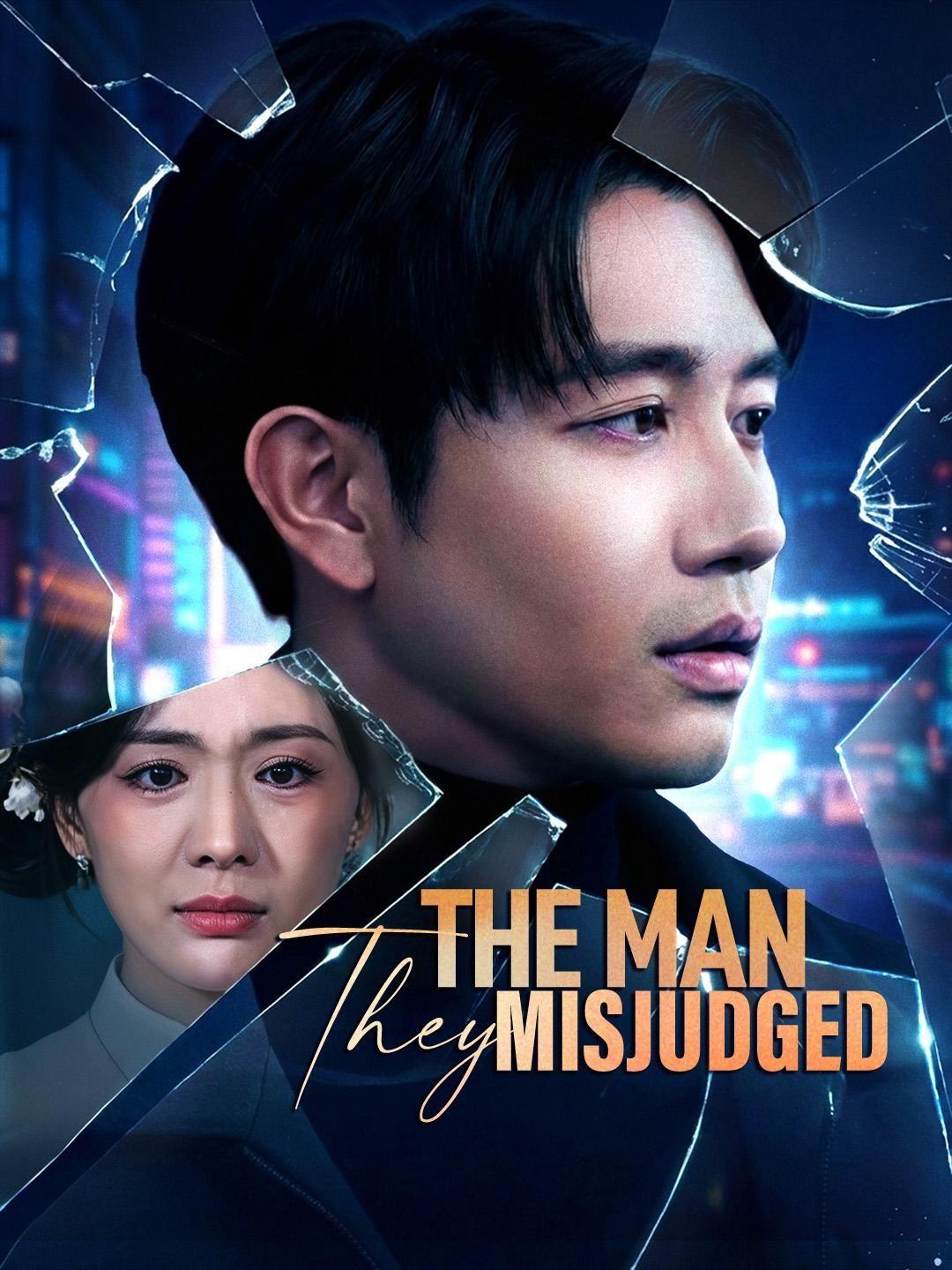
A handsome young man in white with black accents, resembling Pyrobin Hunter's appearance, arrives at Joycom Inn, raising suspicions about his true identity and intentions.Is this mysterious visitor connected to Pyrobin Hunter's hidden assassin life, or does his arrival signal a new threat to Ember and Pyrobin's fragile peace?


Recommended for you



Love on the Edge of a Blade: Footsteps That Speak Louder Than Words
If cinema were a tea ceremony, this sequence from Love on the Edge of a Blade would be the moment the host lifts the bowl—not to drink, but to *show* the rim’s imperfection, inviting the guest to notice what’s been hidden in plain sight. Here, the most potent dialogue isn’t spoken; it’s walked. Literally. Watch closely: the first three seconds show Ling Xue seated, serene, hands folded over a letter, the sword resting beside her like a sleeping guardian. Then—cut. Xiao Chen enters, smiling, but his feet hesitate just beyond the threshold. His right foot taps once, twice, then settles. That tiny stutter in his gait? That’s the first lie of the scene. He’s not delivering news—he’s delivering *consequences*. And the camera knows it. It lingers on his lower body in later cuts, not out of accident, but design: those black cloth shoes, scuffed at the heel, whisper of repeated journeys—perhaps to this very door, perhaps to other rooms where truths were buried under polite bows. Now consider Ling Xue’s reaction. She doesn’t look up immediately. She waits. Lets the silence stretch until it hums. Only when Xiao Chen clears his throat—barely audible, muffled by the fabric of his sleeve—does she lift her gaze. And in that shift, we witness the architecture of her composure: her fingers tighten on the letter, not crushing it, but folding it tighter, as if sealing a wound. Her earrings sway, catching light like distant stars reorienting after a tremor. She’s not surprised by his presence. She’s surprised by *how* he stands—shoulders squared, chin low, avoiding direct eye contact. That’s not deference. That’s guilt. Or complicity. Or both. Then the real disruption arrives—not with fanfare, but with the softest scrape of wood on wood. Yun Zhi appears at the doorframe, backlit by the corridor’s dim glow, his silhouette elongated, his hair tied high with a ribbon that matches Ling Xue’s own floral accents—subtle visual mirroring, a ghost of shared aesthetics now estranged by time. The text above the door reads ‘Room No. 1’, but the subtitle adds a layer: *Tian Yi Fang*, meaning ‘Heaven’s First Chamber’. Irony drips from that label. This isn’t a place of beginnings. It’s a place of reckonings. And Yun Zhi knows it. His hand hovers near the ring pull for three full seconds before he moves. Three seconds in which the audience holds its breath, wondering: Will he turn back? Will he knock? Will he simply vanish again, as he did two years ago—leaving only a letter, a sword, and a woman who stopped sleeping through the night? What follows is a masterclass in spatial storytelling. The camera alternates between tight close-ups of Ling Xue’s face—her pupils dilating, her nostrils flaring slightly as she inhales—and low-angle shots of Yun Zhi’s feet stepping forward, each movement measured, deliberate, as if walking across thin ice. The floorboards groan under his weight, but not loudly—just enough to register as *presence*, not intrusion. When he finally peers through the narrow gap between the doors, his expression isn’t anger or sorrow. It’s disbelief. As if seeing her here, unchanged, undiminished, contradicts everything he believed about time’s erasure. And Ling Xue? She doesn’t blink. She doesn’t reach for the sword—not yet. She simply watches him watch her, and in that exchange, decades collapse into a single heartbeat. The brilliance of Love on the Edge of a Blade lies in its refusal to explain. We never learn why Yun Zhi left. We don’t hear the contents of the letter Xiao Chen carries. We aren’t told whether the sword belongs to Ling Xue, Yun Zhi, or someone long dead. Instead, the film trusts us to read the subtext written in posture, in fabric, in the way Ling Xue’s left hand drifts toward her waist—not to draw, but to steady herself. Her nails are unpainted, clean, practical. Yet her sleeves are embroidered with phoenix motifs, half-hidden beneath translucent layers—a duality that defines her: warrior and poet, keeper of secrets and prisoner of memory. Even the environment conspires in this quiet drama. The blue-and-white vase behind her isn’t static; its reflection shifts as light changes, sometimes showing a distorted version of her face, sometimes revealing the faint outline of Yun Zhi’s shoulder in the glass. The dried chrysanthemums in the corner—once vibrant, now muted—mirror her emotional state: preserved, yes, but no longer alive in the way they once were. And the rug beneath the table? Its pattern spirals inward, drawing the eye toward the center—where the sword lies, where her hands rest, where the collision of past and present is inevitable. When Yun Zhi finally steps fully into the room at 00:57, the edit is jarring—not because of speed, but because of *sound design*. The ambient hum drops out. A single note lingers, like a guqin string plucked and left to decay. His face fills the frame, eyes wide, lips parted—not in speech, but in the act of *remembering how to breathe around her*. And Ling Xue? She exhales. Just once. A release. A surrender. A signal that the game is over—or perhaps, finally, beginning. This is why Love on the Edge of a Blade resonates so deeply: it understands that in matters of heart and honor, the most violent moments are often the quietest. No shouting. No clashing steel. Just two people, a sword between them, and the unbearable weight of everything they’ve refused to say. Xiao Chen fades into the background, his role complete—not as messenger, but as catalyst. He delivered the tension. Now, the real work begins. And as the final shot holds on Ling Xue’s face—her eyes glistening, not with tears, but with the clarity of decision—we realize: the blade wasn’t meant to cut. It was meant to *witness*. To bear testimony. To remind them both that some loves don’t end—they merely wait, sharpened, for the right moment to speak.
Love on the Edge of a Blade: The Silence Before the Sword
In the hushed stillness of Room No. 1—marked with the elegant calligraphy ‘Tian Yi Fang’—a tension thick as incense smoke hangs in the air, and every breath feels like a betrayal waiting to be spoken. This is not just a scene; it’s a psychological chamber where silence speaks louder than any sword clash. The woman, Ling Xue, sits poised at the round table draped in pale silk with golden tassels, her fingers tracing the edge of a folded letter while her other hand rests lightly on the scabbard of a finely crafted jian—its brass fittings gleaming under the soft daylight filtering through lattice windows. Her white hanfu, embroidered with silver floral motifs and layered over a sheer inner robe, suggests purity—but her eyes tell another story: guarded, calculating, restless. She isn’t merely waiting. She’s *listening*. To footsteps. To hesitation. To the weight of unspoken history. The servant boy, Xiao Chen, appears twice in quick succession—first smiling, then faltering—as if caught between duty and dread. His grey-and-brown robes are practical, his sash slightly frayed, his cap modest but neatly tied. He carries no weapon, only a folded slip of paper, yet his entrance disrupts the equilibrium of the room like a stone dropped into still water. When he gestures toward Ling Xue, his mouth opens, but no sound emerges in the cut—we’re left to imagine what he might say: ‘He’s here.’ Or ‘She knows.’ Or worse: ‘It’s already too late.’ His repeated appearances aren’t redundancy; they’re rhythm—like the ticking of a hidden clock counting down to revelation. Each time he steps forward, Ling Xue’s expression shifts subtly: from mild curiosity to sharp alertness, then to something colder—a flicker of recognition, perhaps even regret. Her lips part once, as if to speak, but she stops herself. That restraint is more revealing than any outburst could be. Then comes the third figure: Yun Zhi. Not announced, not heralded—just *there*, standing before the door, back turned, long black hair bound with a silver ribbon that trails down his back like a silent vow. His attire—light grey outer robe over cream brocade, waist cinched with a geometric-patterned sash—echoes Ling Xue’s elegance but with masculine austerity. The camera lingers on his feet as he approaches: black cloth shoes, worn at the toes, stepping deliberately on wooden planks that creak just enough to betray his presence. He doesn’t knock. He doesn’t call out. He simply reaches for the ring handle, pauses, and pushes the door open—not wide, but just enough to peer inside. And in that sliver of space, we see him: eyes wide, lips parted, pulse visible at his throat. It’s not fear. It’s shock. Recognition. A memory surfacing like ink in water. This is where Love on the Edge of a Blade earns its title—not because someone draws steel, but because every gesture, every glance, every withheld word exists *on the edge* of violence, confession, or surrender. Ling Xue’s hand never leaves the sword. Not out of aggression, but out of necessity. She holds it like a promise she’s not ready to break. When Yun Zhi finally slips through the doorway, half-hidden behind the frame, the editing becomes almost voyeuristic: fragmented shots, overlapping dissolves, blurred foregrounds suggesting someone watching from outside—perhaps Xiao Chen, perhaps another unseen player in this delicate game. The lighting shifts too: warm amber tones give way to cooler, mistier hues, as if the emotional temperature of the room has dropped ten degrees. What makes this sequence so compelling is how much is *not* said. There’s no grand monologue about betrayal or lost love. Instead, we get micro-expressions: Ling Xue’s left eyebrow lifts ever so slightly when Yun Zhi enters; her thumb rubs the scabbard’s edge in a nervous tic; her earrings—delicate butterflies made of jade and pearl—catch the light each time she turns her head, as if signaling a transformation she hasn’t yet allowed herself to complete. Meanwhile, Yun Zhi’s posture remains rigid, but his shoulders relax for a fraction of a second when he sees her face clearly. That tiny release tells us everything: he expected her to be angry. He did not expect her to be *here*, unchanged, waiting. The setting itself functions as a character. The blue-and-white porcelain vase behind Ling Xue isn’t just decoration—it’s a motif of continuity, of tradition, of things that endure despite upheaval. The dried flowers in the corner? They’re brittle, faded, yet still arranged with care—much like the relationships in this world: broken, preserved, displayed for reasons no one admits aloud. Even the rug beneath the table, with its swirling crimson and gold patterns, seems to echo the internal turbulence of the characters: ornate, intricate, hiding chaos beneath symmetry. And let’s talk about the sword. It’s never unsheathed. Yet it dominates every frame it appears in. Its presence is symbolic: a boundary, a shield, a reminder of who Ling Xue was—and who she might become again. In Love on the Edge of a Blade, weapons aren’t tools of war; they’re extensions of identity. When she grips it, she’s not preparing to fight. She’s anchoring herself. The moment she lifts her hand from it—briefly, at 00:21—is the most dangerous beat of the entire sequence. Because for that split second, she’s vulnerable. And Yun Zhi sees it. The final shot—Ling Xue staring directly into the camera, eyes wide, mouth slightly open, as if she’s just realized the viewer has been watching all along—breaks the fourth wall not with irony, but with intimacy. It’s an invitation: *You know what’s coming. Do you still want to stay?* That’s the genius of this short film segment: it doesn’t resolve. It *suspends*. Like a blade held mid-swing, trembling with potential energy. We don’t learn why Yun Zhi disappeared. We don’t hear what Xiao Chen was supposed to deliver. We don’t see whether Ling Xue will stand, draw, or simply let the silence swallow them both. But we feel the gravity of what’s unsaid—and that, dear audience, is where true drama lives. Love on the Edge of a Blade isn’t about romance or combat. It’s about the unbearable weight of memory, and how two people can occupy the same room without ever truly meeting again—until the moment they do, and the world tilts on its axis.
When Tea Sets the Stage for Betrayal
She stirs her tea like it’s a spell; he stands frozen at the threshold—*Love on the Edge of a Blade* turns domestic stillness into psychological warfare. One scroll, one sword, one unreadable expression: that’s all it takes to break trust. 😳🍵
The Sword’s Whisper Before the Door
In *Love on the Edge of a Blade*, every glance holds tension—her fingers gripping the scabbard, his hesitant peek through the lattice. That footstep echo? Pure cinematic suspense. The silence between them speaks louder than any dialogue. 🗡️✨