



Family Secrets Unveiled
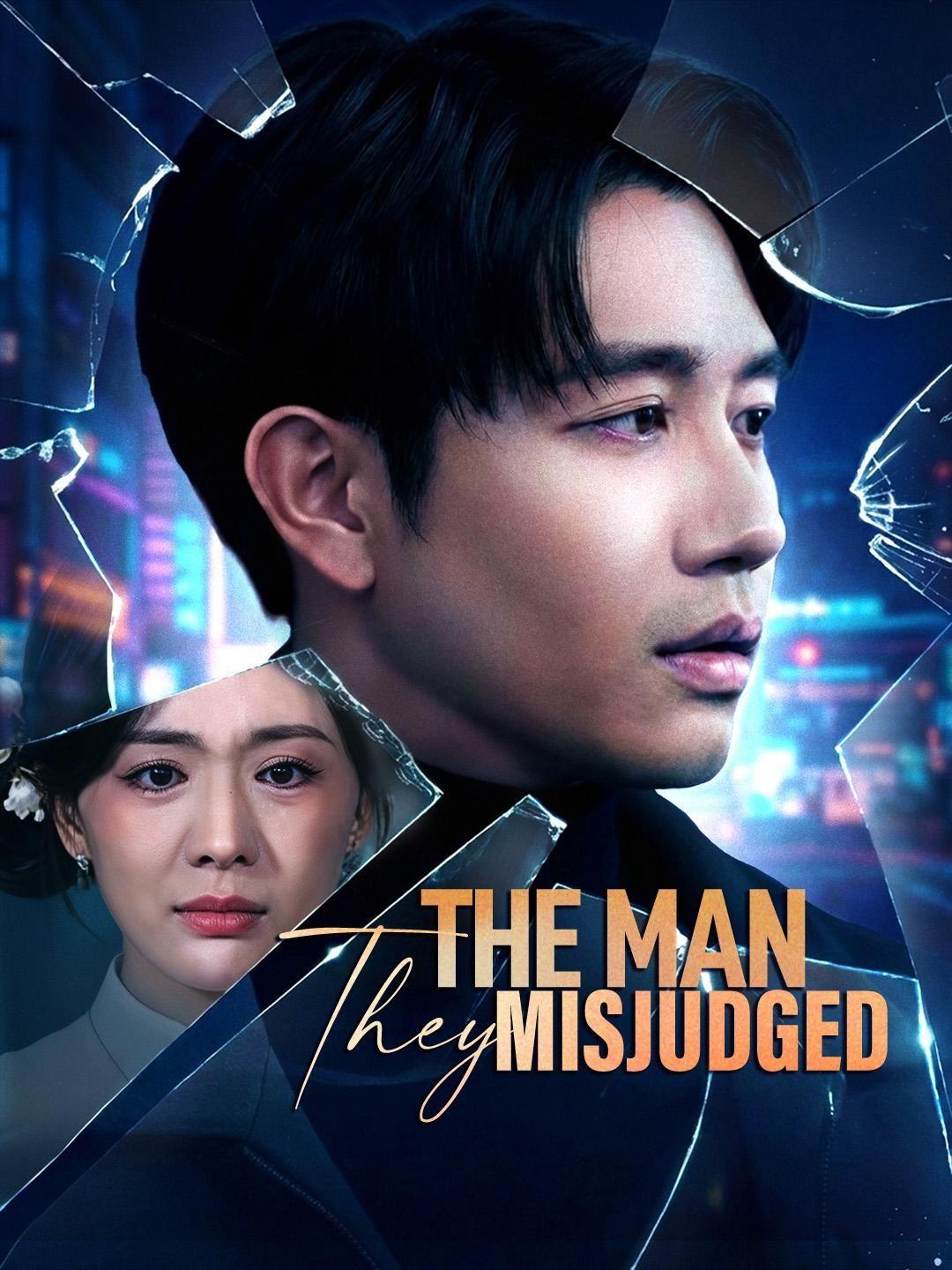
Ember Lynn and Pyrobin Hunter debate whether their daughter Danielle should learn martial arts, leading to the revelation that Pyrobin has been hiding money in his pillow, exposing yet another layer of deception between the couple.Will the discovery of Pyrobin's hidden money lead to a deeper rift between the already secretive couple?


Recommended for you



Love on the Edge of a Blade: When Silence Speaks Louder Than Swords
Let’s talk about what isn’t said in the bamboo grove. Because in Love on the Edge of a Blade, silence isn’t absence—it’s architecture. It’s the scaffolding upon which entire dynasties of regret are built. The scene opens with three figures arranged like a triptych of unresolved fate: Danielle Hunter, small and luminous in white, her hair pinned with blossoms that look too fragile for the gravity of the moment; her mother, poised in sky-blue silk, every fold of her robe a testament to discipline; and the man in white—let’s call him Master Lin, though the title feels inadequate—whose stillness could stop time. They stand before a mound of earth and a wooden post, and for nearly ten seconds, no one moves. Not a leaf stirs. Not a bird calls. That’s the first clue: this isn’t just a visit. It’s a ritual with teeth. Danielle’s entrance into speech is the spark that ignites the whole sequence. She doesn’t cry. She doesn’t kneel. She *speaks*—her voice bright, unguarded, cutting through the solemnity like a shard of glass. And what she says isn’t reverence. It’s inquiry. It’s challenge. In that instant, Love on the Edge of a Blade flips the script on traditional wuxia mourning scenes. Usually, children are silent props, symbols of continuity. Here, Danielle is the destabilizing force—the one who refuses to let the adults hide behind ceremony. Watch her face as her mother reaches out: not to hug, but to *reposition*, to gently steer her away from the grave’s edge. The mother’s hands are firm, but her eyes betray hesitation. She knows what Danielle might unearth if she leans closer. And that’s the core tension of the series: knowledge as danger, innocence as threat. When Danielle turns to Master Lin and asks—again, with that unnerving clarity—‘Was he angry when he left?’, the camera lingers on his throat. A pulse. A swallow. He doesn’t answer. He doesn’t need to. His silence is louder than any confession. The wooden markers are the unsung stars of this scene. Crude, unvarnished, written in bold brushstroke—no gold leaf, no marble, just wood and ink. ‘Shī Niè zhī Xīn Mù’—Here Lies My Master Grace Nieh. The phrasing is intimate: ‘heart of my master’, not ‘grave of’. This isn’t official record; it’s personal devotion, carved by someone who loved him beyond protocol. Then, the second marker: ‘Dì Dān zhī Mù’—Here Lies My Brother Daniel. ‘Brother’, not ‘disciple’ or ‘comrade’. The kinship is claimed, even if the world denies it. And the placement—side by side, yet separated by a foot of bare earth—mirrors the emotional geography of the survivors. They share grief, but not consensus. They stand together, yet each occupies a different moral quadrant. The mother looks at Grace Nieh’s grave with reverence; Master Lin stares at Daniel’s with something colder—guilt? Resignation? The girl, Danielle, looks at both, her brow furrowed not in sadness, but in *analysis*. She’s piecing together a puzzle no adult will solve for her. That’s the brilliance of Love on the Edge of a Blade: it trusts its youngest character to carry the thematic weight. While the elders perform propriety, she embodies consequence. Notice the details that scream subtext. The incense sticks—three of them, burning unevenly. One already half-consumed, another just catching flame. Symbolism? Perhaps. But more importantly, they’re *real*: the smoke wavers, the ash falls, the scent would hang thick in the air—cloying, sacred, suffocating. And the offerings: simple round pastries, golden-brown, placed in black ceramic bowls. Not wine, not meat, not rare herbs—just bread. Sustenance. Humility. A reminder that even masters and brothers ate, slept, bled like anyone else. The bamboo forest itself is a character: tall, straight, unyielding. It watches. It remembers. It offers no comfort, only perspective. When the camera pulls back at the end, revealing both graves in a single frame, the symmetry is brutal. Two lives ended. Two truths buried. And the surviving trio walking away—not in unison, but in staggered rhythm, as if pulled by different currents. The mother leads, Danielle follows, Master Lin brings up the rear, his gaze lingering on the graves long after the others have turned. This is where Love on the Edge of a Blade earns its title. The ‘blade’ isn’t literal here—it’s the edge of truth, the razor-thin line between loyalty and betrayal, between memory and myth. Every gesture in this scene is a parry or a thrust. The mother’s hand on Danielle’s shoulder? A block. Master Lin’s refusal to meet her eyes? A feint. Danielle’s persistent questions? A counter-strike. And the real violence isn’t in bloodshed—it’s in what’s left unsaid. When the mother finally whispers something to Danielle—her lips moving just out of earshot—we don’t need subtitles to know it’s a warning. A secret. A vow. Love on the Edge of a Blade understands that the most devastating wounds are the ones that never bleed openly. They fester in silence, in glances, in the way a child learns to read her parents’ faces like ancient scrolls. By the time the screen fades to ‘The End of Season 1’, we’re not mourning Grace Nieh or Daniel. We’re mourning the innocence that just died in Danielle’s eyes—and dreading what she’ll do with the truth she’s now holding, sharp and cold, in her small, steady hands.
Love on the Edge of a Blade: The Bamboo Graveyard Whisper
In the hushed stillness of a bamboo forest, where light filters through slender green stalks like whispered secrets, three figures stand before two modest mounds of earth—unadorned, unmarked by stone, yet heavy with meaning. This is not a battlefield or a palace courtyard; it’s a sacred silence, a space where grief wears silk and memory walks in measured steps. The scene opens with Danielle Hunter, daughter of Pyrobin and Ember Hunter, her small frame wrapped in white embroidered robes, hands clasped tightly before her as if holding back a tide. Her expression shifts from solemn awe to sudden, startling animation—a child’s voice breaking the ritual calm, her eyes wide, mouth open mid-sentence, as though she’s just glimpsed something no adult dares name. That moment alone tells us everything: this isn’t just mourning. It’s revelation. It’s inheritance. And it’s the quiet detonation at the heart of Love on the Edge of a Blade. The woman beside her—elegant, composed, dressed in pale blue layered over silver-trimmed linen—is clearly her mother, though the subtitles never confirm it outright. Her hair is coiled high with delicate floral pins, each one a tiny artifact of refinement, yet her fingers tremble slightly when she lifts them to brush a stray strand from her temple. She doesn’t cry. Not yet. But her breath catches, just once, when she turns toward the man standing opposite them—the man in white, long black hair tied with a jade-and-silver hairpiece, his posture rigid, his gaze fixed on the wooden marker before him. His name isn’t spoken, but his presence radiates authority laced with restraint. He is the anchor, the keeper of the code, the one who must speak first, even when words feel like knives. When he finally does speak—his voice low, deliberate, almost too calm—it’s not a eulogy. It’s a reckoning. He addresses the grave not as a tomb, but as a witness. And in that subtle shift, Love on the Edge of a Blade reveals its true texture: this is not a story about death, but about what survives it—loyalty, betrayal, lineage, and the unbearable weight of truth passed down like a cursed heirloom. The wooden markers are crude, hand-carved, bearing only four characters each. One reads ‘Shī Niè zhī Xīn Mù’—Here Lies My Master Grace Nieh. The other, revealed later, says ‘Dì Dān zhī Mù’—Here Lies My Brother Daniel. Two graves. Two relationships. One family fractured by duty, ambition, or perhaps love turned lethal. The placement matters: they’re side by side, yet separated by a narrow path—like lives that ran parallel until they collided. Incense sticks burn nearby, their smoke curling upward like unanswered questions. A small black bowl holds golden pastries—offerings not of opulence, but of intimacy. These aren’t imperial rites; they’re private, personal, almost defiant in their simplicity. That’s the genius of Love on the Edge of a Blade: it refuses grand spectacle. Grief here is quiet, tactile, embodied. When the mother places her hands on Danielle’s shoulders, her touch is both comfort and containment—she’s steadying the girl, yes, but also preventing her from stepping too close to the edge of understanding. Danielle resists—not with rebellion, but with curiosity. She tilts her head, studies the man in white, then glances back at the grave, her lips parting again. She knows more than she’s allowed to say. And that’s where the tension coils tightest. What makes this sequence so devastatingly effective is how it weaponizes stillness. No music swells. No wind howls. Just the rustle of bamboo, the soft crunch of dry leaves underfoot, the faint crackle of incense ash falling. Every gesture is weighted: the father’s slight turn of the head, the mother’s fingers tightening on her sleeve, Danielle’s bare feet shifting on the dirt. We’re not told what happened to Grace Nieh or Daniel—but we feel it in the way the man in white exhales, as if releasing a breath he’s held for years. His eyes flicker—not with sorrow, but with calculation. Is he remembering? Or preparing? The ambiguity is intentional. Love on the Edge of a Blade thrives in the space between what’s said and what’s withheld. When Danielle finally speaks—her voice clear, young, unburdened by pretense—she doesn’t ask ‘Why?’ She asks something far more dangerous: ‘Did he smile before he fell?’ That single line reframes everything. It suggests intimacy. It implies betrayal wasn’t sudden, but slow, insidious—a smile masking intent. The mother flinches. The man in white doesn’t blink. And in that microsecond, we realize: Danielle isn’t just a child. She’s the next generation’s truth-teller, the one who will inherit not just titles or swords, but the rot beneath the honor. The final shot—two graves, two markers, the words ‘The End of Season 1’ hovering above them like a verdict—is chilling in its simplicity. There’s no resolution. Only consequence. The bamboo forest remains, indifferent, eternal. The graves stay. The questions linger. And Love on the Edge of a Blade leaves us exactly where it wants us: standing at the edge of a blade, wondering whether the next cut will be mercy or vengeance. This isn’t closure. It’s invitation. A dare. Come back. Because the real story—the one buried deeper than these mounds—has only just begun to breathe.