



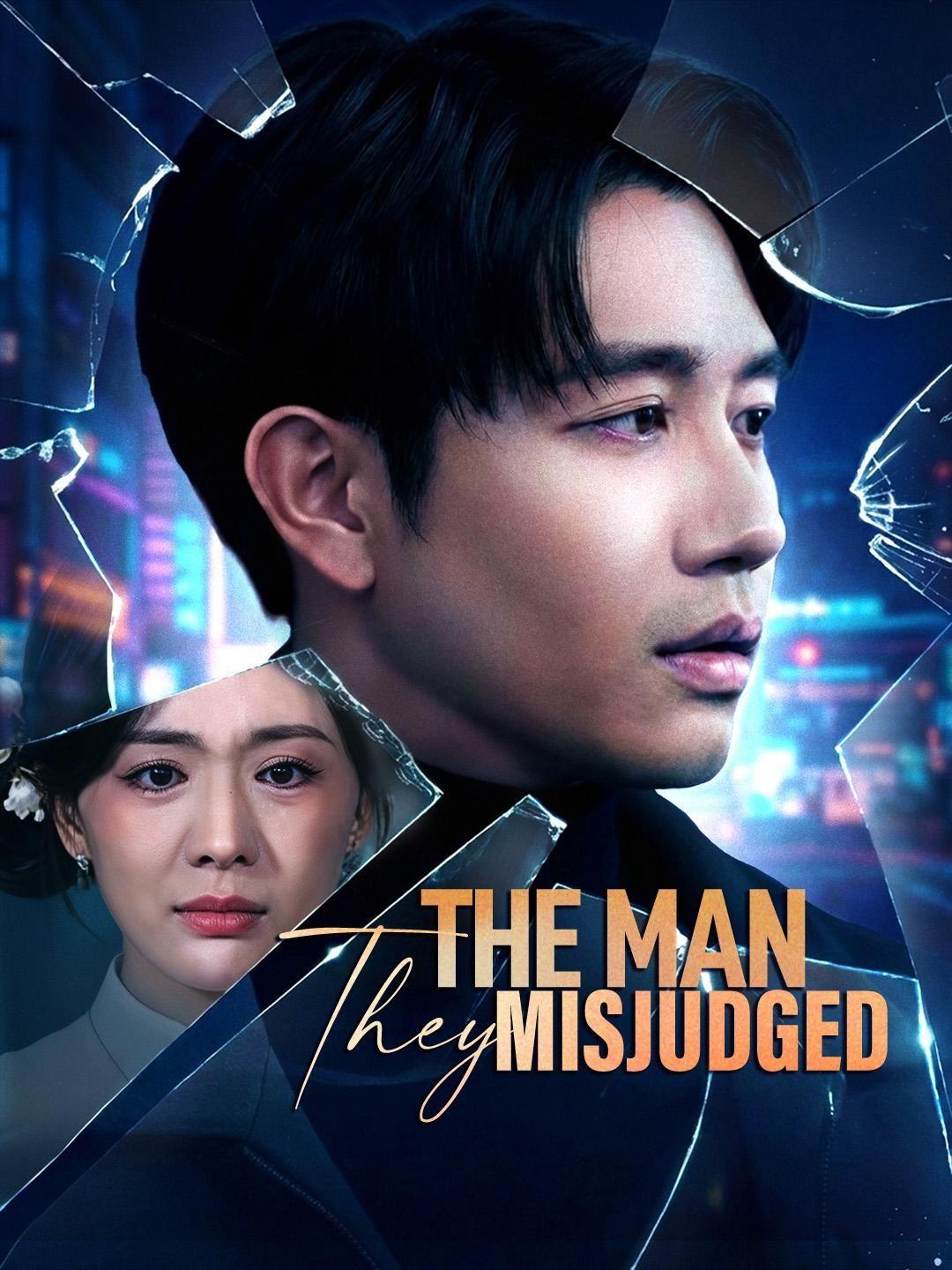
Betrayal and Deception
Ignitia is ambushed by Prudence Office's deputy commander Ian Shane and commander-in-chief Cain Crawford, who reveal Frosteel's true identity and intentions, leading to a shocking confrontation.Will Ignitia survive the betrayal and uncover Frosteel's true motives?


Recommended for you



Love on the Edge of a Blade: The Weight of a Single Glance
Let’s talk about the moment no one saw coming—the one where Su Rong *doesn’t* strike. In *Love on the Edge of a Blade*, violence is expected. Blood is practically a costume accessory. But what shocks you isn’t the sword raised—it’s the hand that *lowers* it. We’ve watched Ling Xue kneel for nearly thirty seconds, her blue robes gathering dust, her breath shallow, her eyes fixed on the floorboards as if they might swallow her whole. Su Rong stands over her, peach sleeves fluttering like moth wings, her floral hairpins catching the candlelight like tiny stars about to fall. The audience braces. The music tightens. The camera zooms in on the blade—silver, cold, impossibly sharp—hovering just above Ling Xue’s crown. And then… Su Rong blinks. Not once. Twice. And in that microsecond, the entire scene pivots. Her wrist relaxes. The sword dips. Not away—*down*, parallel to Ling Xue’s neck, not threatening, but *presenting*. It’s not surrender. It’s invitation. A challenge wrapped in restraint. That’s when Mo Feng moves. Not toward Ling Xue. Not toward Su Rong. Toward *Yan Wei*. His step is quiet, deliberate, his armor barely whispering against the wood. He doesn’t draw his sword. He *offers* it—hilt first—to Yan Wei. A gesture older than empires. A test of loyalty disguised as courtesy. Yan Wei doesn’t take it. Instead, he smiles. Not kindly. Not cruelly. *Angrily*. Because he knows. He knows Su Rong hesitated. He knows Mo Feng is protecting something—or someone—that shouldn’t be protected. And in that silence, the real story unfolds. Not in dialogue, but in the way Su Rong’s earrings sway when she turns her head just slightly toward the stairs—where Chen Yi has been watching, unseen, for the last ten seconds. His entrance isn’t flashy. No wind. No thunder. Just the soft creak of the door, the slow parting of mist, and the quiet certainty in his stride. He doesn’t look at the sword. He looks at *Ling Xue*. And she looks back. Not with hope. With recognition. That’s the heart of *Love on the Edge of a Blade*: it’s not about who wields the blade, but who *deserves* to stand beside it. Ling Xue isn’t a victim. She’s a strategist playing the long game, using her vulnerability as camouflage. Every bruise, every tremor, every forced submission—is calculated. When Su Rong leans down again, this time her voice is audible, though barely: ‘You knew he’d come.’ Ling Xue doesn’t answer. She doesn’t need to. Her silence is the loudest confession. Meanwhile, Mo Feng and Yan Wei circle each other like wolves testing dominance—not with teeth, but with posture, with the angle of their shoulders, with the way their fingers twitch near their weapons. Yan Wei’s crimson robe catches the light like spilled wine, a visual metaphor for how easily power can stain. His belt buckle—a coiled dragon—glints as he shifts his weight. He’s not afraid. He’s *annoyed*. Because for the first time, the script isn’t following his orders. Chen Yi’s arrival rewrote the rules. And now, the question isn’t whether Ling Xue lives or dies. It’s whether *truth* survives the night. The tavern itself becomes a character—the shelves behind the counter hold jars labeled with characters we can’t read, but we *feel* their weight: poison, antidote, memory, regret. A single yellow candle flickers on the counter, casting long shadows that stretch toward Ling Xue like grasping hands. The floorboards are worn smooth by decades of footsteps—some fleeing, some returning, some never leaving at all. That’s the brilliance of *Love on the Edge of a Blade*: it treats setting as psychology. Every object has history. Every shadow has motive. When Chen Yi finally speaks, his voice is calm, almost bored, as if he’s reciting a recipe: ‘The blade remembers what the tongue forgets.’ And in that line, the entire conflict crystallizes. This isn’t about betrayal. It’s about *memory*. Who gets to decide what happened? Who gets to erase it? Su Rong’s hesitation wasn’t weakness—it was resistance. She refused to let Ling Xue become a footnote in someone else’s story. And Mo Feng? He didn’t intervene to save her. He intervened to *witness*. To ensure the record stays intact. The final sequence—where Yan Wei finally draws his sword, not at Ling Xue, but at Mo Feng—isn’t about combat. It’s about rupture. The clash of steel is loud, yes, but what lingers is the sound of Su Rong’s gasp, the way Ling Xue’s fingers curl into fists, the sudden stillness of Chen Yi’s gaze as he watches the two men dance toward destruction. And then—the cut. Black screen. A single drop of blood hits the floor. *Plink*. Then silence. That’s how *Love on the Edge of a Blade* leaves you: not with answers, but with the unbearable weight of a question hanging in the air, sharp as a blade pressed to your throat. Who will speak next? Who will lie? Who will finally tell the truth—even if it kills them? The show doesn’t give you closure. It gives you *consequence*. And in a world where every word is a weapon, sometimes the bravest thing you can do is stay silent… and wait for the right moment to strike. That’s not drama. That’s survival. And in *Love on the Edge of a Blade*, survival is the only love worth risking everything for.
Love on the Edge of a Blade: When Mercy Meets Steel
The opening shot of *Love on the Edge of a Blade* is deceptively serene—a dimly lit, traditional Chinese tavern with wooden beams, hanging gourds, and a counter adorned with a red diamond-shaped ‘Fu’ character. But beneath that calm lies tension thick enough to choke on. At the center, kneeling with her back to us, is Ling Xue, her pale blue hanfu pooling around her like spilled ink, her hair tightly bound in classical knots, each pin gleaming faintly under the candlelight. She doesn’t move. Not even when the door creaks open. Not even when the air shifts—cold, sharp, metallic. That’s when we see her: Su Rong, in soft peach silk embroidered with white blossoms, her floral hairpiece trembling slightly as she strides forward, eyes wide, lips parted—not in fear, but in disbelief. Her entrance isn’t dramatic; it’s *deliberate*. She stops just behind Ling Xue, places one hand on the younger woman’s shoulder, and leans down. The camera lingers on their proximity—the contrast between Su Rong’s composed elegance and Ling Xue’s trembling posture. Then comes the whisper. We don’t hear the words, but we see Ling Xue flinch, her jaw tightening, a fresh smear of blood already drying near her temple. It’s not from a wound—it’s from a slap. Or worse: a warning. Su Rong’s fingers tighten, not cruelly, but with the weight of someone who knows exactly what’s coming next. And then—the blade. A close-up of steel glinting against dark hair, the tip hovering just above Ling Xue’s scalp. Not piercing. Not yet. Just *there*, suspended like fate itself. That moment is pure cinematic dread. It’s not about violence; it’s about control. Who holds the sword? Who holds the silence? Who holds the truth? Enter General Mo Feng, his armor blackened with rivets and ancient script, his expression unreadable as stone. He steps into frame like a shadow given form, his gaze sweeping the room—not at Ling Xue, not at Su Rong, but at the sword still poised in midair. His presence doesn’t break the tension; it *amplifies* it. He doesn’t speak. He doesn’t need to. His stillness is louder than any shout. Then, another figure descends the stairs—Commander Yan Wei, in crimson brocade with a phoenix motif stitched in gold thread, his belt heavy with insignia, his hand resting lightly on the hilt of his own weapon. He doesn’t draw it. Not yet. But the threat is implicit. The three of them—Su Rong standing over Ling Xue, Mo Feng watching from the left, Yan Wei descending from above—form a triangle of power, each corner holding a different kind of authority: maternal, martial, imperial. And Ling Xue remains at the center, silent, bleeding, *waiting*. What makes *Love on the Edge of a Blade* so gripping isn’t the swordplay—it’s the silence before the strike. Every glance exchanged between Su Rong and Mo Feng carries years of unspoken history. When Mo Feng finally speaks, his voice is low, measured, almost gentle—but his eyes never leave Yan Wei. ‘She’s not the traitor,’ he says. Not a declaration. A plea. A test. Yan Wei tilts his head, a flicker of something unreadable crossing his face—regret? Doubt? Or simply the calculation of a man who’s seen too many lies wear pretty faces. Su Rong exhales, slow and deliberate, and for the first time, she looks *away* from Ling Xue. Her gaze lands on Mo Feng—and there, in that split second, we see it: recognition. Not romantic, not nostalgic, but *familiar*. They’ve stood in this exact configuration before. Maybe in another tavern. Maybe over another body. The editing here is masterful—quick cuts between Su Rong’s tightened fists, Ling Xue’s shallow breaths, Mo Feng’s knuckles whitening on his sword hilt. The music doesn’t swell; it *hums*, a single drone note held too long, making your chest ache. Then—chaos. A blur of motion. Ling Xue lunges—not at anyone, but *past* them, toward the door. Not escape. Distraction. Because the real confrontation isn’t happening in the main hall. It’s happening *outside*. The camera whips to the doorway, where mist curls like smoke, and a new figure emerges: Chen Yi, dressed in layered white and grey, his hair tied high with a simple jade pin, his sword drawn but not raised. He doesn’t rush. He walks. Each step echoes. The light behind him bleeds blue, casting his silhouette like a ghost stepping out of legend. And in that moment, everything changes. Su Rong’s composure cracks. Mo Feng’s grip on his sword falters. Even Yan Wei takes half a step back. Because Chen Yi isn’t here to fight. He’s here to *judge*. And in *Love on the Edge of a Blade*, judgment is always deadlier than steel. The final shot lingers on Ling Xue’s face—not tear-streaked, not broken, but *awake*. She sees Chen Yi. She understands. The blood on her temple isn’t shame. It’s proof she’s still alive. Still fighting. Still *choosing*. This isn’t just a period drama. It’s a psychological duel disguised as a swordplay sequence, where every gesture, every pause, every breath is a line in a poem written in blood and silk. And if you think the blade is the sharpest thing in the room—you haven’t been paying attention. The real edge lies in what they *don’t* say. What they *refuse* to admit. What they’d rather die than reveal. That’s the genius of *Love on the Edge of a Blade*: it turns silence into suspense, and mercy into the most dangerous weapon of all.