



Watch Dubbed
Betrayal and Revenge
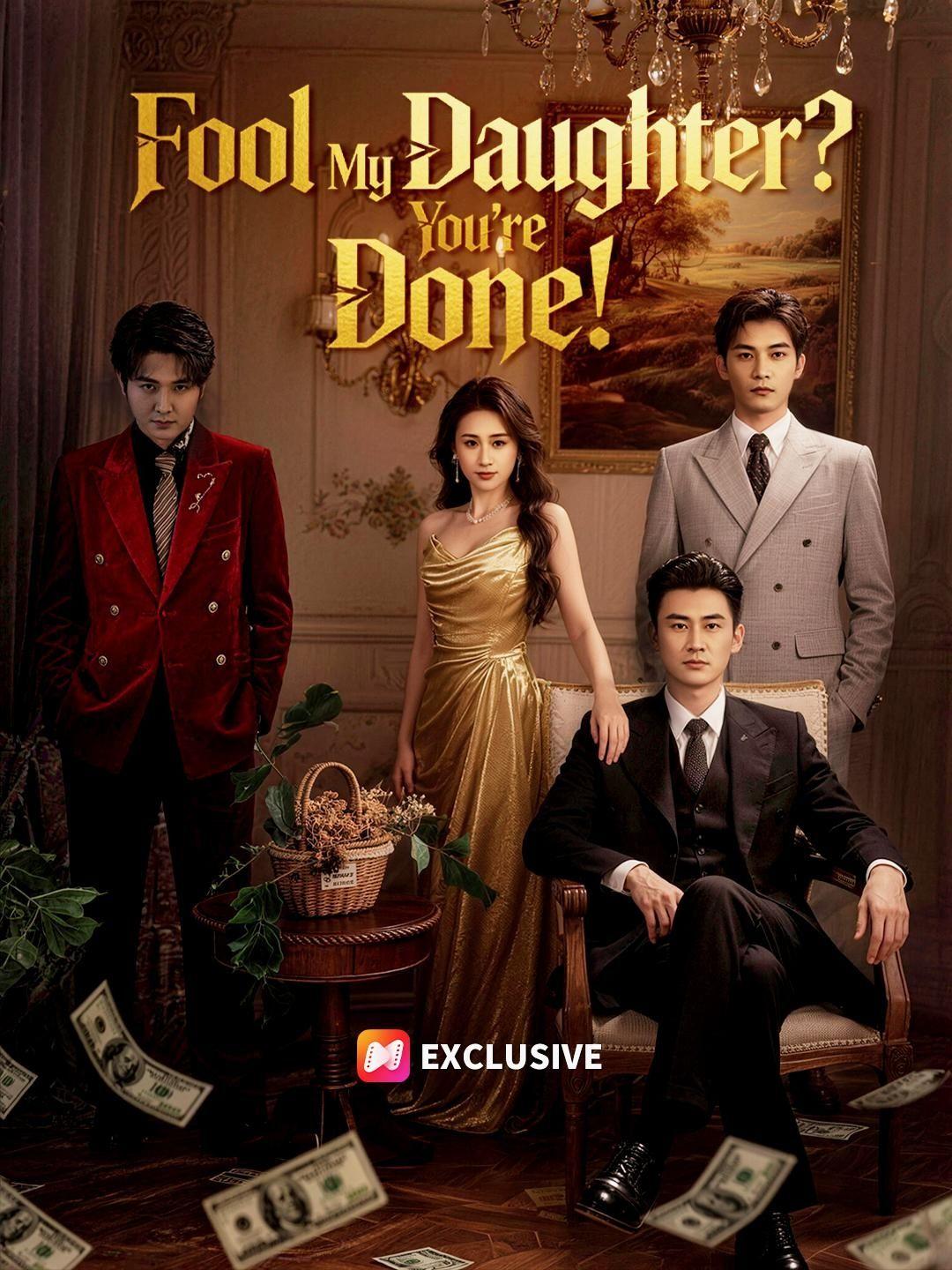
Caleb Shaw's former partners accuse him of sabotaging a major deal with Kathe Group, believing he is bitter about losing his office and conspiring with Katherine. Meanwhile, Caleb is secretly dealing with health issues, and his fiancée urges him to prioritize his well-being over business.Will Caleb's former partners discover the truth before their accusations destroy what little remains of their friendship?


Recommended for you


Too Late to Want Me Back: When a Car Door Closes, a World Ends
There’s a specific kind of dread that settles in your chest when you realize the script has flipped—not with a bang, but with the soft, definitive *click* of a luxury car door sealing shut. In Too Late to Want Me Back, that sound isn’t background noise; it’s the punctuation mark at the end of a chapter, the finality that renders all prior pleas, explanations, and denials irrelevant. The entire sequence we’re dissecting isn’t about what happens *inside* the office—it’s about the unbearable weight of what happens *after*, in the liminal space between the building’s exit and the vehicle’s departure. And in that space, four women and two men become archetypes, not because they’re clichés, but because their choices reveal universal truths about power, identity, and the cost of staying silent. Let’s start with Lin Xiao—the woman whose black ensemble could double as armor. Her outfit isn’t just fashion; it’s semiotics. The velvet dress hugs her form like a second skin, while the cropped jacket, dripping with crystal fringes, functions as both decoration and defense. Those fringes sway with every step, catching light like shattered glass—beautiful, dangerous, impossible to ignore. Her jewelry isn’t accessorizing; it’s *declaring*. The layered necklaces form a V-shape pointing downward, drawing the eye to her collarbone, to her pulse point—where vulnerability hides beneath control. When she stands in the office, hands clasped, gaze steady, she isn’t waiting for permission. She’s waiting for the right moment to act. And when that moment comes—when the black BMW glides into view—she doesn’t hesitate. She moves with the certainty of someone who’s rehearsed this exit a hundred times in her mind. Her expression? Not triumph. Not anger. Something colder: resignation laced with resolve. She knows, deep in her bones, that Too Late to Want Me Back isn’t a lament—it’s a diagnosis. And she’s the doctor delivering it. Then there’s Chen Wei, the junior associate whose white blouse and bow tie scream ‘corporate newcomer’—new recruit, fresh-faced, eager to please. But her eyes tell a different story. Wide, darting, perpetually on the verge of tears or outrage, she’s the moral compass of the group, though she lacks the authority to steer the ship. Her ID badge, clipped neatly to her lanyard, is a badge of belonging—but also of exposure. She’s visible, traceable, accountable. When Zhou Jian enters with his practiced grin and oversized collar, Chen Wei flinches. Not physically, but emotionally. Her lips press together, her chin lifts slightly—a tiny act of defiance in a world that rewards obedience. She’s the one who sees everything: the way Lin Xiao’s fingers twitch when Zhou Jian speaks, the way Su Ran’s smile doesn’t reach her eyes, the way the man in gray—Li Tao—lingers just a beat too long near the entrance. Chen Wei is the audience surrogate, the viewer’s proxy, and her growing distress is our warning siren. She knows something is wrong. She just doesn’t yet know how wrong. Su Ran, in her cream suit, operates on a different frequency. Where Lin Xiao is fire, Su Ran is water: adaptable, reflective, deceptively strong. Her outfit is elegant but not ostentatious; her pearls are classic, not flashy. She doesn’t wear her power on her sleeve—she wears it in her posture, in the way she positions herself *between* Lin Xiao and Zhou Jian, neither aligning nor opposing, but *mediating*. Her silence is strategic. When Zhou Jian gestures emphatically at 00:21, Su Ran doesn’t nod, doesn’t frown—she simply blinks, slowly, as if processing data. That blink is her weapon. It says: I hear you. I’m not convinced. Try again. Her relationship with Lin Xiao is the most fascinating layer here. They don’t touch, don’t exchange glances often—but when they do, at 00:30 and 01:53, it’s electric. Not romantic, not hostile. *Recognitive*. They see each other. They understand the game. And in Too Late to Want Me Back, that recognition is more valuable than any alliance. Zhou Jian, for all his polish, is the wildcard. His black suit is immaculate, his white shirt crisp, his belt buckle a statement piece—but his energy is restless. He talks too much, smiles too wide, moves too quickly. He’s compensating. For what? A mistake? A lie? A debt? His micro-expressions give him away: the slight narrowing of his eyes when Lin Xiao speaks (00:36), the involuntary swallow when Chen Wei looks at him (00:24), the way his hand drifts toward his pocket, as if checking for something—proof, a phone, a weapon? He’s not a villain; he’s a man who believed the rules applied differently to him. And now, standing in the hallway as Lin Xiao and Su Ran walk away, he realizes the rules were always the same. He just misread them. His final expression at 01:47—half-smile, half-frown—is the face of someone who’s just lost a bet he didn’t know he’d placed. But the true emotional climax isn’t inside the office. It’s outside, under the overcast sky, where Li Tao and his companion—let’s call her Mei Ling—stand beside the directory sign. Mei Ling’s beige trench coat and ruffled blouse suggest softness, but her grip on Li Tao’s arm is firm, possessive. She’s not clinging; she’s anchoring. And when she raises her hand to his forehead at 01:28, it’s not a gesture of affection—it’s an assessment. A check-in. A silent question: *Are you still with me?* Li Tao’s response is subtle: he doesn’t pull away, but his gaze drifts toward the departing BMW. He sees Lin Xiao stepping into the car. He sees Su Ran following. And in that moment, something shifts in him. His smile at 01:25 isn’t joy—it’s surrender. He knows, as we do, that Too Late to Want Me Back isn’t just about Lin Xiao. It’s about all of them. About the choices they made in silence, the truths they buried under polite smiles, the opportunities they let slip through their fingers because they were too busy performing competence to admit confusion. The car itself—the black BMW with license plate Jiang A·50001—is more than a prop. It’s a character. Its arrival is cinematic: smooth, inevitable, expensive. The camera lingers on the grille, the emblem, the license plate—not to flaunt wealth, but to emphasize *identity*. That number—50001—feels intentional. The first of something. The beginning of a new era. Or the end of the old one. When Lin Xiao opens the door, the reflection in the window shows her face, distorted, fragmented—just as her sense of self may be fracturing. And when Su Ran gets in beside her, the door closes with that soft, final *click*. No slam. No drama. Just closure. Absolute, irrevocable, elegant closure. What makes Too Late to Want Me Back so devastatingly effective is its restraint. There are no monologues. No tearful confessions. No dramatic reveals. The tension lives in the spaces between words, in the way Chen Wei’s knuckles whiten around her phone, in the way Zhou Jian’s smile doesn’t reach his eyes, in the way Lin Xiao walks away without looking back. This isn’t a story about winning or losing. It’s about realizing, too late, that the game was never about victory—it was about survival. And some people, like Lin Xiao, choose to survive alone. Others, like Chen Wei, are still learning how to fight. And others, like Zhou Jian, discover too late that the only thing they truly owned was the illusion of control. In the end, the most haunting image isn’t the car driving away. It’s Li Tao, standing alone by the entrance, watching them leave, his hand hovering near his wristwatch—as if time itself has betrayed him. Because in Too Late to Want Me Back, time isn’t linear. It’s recursive. Every decision echoes. Every silence compounds. And the moment you realize you should have spoken up? That’s when the door closes. And no amount of knocking will make them answer.
Too Late to Want Me Back: The Silent Power Play in the Office Corridor
In the sleek, glass-walled corridors of what appears to be a high-end corporate headquarters—perhaps the fictional NC Group, as hinted by the signage—the tension doesn’t erupt with shouting or slamming doors. It simmers, cools, and reboils in micro-expressions, posture shifts, and the deliberate placement of a hand on a car door handle. Too Late to Want Me Back isn’t just a title; it’s a psychological timestamp, marking the exact moment when desire, regret, or ambition crystallizes into irreversible action. And in this sequence, that moment arrives not in a boardroom showdown, but in the quiet hum of fluorescent lighting and polished floor tiles. Let’s begin with Lin Xiao, the woman in the black velvet dress and crystal-embellished cropped jacket. Her look is unmistakable: luxury with edge, elegance with restraint. She wears her hair in a low, severe ponytail—not a sign of disinterest, but of control. Every accessory is calibrated: the layered diamond choker, the dangling Y-necklace, the statement earrings that catch light like warning flares. When she walks, it’s not hurried; it’s *measured*. Her heels click with purpose, each step echoing the rhythm of someone who knows exactly where she stands—and more importantly, where she intends to go. In frame after frame, her eyes dart sideways, not out of fear, but calculation. She’s scanning the environment, reading the air like a chess player assessing the board before moving her queen. Her silence speaks volumes: she doesn’t need to raise her voice because her presence already commands volume. Then there’s Chen Wei, the woman in the white blouse with the oversized bow at the collar—a costume of innocence, perhaps even submissiveness, deliberately contrasted against the sharpness of her office attire. Her ID badge hangs visibly, a symbol of institutional belonging, yet her expressions betray a deeper unease. Her eyebrows lift in alarm, her lips part mid-sentence as if caught between protest and compliance. She’s the emotional barometer of the scene: when Lin Xiao glances left, Chen Wei’s gaze follows, trembling slightly. When the young man in the black suit—Zhou Jian—enters with a smile too wide for the context, Chen Wei’s shoulders tense. She doesn’t speak much, but her body language screams internal conflict: loyalty versus self-preservation, duty versus truth. Her role isn’t passive; it’s pivotal. She’s the witness, the potential whistleblower, the one who might tip the scales—if she dares. Ah, Zhou Jian. His entrance is textbook corporate charisma: tailored black suit, crisp white shirt with exaggerated collar, a belt buckle shaped like an abstract monogram—subtle, but loud enough to signal he’s not just an employee; he’s *positioned*. He smiles easily, but his eyes don’t quite match. There’s a flicker of calculation behind the warmth, a practiced charm that feels rehearsed rather than spontaneous. When he addresses Lin Xiao and the woman in the cream suit—let’s call her Su Ran, given her poised demeanor and pearl necklace—he doesn’t bow, doesn’t defer. He *stands*, arms relaxed, weight shifted forward, as if ready to pivot. His dialogue (though unheard) is implied through his mouth movements: rapid, confident, punctuated by slight head tilts. He’s not asking permission; he’s presenting a fait accompli. And yet—here’s the twist—his confidence wavers in close-up. At 00:36, his brow furrows. At 00:44, his jaw tightens. He’s not unshaken; he’s *managing* his composure. That’s the genius of Too Late to Want Me Back: it refuses to cast anyone as purely villainous or heroic. Zhou Jian isn’t evil; he’s ambitious, possibly desperate, and dangerously good at masking vulnerability behind polish. Su Ran, in her cream double-breasted suit, is the counterweight. Where Lin Xiao radiates icy authority, Su Ran exudes calm diplomacy. Her hair flows in soft waves, her pearl earrings whisper understated wealth, and her stance is open—not confrontational, but not yielding either. She listens more than she speaks, and when she does, her words are measured, her tone even. In frame 00:28, she turns slightly toward Zhou Jian, lips parted—not in agreement, but in assessment. She’s not Lin Xiao’s ally, nor is she Zhou Jian’s pawn. She occupies the middle ground, the space where power is negotiated, not seized. Her presence suggests a backstory: perhaps she was once in Lin Xiao’s position, or maybe she’s the heir apparent waiting for the right moment to step forward. The way she glances at Chen Wei at 00:24—brief, almost imperceptible—hints at a silent alliance, or at least shared concern. The setting itself is a character. The office is minimalist, modern, sterile—gray carpeting, wood-paneled walls, shelves holding decorative vases and framed art that feels curated for Instagram, not soul. There’s no clutter, no personal effects. This isn’t a place where people live; it’s where they perform. Even the tea set on the low wooden table in the wide shot (00:46) feels staged: three cups, perfectly aligned, untouched. It’s a ritual without participants—a symbol of hospitality that’s never extended. The hallway shots, with their reflective glass doors and numbered offices, reinforce the theme of transparency as illusion. You can see through the doors, but you can’t see *in*. Just like the characters: all surface, little depth—until the cracks appear. And then, the shift. At 01:09, the scene cuts outside. The air changes. Sunlight filters through trees, greenery softens the edges of concrete, and suddenly we’re in a different world—one with breath, with movement, with *life*. Here, Lin Xiao and Su Ran exit the building, not together, but in parallel, their strides synchronized like dancers who’ve rehearsed separation. A black BMW—license plate Jiang A·50001, a number that feels symbolic, almost mythic—pulls up smoothly. Lin Xiao approaches first, her hand resting on the door frame, her expression unreadable. Then Su Ran, stepping into the passenger seat with quiet grace. The driver? Unseen. But the implication is clear: this car isn’t just transportation; it’s a mobile command center, a gilded cage, a statement of status. Meanwhile, back at the entrance, Zhou Jian watches them leave. He checks his watch—not because he’s late, but because he’s timing something. His smile returns, but it’s thinner now, edged with something sharper. And then, the final beat: the man in the gray double-breasted suit—let’s name him Li Tao—appears beside a woman in a beige trench coat, her ruffled blouse and delicate gold earrings suggesting a softer aesthetic, yet her grip on his arm is firm, possessive. They walk past the same directory sign, the same shrubbery, the same architectural lines—but their energy is entirely different. Lighter, warmer, almost intimate. Yet when she touches his forehead at 01:28, her expression flickers: concern? Doubt? Regret? It’s ambiguous, and that ambiguity is the heart of Too Late to Want Me Back. Because love, ambition, betrayal—they don’t announce themselves with fanfare. They creep in during a glance, a hesitation, a car door closing too softly. What makes this sequence so compelling is its refusal to explain. We don’t know why Chen Wei looks terrified. We don’t know what Zhou Jian said that made Lin Xiao’s fist clench at 00:56 (yes, that detail—the diamond-encrusted bracelet catching the light as her knuckles whiten). We don’t know if Li Tao and his companion are lovers, siblings, or business partners playing a long game. The show trusts the audience to read between the lines, to feel the weight of unsaid things. Too Late to Want Me Back isn’t about the moment of loss; it’s about the slow dawning of realization—that the person you thought you knew has already moved on, and you’re standing in the hallway, still holding the door open, wondering when exactly you stopped being relevant. This is corporate drama at its most visceral. Not boardroom battles, but corridor standoffs. Not shouted arguments, but whispered tensions. The real power isn’t in the title you hold—it’s in who gets to step into the car first, who controls the narrative, and who, in the end, remembers to lock the door behind them. And as Lin Xiao walks away from the BMW, her back straight, her heels clicking like a metronome counting down to consequence—we know, with chilling certainty: it’s too late to want her back. She’s already gone. And the most dangerous thing about Too Late to Want Me Back isn’t the betrayal. It’s the silence that follows.