



Watch Dubbed
Betrayal and Power Play
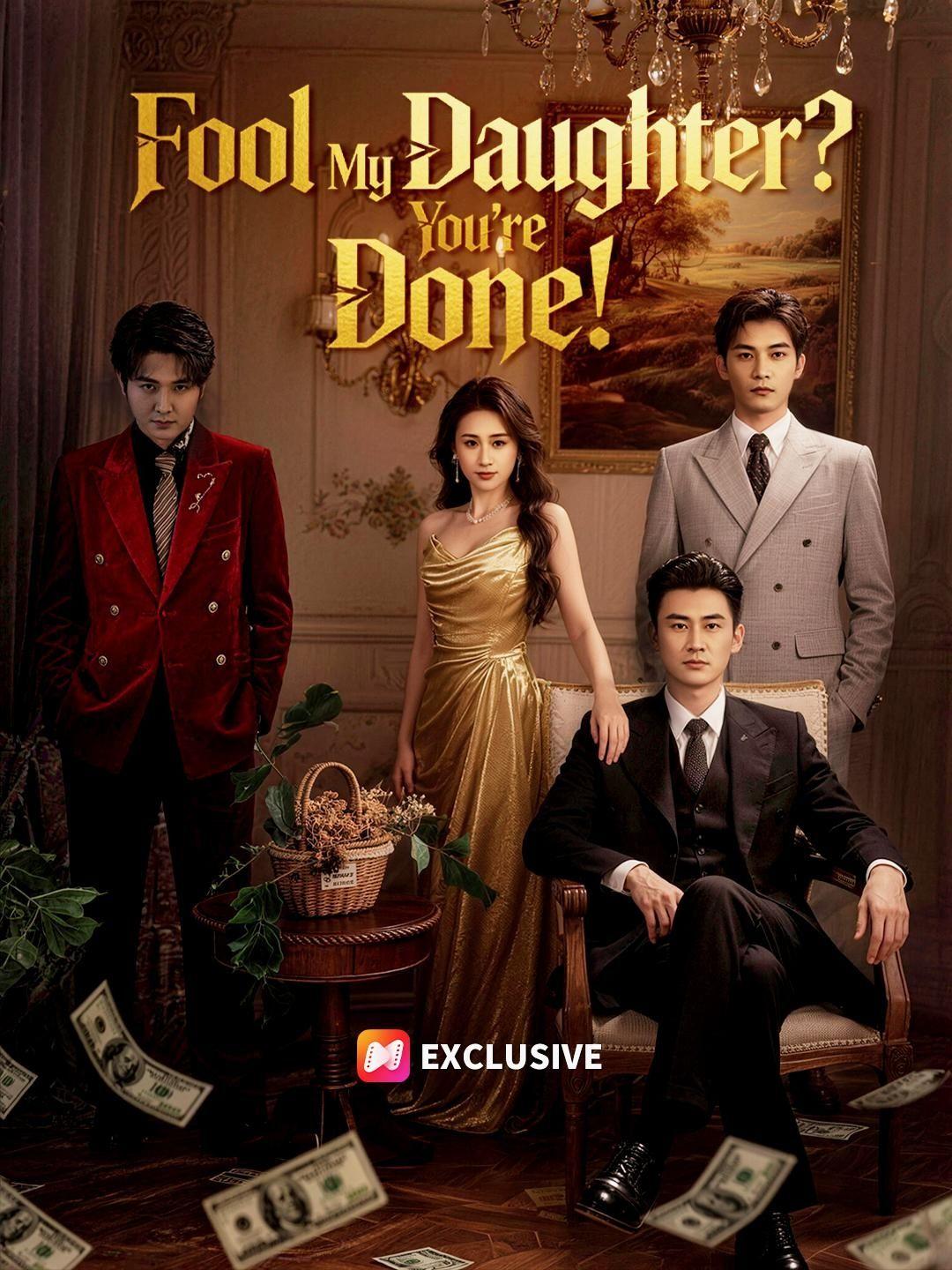
After Caleb Shaw leaves NC, the remaining partners struggle to maintain contracts and business relationships. Wyatt Jensen steps up, claiming to have resolved a key contract issue, leading Ms. Riley and Ms. Logan to promote him to general manager, deliberately provoking Caleb in hopes of forcing his return.Will Caleb Shaw respond to their provocation, or will NC face unforeseen consequences for their actions?


Recommended for you


Too Late to Want Me Back: When Elegance Becomes a Weapon
There’s a moment in *Too Late to Want Me Back*—just after Lin Jian finishes pouring water, his hands still hovering over the glass—that the entire atmosphere shifts. Not because of what he says, but because of how Shen Yueru *doesn’t* react. She stands perfectly still, her black velvet dress absorbing the ambient light like a void, the silver fringe on her jacket catching the overhead LEDs in tiny, sharp flashes. Her earrings—pearl-and-crystal fan motifs—sway minutely with each breath, the only movement in a tableau of controlled fury. Chen Xiaoyu, beside her, has uncrossed her arms, but her posture is coiled, ready to spring. The camera circles them slowly, emphasizing the triangle they form: Lin Jian at the apex, vulnerable and exposed; the two women at the base, united not by affection, but by shared disillusionment. This isn’t a negotiation. It’s an execution, and the sentence has already been passed. What’s fascinating about *Too Late to Want Me Back* is how it weaponizes aesthetics. Shen Yueru’s outfit isn’t just stylish—it’s strategic. The velvet suggests luxury, but the fringed embellishments are aggressive, almost barbed. Her necklace, a double-strand of rhinestones with a long, dangling pendant, draws the eye downward, forcing observers to follow the line of her sternum, her posture, her unbroken gaze. She doesn’t raise her voice. She doesn’t need to. Her silence is calibrated, precise, like a surgeon’s scalpel. When Lin Jian tries to explain—‘It wasn’t personal, Yueru, it was business’—she tilts her head, a gesture so slight it could be missed, but the camera catches it: her left eyebrow lifts, just a fraction, and her lips part, not in shock, but in weary amusement. ‘Business?’ she repeats, the word tasting like ash. ‘You transferred 47% of my stake to your cousin’s shell company *during* my maternity leave. Call that business. I’ll call it cowardice.’ Chen Xiaoyu, meanwhile, watches with the intensity of a hawk. Her ivory suit is immaculate, the pearl choker at her throat simple but unmistakable—a nod to tradition, to class, to the old guard Lin Jian thought he could manipulate. Her hair falls in soft waves over one shoulder, a contrast to Shen Yueru’s severe ponytail, yet her expression is no less resolute. She speaks only once in the first half of the scene, and it’s devastatingly brief: ‘You knew she was pregnant.’ Lin Jian flinches as if struck. That’s the knife twist. He didn’t just betray her professionally. He exploited her biology, her vulnerability, her trust. The office, with its minimalist decor—shelves holding ceramic vases, a framed painting of a deer with antlers made of leaves—feels suddenly claustrophobic. The yellow flowers on the coffee table, previously cheerful, now seem garish, mocking. Even the water in the pitcher looks stagnant, reflecting distorted versions of their faces. The turning point comes when Lin Jian, desperate, reaches into his inner jacket pocket. Not for a phone. Not for a contract. For a small, silver locket. He holds it out, palm up, as if offering absolution. ‘I kept this,’ he says, voice cracking. ‘From the day we founded the company. You gave it to me.’ Shen Yueru doesn’t move. Chen Xiaoyu does—she takes a half-step forward, then stops herself. The locket is engraved with initials: L & Y. A relic of a time before titles, before power, before the rot set in. For a heartbeat, the room holds its breath. Then Shen Yueru smiles. Not kindly. Not cruelly. *Knowingly.* ‘You kept it,’ she says, ‘but you forgot what it meant. It wasn’t a promise. It was a warning. “Loyalty fades. Legacy remains.” You chose the fade.’ She turns to Chen Xiaoyu, and for the first time, there’s warmth in her eyes. ‘Let’s go. The board meeting starts in ten.’ As they walk toward the door, Lin Jian calls out, ‘Yueru—wait!’ She pauses, doesn’t turn. ‘What?’ ‘Do you hate me?’ The question hangs, raw and naked. Shen Yueru exhales, a slow, deliberate release of air. ‘No,’ she says. ‘Hate requires energy. And you, Lin Jian, are no longer worth the calories.’ She exits. Chen Xiaoyu follows, pausing only to glance back—not with pity, but with pity *for him*. The door clicks shut behind them, and Lin Jian is alone. He looks down at the locket in his hand, then at the resignation letter still lying on the desk. He picks it up, reads it again, and this time, he laughs. A hollow, broken sound that echoes off the glass walls. *Too Late to Want Me Back* isn’t about redemption. It’s about irreversibility. The elegance of Shen Yueru and Chen Xiaoyu isn’t superficial—it’s armor forged in disappointment. Their clothes, their jewelry, their posture—they’re not costumes. They’re declarations. I am still here. I am still powerful. I am no longer yours to misjudge. Later, in a quieter corridor, Chen Xiaoyu speaks softly to Shen Yueru: ‘Are you sure about this?’ Shen Yueru stops, turns, and for the first time, her mask slips—not into sadness, but into something softer, almost tender. ‘I’m not leaving because I lost,’ she says. ‘I’m leaving because I finally won. He thought the company was the prize. But the real victory was realizing I didn’t need his approval to be enough.’ The camera lingers on her face, the way the light catches the crystals on her jacket, transforming them from weapons into stars. *Too Late to Want Me Back* understands a fundamental truth: in high-stakes environments, the most dangerous people aren’t the ones who shout. They’re the ones who smile while they dismantle your world, piece by silent piece. And when they walk away, they don’t look back—not because they’re heartless, but because they’ve already moved on. The office will be cleaned, the flowers replaced, the files reorganized. But the silence left behind? That’s permanent. *Too Late to Want Me Back* doesn’t end with a resolution. It ends with a question: What happens when the person you betrayed realizes they never needed you in the first place? The answer, whispered in the rustle of silk and the click of heels on marble, is chillingly simple: nothing. Because some exits aren’t dramatic. They’re just… final. And in that finality, there’s a kind of peace no boardroom could ever grant. *Too Late to Want Me Back* isn’t just a story about corporate betrayal. It’s a manifesto for quiet revolution—where elegance isn’t vanity, but vengeance refined.
Too Late to Want Me Back: The Power Play in the Chairman's Office
The opening shot of *Too Late to Want Me Back* is deceptively serene—a sleek desk, a vase of soft pink and cream roses, a wooden pen holder with an orange highlighter sticking out like a warning flare. But the calm shatters the moment hands enter frame, not gently placing documents, but slamming a black leather folder down with deliberate force. That’s when we know: this isn’t a meeting. It’s a reckoning. The camera pulls back to reveal three figures standing in the spacious, modern office—high ceilings, floor-to-ceiling windows overlooking a muted cityscape, carpeted in geometric gray. On the left, Lin Jian, dressed in a sharp black suit with a stark white collar that looks less like fashion and more like armor. His posture is rigid, his eyes darting between the two women as if calculating angles of retreat. In the center stands Shen Yueru, her black velvet dress cut with precision, the silver crystal fringe cascading from her cropped jacket like frozen tears. Her hair is pulled back in a severe ponytail, yet her earrings—delicate fan-shaped pearls—hint at vulnerability she refuses to show. To her right, Chen Xiaoyu, draped in an ivory pantsuit, arms crossed, lips pressed into a line that could cut glass. She doesn’t speak first. She doesn’t need to. Her silence is louder than any accusation. Lin Jian moves first—not toward them, but toward the coffee table, where two empty glasses sit beside a clear pitcher of water. He pours with exaggerated care, his fingers trembling just slightly as he lifts the glass. A close-up catches the ripple in the water, the way his knuckles whiten around the handle. He’s performing servility, but his eyes flick upward, scanning their faces for cracks. When he finally turns, his expression shifts—half-smile, half-wince—as if he’s rehearsed this apology a hundred times and still can’t get the tone right. ‘I didn’t mean for it to go this far,’ he says, voice low, almost pleading. But Shen Yueru doesn’t blink. She tilts her head, studying him like a specimen under glass. Her necklace—a layered chain with a dangling pendant—catches the light as she exhales slowly, deliberately. That’s when the real tension begins. Not with shouting, but with micro-expressions: the way Chen Xiaoyu’s jaw tightens when Lin Jian mentions ‘the merger’, the way Shen Yueru’s fingers twitch at her side, as if resisting the urge to reach for her phone, to call someone who’d make this all disappear. The scene pivots on a single object: a small, unassuming USB drive Lin Jian places on the desk. He doesn’t hand it over. He *leaves* it there, like bait. Chen Xiaoyu steps forward, but Shen Yueru blocks her with a subtle shift of her shoulder. ‘You think I need proof?’ she asks, voice quiet but edged with steel. ‘I saw the emails. I heard the calls. You weren’t just covering for him—you were *enabling* him.’ Lin Jian flinches. For the first time, his composure fractures. He opens his mouth, then closes it, swallowing hard. The camera lingers on his face—the sweat at his temple, the way his Adam’s apple bobs—and we realize: he’s not lying. He’s terrified. And that’s worse. What makes *Too Late to Want Me Back* so gripping isn’t the plot twist—it’s the emotional archaeology. Every glance, every pause, every gesture is a layer of buried history being unearthed. Chen Xiaoyu’s crossed arms aren’t just defiance; they’re self-protection, a physical barrier against the betrayal that’s been festering for months. Shen Yueru’s stillness isn’t indifference—it’s control. She’s the one holding the detonator, and she knows it. When Lin Jian finally breaks, stammering about ‘loyalty’ and ‘family obligations’, Shen Yueru lets out a soft, bitter laugh. ‘Loyalty? You called me *sister* while you signed the papers that would erase my name from the board.’ The word ‘sister’ hangs in the air like smoke. That’s the core wound. This isn’t corporate espionage. It’s familial treason. The third act arrives not with a bang, but with a knock on the door. A young assistant—white blouse, bow tie, ID badge swinging—enters, eyes wide, voice trembling as she announces, ‘The legal team is here. They’re asking for Mr. Lin.’ The room freezes. Lin Jian’s face goes pale. Chen Xiaoyu glances at Shen Yueru, and for the first time, there’s something like understanding between them—not forgiveness, but recognition. They’ve both been played. Shen Yueru nods once, almost imperceptibly, and the assistant withdraws. No one speaks. The silence stretches, thick with implication. Then, slowly, Shen Yueru reaches into her clutch, pulls out a single sheet of paper, and slides it across the desk toward Lin Jian. It’s not a contract. It’s a resignation letter—hers. Dated yesterday. Signed in bold, elegant script. ‘You wanted to remove me,’ she says, her voice steady now, ‘so I’m making it easy. But remember this: too late to want me back doesn’t mean too late to *fear* me.’ The final shot lingers on Lin Jian’s face as he stares at the paper, his reflection distorted in the polished surface of the desk. Behind him, the city blurs into streaks of gray and light. Chen Xiaoyu turns away, her heels clicking like a metronome counting down to collapse. Shen Yueru doesn’t look back. She walks toward the window, sunlight catching the crystals on her jacket, turning them into shards of ice. *Too Late to Want Me Back* isn’t just a title—it’s a prophecy. And in this world, prophecies have teeth. The real question isn’t whether Lin Jian will survive the fallout. It’s whether he’ll ever understand what he lost before he even knew he had it. Because some betrayals don’t end with a firing. They end with a silence so complete, it echoes forever. *Too Late to Want Me Back* reminds us that power isn’t held in boardrooms—it’s held in the space between breaths, in the hesitation before a word is spoken, in the choice to walk away while the other person is still begging you to stay. And when you finally do leave? That’s when the real damage begins. The office feels colder now. The flowers on the desk seem wilted, though they were fresh just minutes ago. Time bends in rooms like this. Emotions linger like perfume—sweet at first, then cloying, then suffocating. Lin Jian picks up the resignation letter, his fingers tracing the signature. He doesn’t crumple it. He folds it neatly, as if preserving evidence. Maybe he’ll keep it. Maybe he’ll burn it. Either way, it’s already too late. *Too Late to Want Me Back* isn’t about regret. It’s about consequence. And consequences, unlike apologies, never expire.