



Watch Dubbed
Betrayal and Illness
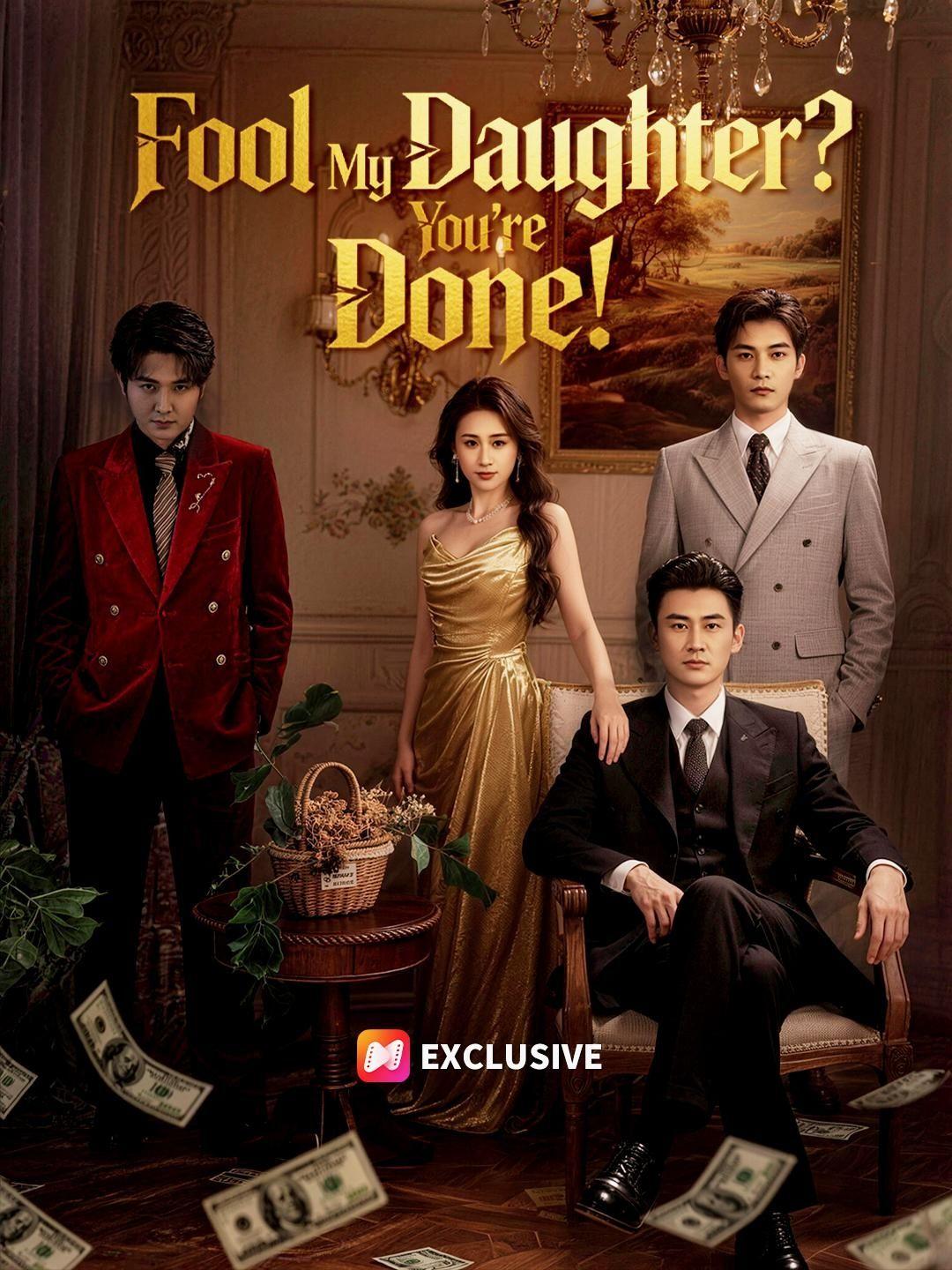
Caleb Shaw, heartbroken after being betrayed by his childhood friends, leaves the company he built with them and is mocked by the manipulative newcomer. During a party, Caleb falls ill, but his condition is dismissed as another act to win sympathy, revealing the deep rift and lack of trust among the former friends.Will Caleb's 'loyal' partners realize the severity of his condition and their mistake before it's too late?


Recommended for you


Too Late to Want Me Back: When the Drink Was Never Just Juice
Let’s talk about the apple juice. Not the kind you buy in a grocery store, not the kind that comes in a shiny green carton with cartoon fruit and the words ‘100% Natural’ printed in cheerful font. No—the juice in *Too Late to Want Me Back* is a lie wrapped in branding, a Trojan horse served in a tumbler. Zhou Mian pours it with the grace of a priestess performing a rite, her fingers steady, her gaze lowered, her lips curved in that faint, knowing smile that says: *I know you’ll drink it anyway.* And Lin Xiao does. Of course he does. Because in this world, refusal isn’t rebellion—it’s exile. To say no is to admit you’re not part of the circle. And Lin Xiao has spent years trying to prove he belongs. The scene unfolds like a chess match where the pieces are people, and the board is a round dining table set with dishes that look expensive but taste like ash. The floral arrangement in the center—roses, peonies, monstera leaves—is too perfect, too staged. It’s not decoration; it’s camouflage. Behind it, the real action happens: Lin Xiao’s hands tremble as he reaches for the tablecloth, his knuckles white, his breath shallow. He’s not drunk—not yet. He’s *anticipating*. Anticipating the next humiliation, the next demand, the next moment where his dignity will be measured in centimeters of space between his forehead and the tabletop. His tan suit, once a symbol of upward mobility, now looks like a costume he can’t remove. The gold buttons on his cuffs glint under the chandelier, mocking him. He’s dressed for success, but the script has changed—and he’s the only one who didn’t get the memo. Yao Ning stands apart, arms folded, her black blazer a fortress lined with golden butterflies. Each one is positioned with intention: one near her collarbone, as if guarding her throat; one at her waist, like a belt of armor; one lower, near her hip, where desire and danger intersect. She doesn’t move much, but her eyes do. They track Lin Xiao like a hawk tracking prey—calm, patient, utterly certain of the outcome. When he stumbles, she doesn’t blink. When Zhou Mian touches his face, Yao Ning’s lips press into a thin line—not jealousy, but calculation. She’s not threatened. She’s *waiting*. Waiting for him to choose. Waiting for him to realize that Zhou Mian’s tenderness is just another form of leverage. *Too Late to Want Me Back* isn’t about love lost. It’s about power misread as affection. And Lin Xiao? He’s been reading the wrong book for years. Chen Wei is the wildcard. He’s the one who laughs too loud, who sips his drink with exaggerated relish, who places a hand on Lin Xiao’s shoulder like a friend offering comfort—while his eyes remain cold, analytical. He’s not enjoying the spectacle. He’s studying it. Every micro-expression, every shift in posture, every time Lin Xiao’s voice cracks when he tries to speak—Chen Wei logs it. Later, he’ll use it. Not to blackmail, necessarily. But to *position*. In their world, information is currency, and emotional instability is the highest denomination. When Chen Wei pours water into a glass—clear, innocent, *safe*—and then deliberately spills it at Lin Xiao’s feet, it’s not clumsiness. It’s theater. A demonstration of control. He can give. He can take. He can make the floor wet and still stand dry. Lin Xiao, meanwhile, kneels—not in prayer, but in exhaustion. His suit is rumpled, his tie askew, his hair falling into his eyes like a curtain he can’t lift. He’s not broken. He’s just out of moves. The genius of *Too Late to Want Me Back* lies in its restraint. There are no shouting matches, no dramatic exits, no slammed doors. The tension is in the pauses—the half-second before Zhou Mian speaks, the way Yao Ning’s earrings catch the light when she turns her head, the sound of ice clinking in a glass that’s already empty. The camera lingers on hands: Lin Xiao’s gripping the chair, Chen Wei’s swirling his glass, Zhou Mian’s resting lightly on Lin Xiao’s shoulder, Yao Ning’s clasped behind her back like she’s holding something dangerous. Hands tell the truth when faces lie. And what is the truth? That Lin Xiao thought he was negotiating. That he believed if he played the role well enough—if he smiled at the right moments, nodded at the right suggestions, drank when told—he’d earn respect. Instead, he earned pity. Or worse: amusement. Zhou Mian’s touch isn’t comfort. It’s calibration. She’s testing how much pressure he can withstand before he fractures. And he’s fracturing beautifully. His eyes glisten, not with tears, but with the dawning horror of self-awareness. He sees it now: the juice wasn’t juice. The invitation wasn’t honor. The seat at the table wasn’t inclusion—it was display. *Too Late to Want Me Back* doesn’t end with a bang. It ends with a sigh. Lin Xiao sits back, defeated not by force, but by revelation. He looks at Yao Ning, and for the first time, he doesn’t see judgment. He sees recognition. She knew. She always knew. And that’s the cruelest cut of all—not that they used him, but that he let them. The butterflies on her jacket don’t move. They never do. Because transformation requires wings. And some people are meant to stay pinned. This isn’t a story about betrayal. It’s about consent—how easily we grant it when we’re desperate to belong. How we confuse proximity for intimacy, service for love, silence for agreement. Lin Xiao didn’t fall. He was *allowed* to fall. And the worst part? He thanked them for catching him—even as they let him drop. *Too Late to Want Me Back* isn’t a warning. It’s a mirror. And if you’ve ever swallowed something bitter just to keep the peace, you’ll recognize the taste. It’s apple juice. It’s whiskey. It’s regret, served neat, with a twist of gold leaf.
Too Late to Want Me Back: The Butterfly Pin That Betrayed Everything
In the tightly framed world of *Too Late to Want Me Back*, every gesture is a confession, every glance a verdict. What begins as a polished corporate dinner—white tablecloths, floral centerpieces, gleaming porcelain—quickly unravels into a psychological chamber piece where power, humiliation, and desire collide in slow motion. At the center stands Lin Xiao, the man in the tan double-breasted suit, whose impeccably tailored jacket hides a trembling vulnerability. His tie—a muted gold-and-brown pattern—mirrors his internal dissonance: he wants to appear composed, authoritative, even noble, but his hands betray him. In the opening seconds, we see him being forcibly held by another man’s gloved hand, fingers pinching his jaw, liquid dripping from his lips like a sacrament of submission. It’s not violence—it’s ritual. And Lin Xiao doesn’t resist. He closes his eyes, breathes through it, as if this degradation is part of some unspoken contract he signed long ago. The woman in black—Yao Ning—watches with the stillness of a predator who has already decided the kill. Her blazer is adorned with three golden butterflies, each meticulously beaded, shimmering under the soft overhead lights like trapped souls. They’re not decoration; they’re symbols. Butterflies signify transformation, yes—but also fragility, transience, and the cruel beauty of something that cannot stay still. Yao Ning’s hair is pulled back in a severe ponytail, her makeup precise, her red lipstick untouched by smudge or doubt. She doesn’t speak much in these frames, yet her silence speaks volumes. When Lin Xiao stumbles toward the table, knees buckling, she doesn’t flinch. She tilts her head just slightly, as if recalibrating her expectations. This isn’t surprise—it’s assessment. She knows what he’s capable of. And more importantly, she knows what he’s willing to endure. Then there’s Chen Wei—the man in navy, striped tie, crisp white shirt. He’s the audience surrogate, the one who *tries* to play the role of the decent colleague. He sips from a glass offered by the woman in ivory—Zhou Mian—who pours apple juice from a carton labeled ‘100% Apple Juice’ with almost theatrical innocence. But the juice is amber, not clear. It’s whiskey, disguised. And Chen Wei drinks it without hesitation, smiling, nodding, playing along. His smile is too wide, too practiced. He’s not fooled—he’s complicit. When Lin Xiao collapses again, Chen Wei steps forward, not to help, but to *observe*. He holds a glass of water later—not for Lin Xiao, but for himself, as if cleansing his own conscience with a sip. His final act—dumping the water onto the floor, letting the glass shatter near Lin Xiao’s feet—isn’t accidental. It’s punctuation. A full stop to whatever pretense remained. Zhou Mian, the woman in ivory, is the most dangerous of all. Her suit is double-breasted with gold buttons, her pearls delicate, her earrings teardrop-shaped—like she’s perpetually mourning something she hasn’t lost yet. She moves with quiet authority, pouring drinks, adjusting Lin Xiao’s collar, cupping his chin with a tenderness that borders on mockery. In one chilling sequence, she leans in, her lips nearly brushing his ear, while her hand grips his jaw—just as the other man did earlier. The symmetry is deliberate. She’s not rescuing him; she’s *replacing* the hand that held him down. Her touch is softer, but no less controlling. When Lin Xiao winces, she smiles—not cruelly, but with the satisfaction of someone who finally sees the truth she’s been whispering into his ear for months: You thought you were choosing freedom. You were just waiting for permission to break. The setting itself is a character. The dining room is elegant but sterile—cream walls, sheer curtains diffusing daylight into a soft haze, framed art blurred in the background like memories half-remembered. There’s no music, only the clink of glass, the rustle of fabric, the wet sound of spilled liquid on hardwood. The camera lingers on details: the way Lin Xiao’s cufflink catches the light when he reaches for the table, the frayed edge of his sleeve where he’s been tugging at it nervously, the way Yao Ning’s butterfly pins catch the reflection of Zhou Mian’s pearl necklace when she turns her head. These aren’t accidents. They’re clues. The show’s title, *Too Late to Want Me Back*, isn’t about regret—it’s about realization. Lin Xiao didn’t lose them. He never really had them to begin with. They were always watching. Always deciding. Always waiting for him to crack. What makes *Too Late to Want Me Back* so unnerving is how ordinary it feels. This isn’t a noir thriller with gunshots and shadows. It’s a boardroom betrayal dressed in silk and starched cotton. The real violence isn’t physical—it’s the erosion of self-trust. Lin Xiao keeps trying to stand, to speak, to assert himself—and each time, the ground shifts beneath him. Chen Wei offers a glass. Zhou Mian offers a touch. Yao Ning offers silence. And he takes them all, because refusing would mean admitting he’s already lost. His final expression—eyes red-rimmed, mouth parted, fingers digging into the chair cushion—is not despair. It’s surrender. He’s not crying for himself. He’s crying because he finally understands: the game wasn’t about winning. It was about proving he’d play until the end. *Too Late to Want Me Back* doesn’t give us heroes or villains. It gives us mirrors. And in those reflections, we see ourselves—how easily we confuse kindness for control, attention for affection, silence for consent. The butterflies on Yao Ning’s jacket don’t flutter. They’re pinned. Just like Lin Xiao. Just like all of us, when we mistake performance for identity. The most haunting line isn’t spoken aloud—it’s written in the way Zhou Mian’s hand lingers on his cheek after he’s already turned away. *Too Late to Want Me Back* isn’t a warning. It’s an epitaph. And the funeral is already underway.