



Watch Dubbed
The Betrayal and the Big Sale
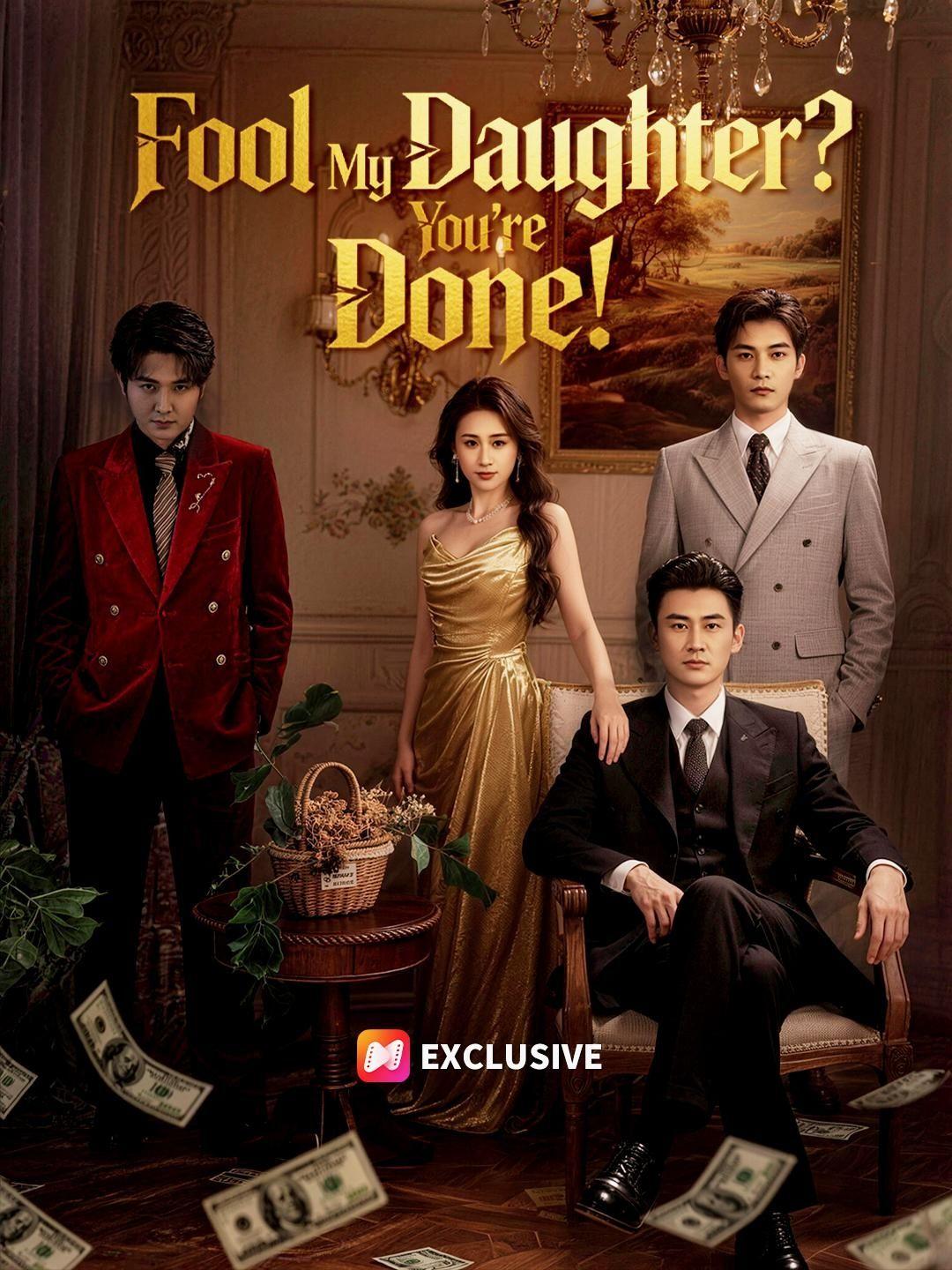
Caleb Shaw, heartbroken by his childhood friends' betrayal, sells his shares in NC Group to their sworn enemy, Yvette, making her the biggest shareholder. His friends, in disbelief, think it's a ploy to upset them, but Yvette reveals Caleb's decision to start a new life by getting married, leaving them shocked and confused.Will Caleb's friends realize the gravity of their betrayal before it's too late and he walks down the aisle?


Recommended for you


Too Late to Want Me Back: When the Signature Was a Lie
Let’s talk about the document. Not just any document—the Equity Transfer Agreement that opens *Too Late to Want Me Back* like a confession slipped under a courtroom door. The camera doesn’t rush to the text. It *lingers* on the fingers holding it: manicured, steady, but trembling at the edges. Shen Xi’s nails are nude with a hint of gloss—professional, unassuming, the kind of detail that screams ‘I belong here,’ right up until the moment she realizes she’s been standing in the wrong room all along. The paper itself is crisp, official, stamped with red seals that look less like validation and more like branding irons. Two signatures. Two dates. One lie. Because contracts aren’t about truth—they’re about *perception*. And in this world, perception is currency, and Shen Xi just found out she’s been paid in counterfeit. Xu Yan, meanwhile, holds the same document like it’s radioactive. Her black velvet dress hugs her frame like a second skin—elegant, severe, impossible to read. But her eyes? They betray everything. At 12 seconds, her pupils dilate—not in shock, but in recognition. She’s seen this before. Maybe she drafted it. Maybe she *signed* it under duress. Her gold pendant, shaped like a comma, hangs suspended between statement and interruption—exactly where her life now resides. When she speaks at 37 seconds, her voice is low, controlled, but the tremor in her lower lip gives her away. She’s not angry. She’s *disappointed*. Disappointed in Shen Xi for trusting, disappointed in herself for enabling, disappointed in the system that lets people like the man in the brown suit walk away with clean hands and dirtier consciences. His tie—ochre with green leaf patterns—feels like a joke. Nature doesn’t do betrayal. Humans do. And he’s wearing it like a uniform. Then there’s the woman in cream—the wildcard, the silent architect. Her entrance at 24 seconds isn’t dramatic; it’s *inevitable*. Like gravity. She doesn’t interrupt. She *recontextualizes*. Her suit is Ralph Lauren, yes, but the belt buckle isn’t just logo—it’s a lock. And when she crosses her arms at 42 seconds, it’s not defensiveness; it’s calibration. She’s measuring the emotional yield of each reaction, calculating leverage points, deciding who breaks first. The office behind her isn’t neutral—it’s curated. The swan statue? Symbol of fidelity. The red deer? Alertness. The vases? Fragility. Every object is a metaphor waiting to be shattered. And shatter it does—when Xu Yan pulls out her phone at 86 seconds, not to call for help, but to *activate* something. A recording? A wire? A trigger? The ambiguity is the point. *Too Late to Want Me Back* thrives in the gray zone between legality and morality, where contracts are binding but conscience is optional. The transition to the bridal suite at 90 seconds isn’t escapism—it’s escalation. The white gown isn’t innocence; it’s irony. Sequins glitter like broken promises. The veil doesn’t hide her face; it *frames* her panic. And when the phone rings—‘Xu Yanru’ glowing on screen—the irony is brutal. The person who signed away 40% of the company is now calling the woman who thought she was marrying into security. Is it a warning? A threat? A plea? The bride doesn’t answer. She stares at the screen like it’s a mirror reflecting a future she no longer recognizes. That hesitation—those three seconds of silence—is louder than any dialogue. *Too Late to Want Me Back* understands that the most devastating moments aren’t the explosions; they’re the pauses before the detonation. The real tragedy isn’t that Shen Xi was deceived. It’s that she *wanted* to believe. She held the contract like a prayer, hoping the fine print would absolve her of doubt. And when it didn’t? She didn’t crumble. She recalibrated. Her final expression at 57 seconds isn’t defeat—it’s recalibration. She’s already drafting her countermove in her head, word by word, clause by clause. This isn’t a love story. It’s a forensic examination of trust. Every glance, every gesture, every misplaced comma in the contract serves a purpose. Xu Yan’s earrings—long, geometric, dangling like pendulums—swing with her uncertainty. Shen Xi’s pearl necklace stays pristine, even as her world fractures. The man in brown? He never looks directly at the camera. He’s always angled toward escape. And the woman in cream? She’s the only one who meets the lens head-on. Because she knows: the audience is watching. And in *Too Late to Want Me Back*, being seen is the first step toward being held accountable. The wedding isn’t the end. It’s the trial. The veil isn’t protection—it’s evidence. And when the phone rings a third time at 105 seconds, bathed in golden light like a divine intervention, we finally understand: some contracts aren’t meant to be honored. They’re meant to be *broken*. And the person who breaks them? They don’t ask permission. They just pick up the phone—and change the terms.
Too Late to Want Me Back: The Contract That Shattered Three Lives
In the opening frames of *Too Late to Want Me Back*, we’re thrust into a corporate warzone disguised as a modern office—polished floors, minimalist decor, and tension so thick you could slice it with the silver paperclip dangling from Shen Xi’s ear. She’s not just holding a document; she’s holding a detonator. Her fingers tremble slightly—not from weakness, but from the sheer weight of realization. The contract in her hands isn’t just legal paperwork; it’s a tombstone for trust, signed in bloodless ink but soaked in betrayal. Every flicker of her eyes, every micro-expression as she flips the pages, tells us she already knew something was off—but not *this* off. The camera lingers on her pearl necklace, a symbol of purity and tradition, now clashing violently with the cold pragmatism of the equity transfer agreement she’s reading. It’s not just about shares—it’s about identity, legacy, and who gets to decide what ‘family’ means when money talks louder than vows. Then there’s Xu Yan, the woman in black velvet, whose posture is rigid but whose voice cracks like thin ice when she speaks. She doesn’t shout. She doesn’t cry. She *accuses* with silence, then delivers lines like surgical strikes: “You think this is over?” Her gold pendant—a simple curved bar, almost like a suppressed sigh—hangs against her sternum, a quiet rebellion against the performative elegance demanded by the boardroom. When she pulls out her phone at the climax, not to call for help, but to *record*, the shift is chilling. This isn’t desperation. It’s strategy. She’s been playing three-dimensional chess while everyone else thought they were in checkers. And the man in the brown suit? He’s the ghost in the machine—present, but never quite *there*. His tie, patterned with leaf motifs, feels ironic: nature’s growth, frozen in polyester. He watches, blinks slowly, mouths half-formed denials, but never steps forward. He’s complicit not through action, but through omission—the most dangerous kind. The third woman, dressed in cream with an RL belt buckle gleaming like a badge of authority, enters like a storm front. Her arms cross not in defense, but in declaration. She’s not part of the original trio; she’s the arbiter, the unexpected variable. Her presence rewrites the rules mid-game. When she gestures outward, palms up, it’s not surrender—it’s invitation to chaos. The background shelves hold vases, swans, red deer figurines—symbols of harmony, grace, and wildness—all arranged too perfectly, like a stage set waiting for the curtain to drop. And drop it does. In the final sequence, the tone shifts violently: white lace, veils, studio lights, and a phone ringing with the name ‘Xu Yanru’ flashing on screen. The bride—yes, *the bride*—stands frozen in her gown, sequins catching light like shattered glass. That moment isn’t romantic. It’s apocalyptic. The wedding dress isn’t a celebration; it’s armor. And the incoming call? It’s not a last-minute RSVP. It’s the final clause in the contract no one saw coming. *Too Late to Want Me Back* doesn’t just explore betrayal—it dissects how easily love, loyalty, and legality can be weaponized when ambition wears a tailored jacket and smiles with teeth. What makes this segment unforgettable is how it refuses melodrama. No screaming matches. No thrown files. Just glances that cut deeper than knives, documents that speak louder than speeches, and a single ringtone that shatters an entire illusion. Shen Xi’s tear doesn’t fall until frame 57—after she’s already processed the truth, after she’s decided what to do next. That restraint is power. Xu Yan’s smirk at 38 seconds isn’t triumph; it’s resignation wrapped in venom. And the cream-suited woman? She’s the real protagonist—not because she drives the plot, but because she *controls the framing*. She decides who gets to speak, who gets to be seen, and who gets erased. *Too Late to Want Me Back* understands that in modern relationships, the most violent acts are often committed in silence, in signatures, in the space between ‘I love you’ and ‘I own you.’ The wedding scene isn’t an epilogue—it’s a trapdoor. The veil isn’t modesty; it’s camouflage. And when the phone buzzes again at 104 seconds, we don’t need to hear the voice on the other end. We already know: the deal is off. The marriage is void. And the real game? It hasn’t even started yet. *Too Late to Want Me Back* isn’t about regret—it’s about the terrifying clarity that comes *after* the point of no return. You don’t miss someone when they leave. You miss the version of yourself you were when you believed they’d stay.