



Desperate Plea
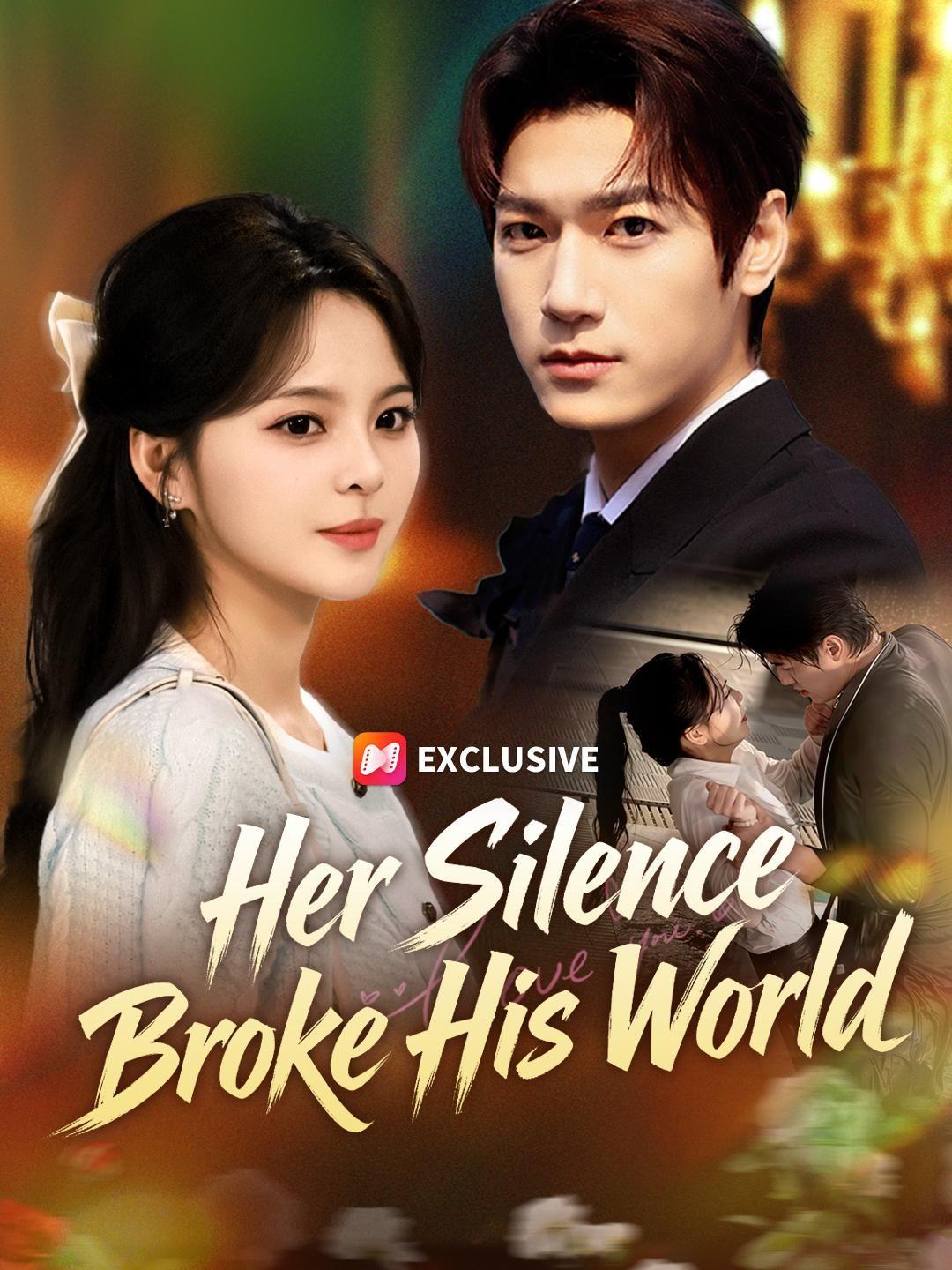
Eva Shaw, in dire danger on the rooftop with Mr. Zane, sends a desperate message to Ethan Yates through a friend, revealing her true name and begging for his help. Ethan initially dismisses the plea but changes his mind upon hearing her genuine words, rushing to her rescue. Meanwhile, Eva faces torment and humiliation from Mr. Zane, who belittles her worth, but she defiantly resists, showing her strength even in desperation.Will Ethan arrive in time to save Eva from Mr. Zane's cruel intentions?


Recommended for you



Trap Me, Seduce Me: When the Aquarium Becomes a Confessional
There’s a moment—just one—that defines the entire emotional architecture of *Trap Me, Seduce Me*. Not the drowning. Not the wheelchair. Not even the smile Zhou Yan gives while Xiao Yue fights for breath. It’s earlier. In the apartment. When Lin Wei, still lounging on the sofa, lifts his gaze from Xiao Yue’s trembling hands and locks eyes with Chen Hao—who hasn’t moved, hasn’t spoken, hasn’t blinked. And in that silent exchange, something passes between them: not hostility, not alliance, but *recognition*. As if they’ve both seen the same ghost, and they’re deciding whether to bury it or let it walk among them. That’s the core of this series: it’s not about plot twists. It’s about the quiet detonations that happen between heartbeats. *Trap Me, Seduce Me* operates in the negative space—the pauses, the glances, the way a character’s fingers curl when they’re lying, or how their breath hitches when they’re remembering something they wish they could forget. Xiao Yue is the axis around which this world spins, but she’s not passive. Watch her closely. In the white dress, she doesn’t beg—she *negotiates*. Her voice is low, controlled, even as her knuckles whiten around her own wrists. She’s not asking for mercy; she’s offering a trade. And Lin Wei knows it. That’s why he doesn’t dismiss her. He studies her, like a collector examining a rare artifact he’s unsure whether to display or destroy. His watch—a heavy, masculine piece—contrasts with her delicate silver bangle. Symbolism? Maybe. Or maybe it’s just that in this world, time is the only currency that matters, and they’re both running out. Chen Hao, meanwhile, remains a cipher. His suit is flawless, his posture military-straight, but his eyes—when they flick toward Xiao Yue—hold a flicker of something ancient. Guilt? Loyalty? Love, long since fossilized into duty? The show refuses to name it. And that’s its strength. We don’t need to know *why* he stands there. We only need to feel the weight of his presence—as oppressive as the curtains behind him, as inevitable as the rain that will soon fall. Then the transition: the car ride. No dialogue. Just the hum of the engine, the blur of city lights, and Xiao Yue’s reflection in the window—fractured, multiplied, unstable. She’s not crying. She’s *processing*. This is where *Trap Me, Seduce Me* reveals its cinematic intelligence: it treats silence as a character. The absence of sound isn’t emptiness; it’s accumulation. Every unspoken word settles like dust in the corners of the frame. When she appears later in the wheelchair, pushed by an older woman whose face is kind but weary, the shift is devastating not because of the disability, but because of the *dignity* she still clings to. Her dress is simple, her hair neatly pinned, her pearl necklace untouched—small acts of resistance against erasure. And when she speaks outdoors, her voice is steady, even as tears track through her mascara. She’s not broken. She’s *reforged*. The trauma hasn’t shattered her; it’s annealed her. That’s the real seduction of *Trap Me, Seduce Me*: it doesn’t romanticize pain. It shows how pain becomes language. Now—the aquarium. Let’s be clear: this isn’t torture porn. It’s ritual. The tank isn’t a prison; it’s a stage. The lighting—deep indigo, streaks of magenta, the glow of a massive screen behind it showing a distorted hallway—creates a dreamscape where reality bends. Xiao Yue floats in crimson, her dress swirling like smoke, her earrings catching the light like fallen stars. She doesn’t thrash. She *floats*. As if she’s chosen this submersion, this suspension between life and surrender. And Zhou Yan—ah, Zhou Yan. He’s the architect of this theater. His black silk shirt, the chain around his neck (a relic of rebellion, now polished into ornament), the way he swirls his brandy like he’s mixing a potion—he’s not a villain. He’s a curator. He’s presenting Xiao Yue to *herself*, forcing her to confront the version of her that exists outside of performance, outside of expectation. When he raises his glass, it’s not mockery. It’s acknowledgment. *I see the truth you hide even from yourself.* And when he finally approaches the tank, his smile isn’t cruel—it’s intimate. He knows her better than she knows herself. That’s the trap: not the water, but the certainty that someone else holds the map to your soul. The bucket scene is the pivot. Water crashes in, violent and sudden, and for the first time, Xiao Yue *reacts*. Not with fear—but with fury. Her eyes snap open, her body arches, her hands slam against the glass—not in desperation, but in defiance. She’s not drowning. She’s *protesting*. And Zhou Yan? He doesn’t laugh. He *leans in*. His expression shifts from amusement to something darker, more complex: respect. He sees her fire, and it excites him. Because now the game has changed. It’s no longer about control. It’s about resonance. When Lin Wei enters later, he doesn’t rush. He doesn’t shout. He walks with the calm of a man who’s already decided his next move. And when he stands before Zhou Yan, the tension isn’t physical—it’s metaphysical. Two men who understand the cost of power, standing on opposite sides of a glass wall that holds the woman who ties them together. Lin Wei doesn’t try to free Xiao Yue. He doesn’t even look at her. He looks at Zhou Yan—and in that look, we understand: this isn’t a rescue mission. It’s a reckoning. The final shots—Xiao Yue underwater, her face serene despite the chaos, her hand pressed to the glass as if sealing a vow—tell us everything. She’s not waiting to be saved. She’s waiting to be *chosen*. And *Trap Me, Seduce Me* leaves us hanging not with a question, but with a promise: the trap is set. The seduction is complete. And the only way out is through the heart of the storm. Who will break first? Not her. Never her. The real suspense isn’t whether she survives the water—it’s whether the men who love her, fear her, or worship her can survive the truth she’s about to reveal. Because in this world, the deepest drownings happen on dry land.
Trap Me, Seduce Me: The Glass Coffin and the Man Who Smiled at Drowning
Let’s talk about what we just witnessed—not a scene, but a psychological rupture. In the opening frames of *Trap Me, Seduce Me*, we’re dropped into a sleek, cold-lit apartment where three people orbit each other like celestial bodies caught in a failing gravitational system. Lin Wei, reclined on the sofa in an unbuttoned ivory shirt, exudes a kind of exhausted dominance—his posture is relaxed, but his eyes are sharp, calculating. He doesn’t speak much, yet every micro-expression speaks volumes: the slight tightening around his jaw when the woman in white—Xiao Yue—begins to plead; the way his fingers twitch on his thigh, as if resisting the urge to reach out or push her away. She stands before him, hands clasped, wearing a dress that looks both bridal and funereal—ruffles like folded prayers, a silver watch on her wrist ticking not time, but desperation. Her voice trembles, though we never hear the words; the silence is louder than any dialogue could be. Behind her, Chen Hao stands rigid in a double-breasted black suit, his expression unreadable, yet his stance suggests he’s not there as a witness—he’s there as a guard, a silent enforcer, or perhaps a man waiting for permission to intervene. The tension isn’t built through shouting or violence; it’s built through stillness, through the unbearable weight of what *isn’t* said. That’s the genius of *Trap Me, Seduce Me*: it understands that power doesn’t always roar—it often whispers, then watches you crumble under its silence. Then—the cut. A shift so brutal it feels like a slap. We’re now inside a car, night outside blurred by motion and streetlights. Xiao Yue sits beside someone—perhaps Chen Hao again—but her face is different. Not pleading now. Not anxious. Just hollow. Empty. As if the earlier confrontation didn’t end with resolution, but with erasure. Her lips move, but no sound comes. Her eyes stare ahead, not at the road, not at her companion—just *through*. This is where the show reveals its true texture: it’s not about romance or betrayal in the traditional sense. It’s about how trauma reshapes identity. When she appears later, pushed in a wheelchair by an older woman (a caregiver? a mother?), her gray sleeveless dress is elegant, but her shoulders slump like she’s carrying something invisible yet crushing. Her makeup is perfect—red lips, kohl-lined eyes—but her eyes themselves are raw, red-rimmed, leaking grief that refuses to fully spill. She speaks again, this time outdoors, under city lights that flicker like dying stars. Her voice cracks—not from weakness, but from the sheer effort of holding herself together while the world keeps turning. And here’s the chilling detail: she’s not looking at the person beside her. She’s looking *past* them, toward something only she can see. A memory? A threat? A future she’s already resigned to? Which brings us to the aquarium scene—the centerpiece, the horror, the twisted climax of this narrative arc. Because yes, *Trap Me, Seduce Me* doesn’t flinch. It plunges us into a dim, neon-drenched chamber where a glass tank—resembling a luxury coffin—holds Xiao Yue, submerged in water, wearing a deep crimson dress that blooms like blood in liquid. Her hands press against the glass, fingers splayed, nails painted a soft pink that contrasts grotesquely with the violence of her situation. She’s not struggling wildly; she’s *waiting*. Breathing shallowly, eyes open, watching the man who sits across from her—Zhou Yan—sipping brandy, smiling. Zhou Yan. The new antagonist, or perhaps the final evolution of the old one. His hair is longer, styled with careless precision; he wears black silk, a chain necklace with a tiny cross, and a ring that catches the light like a weapon. He doesn’t leer. He *observes*. He tilts his head, amused, as if watching a performance he commissioned. When he raises his glass, it’s not a toast—it’s a punctuation mark. And when he finally stands, walks forward, places his palm against the glass opposite hers… the symmetry is unbearable. Their hands almost touch, separated only by millimeters of tempered glass and gallons of water. He smiles wider. Then he *laughs*. Not cruelly—not yet. But with the kind of delight that suggests he’s been waiting for this moment for years. This is where *Trap Me, Seduce Me* transcends melodrama: it turns captivity into theater, suffering into spectacle, and makes the audience complicit. We’re not just watching Xiao Yue drown—we’re watching her *choose* to stay submerged, because rising would mean admitting defeat, and she’d rather vanish than surrender. The bucket sequence is the breaking point. A henchman—faceless, efficient—appears behind the tank, lifts a pale blue bucket, and dumps its contents into the tank. Not slowly. Not ceremonially. *Violently*. Water surges, bubbles explode upward, Xiao Yue’s body jerks as the sudden pressure forces air from her lungs. She gasps underwater, mouth open, eyes wide—not with panic, but with recognition. She *knew* this was coming. And Zhou Yan? He doesn’t flinch. He leans back, crosses his legs, and watches her thrash—not with disgust, but with fascination. Like a scientist observing a reaction. Then, in a single, devastating cut, his expression shifts. Not anger. Not pity. *Disappointment*. As if she failed a test he didn’t even tell her about. He rises, walks to the tank, presses his forehead against the glass, and whispers something we can’t hear. Her eyes lock onto his. And for the first time, she doesn’t look afraid. She looks *challenging*. That’s the trap: not the water, not the glass, but the fact that she still has agency, even here. Even now. Even as her lungs burn and her vision blurs, she’s not a victim. She’s a player. And Zhou Yan knows it—which is why he smiles again, softer this time, almost tender, as if saying: *I see you. I always saw you.* Then Lin Wei returns. Not storming in like a hero. Not rushing to save her. He walks in slowly, deliberately, from a dark corridor lit only by a single overhead bulb—his silhouette sharp, his suit immaculate, his expression unreadable. He stops a few feet from the tank. Doesn’t speak. Doesn’t gesture. Just *looks* at Xiao Yue. And in that look, everything changes. Because now we see it: the three of them—Lin Wei, Zhou Yan, Xiao Yue—are bound by something deeper than love or hate. A history. A debt. A shared secret buried under layers of performance. When Lin Wei finally moves, it’s not toward the tank. It’s toward Zhou Yan. They stand face-to-face, inches apart, the tank between them like a mirror reflecting their duality. Zhou Yan grins, full of teeth, but his eyes are wary. Lin Wei says nothing. He simply raises his hand—and for a split second, we think he’ll strike. But he doesn’t. He touches Zhou Yan’s collar, adjusts it, with the intimacy of an old friend. Then he steps back. And Xiao Yue, underwater, closes her eyes. Not in surrender. In understanding. *Trap Me, Seduce Me* isn’t about who rescues whom. It’s about who *chooses* to stay trapped—and why. The final shot lingers on her face, half-submerged, lips parted, water streaming down her cheeks like tears she refused to shed on land. The glass is fogged. The lights pulse. And somewhere, offscreen, a clock ticks. Three people. One tank. Infinite ways to drown. And the most dangerous trap of all? Believing you’re the one holding the key.