



The Naming Game
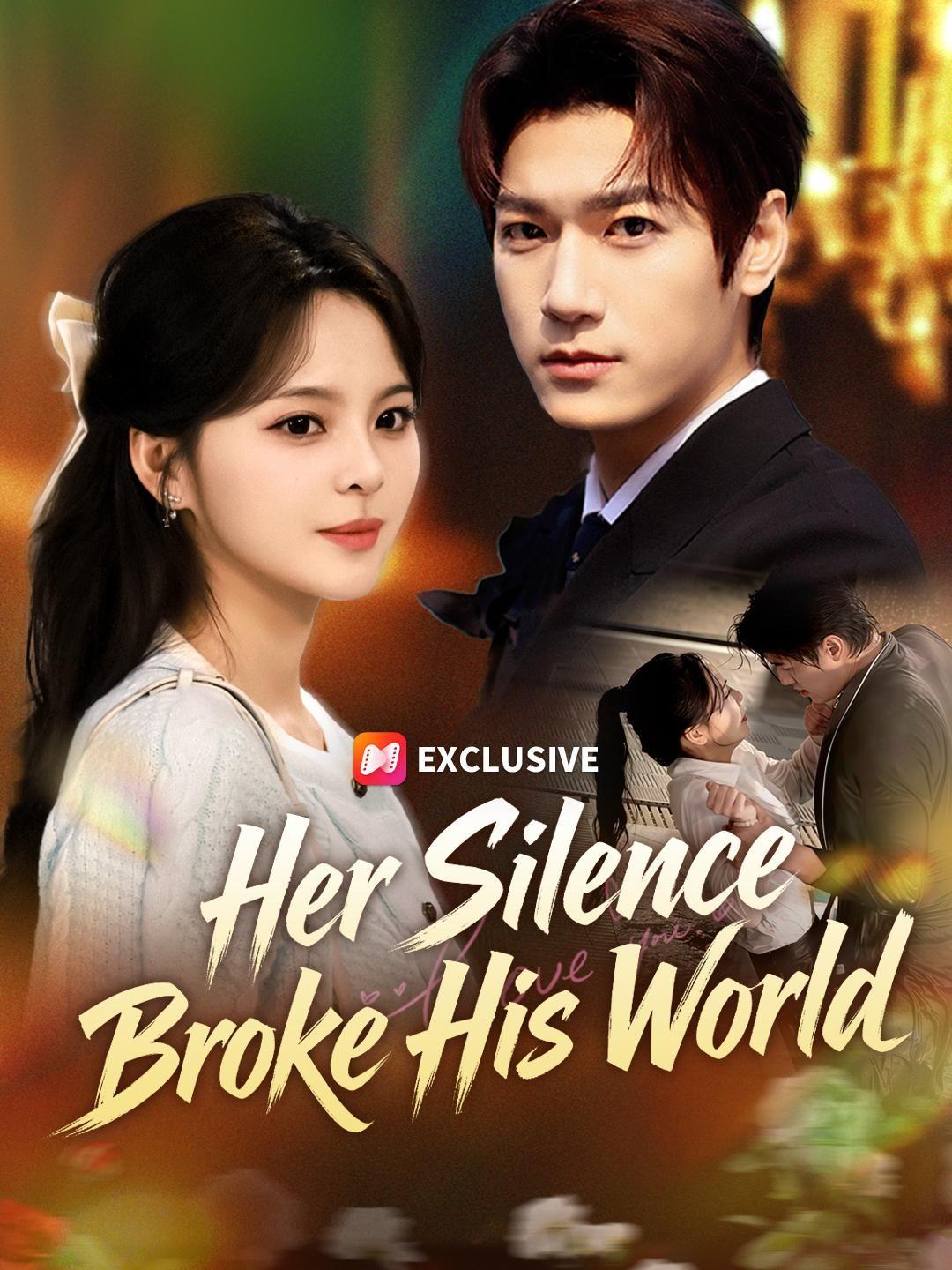
At a gathering, Eva Shaw is humiliated by Ethan Yates, who gives her a degrading nickname 'Pussy Shaw' in front of everyone. Despite the humiliation, Eva is desperate to secure medicine for her sister's treatment, which Ethan controls.Will Eva be able to endure Ethan's torment to save her sister, or will she find another way to get the medicine?


Recommended for you



Trap Me, Seduce Me: When the Lounge Becomes a Confessional
There’s a specific kind of silence that settles in upscale lounges after the music dips—a silence that hums with possibility, danger, and the faint scent of expensive bourbon. In this excerpt from *Trap Me, Seduce Me*, that silence isn’t empty. It’s *occupied*. Occupied by Lin Jian’s restless fingers tracing the edge of a smartphone, by Xiao Yu’s hand hovering over her chest like she’s trying to silence a confession before it escapes, by Mei Ling’s practiced smile that never quite reaches her eyes. This isn’t just a party. It’s a stage where every character is playing a role they’ve outgrown—but can’t afford to abandon. Let’s start with Lin Jian. He’s dressed like a man who owns the building, but his body language screams uncertainty. Notice how he leans forward when speaking, then immediately retreats—shoulders pulling inward, jaw tightening. He’s not commanding the room; he’s *negotiating* with it. The lighter in his hand isn’t a prop. It’s a metronome. Click. Pause. Click. Each motion syncs with his internal rhythm: *Should I speak? Should I leave? Should I reach for her?* And when he finally does turn toward Xiao Yu—really turn, not just glance—the shift is seismic. His pupils dilate. His lips part. For a fraction of a second, the mask slips, and what we see isn’t confidence, but *hunger*. Not sexual, not even romantic—something deeper. The hunger of a man who’s spent years building walls, only to realize the one breach he can’t fix is the one he created himself. Xiao Yu, meanwhile, is the quiet storm. Her lace dress isn’t provocative—it’s *armored*. The sheer fabric reveals nothing; the structure underneath holds everything together. Her pearl necklace, with its distinctive eye motif, isn’t jewelry. It’s surveillance. A reminder that she’s always being watched—even by herself. When Mei Ling enters in that blood-red dress, the contrast is intentional. Red is urgency. Red is warning. Red is the color of a stop sign no one obeys. Mei Ling doesn’t walk; she *advances*, hips swaying with the certainty of someone who’s memorized every exit and every weakness in the room. Her speech—though unheard—is clearly directive. She’s not addressing the group. She’s speaking *to* Lin Jian, *past* Xiao Yu, and *through* Zhou Wei, who’s suddenly very interested in his glass. Ah, Zhou Wei. The loudest man in the room, yet the least heard. His robe—black silk with crimson and indigo streaks—is flamboyant, but his posture is defensive. He laughs, yes, but his foot taps a nervous rhythm against the floor. When he gestures toward the woman in white beside him, his hand lingers too long on her shoulder. Is it affection? Possession? Or is he using her as a human shield? The film doesn’t tell us. It *invites* us to decide. And that’s the genius of *Trap Me, Seduce Me*: it refuses to moralize. These aren’t heroes or villains. They’re people who’ve made compromises so gradual they barely noticed the line crossing. Xiao Yu didn’t become complicit overnight. Lin Jian didn’t lose his integrity in one bad decision. It was a series of small silences, a handful of unspoken truths, a lifetime of choosing comfort over courage. The lighting here is a character in itself. Blue tones dominate the lounge—cool, clinical, emotionally distant. But whenever Xiao Yu is framed alone, a sliver of warm amber bleeds in from off-screen, as if the past is literally casting its glow on her present. When Mei Ling speaks, the background dissolves into soft bokeh, turning the other guests into ghosts—present, but irrelevant. This isn’t cinematography for beauty’s sake. It’s visual psychology. We’re being guided to focus not on what’s happening, but on what’s *not* being said. Then—the rupture. The scene cuts to night streets, where the rules change. No more velvet couches. No more curated lighting. Just concrete, neon signs flickering like dying stars, and Xiao Yu walking with the gait of someone who’s just received a death sentence—or a reprieve. Her cream dress is a statement: innocence, purity, a rejection of the darkness she just left behind. Or is it camouflage? Because when the man in the tropical shirt intercepts her—hair pulled back, watch glinting, fingers already reaching for her bag—she doesn’t flinch. She *stops*. Not in fear. In recognition. This man isn’t random. He’s part of the architecture of her life. The way he handles the cash—fanning it, not counting it—suggests familiarity. Transactional, yes, but also intimate. Like they’ve done this before. Like this is their language. And then Lin Jian appears. Not running. Not shouting. Just *there*, emerging from the shadows like a figure in a noir dream. His suit is rumpled now, the lapel pin askew. He doesn’t confront. He observes. His eyes lock onto the exchange—the money, the bag, the way Xiao Yu’s thumb brushes the screen of her phone. That’s the key. She’s not recording *him*. She’s recording *herself*. A confession. A backup. A lifeline. In that moment, Lin Jian understands: she’s not trapped by him. She’s trapped by her own resolve. And that’s far more terrifying. The final frames—Lin Jian’s face, bathed in golden haze, the Chinese characters ‘To Be Continued’ floating beside him like smoke—are not a cliffhanger. They’re a mirror. *Trap Me, Seduce Me* isn’t about whether Xiao Yu will choose Lin Jian or flee with the stranger. It’s about whether any of them can live with the truth once it’s spoken aloud. Because the real trap isn’t the lounge, the debt, the affair, or the blackmail. The real trap is the belief that you can seduce your way out of consequence. That you can charm, lie, or bargain your way into redemption. Xiao Yu knows better. Mei Ling knows better. Even Zhou Wei, mid-laugh, knows—deep down—that the joke’s on all of them. This is why *Trap Me, Seduce Me* lingers. It doesn’t offer catharsis. It offers reckoning. And in a world where everyone’s performing, the most radical act isn’t rebellion—it’s honesty. Even if it burns you alive. *Trap Me, Seduce Me* isn’t a love story. It’s a ghost story, told in slow motion, where the haunting isn’t from the past—but from the future you’re too afraid to meet. Lin Jian will walk away tonight. Xiao Yu will press send on that recording. Mei Ling will smile, pour another drink, and wait for the next act. And we, the viewers, will sit in the dark, wondering: which of us is truly free? *Trap Me, Seduce Me* doesn’t answer. It just keeps playing the tape.
Trap Me, Seduce Me: The Unspoken Tension in Neon Shadows
Let’s talk about the kind of scene that doesn’t need dialogue to scream volumes—where every flicker of light, every hesitation of a hand, and every glance held just a beat too long tells a story far more dangerous than any monologue could. In this fragment from what feels like a high-stakes urban drama—possibly *Trap Me, Seduce Me*—we’re dropped into a lounge where luxury is worn like armor, and vulnerability is the most expensive accessory. The setting is deliberately disorienting: shifting neon hues—crimson bleeding into cobalt, then emerald—cast chiaroscuro across faces that are both polished and fractured. This isn’t just nightlife; it’s psychological theater with cocktails on the side. First, there’s Lin Jian, the man in the black satin-trimmed blazer, whose posture suggests control but whose micro-expressions betray something else entirely. He’s not just holding a lighter—he’s *performing* with it. Watch how he flips it open, clicks it shut, brings the flame close to his lips without lighting anything. It’s ritualistic. A stalling tactic. A way to buy time while his eyes dart—not at the room, but *through* it, scanning for threats, exits, or perhaps… her. His wristwatch gleams under the blue LED strip overhead, a silent reminder of precision, of timing. Yet his fingers tremble, just once, when the woman in black lace shifts beside him. That’s the crack in the facade. And we, the audience, are the only ones who see it. Then there’s Xiao Yu—the woman in the sheer black lace dress, pearl choker resting like a collar of quiet defiance. Her hand stays pressed against her sternum, not out of modesty, but as if she’s trying to keep her heart from escaping. Her gaze never lingers on Lin Jian directly; instead, she watches the space *between* them, the air thick with unsaid things. When the red-dressed hostess enters—let’s call her Mei Ling, given her poised entrance and the floral pin in her hair—Xiao Yu’s breath hitches. Not fear. Recognition. There’s history here, buried under layers of glitter and forced smiles. Mei Ling speaks, her voice smooth as velvet over steel, and though we don’t hear the words, her body language says everything: she’s not hosting. She’s *orchestrating*. Every gesture—a tilt of the head, a slight lift of the chin—is calibrated to provoke, to redirect, to expose. And Xiao Yu? She flinches inwardly, but outwardly remains still. That’s the real trap: not the room, not the men around her, but the memory she can’t outrun. Meanwhile, the man in the silk robe—Zhou Wei, let’s say—leans back with exaggerated ease, laughing too loud, gesturing too wide. He’s the comic relief, yes, but also the decoy. His laughter is a shield, and when he turns to the woman in white beside him, his smile doesn’t reach his eyes. He knows something. Or suspects. And that’s what makes the tension so delicious: no one is fully innocent, no one is fully in control. Even the background figures—the woman in pink silk, the man in the striped shirt—react with subtle shifts: a sip of whiskey held too long, a glance exchanged that lasts half a second too much. These aren’t extras. They’re witnesses. Complicit bystanders in a game none of them fully understand. What’s fascinating is how the editing mirrors emotional fragmentation. Quick cuts between Lin Jian’s focused intensity and Xiao Yu’s quiet despair create a rhythm of push-and-pull. One moment he’s lighting a cigarette (though he never inhales), the next she’s blinking back tears she refuses to shed. The camera lingers on her necklace—the eye-shaped pendant—symbolism so blatant it’s almost mocking. Is she being watched? Protected? Cursed? The ambiguity is the point. In *Trap Me, Seduce Me*, seduction isn’t about touch—it’s about *withholding*. It’s the space between ‘yes’ and ‘no’, the pause before the confession, the cigarette lit but never smoked. And then—the shift. The scene fractures. We’re outside now, under streetlights that buzz like angry insects. Xiao Yu walks alone, in a cream dress that looks absurdly pure against the grime of the city. Her clutch is small, delicate, yet she grips it like a weapon. Then *he* appears: the man in the tropical-print shirt, hair tied back, smoke curling from his lips like a question mark. He’s not part of the lounge world. He’s raw, unpolished, dangerous in a different way. When he reaches for her bag—not aggressively, but with the casual entitlement of someone who’s done this before—her reaction is chilling. She doesn’t pull away. She *waits*. As if she expected this. As if this was the next move in a script she’s been rehearsing in her head for months. He pulls out cash—not counting, just fanning it like a gambler showing his hand. She doesn’t take it. Instead, she opens her phone, taps once, and holds it up. A recording? A photo? A message already sent? The power dynamic flips in that instant. The streetlight catches the edge of her jaw, sharp and resolute. This isn’t victimhood. It’s strategy. And when Lin Jian steps into frame—silent, hands in pockets, eyes locked on the exchange—we realize: he followed her. Not to rescue. To *witness*. His expression isn’t anger. It’s calculation. He’s not surprised. He’s *waiting* for her to make the first move. That final shot—Lin Jian staring into the distance, the words ‘To Be Continued’ glowing beside him like a warning—isn’t an ending. It’s a dare. *Trap Me, Seduce Me* isn’t about who wins. It’s about who survives the aftermath. Because in this world, love is a transaction, loyalty is negotiable, and the most seductive thing of all? Silence. The kind that lets you believe you’re in control—until the lights dim, the music drops, and someone whispers your name from the shadows. Xiao Yu knows this. Mei Ling knows this. Even Zhou Wei, laughing too loud in the corner, knows this deep down. They’re all trapped—not by walls or contracts, but by the choices they haven’t yet admitted to making. And the most terrifying part? None of them want out. *Trap Me, Seduce Me* isn’t a title. It’s a confession. And we’re all listening, breath held, waiting for the next spark to catch.