



Unwanted Advances
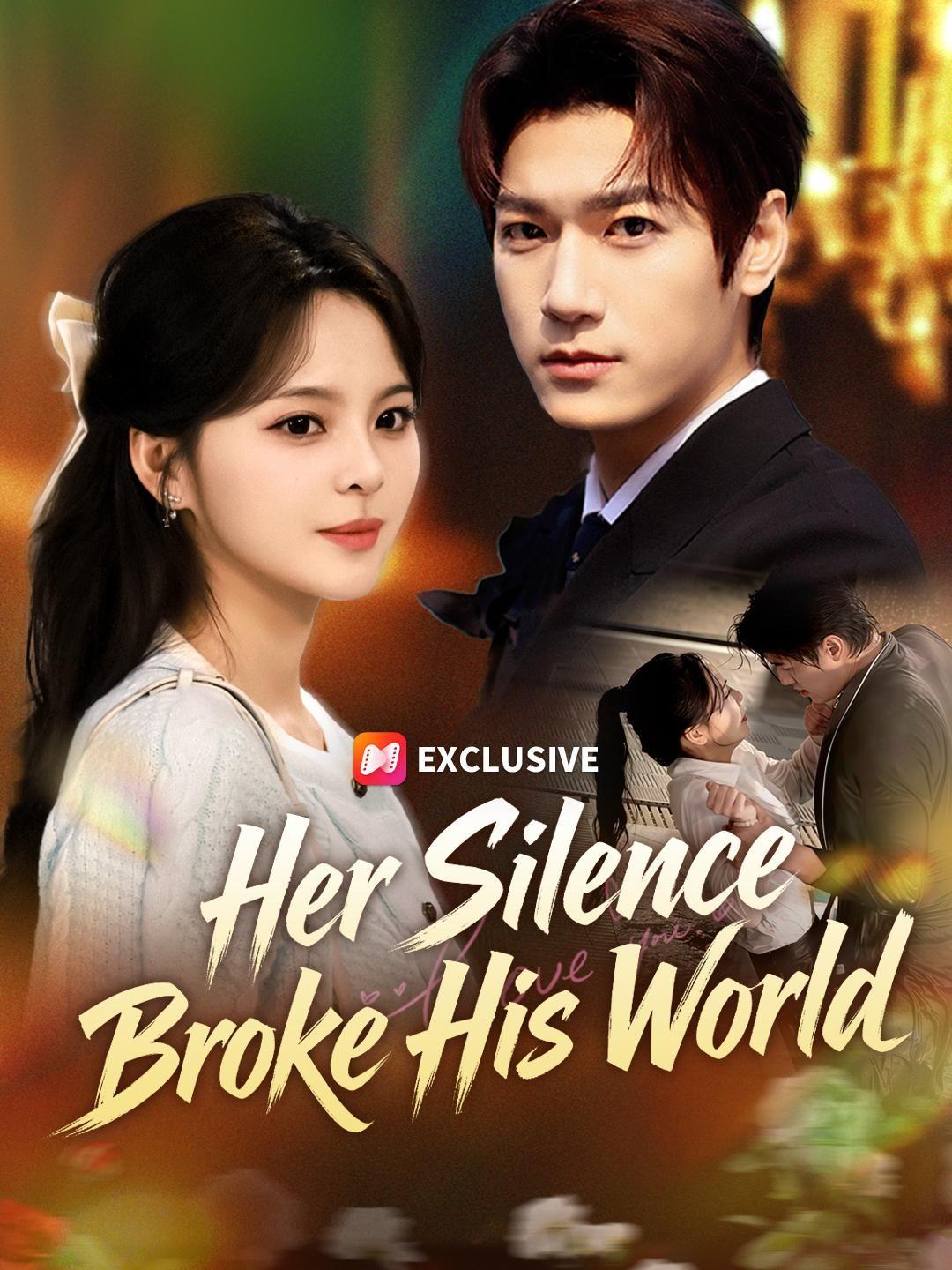
Eva is confronted by Mr. Zane, who tries to force her into wearing a cheongsam and implies unwanted advances, leveraging the absence of Ethan Yates. Eva resists firmly, highlighting the tension and danger in her situation.Will Eva manage to escape Mr. Zane's clutches before Ethan returns?


Recommended for you



Trap Me, Seduce Me: When a Scarf Becomes a Weapon
Let’s talk about the scarf. Not just *any* scarf—the one Chen Yi carries like a relic, folded with care, its pale silk marred by faint ink stains and a single frayed edge. In Trap Me, Seduce Me, objects aren’t props; they’re characters with backstories. This scarf appears early, held loosely in Chen Yi’s hand as he strides into the lounge, but its significance doesn’t register until Lin Xiao reacts—not with shock, but with a flicker of *recognition*. Her pupils contract, just slightly. Her posture doesn’t change, but her breathing does: a shallow inhale, held too long. That’s when you know this isn’t a random prop. This is a key. And Lin Xiao has seen it before. The lounge itself is a stage designed for psychological warfare. Sleek black surfaces reflect every movement, turning the space into a hall of mirrors where intentions are doubled, tripled, distorted. A laptop sits open on the coffee table—Microsoft Surface, screen glowing with code or data—and beside it, wine glasses half-full, ashtray polished to a mirror sheen. These details aren’t set dressing; they’re clues. The tech suggests surveillance, the alcohol implies lowered inhibitions, the ashtray hints at lingering tension. When Lin Xiao rises from the sofa, her red dress catching the light like blood on glass, she doesn’t glance at the laptop. She looks directly at Chen Yi. Her movement is fluid, almost predatory, but there’s no aggression in it—only certainty. She knows what’s coming. She’s been waiting for it. Wei Ran, meanwhile, stands near the projection screen, her floral-black gown a stark contrast to Lin Xiao’s bold red. Her hair is pinned up with a crimson rose, a detail so deliberate it feels like costume design whispering plot points. She speaks—her voice bright, melodic—but her eyes never leave Lin Xiao’s back. When Chen Yi extends the scarf toward Lin Xiao, Wei Ran’s fingers twitch. Not toward her own purse, not toward her phone—but toward the air, as if trying to grasp the invisible thread connecting the two of them. That’s the brilliance of Trap Me, Seduce Me: it understands that jealousy isn’t always loud. Sometimes, it’s the silence between words, the way a woman’s smile tightens at the corners when she realizes she’s not the only one who remembers the night the scarf was left behind. The confrontation unfolds not with shouting, but with touch. Chen Yi takes Lin Xiao’s wrist, and the camera zooms in—not on their faces, but on their hands. His fingers are long, clean, with a silver ring on the pinky; hers are adorned with a thin chain bracelet that chimes softly against his cufflink. He doesn’t squeeze. He *holds*. And in that hold, Lin Xiao makes her choice: she doesn’t pull away. Instead, she turns her palm upward, inviting him to see the pulse point at her wrist—the most vulnerable spot, the one that betrays fear, desire, or both. Chen Yi’s gaze drops. For a heartbeat, he hesitates. Then he lifts the scarf higher, letting it drape over her forearm like a shroud. The fabric whispers against her skin. She doesn’t flinch. She *leans in*. That’s when the lighting shifts again—deep violet, then emerald—and the background blurs into abstraction, leaving only their profiles silhouetted against the glow. Trap Me, Seduce Me knows how to weaponize intimacy: the closer they get, the less we understand, and the more we need to know. What’s fascinating is how the scarf evolves. Initially, it’s a token of past connection. Then, as Chen Yi wraps it loosely around Lin Xiao’s wrist—just once, not tight, not binding—it becomes a leash. But Lin Xiao twists her arm, not to escape, but to *reposition* the scarf, so the stained corner faces outward, visible to Wei Ran. A declaration. A challenge. A dare. Wei Ran sees it. Her smile vanishes. She takes a step forward, then stops herself, clutching her own clutch like it’s a shield. The tension isn’t just between the two women—it’s triangulated, with Chen Yi at the apex, smiling faintly, as if he’s watching a play he wrote himself. And maybe he did. The projector screen behind them flashes fragmented phrases in Chinese—‘Mute’, ‘176’, ‘We’—but none of it matters. The real script is written in body language: the way Lin Xiao’s shoulder brushes Chen Yi’s as she turns, the way his hand lingers a fraction too long on her elbow, the way Wei Ran’s breath hitches when Lin Xiao laughs—a low, throaty sound that isn’t joy, but triumph. The climax isn’t a slap or a scream. It’s subtler. Chen Yi, still holding the scarf, suddenly grips Lin Xiao’s wrist tighter—not painfully, but firmly—and leans in until his lips are level with her ear. We don’t hear what he says. We don’t need to. Lin Xiao’s eyes widen, just once. Then she closes them. And when she opens them again, she’s not the same woman who walked through the door. There’s a new calculation in her gaze, a quiet fury masked as amusement. She pulls her arm free, not with force, but with grace—and in doing so, she lets the scarf slip from Chen Yi’s grasp. It falls to the floor, unnoticed by everyone except Wei Ran, who bends down slowly, deliberately, and picks it up. Not to return it. To *keep* it. That’s the moment Trap Me, Seduce Me reveals its true theme: power isn’t taken. It’s *offered*, then refused, then reclaimed in silence. The final shot is of Lin Xiao walking toward the exit, her heels clicking like a metronome counting down to inevitable collision. Chen Yi watches her go, his expression unreadable—but his fingers trace the spot on his palm where her skin had been. And somewhere in the shadows, Wei Ran holds the scarf close to her chest, her knuckles white, her lips moving silently, repeating a phrase only she can hear. The screen fades to black. No resolution. No moral. Just the echo of three people who thought they were playing a game—and realized too late that the game was playing them. Trap Me, Seduce Me doesn’t give answers. It leaves you haunted by the questions.
Trap Me, Seduce Me: The Red Dress That Rewrote the Rules
In a dimly lit lounge where neon hues bleed into velvet shadows, the opening frame of Trap Me, Seduce Me doesn’t just introduce a character—it drops a detonator. Lin Xiao, draped in a crimson off-shoulder mini-dress that clings like liquid fire, steps out from behind a black door with the quiet confidence of someone who already knows she’s won before the game begins. Her hair—long, dark, and artfully tousled—frames a face painted in bold red lips and smoky eyes, but it’s her earrings that whisper danger: silver floral chandeliers dangling like frozen lightning, catching every flicker of ambient light as she moves. She doesn’t walk; she *unfolds*, each step calibrated to draw breath from the room. The camera lingers on her hands—slim, manicured, one adorned with a delicate pearl-buttoned sleeve—before cutting to the mirror reflection where she pauses, not to admire herself, but to *assess*. This isn’t vanity. It’s reconnaissance. In that split second, we see the duality: the woman who commands attention, and the strategist who calculates how much power her presence alone can wield. Then enters Wei Ran, in a white ruffled off-shoulder gown that reads like innocence incarnate—until you notice the tension in her jaw, the way her fingers twist a folded napkin like it’s a confession she’s too afraid to speak. Her makeup is softer, her jewelry minimal—a double-strand crystal choker, slender drop earrings—but her gaze is sharp, darting between Lin Xiao and the unseen forces gathering around them. When Lin Xiao glides past her, Wei Ran’s expression shifts: first surprise, then recognition, then something colder—*recognition with consequence*. She smiles, yes, but it’s the kind of smile that hides a blade behind its curve. The lighting shifts from cool blue to hot magenta as they pass each other, a visual metaphor for the emotional temperature rising between them. This isn’t just rivalry; it’s a silent treaty being drafted in real time, written in glances and posture. Trap Me, Seduce Me thrives on these micro-moments—the unspoken history that hangs heavier than any dialogue could carry. The scene escalates when Chen Yi enters, flanked by two men in black suits, holding a crumpled silk scarf like evidence. His entrance is theatrical but controlled: glasses perched low on his nose, a chain necklace with a cross pendant resting against his open collar, sleeves rolled just enough to reveal forearms that suggest both discipline and restraint. He doesn’t rush toward Lin Xiao. He *approaches*, each footfall echoing in the sudden silence of the room. The projector screen behind him flickers with fragmented Chinese text—likely a coded message or a warning—but no one looks at it. All eyes are on the triangle forming at the center of the lounge: Lin Xiao standing tall, Wei Ran hovering near the edge like a storm cloud waiting to break, and Chen Yi, now inches away from Lin Xiao, holding out the scarf as if offering a truce—or a trap. What follows is a masterclass in physical storytelling. Chen Yi takes Lin Xiao’s wrist—not roughly, but with the precision of someone used to handling fragile things. Her sleeve, rich with pearl buttons, strains slightly under his grip. She doesn’t pull away. Instead, she tilts her head, her lips parting just enough to let a single word slip out—though we don’t hear it, we feel its weight. Her eyes lock onto his, and for a beat, the world narrows to that contact point: skin on skin, intention on intention. The camera circles them, capturing the subtle shift in Chen Yi’s expression—from calm curiosity to something warmer, more dangerous. He smiles, and it’s not the polite gesture of a host. It’s the smile of a man who’s just realized he’s been playing chess while she’s been playing *go*. Trap Me, Seduce Me doesn’t rely on exposition; it trusts the audience to read the subtext in a raised eyebrow, a tightened grip, the way Lin Xiao’s thumb brushes against Chen Yi’s knuckle as if testing the texture of his resolve. Meanwhile, Wei Ran watches, her earlier smile now gone, replaced by a stillness that feels more volatile than shouting. She steps forward—not to intervene, but to *witness*. When Chen Yi finally releases Lin Xiao’s wrist, Lin Xiao doesn’t retreat. She lifts her hand, slow and deliberate, and touches her own earring, as if reminding herself—or him—that she’s still armed. The scarf remains in Chen Yi’s hand, now a symbol rather than an object: a relic of a prior encounter, a promise, or a threat disguised as courtesy. The lighting pulses—purple, green, indigo—casting their faces in shifting tones, mirroring the instability of their dynamic. One moment Lin Xiao seems in control; the next, Chen Yi leans in, voice low, and her breath catches—not in fear, but in *anticipation*. That’s the genius of Trap Me, Seduce Me: it never tells you who holds the power. It makes you *feel* the uncertainty in your own chest. The final sequence—where Chen Yi gently tugs the sleeve of Lin Xiao’s dress, revealing the delicate chain strap of her undergarment beneath—isn’t gratuitous. It’s narrative punctuation. It signals vulnerability, yes, but also defiance: she lets him see it, because she knows he’ll misread it. He thinks he’s uncovering her; she knows he’s only seeing what she allows. And as the camera pulls back to show the three of them standing in a tense equilateral triangle, the lounge’s glossy black table reflecting their distorted images like fractured identities, the real question emerges: Who is trapping whom? Is Lin Xiao using Chen Yi to provoke Wei Ran? Is Chen Yi manipulating both women to serve some hidden agenda? Or are they all, in their own ways, caught in a loop of desire and deception that Trap Me, Seduce Me refuses to resolve—because the thrill isn’t in the ending, but in the suspended moment before the fall? The last shot lingers on Lin Xiao’s face, half-lit by a dying blue spotlight, her lips curved in a smile that could mean anything. The words ‘To Be Continued’ fade in—and the audience is left not with answers, but with the delicious, trembling ache of wanting more. That’s not just storytelling. That’s seduction.
Jian’s Glasses Hide Nothing
He wears frames like armor—but his micro-expressions betray him: the smirk, the hesitation, the way he grips Ling’s sleeve like it’s the last thread holding him together. In Trap Me, Seduce Me, tension lives in the space between touch and restraint. That scarf? A metaphor. He’s already trapped. 😏
The Red Dress That Started It All
Ling’s crimson velvet dress isn’t just fashion—it’s a weapon. Every ruched fold, every pearl button, whispers power. When she locks eyes with Jian in that neon-lit lounge, the air crackles. Trap Me, Seduce Me doesn’t need dialogue; her silence speaks volumes. 💋 #PowerDress