



Desperate Plea
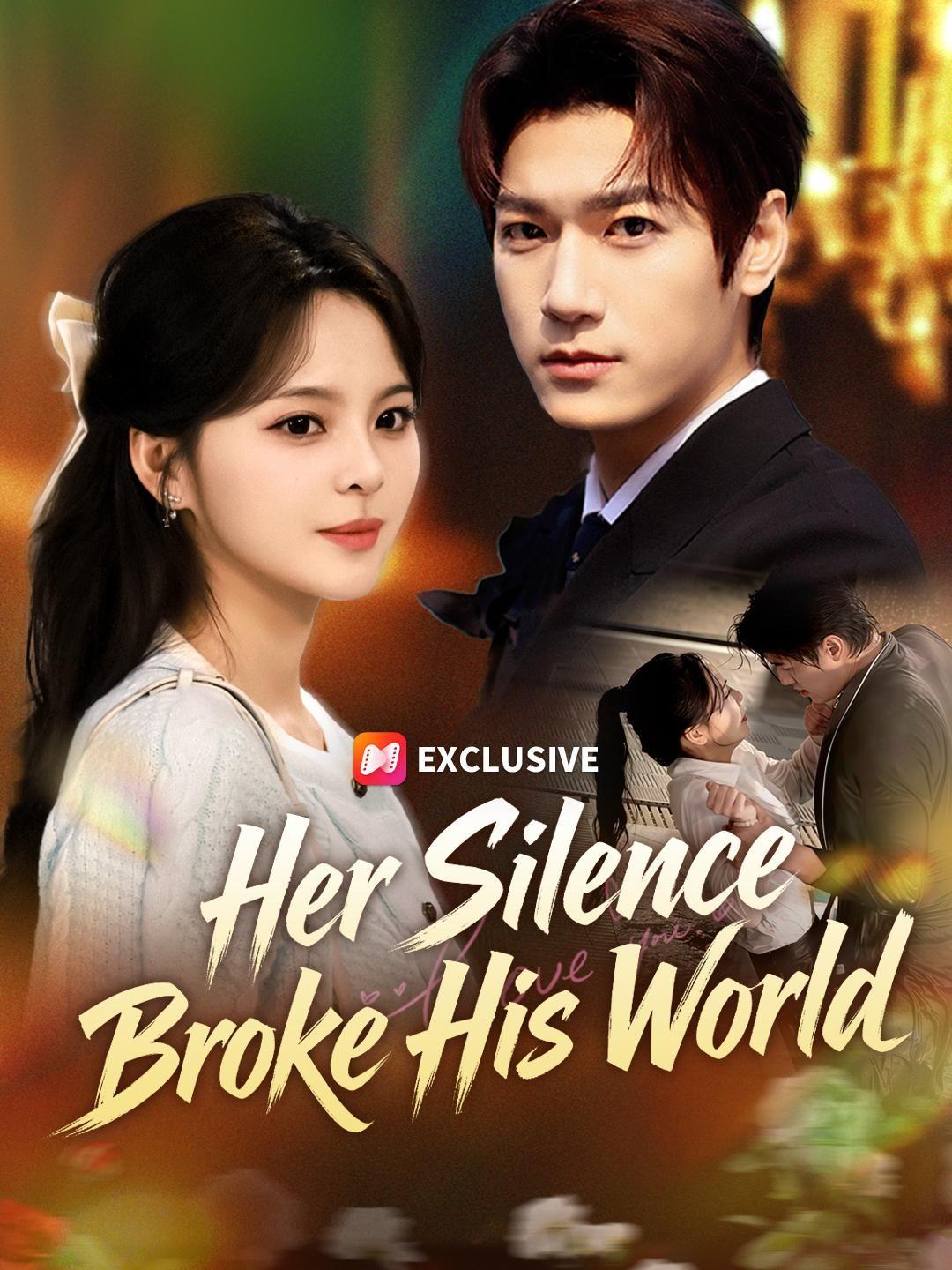
Eva is confronted by Ethan, who mocks her current situation, making her feel humiliated and desperate. When Annie questions Eva about Ethan's presence, Eva dismisses him, masking her true feelings. Later, Ethan is asked to promise not to provide Eva with any more medication, hinting at deeper conflicts and control issues.Will Ethan keep his promise or continue to manipulate Eva's desperation?


Recommended for you



Trap Me, Seduce Me: When Pajamas Speak Louder Than Words
Let’s talk about the pajamas. Not the fabric, not the print—though yes, those delicate willow motifs are doing *work*—but what they represent in the world of Trap Me, Seduce Me. Su Wei steps out of that dimly lit doorway wearing them like a confession. Bare feet on cold asphalt. Hair unbound. No makeup. No armor. Just silk and vulnerability, draped over a woman who’s spent years building walls. And Lin Jian? He doesn’t blink. He doesn’t look away. He just stands there, hands in pockets, watching her approach like she’s the only flame left in a dying city. That’s the first trap: the illusion of control. He thinks he’s the hunter. But the moment she stops three feet from the car, chin lifted, eyes steady, you realize—she’s the one holding the leash. The pajamas aren’t a weakness. They’re a weapon. A declaration: *I am not who you think I am. And I’m not running anymore.* The alley isn’t just a location. It’s a psychological threshold. On one side: the apartment building, its barred windows whispering of confinement, routine, the life she’s trying to escape. On the other: the black sedan, sleek and silent, representing chaos, power, the past she thought she buried. And Su Wei? She’s standing in the middle, literally and emotionally. The camera angles emphasize this—low shots making her seem small against the towering walls, then sudden close-ups that magnify the pulse in her throat, the slight tremor in her fingers. She’s not trembling with fear. She’s vibrating with decision. Every step she takes is a sentence she can’t take back. Lin Jian watches her like a man who’s waited years for this exact moment. His expression doesn’t change, but his breathing does—shallower, faster. He’s not calm. He’s *contained*. And that’s scarier. Their exchange is minimal, but every syllable lands like a brick. Lin Jian says, ‘You look tired.’ Not ‘I missed you.’ Not ‘Why did you come?’ Just that. And Su Wei replies, ‘I am.’ Two words. A lifetime of exhaustion. She doesn’t elaborate. She doesn’t need to. The silence between them is thick with unsaid things: the fight they never resolved, the letter she never sent, the night he showed up at her sister’s wedding and didn’t say a word. The camera cuts between their faces, capturing the micro-shifts—the way her nostrils flare when he mentions ‘the deal,’ how his thumb rubs the seam of his pocket when she says ‘I’m not the same person.’ He knows. He’s known since the second she stepped into the light. And yet he stays. Because the real seduction in Trap Me, Seduce Me isn’t physical. It’s intellectual. It’s the thrill of being *understood*, even when you’re at your most broken. Then Xiao Ran arrives. Not as a rival. As a mirror. She’s everything Su Wei used to be: hopeful, impulsive, trusting. Her overalls are practical. Her hair is braided neatly. She carries a checkered shirt like it’s a lifeline. And when she thrusts it at Su Wei, saying ‘Put this on before you catch a chill,’ it’s not concern—it’s intervention. She’s trying to pull Su Wei back into the world of logic, of consequences, of *safety*. But Su Wei doesn’t take the shirt immediately. She looks at Lin Jian. Just for a beat. And in that glance, we see the war: duty vs desire, survival vs surrender. Xiao Ran’s voice cracks when she says, ‘He’ll hurt you again.’ And Su Wei’s reply? ‘Maybe I want him to.’ That’s the line that breaks the scene. Not because it’s shocking, but because it’s honest. Brutally, devastatingly honest. Trap Me, Seduce Me thrives on these moments—where characters stop performing and start *being*. The car drives off. The camera lingers on Su Wei’s silhouette against the alley wall, the checkered shirt now half-on, sleeves dangling, mismatched with her pajama pants. She doesn’t watch it go. She stares at the ground, where a single leaf skitters across the pavement, caught in the wind the car left behind. Xiao Ran stands beside her, silent, arms crossed, jaw tight. No judgment. Just grief. Because she knows what’s coming. She’s read the script. She’s seen the way Lin Jian looks at Su Wei—not with lust, but with *recognition*. Like he’s found a missing piece of himself in her wreckage. And that’s the most dangerous kind of love. The kind that doesn’t ask permission. The kind that says, ‘I see your scars, and I want to trace them with my tongue.’ Cut to the mansion. Not the grand exterior—the one with the fountain and the manicured hedges—but the bedroom. Soft lighting. A circular painting of a white fox on the wall, eyes glowing faintly in the dimness. Symbolism? Absolutely. The fox is cunning, elusive, beautiful—and deadly when cornered. Su Wei sits on the bed, now in ivory silk, hair pinned loosely, a gold bangle glinting on her wrist. Lin Jian enters, wearing a black robe with silver piping, his hair slightly damp, as if he’s just showered off the city’s grime. He doesn’t speak. He just walks to the foot of the bed and kneels. Not in supplication. In reverence. And then she moves. Not toward him. *Into* him. Her hands find his shoulders, her forehead rests against his, and for a long moment, they just breathe. No words. No kisses. Just the shared rhythm of inhalation and exhalation. That’s when the trap snaps shut. Not with violence. With tenderness. Because the most insidious seductions aren’t loud. They’re quiet. They happen in the space between heartbeats, when you forget to guard yourself because the person in front of you feels like home—even if home is built on quicksand. Their embrace is slow, deliberate, charged with the weight of everything unsaid. Su Wei’s fingers dig into his back, not to push away, but to anchor herself. Lin Jian’s hands cradle her waist, thumbs brushing the dip of her spine, as if memorizing the map of her. The camera circles them, capturing the way her eyes flutter shut, how his lips hover just above her temple, how her breath hitches when he murmurs, ‘You still smell like rain.’ And that’s it. That’s the trigger. The memory. The scent that ties her to a summer night years ago, when they were young and foolish and believed love could outrun consequence. She pulls him closer, burying her face in his neck, and for the first time, she sobs. Not loudly. Quietly. A sound that’s half-relief, half-terror. Because she knows what this means. This isn’t a reunion. It’s a reckoning. And Trap Me, Seduce Me doesn’t shy away from the aftermath. The final shot is her reflection in the vanity mirror—tears streaking her cheeks, lips swollen, eyes red-rimmed but clear. She’s not crying because she’s lost. She’s crying because she’s finally found herself. And the scariest part? She’s not sure she likes what she sees. The trap was never Lin Jian’s. It was her own longing, disguised as caution. The seduction wasn’t his charm. It was the unbearable relief of being *known*. And in the end, that’s the real hook of Trap Me, Seduce Me: it doesn’t ask if love is worth the risk. It asks if you’re brave enough to find out.
Trap Me, Seduce Me: The Alley’s Silent Confession
The opening shot of the alley—damp concrete, flickering neon from a distant sign, the low hum of a city that never sleeps—sets the tone for what unfolds as a masterclass in restrained tension. A black sedan glides into frame like a shadow given wheels, its headlights cutting through the haze just enough to reveal Lin Jian standing beside it, hands buried in his pockets, posture relaxed but eyes sharp. He’s not waiting for anyone. Or maybe he is. The camera lingers on his face—not a smirk, not a frown, just that quiet intensity that makes you wonder if he’s already decided what happens next. Then she appears: Su Wei, barefoot in silk pajamas patterned with faded willow branches, hair loose and slightly tangled, as if she’d been pulled from sleep mid-thought. She doesn’t run toward him. She walks. Slow. Deliberate. Her expression isn’t fear—it’s resignation mixed with something dangerously close to curiosity. That’s when the real trap begins. The dialogue between them is sparse, almost ritualistic. Lin Jian speaks first, voice low, measured, each word weighted like a stone dropped into still water. He says little, yet everything. ‘You came.’ Not a question. A statement. An acknowledgment of inevitability. Su Wei doesn’t flinch. She tilts her head, lips parting just enough to let out a breath that might be laughter or surrender—hard to tell. Her eyes, though, they betray her: wide, glistening, holding back tears not of sadness but of recognition. She knows this moment. She’s rehearsed it in her mind a hundred times. And now it’s here, under the indifferent glow of a broken streetlamp, with the car’s interior lights pulsing blue like a heartbeat. What follows isn’t a confrontation. It’s an excavation. Lin Jian doesn’t raise his voice. He doesn’t grab her wrist or block her path. He simply steps closer—just one step—and the air between them thickens. Su Wei exhales again, and this time, it’s a sound. A soft, broken thing. She looks away, then back, and in that glance, we see the fracture: the woman who believed in clean exits, and the one who’s realizing some doors only open inward. The camera circles them, tight on their faces, catching the micro-expressions—the way Lin Jian’s jaw tightens when she mentions ‘the letter,’ how Su Wei’s fingers twitch at her side, as if resisting the urge to reach for him. There’s no music. Just the distant clatter of a delivery bike, the drip of condensation from a rusted pipe overhead. The silence is louder than any score. Then comes the second woman—Xiao Ran—bursting into the scene like a spark in dry grass. She’s younger, dressed in overalls and a gray tee, clutching a checkered shirt like a shield. Her entrance isn’t dramatic; it’s urgent. She doesn’t shout. She *pleads*. ‘Su Wei, don’t do this.’ And suddenly, the dynamic shifts. Lin Jian doesn’t react outwardly—he barely glances at Xiao Ran—but his posture changes. His shoulders square. His gaze narrows. He’s not threatened. He’s… recalibrating. Because now it’s not just about Su Wei. It’s about what she represents: loyalty, innocence, the life she tried to leave behind. Xiao Ran’s presence forces Su Wei to choose—not between two men, but between two versions of herself. The one who runs toward safety, and the one who walks into the fire knowing full well she’ll burn. The checkered shirt becomes a symbol. Xiao Ran insists Su Wei put it on—‘It’s cold,’ she says, but her voice trembles. It’s not about warmth. It’s about armor. About erasing the vulnerability of the pajamas, the intimacy of the night, the rawness of the moment. Su Wei hesitates. Then, slowly, she slips it on. The fabric is stiff, unfamiliar. It doesn’t fit right. And in that small act of resistance—her fingers fumbling with the buttons, her eyes darting between Xiao Ran’s worried face and Lin Jian’s unreadable one—we understand everything. She’s trying to become someone else. But Lin Jian sees through it. He smiles—not kindly, not cruelly, just *knowingly*. ‘You always did hate that shirt,’ he murmurs. And Su Wei freezes. Because he’s right. She wore it once, years ago, on the day she told him she was leaving. He remembers. He remembers *everything*. The car leaves. Not with screeching tires or dramatic reversals. It just… departs. Headlights fade into the alley’s mouth, leaving Su Wei standing alone, the checkered shirt hanging off her shoulders like a question mark. Xiao Ran stays beside her, silent now, watching the taillights vanish. There’s no victory here. No clear resolution. Just two women, one shirt, and the echo of a man who didn’t need to say ‘I love you’ to make it undeniable. The final shot lingers on Su Wei’s face—not tearful, not triumphant, but hollowed out by truth. She knows what she’s done. She knows what she’ll do next. And the most terrifying part? She’s not sure she regrets it. Later, inside the mansion—yes, *the* mansion from Trap Me, Seduce Me, all marble floors and curated loneliness—the contrast is brutal. Lin Jian enters the bedroom like he owns the air itself. Su Wei sits on the edge of the bed, now in cream silk, hair half-up, a gold bangle catching the light. The room is warm, soft, *designed* for comfort. Yet neither of them looks comfortable. When he approaches, she doesn’t stand. She doesn’t flee. She watches him come, her expression unreadable—until he kneels. Not in submission. In invitation. And then she moves. One hand on his shoulder, the other threading into his hair, pulling him close. Their kiss isn’t passionate. It’s desperate. A collision of need and guilt, memory and hunger. Her eyes stay open, fixed on his, as if trying to memorize the shape of his pupils before she loses herself completely. He holds her like she might vanish if he loosens his grip. She clings to him like he’s the only thing keeping her grounded. This is where Trap Me, Seduce Me reveals its true genius: it doesn’t romanticize obsession. It dissects it. Lin Jian isn’t a hero. He’s not even a villain. He’s a force of nature—calm, inevitable, devastating. Su Wei isn’t weak. She’s *aware*. She knows the cost. She just chooses the fire anyway. The final frames show her face, reflected in a vanity mirror, as he whispers something against her neck. Her lips part. A single tear escapes. Not because she’s sad. Because she finally understands: the trap wasn’t sprung by him. She walked into it willingly. And the seduction? It wasn’t his voice or his touch. It was the unbearable weight of being *seen*—truly seen—for the first time in years. That’s the real horror. That’s the real allure. That’s why Trap Me, Seduce Me lingers long after the screen fades to black. You don’t root for them. You root for the truth they’re too afraid to speak aloud. And in the end, the most dangerous line isn’t ‘I love you.’ It’s ‘I remember.’ Because memory, unlike desire, never fades. It waits. It watches. And when the night is quiet enough, it calls your name.