



Betrayal and Deception
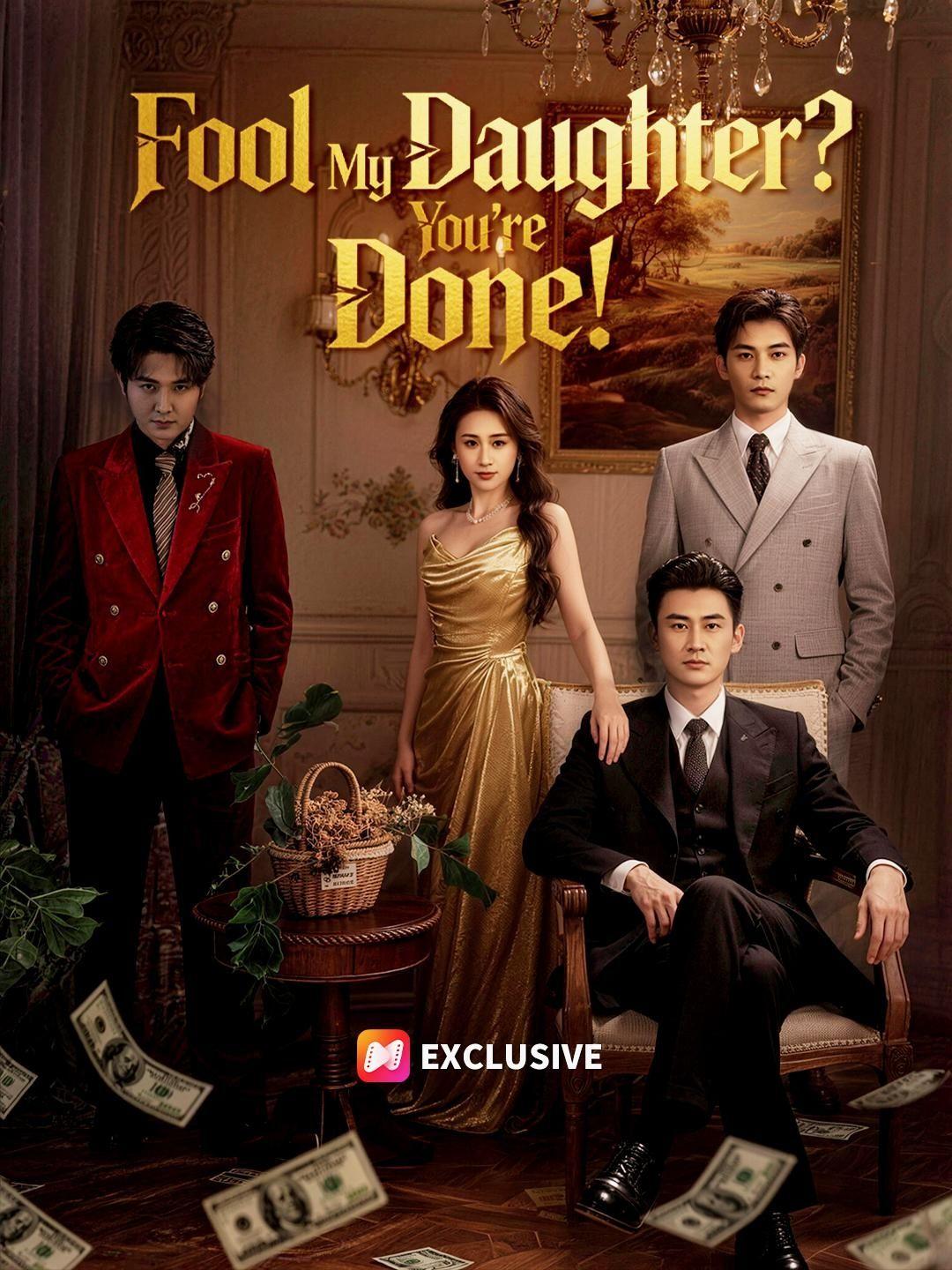
The protagonist discovers that her family has been deceiving her for years, treating her as nothing more than a tool for their benefit, culminating in a dramatic confrontation where her true origins are revealed and she refuses to comply with their demands for an arranged marriage.Will the protagonist escape the clutches of the deceitful Dragon Family and uncover the truth about her past?


Recommended for you


Afterlife Love: When the Altar Becomes a Courtroom
Let’s talk about the floor. Not the marble, not the floral arrangements, not even the absurdly ornate white arches that frame the stage like a celestial courtroom—but the black-and-white checkered tile beneath Lily’s knees. That floor is the silent protagonist of *Afterlife Love*, the witness to every betrayal, every coerced gesture, every unspoken threat. It reflects light too well, too cleanly, turning Lily’s descent into a grotesque ballet: first kneeling, then crouching, then full prostration, her white gown spreading like a surrender flag on a battlefield no one else acknowledges. The guests watch. They sip champagne. They murmur. But no one moves to help her. Not because they’re cruel—but because they know the rules. In this world, intervention is worse than complicity. To lift her would be to challenge the hierarchy. And in the Dragon Family’s domain, hierarchy is not suggested—it is enforced. James Thompson, the so-called groom, is fascinating precisely because he’s not a villain. He’s a functionary. His white suit is pristine, yes, but his shoes—white sneakers peeking out beneath tailored trousers—betray a man who thinks he’s above tradition, yet still plays by its rules. He leans over Lily with the practiced ease of someone who’s done this before. His mouth moves. We don’t hear his words, but we see their effect: Lily’s pupils contract, her breath hitches, her fingers dig into the tile as if anchoring herself to reality. He’s not shouting. He’s *negotiating*. And in *Afterlife Love*, negotiation is always asymmetrical. The power imbalance isn’t hidden behind veils or metaphors—it’s baked into the choreography. Every time Lily tries to rise, someone blocks her path: a guest shifting subtly, a servant stepping forward with a tray, James himself adjusting his lapel just as her knee lifts off the ground. It’s not physical restraint. It’s psychological architecture. Then there’s the mother—Lily’s mother, whose name we learn only through on-screen text: *Lily, Mother of James Thompson*. The irony is brutal. She is not a grieving parent. She is a strategist. Her burgundy dress, shot through with threads of gold and silver, shimmers like oil on water—beautiful, toxic, impossible to ignore. She stands with arms crossed, chin lifted, watching her daughter’s humiliation with the detachment of a general reviewing troop formations. When she finally intervenes, it’s not with tenderness. It’s with authority. She places a hand on Lily’s back—not to steady her, but to *press* her down. And then, the whip. Not brandished. Not swung. Simply *held*, dangling from her fingers like a forgotten accessory. The moment it appears, the ambient noise of the room drops to near silence. Even Max Dragon, the imposing figure in red silk, tilts his head—not in surprise, but in acknowledgment. He knows what that whip represents. It’s not punishment. It’s validation. A symbol that the transaction is proceeding as planned. What elevates *Afterlife Love* beyond mere melodrama is its refusal to moralize. There’s no righteous hero bursting in to save the day. No last-minute revelation that Lily was kidnapped or drugged. Instead, the show forces us to sit with discomfort—to ask why Lily doesn’t scream, why she doesn’t run, why her eyes, when they meet the camera’s lens, hold not fear, but *recognition*. She knows the script. She’s read the fine print. And perhaps, most chillingly, she’s chosen this path. The flashback cut to the outdoor scene—James in his black ceremonial robe, holding the glowing lotus artifact—isn’t exposition. It’s confirmation. That object is the reason. It’s the price. It’s the debt that must be paid in flesh and silence. The way he cradles it, the reverence in his touch, suggests this isn’t a trophy. It’s a burden. A curse disguised as a blessing. And Lily? She’s the offering. The genius of the cinematography lies in its restraint. No shaky cam during the crawling scenes. No dramatic zooms on tear-streaked faces. Just steady, unflinching shots—medium close-ups that trap Lily in the frame, wide angles that dwarf her against the grandeur of the hall. The lighting is soft, almost romantic—until you notice how it catches the sweat on her temples, the slight tremor in her wrists, the way her veil slips just enough to reveal a bruise near her hairline. Nothing is explicit. Everything is implied. *Afterlife Love* trusts its audience to connect the dots, to feel the weight of what isn’t said. When Lily finally stands—assisted not by kindness but by obligation—her posture is straight, her gaze fixed ahead, her expression blank. She doesn’t look at James. She doesn’t look at her mother. She looks at the altar, where two empty chairs await. One for her. One for him. But the third chair—the one slightly apart, draped in white fur—is reserved for Max Dragon. And that, more than any dialogue, tells us everything: this wedding isn’t about two people. It’s about three families, four generations of blood debts, and a ritual older than religion. The final image—Lily on all fours, head bowed, the whip hovering inches from her shoulder—is not a moment of defeat. It’s a moment of transition. In *Afterlife Love*, kneeling is not weakness. It’s preparation. The floor is cold. The lights are bright. The guests are waiting. And somewhere, deep in the vaults beneath the venue, the lotus artifact pulses once, twice, thrice—like a heartbeat waking from sleep. This isn’t the end of a story. It’s the first line of a new covenant. And Lily? She’s already signing it—in ink made of tears and terror, stamped with the seal of her own surrender. *Afterlife Love* doesn’t ask if love can survive such a ceremony. It asks whether love was ever the point to begin with. The answer, whispered in the rustle of silk and the crack of leather, is devastatingly simple: no. The point was always power. And in this world, the bride who crawls is the one who remembers how to rise—when the time is right, and the cost has been fully paid.
Afterlife Love: The Bride Who Crawled and the Man in White
In a world where wedding ceremonies are supposed to be sanctuaries of joy, *Afterlife Love* delivers a chilling inversion—where vows are whispered not in love, but in dread. The opening frames introduce us to James Thompson, dressed in an immaculate white jacket over a pale blue three-piece suit, his bowtie slightly askew like a man trying too hard to appear composed. He stands beside a wheelchair, one foot casually resting on its armrest, as if he’s just paused mid-stride from some grand entrance. His expression shifts rapidly—from smug amusement to feigned concern, then to outright shock—as he looks down at the woman before him: Lily, the bride, kneeling on the black-and-white checkered floor, her white gown pooling around her like spilled milk. Her hair is pinned elegantly, adorned with a feathered hairpiece that trembles with each shallow breath. Her collar, encrusted with crystals, catches the light like frozen tears. She doesn’t speak. She doesn’t need to. Her eyes—wide, wet, trembling—tell the entire story: she is not here by choice. The camera lingers on her hands pressed flat against the glossy tile, fingers splayed as though bracing for impact. This isn’t a ritual of submission; it’s a performance of survival. Every time James leans forward, his voice dropping into that low, condescending murmur (we never hear the words, only the cadence), Lily flinches—not outwardly, but in the micro-tremor of her jaw, the way her lashes flutter shut for half a second too long. It’s clear: this is not her first time being watched. Not her first time being judged. The guests in the background stand frozen, some holding wine glasses mid-sip, others whispering behind gloved hands. One woman—Lily’s mother, we later learn—wears a shimmering burgundy dress with gold-threaded sleeves, arms crossed tightly across her chest. Her lips are painted crimson, but her eyes are hollow. She watches her daughter not with sorrow, but with calculation. When she finally steps forward, it’s not to help Lily up. It’s to place a hand on her shoulder—not comfortingly, but possessively—and guide her toward the altar like a piece of property being presented for inspection. Then comes the twist no one sees coming: Max Dragon, Head of the Dragon Family, appears beside Lily’s mother, clad in a red silk tunic embroidered with golden cranes, his posture rigid, his gaze unreadable. His presence alone shifts the air pressure in the room. The guests part instinctively. And yet—here’s the genius of *Afterlife Love*—the real power doesn’t lie with him. It lies with the woman in the burgundy dress. Because when Lily stumbles again, collapsing fully onto all fours, the mother doesn’t sigh. Doesn’t look away. She smiles. A slow, deliberate curve of the lips, as if witnessing a long-anticipated climax. Then she reaches into the folds of her sleeve and pulls out a black leather whip—not theatrical, not exaggerated, but worn, practical, *used*. The sound it makes when she flicks it once, sharp and dry, echoes louder than any speech. James flinches. Lily freezes. Even Max Dragon narrows his eyes, not in disapproval, but in recognition. This isn’t cruelty. It’s protocol. A language older than vows, written in scars and silence. The final act unfolds outside, under a skeletal white archway overlooking misty hills—a stark contrast to the claustrophobic opulence inside. Here, James reappears, but transformed. Gone is the dandyish groom. In his place stands a man in a black-and-silver traditional robe, his belt studded with silver buckles shaped like dragon heads. He holds a glowing lotus-shaped artifact—golden, crystalline, pulsing with inner light. The camera circles him slowly, capturing the awe on his face as he lifts it toward the sky. Is it a relic? A weapon? A key? The show never tells us. But the implication is devastating: this object is why Lily kneels. Why her mother wields the whip. Why Max Dragon permits it all. *Afterlife Love* doesn’t explain—it implicates. Every glance, every hesitation, every misplaced hand on a shoulder speaks of debts unpaid, oaths broken, and lives traded like currency in a underworld where marriage is merely the paperwork for possession. What makes *Afterlife Love* so unnerving is how ordinary it feels. The venue is elegant, the lighting soft, the music absent but implied. There are no monsters, no explosions—just people in beautiful clothes doing unspeakable things with quiet precision. Lily’s gown, for instance, is breathtaking: sheer illusion fabric over satin, crystal embroidery mimicking frost patterns, a neckline that frames her throat like a cage. Yet it’s also a shroud. When she rises—finally, after what feels like hours—her movement is stiff, mechanical, as if her joints have been rewired. She doesn’t look at James. She looks past him, toward the balcony where Lily’s mother and Max Dragon now stand side by side, their expressions serene, almost pleased. The camera cuts to a close-up of Lily’s face: her lips part, not to speak, but to gasp—as if she’s just remembered something vital. Something dangerous. Something that changes everything. This is not a love story. It’s a hostage negotiation disguised as a wedding. And the most terrifying line in the entire sequence? It’s never spoken. It’s in the way James, after watching Lily crawl, turns to the crowd and gives a small, satisfied nod—as if he’s just received his inheritance. *Afterlife Love* understands that true horror isn’t in the scream, but in the silence after. In the way a mother can smile while her daughter bleeds on the floor. In the way a groom can adjust his cufflinks while holding a weapon that glows like a dying star. We’re not watching a ceremony. We’re witnessing a transfer of power—and the bride is merely the vessel. The real question isn’t whether Lily will escape. It’s whether she even wants to. Because in the world of *Afterlife Love*, freedom might be the cruelest punishment of all.