



The Tournament's Brutal Prize
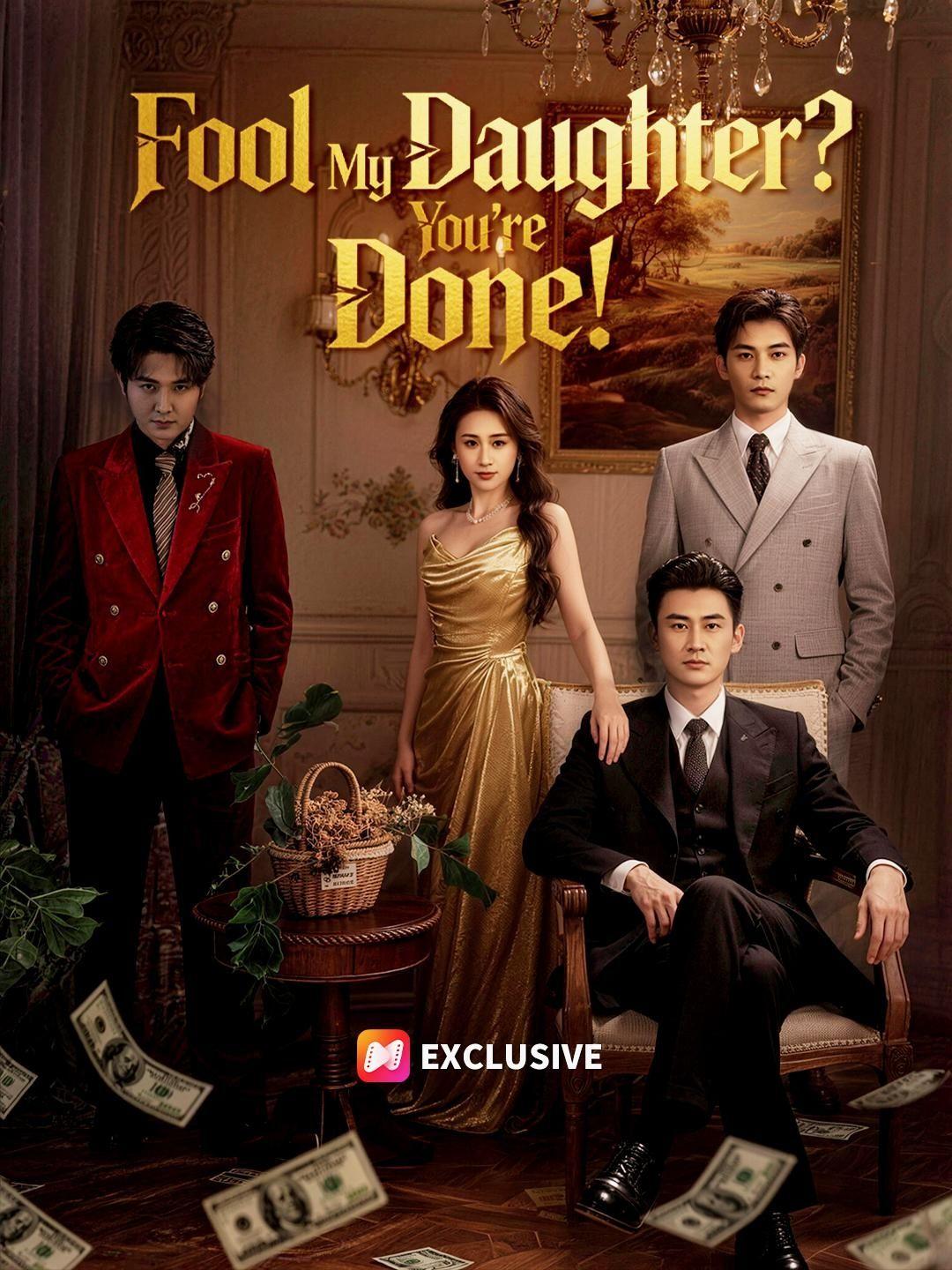
During the Pharmaceutical King tournament, a cruel victor claims the prize—the Pharmaceutical King's daughter—under tournament rules, leading to a desperate plea from the daughter and a shocking betrayal by her father.Will the daughter escape the clutches of the tournament's ruthless champion?


Recommended for you


Afterlife Love: When Zhou Feng’s Laughter Betrayed the Script
There’s a moment—just a fraction of a second—when Zhou Feng’s laughter cracks. Not the booming, confident chuckle he’s been deploying like a weapon since he entered the Jade Hall, but a strained, off-key giggle that catches in his throat like a fishbone. It happens right after Li Xue wrenches her wrist free, and just before Master Chen utters those three devastating words: ‘Let the selection proceed.’ That laugh is the hinge upon which the entire scene pivots. Because up until that point, Zhou Feng believed he was directing the drama. He thought the maroon jacket, the lace trim, the sword at his hip—all of it was armor. But in that instant, the armor splits. And what bleeds out isn’t villainy. It’s vulnerability. Raw, unvarnished, and utterly human. This is the genius of Afterlife Love: it doesn’t ask us to hate Zhou Feng. It asks us to *see* him. To recognize that his bluster is a shield forged in fear—fear of irrelevance, fear of being seen as small, fear that without the spectacle, he disappears. Let’s rewind. The room is pristine, clinical almost—white tables, gray chairs, floor tiles reflecting overhead lights like a sterile operating theater. The banner above reads ‘Jade King Selection Contest,’ but the energy is less about choosing a winner and more about enforcing a hierarchy. Zhou Feng strides in with the swagger of a man who’s rehearsed his entrance a hundred times. He grabs Li Xue’s arm not with urgency, but with *theatricality*—his fingers wrap around her wrist like he’s presenting a trophy. His eyes scan the room, inviting reactions. He wants applause. He wants awe. What he gets instead is silence—and then, slowly, the quiet disapproval radiating from Master Chen, who stands like a statue carved from disappointment. Master Chen doesn’t raise his voice. He doesn’t need to. His stillness is louder than any shout. His pendant—the jade disc with yellow tassels—sways slightly with each breath, a metronome counting down to judgment. And Zhou Feng, for all his bravado, flinches every time that pendant moves. Li Xue, meanwhile, is doing something far more dangerous than resisting: she’s *observing*. While Zhou Feng monologues—his mouth moving fast, his eyebrows arching for emphasis—she studies the lines around his eyes, the slight tremor in his left hand when he gestures toward the altar. She notices how his smile never reaches his pupils. She sees the way Lin Wei, standing near the red banner, watches him not with contempt, but with pity. That’s the real betrayal: not Li Xue pulling away, but the realization dawning on Zhou Feng that his audience isn’t buying it. Su Yan’s quiet intervention—her hand on Master Chen’s arm, her whispered words—doesn’t stop the confrontation, but it changes its trajectory. It reminds Zhou Feng that there are forces here he cannot command. He’s used to being the loudest voice in the room. He’s not prepared for the power of collective silence. What elevates Afterlife Love beyond typical period drama tropes is its refusal to simplify motive. Zhou Feng isn’t evil. He’s *afraid*. Afraid that without the title, without the ceremony, without the spectacle, he’s just a man with a shaved head and a mustache, holding a sword he’s never drawn. His aggression toward Li Xue isn’t about her—it’s about the void he’s trying to fill. When he grips her wrist tighter, it’s not dominance he’s seeking; it’s confirmation that he still exists in her world. And when she finally breaks free, not with fury but with calm precision, he doesn’t rage. He *laughs*. Because laughter is the last refuge of the cornered. It’s the sound of a man realizing the script has changed—and he forgot his lines. The camera work in this sequence is masterful. Close-ups on Zhou Feng’s face don’t just capture emotion—they dissect it. We see the micro-shift when his confidence wavers: the slight dip of his chin, the way his tongue presses against his teeth before he speaks again. We see Li Xue’s knuckles whiten as she grips her own forearm after freeing herself—not in pain, but in self-reassurance. And Master Chen? His eyes remain fixed on the space between Zhou Feng and Li Xue, as if he’s reading the invisible text of their conflict like ancient calligraphy. He knows this isn’t about selection. It’s about succession. About who gets to define the future of the Jade Hall. And Zhou Feng, for all his noise, is still auditioning. Lin Wei’s role here is subtle but critical. He doesn’t speak. He doesn’t move. Yet his presence destabilizes Zhou Feng’s performance. Every time Zhou Feng glances toward him, his voice drops half a decibel. Lin Wei represents the next generation—not rebellious, not obedient, but *aware*. He sees the artifice. He sees the pain beneath the pageantry. And his refusal to engage—his quiet observation—is a form of resistance more potent than any shouted protest. In Afterlife Love, power isn’t seized; it’s *withheld*. And Lin Wei is withholding his approval, his allegiance, his very attention. That’s why Zhou Feng’s final gesture—raising his hand as if to dismiss the whole affair—is so hollow. He’s trying to reclaim control, but his arm trembles. Just slightly. Enough. The ending of the clip is chilling in its restraint. No resolution. No reconciliation. Just Li Xue standing alone, her blue qipao shimmering under the fluorescent lights, her expression unreadable. Zhou Feng retreats to the edge of the frame, adjusting his sleeve, his smile now a grimace stretched too thin. Master Chen turns away, his back to the camera, the pendant swinging like a pendulum marking time. And somewhere in the background, Su Yan exhales—a soft, almost imperceptible release of breath, as if she’s just survived something. Afterlife Love doesn’t give us closure. It gives us consequence. The contest will continue. The titles will be awarded. But none of them will mean what they did before. Because once you’ve seen the crack in the mask, you can never unsee it. Zhou Feng’s laughter wasn’t the climax. It was the confession. And in that confession, Afterlife Love reveals its deepest truth: the most terrifying thing in any hierarchy isn’t the tyrant who shouts. It’s the moment the tyrant realizes—too late—that no one is listening anymore.
Afterlife Love: The Silent Rebellion of Li Xue in the Jade Hall
The scene opens not with fanfare, but with a quiet tension—white draped tables, minimalist chairs, and a banner proclaiming ‘Jade King Selection Contest’ like a cruel joke hanging above a room that feels less like a competition and more like a courtroom. Everyone is dressed in stylized traditional attire, yet each costume tells a different story: the elder man in cream brocade with a long beaded pendant—Master Chen—stands near the doorway, his posture rigid, eyes scanning the room as if measuring every breath taken. He doesn’t speak at first. He doesn’t need to. His silence is already verdict enough. Then enters Li Xue, the woman in the pale blue sequined qipao, her hair coiled elegantly with a black bow, pearl earrings catching the light like tiny moons. She moves with grace, but her hands tremble just slightly as she reaches for the arm of the man in maroon—Zhou Feng—whose jacket is embroidered with lace so ornate it borders on theatrical arrogance. His grip on her wrist is firm, almost possessive, yet his expression shifts constantly: from smug amusement to mock concern, then to exaggerated shock, as if he’s performing for an audience only he can see. This isn’t a contest. It’s a stage. And everyone is playing roles they didn’t choose. What makes Afterlife Love so compelling here is how it weaponizes restraint. Li Xue never screams. She doesn’t collapse. Instead, she tightens her own fingers around Zhou Feng’s sleeve—not to pull away, but to hold him in place, as if daring him to escalate. Her lips part, not in a cry, but in a controlled whisper that somehow carries across the room. You can see the calculation behind her eyes: she knows Master Chen is watching. She knows the others are watching—the young man in black with the butterfly motifs, Lin Wei, who stands stiffly by the altar, his gaze unreadable; the woman in mint green, Su Yan, who steps forward only once, placing a hand gently on Master Chen’s arm, whispering something that makes his brow furrow deeper. That single gesture speaks volumes: Su Yan isn’t taking sides. She’s trying to *mediate*. But mediation requires two willing parties, and Zhou Feng has already decided this is his narrative to control. The camera lingers on details—the way Zhou Feng’s thumb rubs against Li Xue’s pulse point, not tenderly, but deliberately, like he’s checking if she’s still alive. The way Master Chen’s pendant sways when he exhales, a subtle rhythm that mirrors the rising tension in the room. Even the sword resting beside Zhou Feng’s hip—its hilt wrapped in black leather, gold filigree gleaming—feels less like a prop and more like a threat held in reserve. No one draws it. No one needs to. Its presence alone alters the physics of the space. When Li Xue finally pulls her hand free—not violently, but with a slow, deliberate twist of her wrist—it’s the most defiant act in the entire sequence. Zhou Feng blinks, startled, as if he’d forgotten she had agency at all. His smile falters. For a split second, the mask slips, revealing something raw beneath: insecurity, perhaps, or the fear that his performance might not be enough. This is where Afterlife Love transcends melodrama. It doesn’t rely on grand declarations or sudden violence. It builds its stakes through micro-expressions, through the weight of unspoken history. We learn nothing of the past directly, yet we feel it in the way Master Chen avoids looking at Li Xue’s face, in the way Lin Wei’s jaw tightens whenever Zhou Feng raises his voice. There’s a hierarchy here, invisible but absolute: Zhou Feng believes he holds power because he wears the loudest jacket and speaks the loudest lines. But Li Xue understands something deeper—that true authority lies in stillness, in refusal to play the game on someone else’s terms. When she finally turns toward Master Chen, her voice steady despite the tremor in her shoulders, she doesn’t plead. She states a fact: ‘I am not a prize to be claimed.’ The words hang in the air like smoke. Zhou Feng laughs—a sharp, brittle sound—but his eyes dart to Lin Wei, then to Su Yan, searching for allies. None come forward. Not even the seated women, who had been silent spectators until now, shift in their chairs. They’re waiting. Watching. Learning. The brilliance of this sequence in Afterlife Love is how it uses costume as character exposition. Li Xue’s sequins catch the light not to dazzle, but to reflect—every flicker reveals a new angle of her resolve. Zhou Feng’s lace is excessive, almost desperate, as if he’s trying to stitch dignity onto himself with thread and bravado. Master Chen’s simplicity is his armor; his lack of ornamentation signals that he no longer needs to prove anything. And Lin Wei—ah, Lin Wei. His outfit is a fusion of old and new: traditional collar, modern asymmetrical panels, a belt with silver buckles that look both ceremonial and functional. He represents the generation caught between obedience and rebellion, and his silence throughout the confrontation is perhaps the most telling choice of all. He doesn’t intervene. He doesn’t endorse. He simply *witnesses*. In a world where everyone performs, his refusal to perform is itself a kind of resistance. By the end of the clip, the physical struggle has ended, but the emotional one has only just begun. Li Xue stands alone in the center of the room, her back straight, her hands clasped loosely before her. Zhou Feng steps back, adjusting his sleeve with a smirk that doesn’t quite reach his eyes. Master Chen finally speaks—not to her, but to the room: ‘Let the selection proceed.’ The phrase is neutral, yet it lands like a gavel. The contest continues. But something has irrevocably shifted. Li Xue has redefined the rules simply by refusing to break. Afterlife Love doesn’t give us heroes or villains. It gives us people—flawed, frightened, fiercely human—who choose, in real time, what kind of legacy they’ll leave in the silence after the shouting stops. And in that silence, Li Xue’s quiet defiance echoes louder than any sword could ever clang.