



Confrontation at the Pharmaceutical Pavilion
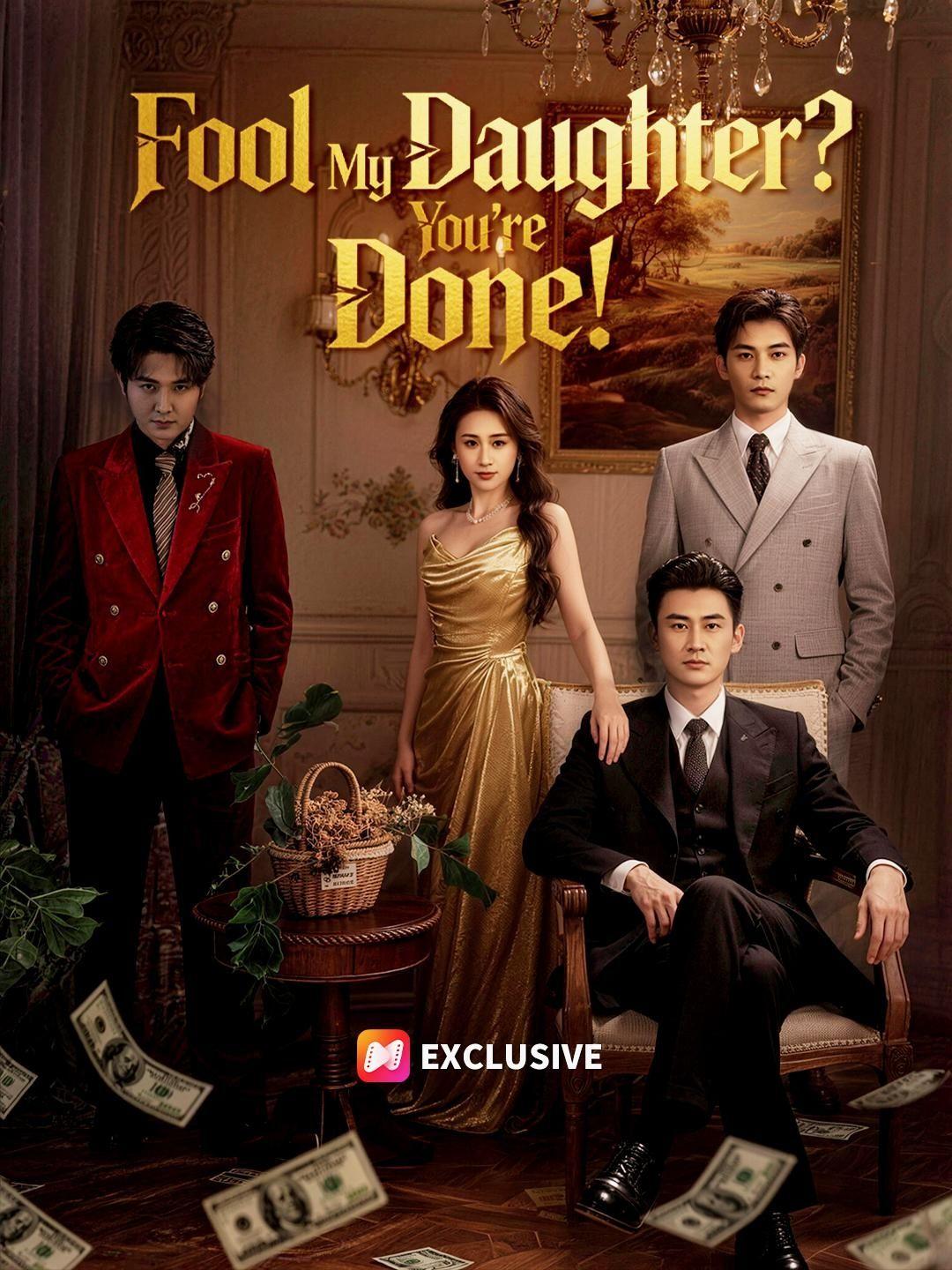
Karen Reed, the daughter of the Pharmaceutical King, intervenes in a dispute involving Lucas Ben, mistaking him for causing trouble at the Pavilion. The encounter sparks recognition and confusion, as Lucas bears a striking resemblance to Karen's master, who is currently in a coma. Meanwhile, an unseen adversary vows revenge against Lucas for capturing Karen's attention.Will Lucas uncover the mystery behind his resemblance to Karen's master before his enemy strikes?


Recommended for you


Afterlife Love: Sequins, Silence, and the Weight of a Handshake
There’s a moment—just two seconds, maybe less—where Xiao Yu’s sequined sleeve catches the overhead light and fractures it into a thousand tiny stars, and in that blink, everything changes. Not because of what she says, but because of what she *doesn’t*. In Afterlife Love, dialogue is sparse, almost luxurious in its absence, and the real storytelling happens in the negative space between gestures: the hesitation before a touch, the breath held too long, the way a hand lingers just past the point of propriety. The scene opens with Li Wei standing stiffly beside a display table, papers scattered like fallen leaves, his posture suggesting he’s been summoned, not invited. Then Xiao Yu enters—not striding, but *gliding*, her qipao whispering against the floor, her hair coiled in a low chignon secured by a black silk ribbon that matches the subtle severity of Zhou Lin’s attire. She doesn’t greet him. She reaches for his ear. Again. And again. Each tug is calibrated: first firm, then teasing, then almost reverent. Li Wei reacts like a man caught in a dream he can’t wake from—his eyes darting, his mouth forming silent pleas, his body leaning *into* her grip even as his face protests. It’s not submission. It’s surrender to a truth he can’t articulate. And that’s the genius of Afterlife Love: it treats intimacy as archaeology. Every touch uncovers a layer of buried history. Zhou Lin watches from the periphery, not as an intruder, but as a witness who’s seen this script play out before. His clothing is a statement in itself—structured, ornate, with leather straps and metallic clasps that evoke armor, yet the fabric beneath is soft, yielding, almost vulnerable. He wears a brooch with a sapphire stone that pulses faintly under the cool lighting, as if responding to the emotional frequency of the room. When Xiao Yu finally releases Li Wei and turns, her expression shifts—not cold, not warm, but *resolved*. She extends her hand. Not to Li Wei. To Zhou Lin. The camera lingers on their handshake: her palm upturned, his fingers closing over hers with deliberate slowness. No squeeze. No flourish. Just contact. And yet, in that contact, the entire emotional architecture of the scene collapses and rebuilds. Li Wei freezes mid-gesture, his hands half-raised as if he’d meant to intervene, to protest, to beg—but the words die in his throat. Because he understands, suddenly, violently, that this isn’t about preference. It’s about alignment. Zhou Lin’s gaze doesn’t waver. He doesn’t smile. He simply *holds* her hand, and in that stillness, the corridor seems to exhale. The fluorescent lights soften. The distant murmur of unseen visitors fades. This is the heart of Afterlife Love: love isn’t declared. It’s *acknowledged*, often in silence, often too late, often while standing in a hallway that smells faintly of sandalwood and regret. What’s fascinating is how the film uses costume as psychological mapping. Xiao Yu’s qipao—modernized, yes, with puff sleeves and sequins that glitter like frost on glass—is traditional in cut but defiant in execution. It speaks of heritage worn lightly, of identity that refuses to be confined. Li Wei’s jacket, clean and restrained, is a mask of civility, but the embroidered emblem on his chest—a stylized phoenix, half-hidden—hints at a fire he’s spent lifetimes trying to smother. Zhou Lin’s ensemble is the most revealing: the asymmetry, the industrial hardware, the jewel that gleams like a wound—this is a man who has fused tradition with trauma, who carries his past not as baggage, but as adornment. When Xiao Yu finally speaks—her voice calm, measured, carrying the weight of centuries—she doesn’t address either man directly. She says, ‘You both remember the bridge.’ And in that instant, Li Wei’s face goes slack. Zhou Lin’s jaw tightens. The bridge. Not a location. A metaphor. A threshold. A place where one self drowned and another rose, gasping, into the light. Afterlife Love doesn’t explain the bridge. It trusts the audience to feel its weight in the pause that follows her words. The editing is surgical. Cuts between close-ups are timed to the rhythm of a heartbeat—too fast when Li Wei panics, too slow when Zhou Lin absorbs her words. The camera circles them once, just once, during the handshake, creating a visual vortex that pulls the viewer into their shared gravity. Xiao Yu’s earrings—pearls suspended in silver filigree—swing gently with each tilt of her head, catching light like distant moons. And when she finally releases Zhou Lin’s hand, she doesn’t step back. She steps *sideways*, placing herself equidistant between them, a living fulcrum. Li Wei looks at her, then at Zhou Lin, then back at her—and for the first time, his expression isn’t fear or confusion. It’s grief. Raw, unvarnished. Because he realizes he’s not losing her. He’s remembering her. And Zhou Lin? He doesn’t look triumphant. He looks weary. As if loving her across lifetimes has cost him more than he can afford to name. That’s the tragedy—and the beauty—of Afterlife Love: the people we’re destined to love are often the ones we’ve already hurt beyond repair. The sequins on Xiao Yu’s dress don’t just sparkle; they reflect the fractured light of choices made in other lives, other bodies, other regrets. The final shot lingers on her hand, now empty, resting at her side. The faint imprint of Zhou Lin’s fingers still visible on her skin. And somewhere, offscreen, Li Wei exhales—a sound like paper tearing. Afterlife Love doesn’t end with a kiss or a breakup. It ends with three people standing in a hallway, breathing the same air, haunted by the same silence, knowing that love, in its truest form, is not possession. It’s recognition. And sometimes, the hardest thing to do is let go of the ear you’ve been tugging for lifetimes—just to hear the truth clearly for the first time.
Afterlife Love: The Ear-Tug That Changed Everything
In the sleek, minimalist corridor of what appears to be a high-end boutique or cultural exhibition space—soft LED strips lining the walls, polished floors reflecting the shimmer of sequins—the tension between Li Wei and Xiao Yu isn’t just palpable; it’s choreographed like a silent opera. Li Wei, dressed in a crisp off-white Zhongshan-style jacket with subtle embroidered motifs near the chest, stands rigid, his posture betraying both deference and discomfort. Xiao Yu, radiant in a sky-blue qipao encrusted with iridescent sequins that catch every shift of light like scattered moonlight, reaches out—not with anger, but with startling intimacy—and tugs his ear. Not once. Not twice. But repeatedly, across multiple cuts, as if testing the elasticity of his obedience, or perhaps reasserting a bond only they understand. Her fingers linger, her nails manicured but unobtrusive, her expression shifting from playful accusation to quiet resolve, then to something softer—almost tender—as she watches his flustered reactions. He winces, blinks rapidly, gestures helplessly with his hands, even presses them together in mock supplication, yet never pulls away. That’s the first clue: this isn’t coercion. It’s ritual. A private language spoken through touch, where the ear becomes a conduit for memory, guilt, or affection too complicated for words. The third man—Zhou Lin—enters the frame like a shadow cast by a sudden cloud. His attire is deliberately theatrical: a hybrid Tang suit in deep indigo and burnished silver brocade, asymmetrical fastenings, a cobalt-blue jewel pinned at the lapel like a seal of authority. He doesn’t speak much, but his silence is louder than any dialogue. Every time the camera cuts to him, his gaze is fixed—not on Xiao Yu’s hand, not on Li Wei’s squirming face, but on the *space between them*. His lips part slightly, as if he’s rehearsing a line he’ll never deliver. There’s no jealousy in his eyes, not exactly. More like recognition. As though he’s seen this dance before—in another life, another timeline. And that’s where Afterlife Love begins to unfurl its true texture. This isn’t just a romantic triangle; it’s a triad bound by karmic residue. The way Xiao Yu glances toward Zhou Lin after releasing Li Wei’s ear—her smile tight, her eyes flickering with something unreadable—suggests she’s not choosing between them. She’s reconciling versions of the same soul. Li Wei’s exaggerated expressions—wide-eyed panic, feigned innocence, the desperate clutch at his own chest—are almost comedic, until you notice how his left hand trembles when he tries to mimic her gesture later. He’s trying to replicate the intimacy, but it feels hollow. Because he doesn’t remember *why* she tugs his ear. Only that he must endure it. The setting itself reinforces this metaphysical undertone. Behind them, a poster partially visible reads ‘The Art of Letting Go’ in elegant calligraphy, next to an image of a broken teacup reassembled with gold lacquer—kintsugi. A deliberate metaphor. The characters aren’t repairing what’s broken; they’re honoring the fracture. When Xiao Yu finally releases Li Wei’s ear and turns toward Zhou Lin, her movement is fluid, unhurried. She extends her hand—not in greeting, but in offering. Zhou Lin hesitates, then takes it. Their handshake lasts longer than necessary, fingers interlacing just enough to suggest familiarity, not formality. Li Wei watches, mouth slightly open, as if someone has just spoken a phrase in a language he once knew fluently but now only recognizes in dreams. In that moment, the corridor seems to stretch, the lighting dimming subtly, the background shelves blurring into suggestion rather than substance. Time isn’t linear here. It’s cyclical, layered, like the embroidery on their garments—each stitch a past decision, each thread a consequence. What makes Afterlife Love so compelling isn’t the spectacle of costume or the elegance of framing—it’s the restraint. No grand declarations. No melodramatic confrontations. Just a woman tugging an ear, a man flinching, and a third man stepping into the silence like he’s been waiting centuries for the door to open. The director trusts the audience to read the subtext in micro-expressions: the way Xiao Yu’s earring—a delicate pearl drop—sways when she tilts her head, the slight crease between Zhou Lin’s brows when Li Wei laughs too quickly, the way Li Wei’s jacket sleeve rides up just enough to reveal a faint scar on his wrist, identical to one Zhou Lin hides beneath his cuff. Coincidence? In Afterlife Love, nothing is accidental. Even the color palette whispers meaning: Xiao Yu’s blue—cool, ethereal, associated with water and rebirth; Li Wei’s white—purity, but also emptiness, a blank page; Zhou Lin’s indigo—depth, mystery, the night sky before dawn. They are not rivals. They are reflections. And the ear-tug? It’s not dominance. It’s an anchor. A physical reminder: *I know who you were. I remember when you forgot yourself.* Later, when Xiao Yu raises her index finger—not scolding, but illuminating—Li Wei’s expression shifts from panic to dawning comprehension. He touches his own ear, then his chest, then looks at Zhou Lin with something like awe. Not envy. Recognition. The scene ends not with resolution, but with suspension: three figures suspended in a hallway that feels less like a physical space and more like a liminal threshold. Afterlife Love doesn’t ask who she’ll choose. It asks: *Can love survive its own reincarnation?* And more unsettlingly: *What if the person you’re meant to love is the one you’ve already failed?* The brilliance lies in how the cinematography refuses to take sides. Close-ups alternate with over-the-shoulder shots that force us to inhabit each character’s perspective, making us complicit in their confusion, their longing, their quiet despair. We don’t just watch Afterlife Love—we feel the weight of its unresolved echoes in our own ribs. That final shot, where Zhou Lin’s hand still holds Xiao Yu’s, but his eyes are locked on Li Wei’s retreating back—no music, just the hum of fluorescent lights—that’s when the real haunting begins. Because love, in this world, isn’t about finding the right person. It’s about remembering the wrong one… and choosing to love them anyway.
Third Man Syndrome: When Brooches Speak Louder Than Words
The dark-clad man’s brooch glints like a silent verdict while the white-clad one stammers. His stillness screams more than any dialogue could. In Afterlife Love, costume isn’t decoration—it’s destiny. That handshake? Not agreement. It’s surrender disguised as civility. Chills. ❄️
The Ear-Pulling Power Move in Afterlife Love
That iconic ear-grab? Pure emotional leverage—she’s not just holding him, she’s anchoring his entire moral compass. His panic vs her calm control creates delicious tension. Every flinch, every pleading gesture? Chef’s kiss. This isn’t romance—it’s psychological warfare with sequins. 🌊✨ #AfterlifeLove