



Judgment and Reunion
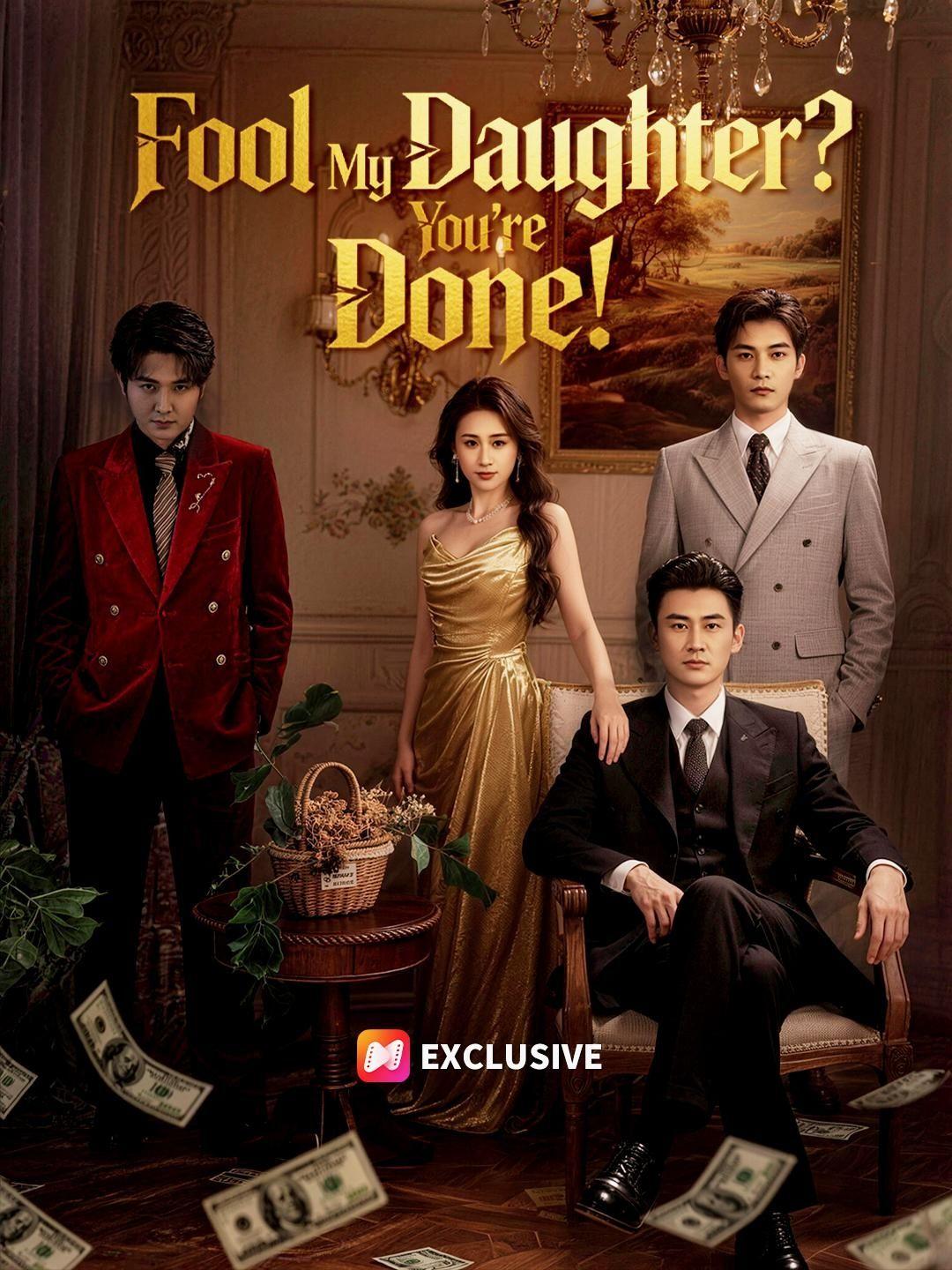
Jasmine, now reincarnated, confronts Astra, her brother, who has committed numerous evil deeds. Using the power of the people, she defeats him, ensuring justice. Meanwhile, Lucas, the amnesiac Dragon Emperor, is found by Jasmine, who recognizes him instantly despite his lost memories. They vow to be together forever.Will Lucas regain his memories and fully reunite with Jasmine in the next episode?


Recommended for you


Afterlife Love: When the Villain Was Always the Heart
Let’s talk about Mo Xuan. Not the silver-haired specter wreathed in crimson malice, but the man beneath the feathers and fury. Because in *Afterlife Love*, the true tragedy isn’t the battle—it’s the realization that the villain was never the enemy. He was the wound. From his first appearance, Mo Xuan radiates contradiction. His costume is opulent yet decaying: black silk layered with translucent gauze, feathered shoulders that suggest fallen angels, rings embedded in his knuckles like prison bars. His makeup—sharp brows, blood-red lips, a third eye painted in indigo—isn’t theatrical; it’s armor. And those red energy tendrils? They don’t just swirl around him—they *pulse* in time with his heartbeat, visible proof that his power is tied to his pain. Watch closely during the confrontation: when Li Zeyu raises his sword, Mo Xuan doesn’t charge. He *stills*. His fingers curl inward, not in aggression, but in self-restraint. He knows what’s coming. He’s waited for it. The moment the cyan blast hits him, his reaction isn’t shock—it’s surrender. His scream isn’t defiance; it’s release. His body dissolves not into nothingness, but into fragments of memory: a childhood courtyard, a shared scroll, a promise broken by circumstance, not choice. The visual language here is devastatingly precise. As the light consumes him, flashes of golden light—warm, familiar—flicker within the turquoise storm. Those aren’t random effects. They’re echoes of Li Zeyu’s own past, projected onto Mo Xuan’s disintegration. The film forces us to ask: Who really cast the first curse? Who turned away first? The answer, whispered in subtext, is that Mo Xuan didn’t become the darkness—he was abandoned to it. Meanwhile, Li Zeyu’s arc is equally nuanced. His initial confidence—standing before the Pharmacy Pavilion banner, sword raised like a priest at an altar—is undercut by micro-expressions: a twitch near his temple, a hesitation before the final strike. He doesn’t want to win. He wants to *stop*. His relief when Chen Yueru revives isn’t joy—it’s absolution. And that’s where *Afterlife Love* transcends genre. It’s not a hero’s journey. It’s a reckoning. The real magic isn’t in the glowing lotus or the energy swords. It’s in the silence after the fight, when Li Zeyu kneels beside Yueru and she reaches up, not to thank him, but to *check* him—to verify he’s still there, still himself. Her touch lingers on his jawline, her thumb brushing the corner of his mouth, as if memorizing the shape of his humanity. His smile, when it comes, is cracked at the edges, like porcelain repaired with gold—kintsugi for the soul. The wedding scene, often misread as a happy ending, is actually the most haunting part. Li Zeyu in his dragon robe, radiant and regal, stands before two veiled brides—symbols of tradition, duty, societal expectation. But his eyes keep drifting. To the side. To Chen Yueru, who watches from the edge of the crowd, her expression unreadable. She doesn’t smile. She *observes*. And when he finally turns, not to the brides, but to her, the entire courtyard seems to hold its breath. Their embrace isn’t romantic in the conventional sense. It’s cathartic. It’s two survivors acknowledging the war they survived—not against monsters, but against the stories they were forced to believe about themselves. The director lingers on their hands clasped together, fingers interlaced, as if sealing a pact older than the temple behind them. This is where *Afterlife Love* earns its title: love isn’t reborn in grand gestures. It’s resurrected in the quiet refusal to let the past dictate the future. The final shot—Mo Xuan’s absence felt more than seen, the red veils still hanging heavy in the air, Li Zeyu and Chen Yueru holding each other while the world celebrates around them—says everything. Some endings aren’t about closure. They’re about carrying the ghost with grace. And that’s the real magic *Afterlife Love* offers: the courage to love the person you were, even after you’ve had to destroy them to survive. The film doesn’t give us villains or heroes. It gives us fractured people, trying to reassemble themselves in a world that demands perfection. And in that imperfection—those trembling hands, that tear-streaked scream, that hesitant hug—we find the only truth worth fighting for. *Afterlife Love* isn’t fantasy. It’s therapy with special effects. And honestly? We all need that kind of healing.
Afterlife Love: The Sword That Sealed a Soul’s Return
In the opening frames of *Afterlife Love*, we’re thrust into a world where magic isn’t whispered—it’s wielded like a scalpel. The protagonist, Li Zeyu, stands before a banner bearing the characters for ‘Pharmacy Pavilion,’ but this is no ordinary apothecary. His attire—a hybrid of Ming-dynasty armor and modern tactical layering—signals a fusion of eras, a man caught between duty and destiny. He grips a sword that pulses with cyan energy, not as a weapon of war, but as a conduit. His eyes narrow, lips part in concentration, fingers tracing the hilt with reverence. This isn’t just preparation; it’s invocation. Every motion is deliberate: the wrist flick, the breath held, the slight tilt of his head as if listening to a frequency only he can hear. The glow intensifies—not violently, but insistently—like water rising behind a dam. And then, the cut. We shift to a corridor bathed in sterile light, where the antagonist, Mo Xuan, emerges. Silver hair cascades like frozen moonlight, framing a face carved from defiance and sorrow. His black feathered cloak billows without wind, red spectral tendrils coiling around his arms like serpents made of sin. His nails are elongated, jeweled, dangerous—not for show, but function. When he snarls, it’s not rage alone; it’s betrayal, grief, the kind that calcifies the heart. He doesn’t speak. He *vibrates* with unspoken history. The editing here is masterful: alternating cuts between Li Zeyu’s calm precision and Mo Xuan’s volatile aura create a tension that feels less like a duel and more like two halves of a shattered soul reuniting in combat. The real genius lies in what’s unsaid. Why does Li Zeyu hesitate before striking? Why does Mo Xuan flinch when the cyan light first touches him—not in pain, but recognition? There’s a shared past buried beneath the magic, a wound neither has dared to name. Then comes the climax: the blast. Not fire, not lightning—but pure chromatic force, turquoise and crimson colliding in a vortex that distorts the hallway’s marble walls like heat haze over asphalt. Mo Xuan screams, not in agony, but in revelation. His body fractures—not physically, but metaphysically—as if the spell isn’t attacking him, but *unmaking* him. The camera lingers on his face as the light consumes him: eyes wide, mouth open, tears cutting through kohl. He vanishes not with a bang, but a sigh—a dissolution into smoke and memory. The silence afterward is heavier than the fight. Li Zeyu lowers his sword, breathing hard, staring at the spot where Mo Xuan stood. His expression isn’t triumph. It’s exhaustion. Grief. The weight of having erased someone he once called brother. This moment defines *Afterlife Love*’s emotional core: power isn’t about victory; it’s about the cost of remembering who you were before the world demanded you become something else. Later, the scene shifts to the aftermath. A woman in white—Chen Yueru—lies limp on the floor, her traditional dress stained with dust, not blood. Two others kneel beside her: one in jade silk, another in crimson velvet, their hands trembling as they cradle her head. Li Zeyu rushes in, sword forgotten, kneeling beside her with a tenderness that contradicts his earlier ferocity. He pulls a glowing lotus from his sleeve—not a weapon, but a relic. Pink light blooms, soft as dawn, weaving through Yueru’s limbs like healing ivy. Her eyelids flutter. She wakes—not with a gasp, but a slow inhale, as if surfacing from deep water. Their reunion is quiet, intimate. She touches his cheek, her fingers tracing the line of his jaw, her gaze searching his eyes for the man she knew before the magic, before the war. He smiles—small, fragile—and whispers something we don’t hear. But we feel it. In that moment, *Afterlife Love* reveals its true theme: resurrection isn’t about bringing back the dead. It’s about finding the living person still buried beneath layers of trauma, duty, and self-destruction. The final sequence—outside, in a courtyard framed by ancient eaves and potted bonsai—shifts tone entirely. Li Zeyu now wears a crimson dragon robe, embroidered with gold phoenixes, standing before two brides veiled in red. The crowd cheers, claps, raises fists in celebration. But watch his eyes. They don’t linger on the brides. They scan the periphery, searching. And then—she appears. Chen Yueru, now in a matching red qipao, steps forward, not as a bride, but as a witness. Their eyes lock. No words. Just a nod. A shared breath. A lifetime of silence broken by understanding. The wedding proceeds, but the focus stays on them—the ones who chose survival over ceremony, love over legacy. *Afterlife Love* doesn’t end with vows. It ends with a hug, tight and wordless, as the camera pulls back, revealing the courtyard, the guests, the temple doors sealed behind them. The message is clear: some bonds aren’t forged in fire or ritual. They’re resurrected in the quiet space between heartbeats, after the magic fades and all that’s left is two people, finally willing to be seen. This isn’t fantasy escapism. It’s emotional archaeology—digging through myth to find the human truth underneath. And that’s why *Afterlife Love* lingers long after the screen goes dark.