



Poisoned Prince
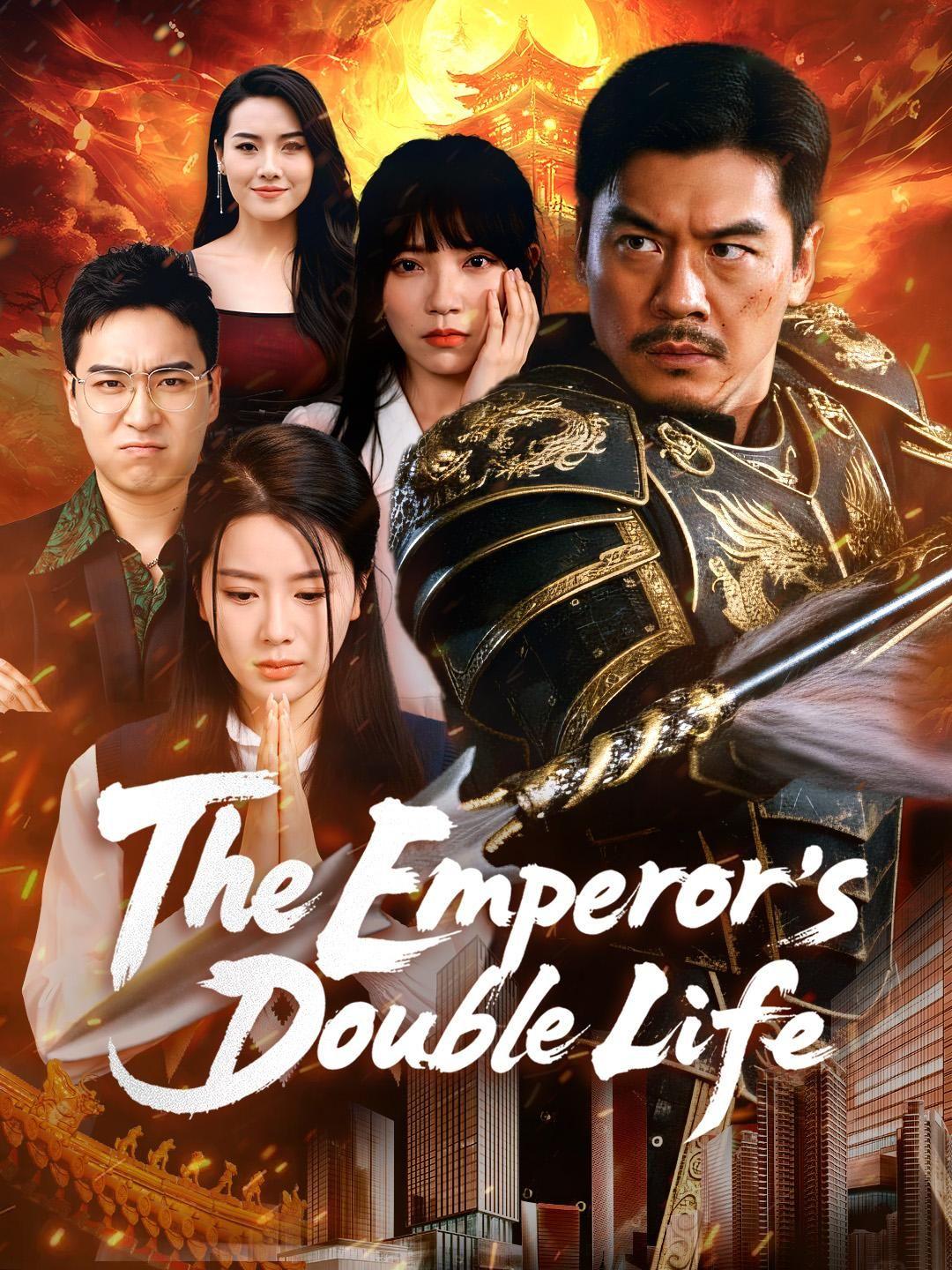
The Prince of Dansla, James Xiao, was injured in battle. He was saved by the princess of the country that he was fighting. However, he was poisoned by Gu and his life was in danger. The princess transferred the Gu poison to herself in order to save James. After James escaped pursuit, he was saved by his bodyguards. He had fallen in love with the princess who saved him. What would their fate be?
EP 1: Prince James Xiao of Dansla is poisoned with the deadly Red-eye Gu by Nesadian Elder Liziczai Lei, and Princess Luna Nan discovers his condition, revealing a plot against him amidst the ongoing conflict between their nations.Will Princess Luna Nan be able to save Prince James from the deadly poison?


Recommended for you


One and Only: When the Blade Forgets Its Name
There’s a moment—just one—that haunts me long after the screen fades. Xiao Jing’an, lying on the forest floor, eyes closed, blood drying on his cheek like rust on old iron, and Nan Yue Ling kneeling beside him, her fingers brushing the edge of his armor not to comfort, but to *remember*. She’s tracing the carvings—the dragons, the spirals, the ancient glyphs that spell out his lineage, his duty, his curse. And in that silence, you realize: this isn’t a love story. It’s a *reclamation*. A man who spent his life being defined by his title, his sword, his kingdom—now reduced to flesh and breath—and a woman who sees past all that, straight to the boy who once laughed beneath those same bamboo trees. Let’s unpack the choreography, because it’s not just flashy—it’s *psychological*. Watch how Xiao Jing’an fights: every parry is precise, every leap calculated, but there’s a tremor in his wrist when he blocks a blow from the masked assassins. Not weakness. *Memory*. He’s fighting ghosts in every opponent. The way he spins, cloak whipping like a banner of surrender, isn’t showmanship—it’s exhaustion wearing the mask of elegance. And when he kicks a soldier off a crate, sending him tumbling down the slope, the camera follows the fall in slow motion, not to glorify the violence, but to emphasize the *distance* between them now. Once, they marched side by side. Now, gravity pulls them apart. Lei Wují is the dark mirror Xiao Jing’an refuses to face. The elder doesn’t wear armor—he wears *history*. His fur-trimmed robes, his bone beads, his braids threaded with copper wire—they speak of a time before empires, before oaths were written in blood. When he confronts Xiao Jing’an, it’s not with rage, but with sorrow so deep it cracks his voice. ‘You carry their weight,’ he says, though the subtitles never translate it. We don’t need them. We see it in the way Xiao Jing’an flinches—not from the green energy blast, but from the truth in those words. He *does* carry it. The dead. The broken promises. The faces of men he couldn’t save. And when he collapses, coughing blood onto the dirt, it’s not defeat. It’s release. The first time he’s allowed himself to stop holding it all together. Then Nan Yue Ling arrives—not as a healer, not as a princess, but as a *witness*. Her entrance is deliberately understated: no fanfare, no music swell. Just her feet crunching on dry leaves, her breath uneven, her eyes wide with a terror that’s not for herself, but for *him*. She doesn’t cry out. She doesn’t beg. She kneels. And in that act—so simple, so radical—she dismantles the entire hierarchy of the scene. The warriors pause. The smoke thins. Even the wind seems to hush. Because she’s doing what no one else dares: she’s treating him like a man, not a symbol. Their interaction afterward is where the film transcends genre. In the chamber, Xiao Jing’an wakes blind, and instead of panic, there’s a strange calm. He touches his face, his chest, his sword—each gesture a ritual of reorientation. And when Nan Yue Ling enters, he doesn’t ask ‘Where am I?’ or ‘What happened?’ He asks, voice barely audible: ‘Did you see it?’ Not the battle. Not the betrayal. *The moment.* The instant he chose to stand, knowing it would break him. She doesn’t lie. She says nothing. She just places her hand over his, and for the first time, he *feels* her—not as a presence, but as a *truth*. That’s when the real transformation begins. Not physical healing. Emotional excavation. He removes the bandage slowly, not because he can see, but because he’s ready to *be seen*—flawed, fragile, finally human. The final confrontation with the assassins isn’t about victory. It’s about *choice*. When the black-clad figures surround them, Xiao Jing’an doesn’t draw his sword immediately. He looks at Nan Yue Ling. And she nods. Not encouragement. *Consent.* They’ve agreed: if this is the end, let it be together. And when he fights—blind, wounded, yet moving with uncanny precision—it’s not skill that saves him. It’s *trust*. He hears her breath, the shift of her robes, the exact angle of her step, and he *dances* with her, their movements synchronized like a language only they understand. One assassin lunges; Xiao Jing’an sidesteps, not by sight, but by the rhythm of her heartbeat against his back. Another swings high; Nan Yue Ling ducks, pulling him down with her, their bodies colliding not in accident, but in design. They’re not two people fighting. They’re one entity, breathing as one. And the ending—oh, the ending—isn’t redemption. It’s reckoning. Xiao Jing’an sits on the edge of the bed, sword in hand, blindfold loose, and he *smiles*. Not happy. Not sad. *Resolved.* Because he’s finally understood: One and Only isn’t about being the last man standing. It’s about finding the one person who sees you when the world goes dark. Nan Yue Ling stands behind him, her hand resting lightly on his shoulder, and for the first time, he doesn’t tense. He leans in. Just slightly. Just enough. The camera pulls back, revealing the chamber, the teal drapes, the sword gleaming dully in the low light—and in that frame, you realize: the real battle wasn’t on the battlefield. It was here. In the quiet. In the choosing. In the unbearable courage of saying, even when broken, even when blind, *I am still yours.* That’s the legacy of One and Only. Not glory. Not power. But the quiet, devastating act of loving someone *after* they’ve stopped believing they deserve it. And in a world that rewards noise, that silence—between two hands, two hearts, one breath—is the loudest thing of all.
One and Only: The Crimson Cloak’s Last Stand
Let’s talk about Xiao Jing’an—the man in the crimson cloak who doesn’t just fight, he *burns* through every frame like a comet with a sword. From the very first shot, where he pivots mid-air with his blade raised and that ornate golden hairpiece catching the light like a crown of defiance, you know this isn’t just another warrior. He’s a paradox wrapped in armor: elegant yet brutal, noble yet exhausted, regal yet bleeding from the cheek like someone who’s been smiling through too many betrayals. His movements aren’t choreographed—they’re *alive*. When he flips over a fallen enemy, boots skidding on dry earth, the camera lingers not on the impact but on the way his red cape flares like a dying flame. That’s the visual language here: everything is symbolic, even the dirt under his nails. The battlefield isn’t just a setting—it’s a character. Smoke curls lazily from scattered fires, bamboo stalks sway as if whispering secrets, and bodies lie half-buried in the dust like forgotten prayers. But what makes this sequence unforgettable isn’t the spectacle; it’s the silence between the strikes. Watch how Xiao Jing’an pauses—just for a breath—after disarming a foe, his eyes scanning the chaos not with triumph, but with weary recognition. He knows these men. Some wore the same insignia once. Some shared wine before the war turned sour. That flicker of hesitation? That’s where the real story lives. And when he finally pins an opponent to a wooden crate, knee pressing into chest, his voice—low, hoarse, almost tender—says something we don’t hear, but *feel*: ‘You were supposed to stand with me.’ Then comes Lei Wují—the elder with braided silver hair, feathered headband, and eyes that hold centuries of regret. He doesn’t rush in. He *arrives*, stepping over corpses like they’re fallen leaves. His entrance isn’t loud; it’s heavy. The air shifts. Xiao Jing’an’s posture changes—not fear, but *recognition*. This isn’t just an enemy. This is the ghost of a promise broken. When Lei Wují raises his hand and green energy coils around his palm like venomous smoke, the tension doesn’t spike—it *settles*, like poison sinking into water. Xiao Jing’an doesn’t dodge. He watches. Because he already knows what’s coming. And when the blast hits him, sending him flying backward with blood blooming across his lips, he doesn’t scream. He *laughs*. A broken, ragged sound that says more than any monologue ever could: ‘So this is how it ends. Not with a roar—but with a sigh.’ That’s when Nan Yue Ling enters—not running, but *gliding*, her turquoise robes fluttering like wings caught in a sudden wind. Her name appears in gold script beside her, and for a second, the world holds its breath. She’s not a damsel. She’s not a savior. She’s the question no one dared ask: *What if love survives the war?* Her face isn’t painted with resolve—it’s raw, trembling, alive with terror and devotion. When she reaches Xiao Jing’an, cradling his head in her lap, her fingers trace the blood on his temple like she’s trying to erase the wound with touch alone. And then—oh, then—she does something shocking: she takes his hand, turns it palm-up, and presses her own against it. Not to heal. To *witness*. To say: I see you. Even now. Even broken. Even blind. Because yes—he *is* blind later. In the quiet chamber, draped in teal silk, bandages wrapped tight over his eyes, Xiao Jing’an sits up with a groan that sounds less like pain and more like grief. His sword lies beside him, untouched. He doesn’t reach for it. He reaches for his own ribs, where the wound still burns. And when Nan Yue Ling walks in—her steps soft, her expression unreadable—he doesn’t turn. He *listens*. He hears the jingle of her bracelets, the rustle of her sleeves, the hitch in her breath. Then he speaks, voice stripped bare: ‘You didn’t have to come back.’ She doesn’t answer. Instead, she draws the sword—not to strike, but to place it gently across her own throat. A silent vow. A threat. A plea. And Xiao Jing’an, blind but *seeing*, smiles faintly. ‘One and Only,’ he murmurs. Not to her. To the universe. As if naming the only truth left standing. This isn’t just action. It’s anatomy of the soul. Every slash, every fall, every tear shed in silence—it’s all building toward one moment: when two people choose each other *after* the world has tried to unmake them. One and Only isn’t a title. It’s a rebellion. A refusal to let love be collateral damage. And in a genre drowning in tropes, that’s the rarest weapon of all. Xiao Jing’an may lose the battle, but he wins the only thing that matters: her gaze, even when he can’t see it. And Nan Yue Ling? She doesn’t wait for him to recover. She becomes his eyes. His compass. His reason to draw breath again. That final shot—her hand resting on his, both stained with blood and hope—isn’t an ending. It’s a covenant. Written not in ink, but in pulse and pressure and the unbearable weight of choosing someone, again and again, even when the world says no. One and Only isn’t about being singular. It’s about being *chosen*. And in this chaotic, burning world, that’s the most dangerous magic of all.