



The Mysterious Savior
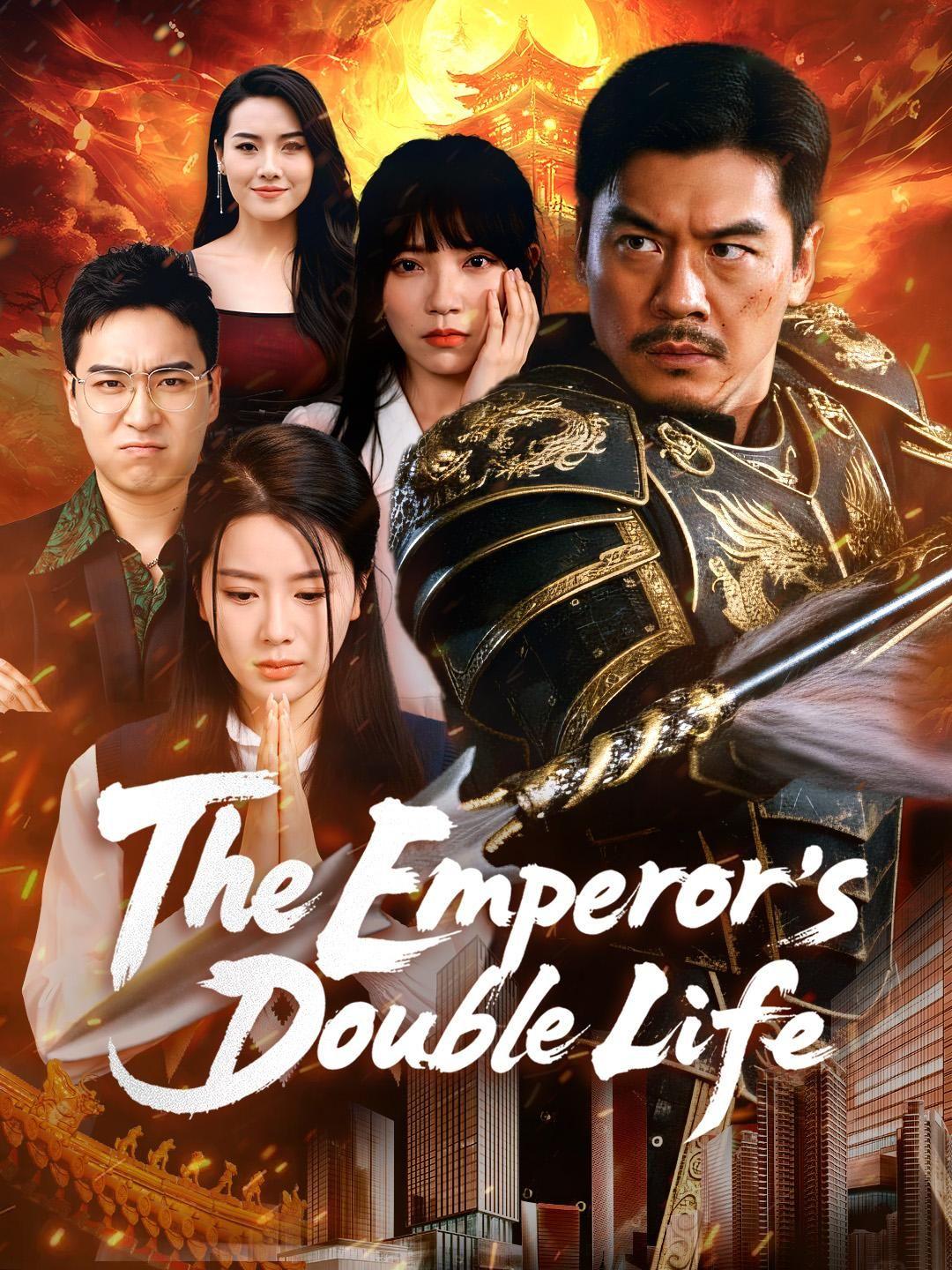
Prince James Xiao of Dansla, injured and poisoned by a Gu in battle, is rescued by Princess Yasmin, who transfers the poison to herself to save him. As James recovers in her house, unaware of her sacrifice, his bodyguard discovers clues leading to Yasmin's location, signaling impending danger.Will James discover Yasmin's sacrifice before it's too late?


Recommended for you


One and Only: When the Sword Speaks Louder Than Words
There’s a moment—just three seconds, maybe less—where time stops not because of violence, but because of restraint. Ling Xue stands frozen, sword at her throat, eyes wide not with fear but with dawning realization. Mo Yan’s arm is extended, rigid, yet his wrist trembles. Not from weakness. From conflict. That’s the genius of *One and Only*: it understands that the most devastating battles aren’t fought with clashing steel, but with the unbearable weight of a single, unsaid truth hovering between two people who’ve spent lifetimes circling each other like planets bound by gravity they refuse to name. Let’s unpack the costume design first, because it’s never just fabric—it’s narrative. Ling Xue’s attire is a mosaic of resistance. The geometric embroidery on her vest? Those are tribal motifs from the Western Peaks, a region erased from official maps fifty years ago. The layered turquoise necklaces? Each strand represents a generation of women who refused to let their language die. Even her earrings—long, dangling, tipped with silver bells—are silent now, as if they’ve chosen not to chime in the presence of danger. She doesn’t need sound to announce herself. Her presence is already a declaration. Mo Yan, by contrast, is dressed in monochrome severity. Black robes, textured like folded shadow. His sleeves are reinforced with subtle chainmail stitching—practical, yes, but also symbolic: he’s armored not just against blades, but against empathy. The blindfold? White silk, tied with precision. Not hastily wrapped. This was done deliberately. He *wants* to be unable to see her face when he does what he must. Because if he sees the way her lower lip catches between her teeth when she’s trying not to cry—or the faint scar near her hairline, the one shaped like a crescent moon—he might hesitate. And hesitation, in his world, is treason. Their dialogue—if you can call it that—is almost entirely nonverbal. She blinks once, slowly. He exhales through his nose, a sound like wind through dry reeds. She shifts her weight, just enough to make the tassels on her vest sway. He tightens his grip on the hilt. The sword doesn’t move. It *waits*. And in that waiting, we learn everything: Ling Xue knows who he is. Not just his title, not just his rank, but the boy who once shared bread with her under a willow tree during the famine year. The one who whispered stories to her when the raiders came. Mo Yan? He remembers her voice. The way she hummed while mending nets. The exact pitch of her laugh when she caught fireflies in a jar. He’s holding a weapon against the only person who ever saw him *unarmed*—not physically, but emotionally. And that’s why his hand shakes. Then—the turn. Not dramatic. Not cinematic in the Hollywood sense. Just… human. Ling Xue lifts her chin. Not defiantly. Quietly. As if she’s making a choice no one else can see. She places her palm flat against the flat of the blade. Not to push it away. To *feel* it. To say, *I am here. I am real. You cannot pretend I am not.* And Mo Yan—oh, Mo Yan—his breath catches. His jaw tightens. For a heartbeat, the blindfold slips, just slightly, revealing one eye: dark, liquid, flooded with something that looks terrifyingly like regret. Cut to later. Outside. The marketplace bustles, but the energy is different now. Tense. Watchful. Shi Lao receives the black cloth from A Gui—his expression unreadable, but his fingers tighten around the fabric like it’s burning him. The cloth is from Mo Yan’s sleeve. Torn. Stained. A message without words. Shi Lao doesn’t ask questions. He already knows. He’s been waiting for this moment since the day Mo Yan walked out of the training halls with that blindfold tied behind his head. ‘He chose the path of silence,’ Shi Lao murmurs, not to A Gui, but to the wind. ‘But silence has a price. And tonight, the debt comes due.’ Back in the chamber, Ling Xue kneels—not in submission, but in solidarity. She places her hand over his where it rests on his side, near the wound he’s been hiding. He doesn’t pull away. Instead, he turns his head toward her voice, as if trying to map her location by sound alone. ‘You could have killed me,’ she says, voice steady. ‘Why didn’t you?’ He doesn’t answer right away. The silence stretches, thick as incense smoke. Then, softly: ‘Because the sword remembers your name.’ That line—so simple, so devastating—is the emotional core of *One and Only*. It suggests memory isn’t just personal; it’s embedded in objects, in steel, in the very air we breathe. The sword wasn’t forged to kill her. It was forged *alongside* her legacy. And Mo Yan, for all his training, cannot unlearn what the metal already knows. The final sequence—Ling Xue walking away, her back straight, her braids catching the light—isn’t an ending. It’s a threshold. She leaves the room, but she doesn’t leave *him*. She carries him with her, in the weight of that uncut throat, in the echo of his breath against her skin. And Mo Yan? He remains seated, sword now resting across his lap like a sleeping serpent. He lifts his hand to his blindfold. Not to remove it. To adjust it. To reaffirm his choice. But his fingers linger on the edge of the silk, as if testing whether the boundary between sight and blindness is as firm as he believes. *One and Only* thrives in these liminal spaces—in the breath between words, the pause before action, the glance that holds a lifetime. It doesn’t rush. It *resonates*. And that’s why, when Ling Xue smiles at the end—not at Mo Yan, but at something beyond the frame—we don’t wonder what she’s thinking. We feel it. Hope isn’t naive here. It’s hard-won. It’s the courage to believe that even the most broken people can still choose kindness, one trembling second at a time. This isn’t fantasy. It’s humanity, dressed in silk and sorrow, walking through a world that demands you pick a side. Ling Xue refuses. Mo Yan hesitates. And in that refusal and hesitation, *One and Only* finds its truth: the most revolutionary act isn’t swinging the sword. It’s lowering it—and daring to see what’s been hidden in plain sight all along.
One and Only: The Blade That Never Cuts True
Let’s talk about the kind of tension that doesn’t need explosions—just a sword hovering an inch from a throat, a blindfolded man breathing like he’s holding back a storm, and a woman whose eyes flicker between terror, defiance, and something far more dangerous: pity. This isn’t just a standoff; it’s a psychological duel wrapped in silk and silver, where every gesture carries the weight of unspoken history. In *One and Only*, the opening sequence between Ling Xue and Mo Yan isn’t about who wins the fight—it’s about who survives the silence after the blade drops. Ling Xue enters not with a roar, but with a step that echoes off wooden beams—her turquoise skirt sways like water over stone, her braids heavy with turquoise beads and dangling tassels that catch the light like tiny weapons themselves. Her headpiece? A crown of filigree and gemstones, not for royalty, but for rebellion. She doesn’t wear armor; she wears identity. Every stitch on her vest tells a story of a people who refuse to be erased. When Mo Yan’s sword presses against her neck, she doesn’t flinch—not because she’s fearless, but because she’s calculating. Her lips part, not in a scream, but in a half-formed word, as if she’s already spoken the sentence that will change everything. And then—she smiles. Not a smile of relief. A smile of recognition. As if she’s seen this moment before, in dreams or prophecies or memories she didn’t know she carried. Mo Yan, meanwhile, is a paradox wrapped in black silk. His blindfold isn’t a weakness—it’s a declaration. He *chooses* not to see. Or perhaps he sees too much already. The gold hairpiece perched atop his high ponytail isn’t ornamental; it’s ceremonial, like the crest of a fallen dynasty he still serves in spirit. His grip on the sword is steady, but his breath hitches—once, twice—when Ling Xue’s fingers brush the blade’s edge. He feels her pulse through the steel. He knows she’s not trembling. That’s what undoes him. A warrior can brace for fear. He cannot brace for calm. The room itself breathes with them. Bamboo panels, faded teal drapes, a low table with a half-eaten dish—someone was eating before this began. Life interrupted. The camera lingers on details: the frayed hem of Ling Xue’s sleeve, the way Mo Yan’s left hand clutches his waistband like he’s trying to keep his ribs from cracking open. There’s blood on his temple later—not fresh, but old, dried into a rust-colored line that matches the scar on his jaw. He’s been hurt before. Not by swords. By choices. What follows isn’t resolution—it’s rupture. Ling Xue lowers her hands. Not surrender. Invitation. And Mo Yan, for the first time, *leans* into the blade. Not to cut deeper, but to feel its truth. The moment hangs, suspended, until he collapses—not from injury, but from exhaustion of will. He sinks onto the edge of the bed, sword still in hand, one knee on the floor, the other bent like a man who’s forgotten how to stand straight. Ling Xue watches. She doesn’t move toward him. She doesn’t retreat. She simply *holds* the space between them, as if it’s sacred ground. Later, outside, the world shifts. A marketplace. Dusty, loud, alive with soldiers and merchants and the clatter of hooves. An older man—Shi Lao, with his fur-lined robes and bone-and-ivory belt—stands beneath a thatched pavilion, staring at a scrap of black cloth handed to him by a younger man named A Gui. The cloth is torn. It smells of smoke and iron. Shi Lao’s face doesn’t betray shock. It betrays grief. He knew this would come. He just hoped it wouldn’t come *here*, not in front of the children playing near the stall with the hanging ox skull. Back inside, Ling Xue finally speaks. Not to Mo Yan—who’s now slumped, breathing shallowly, one hand pressed to his side as if guarding something deeper than flesh. She speaks to the air. To the ghosts in the rafters. ‘You don’t have to wear the blindfold to be blind,’ she says, voice low, almost tender. ‘Some of us see too clearly. And that’s the real curse.’ That line—delivered without flourish, barely above a whisper—is the core of *One and Only*. It’s not about power. It’s about perception. About how we choose what to witness, and what we let ourselves forget. Mo Yan’s blindness isn’t physical; it’s ethical. He’s been trained to obey, to strike, to sever ties without hesitation. But Ling Xue? She’s been trained to remember. To carry names, songs, wounds, and rituals in her bones. When she touches the sword, she’s not testing its edge—she’s asking it a question: *Have you ever cut someone who didn’t deserve it?* The final shot—Ling Xue smiling, truly smiling, as sunlight catches the turquoise in her earrings—isn’t triumph. It’s surrender to hope. A dangerous, fragile thing. Because in *One and Only*, hope isn’t the absence of pain. It’s the decision to keep walking *through* it, even when your hands are still stained with the ink of old oaths. And Mo Yan? He’ll wake up soon. And when he does, the blindfold will still be there. But something behind it—something long buried—will have shifted. Like tectonic plates moving under silent earth. *One and Only* doesn’t give answers. It gives questions that linger long after the screen fades. And that, dear viewer, is how you know you’re watching something rare: not just a drama, but a mirror.