



Betrayal and Rescue
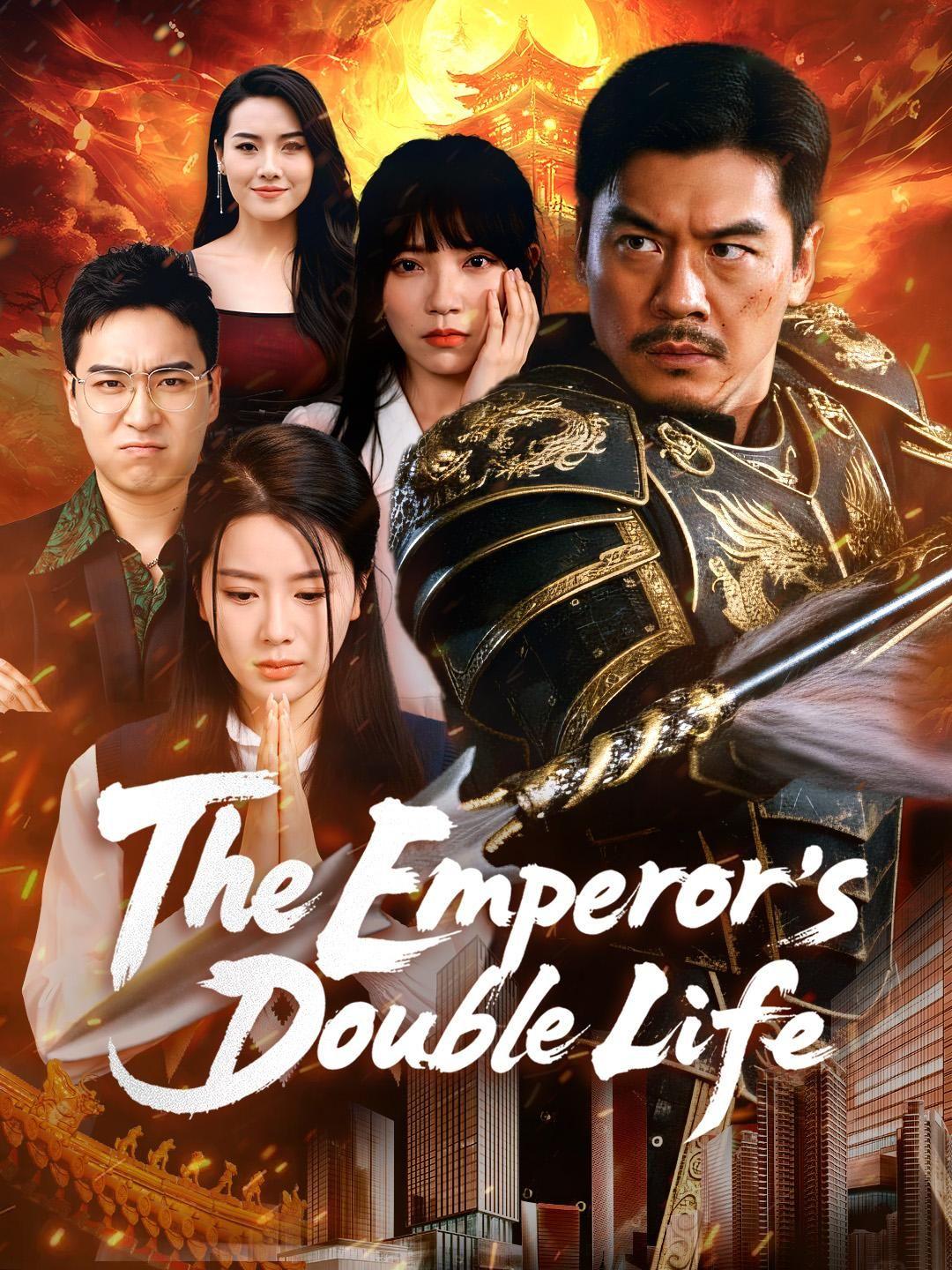
Prince James Xiao returns from battle, injured and carrying Princess Jennifer, revealing that they were ambushed by the emperor's Shadow Guards, raising questions about the emperor's motives and the future of their relationship.Will Prince James uncover the truth behind the emperor's betrayal and protect Princess Jennifer from further danger?


Recommended for you


One and Only: When Feathers Fall and Swords Stay Silent
There’s a moment—just after the horse exits frame, hooves kicking up dust like a dismissed thought—where the air itself seems to hold its breath. That’s the magic of One and Only: it doesn’t need explosions or monologues to make your pulse stutter. It uses silence like a blade, and costume like confession. Let’s unpack what unfolds in those first sixty seconds, because every thread in this tapestry matters—from the embroidery on Li Zeyu’s sleeve to the way Su Ruyue’s hairpin catches the light like a fallen star. We open on a dirt path, flanked by towering bamboo—green, relentless, indifferent. Three figures walk away. Not fleeing. Not marching. *Leaving.* The man on the left, Chen Mo, keeps his hand near his hip, where a sword rests in a scabbard wrapped in worn leather. His posture is alert, but not aggressive. He’s watching the woman ahead—the one in black, hood pulled low, her back straight as a judge’s gavel. She doesn’t glance back. Not once. And that’s the first clue: this isn’t about distance. It’s about refusal. Refusal to engage, to explain, to forgive. Behind her, Li Zeyu walks with his head slightly bowed, as if carrying something heavier than his own body. His robes are rich—deep indigo under black outer layers, gold thread swirling like smoke around his shoulders. But his hands are empty. No weapon. No gesture. Just walking. And that emptiness? It’s louder than any shout. Then—the cut. A whip-fast transition to Li Zeyu’s face, eyes wide, mouth parted mid-breath. He’s reacting to something off-screen, something that shatters his composure. His grip tightens on his sword—not drawing it, just *holding* it like a lifeline. This is the core tension of One and Only: the man who wields power but fears losing control. His hair is tied high, a purple-jade hairpiece securing it—a detail that signals nobility, yes, but also restraint. He’s been trained to contain himself. To be still. And yet here he is, trembling at the edges. Enter Su Ruyue. She doesn’t run to him. She *steps* into him—deliberately, urgently—her cheek pressing against his chest, her arms wrapping around his waist not in affection, but in anchoring. Her gown is ivory, edged in gold brocade, a color that means purity in their world—but also vulnerability. She wears a phoenix crown, heavy with pearls and filigree, yet her expression is soft, almost smiling, as if she’s found peace in the chaos. But look closer: her fingers dig slightly into his side. Not pain. Pressure. A reminder: *I’m still here. Don’t forget me.* That’s the duality of Su Ruyue—graceful, composed, yet simmering with unspoken demands. She doesn’t beg. She *asserts*, through touch, through proximity, through the sheer weight of her presence. Chen Mo reappears, now facing them, sword drawn but not raised. His armor is practical—black woven fabric over padded underlayers, crimson trim like dried blood at the collar. His hair is tied with a silver leaf-shaped pin, simple but sharp. He doesn’t speak immediately. He watches. And in that watching, we learn everything: he’s not jealous. He’s disappointed. Disappointed in Li Zeyu for thinking love is a cage, and disappointed in Su Ruyue for letting him believe it. When he finally speaks, his voice is low, almost conversational—‘You think carrying her makes you noble?’ It’s not an accusation. It’s an invitation to rethink. And Li Zeyu flinches. Not from the words, but from their truth. The shift happens when Li Zeyu lifts Su Ruyue. Not roughly, not romantically—but with the urgency of someone who’s just realized time is running out. Her robes billow, the gold trim catching sunlight like scattered coins. Her face is calm, but her eyes—oh, her eyes—are scanning the trees, the path, the sky. She’s not looking at him. She’s looking *past* him, toward the future she’s not sure she wants. That’s the brilliance of One and Only: it refuses to romanticize rescue. Being carried isn’t empowerment—it’s suspension. And Su Ruyue knows it. Cut to the courtyard. Ornate, symmetrical, suffocating in its beauty. Lanterns hang like trapped fireflies. Two women stand waiting: Yuan Qing, in blush-pink silk, her hands clasped so tightly her rings press into her palms; and Lin Xue, in white feathered robes that shimmer like mist, her hair pinned with silver crescents. Lin Xue’s entrance is silent, but her presence disrupts the air. She doesn’t bow. She doesn’t smile. She simply *arrives*, and the scene recalibrates around her. When she speaks to Li Zeyu—‘You treat her like a relic, not a person’—her tone is cool, clinical. Yet there’s grief beneath it. Grief for what he’s becoming. Grief for what Su Ruyue is sacrificing. Yuan Qing, meanwhile, is the emotional barometer of the scene. Her expressions shift like weather: concern, confusion, dawning realization. She glances at Lin Xue, then at Su Ruyue, then back—searching for alignment, for safety. She’s the audience surrogate, the one who feels everything but says little. And in One and Only, that silence is political. In a world where women’s voices are curated, edited, silenced—Yuan Qing’s hesitation is rebellion. Every time she bites her lip instead of speaking, she’s choosing survival over truth. And yet… she stays. She doesn’t walk away. That’s her quiet courage. The visual language here is masterful. Notice how the camera frames Li Zeyu and Su Ruyue in tight two-shots, their faces half-lit, half-shadowed—literally divided between public persona and private truth. Contrast that with Lin Xue, always shot in full profile, her features sharp, her intentions opaque. And Chen Mo? He’s often framed in medium shots, slightly off-center, as if he exists in the margins of their story—yet he’s the only one who sees the whole picture. One and Only doesn’t resolve. It *suspends*. The final sequence shows the group moving toward the palace gates, Su Ruyue now walking on her own, her hand brushing Li Zeyu’s arm—not holding, just connecting. Chen Mo walks behind, sword sheathed, gaze fixed ahead. Lin Xue and Yuan Qing linger at the archway, watching. No farewells. No promises. Just movement. And in that movement, the real question emerges: Is love the act of staying—or the courage to leave? What makes this short drama unforgettable isn’t the costumes (though they’re exquisite) or the setting (though the bamboo grove feels mythic). It’s the psychological precision. Every gesture is calibrated. Every pause is loaded. When Su Ruyue adjusts Li Zeyu’s collar in the courtyard, her fingers linger on his neck—not possessive, but *checking*. Is he still human? Still hers? Still worth fighting for? And when Li Zeyu doesn’t pull away, but closes his eyes for half a second—that’s the crack in the armor. The moment he admits, silently, that he’s afraid. One and Only understands that in historical dramas, power isn’t just held by emperors or generals. It’s held by the woman who chooses when to speak, the friend who knows when to stay silent, the rival who refuses to hate. Lin Xue doesn’t curse Su Ruyue. She observes her. And in that observation, she grants her dignity. Chen Mo doesn’t challenge Li Zeyu to a duel. He challenges his worldview—and wins, quietly, without raising his voice. The title—One and Only—is ironic, isn’t it? Because no one here is truly singular. Li Zeyu is defined by his roles: son, warrior, protector. Su Ruyue is mother, lover, survivor. Chen Mo is loyalist, skeptic, truth-teller. Lin Xue is strategist, sister, ghost of choices unmade. Yuan Qing is witness, keeper of secrets, the heart that beats too loudly in a world that rewards silence. And yet—when the camera lingers on Su Ruyue’s face in the final close-up, her lips curved in that faint, knowing smile, we understand. *She* is the one and only. Not because she’s perfect, but because she’s the only one brave enough to want more than survival. To want *choice*. To stand in the courtyard, surrounded by expectation, and still whisper, without sound: *I am here. And I decide what happens next.* That’s the legacy of One and Only. Not swords clashing, but hearts recalibrating. Not grand exits, but small revolutions in posture, in touch, in the way a woman finally meets a man’s gaze—and doesn’t look away. The bamboo will grow back. The courtyard will echo with new footsteps. But this moment—this fragile, furious, beautiful collision of love and autonomy—will remain. Because some stories aren’t meant to end. They’re meant to haunt you, softly, like perfume on old silk.
One and Only: The Bamboo Path Where Love Defies Blades
Let’s talk about the quiet storm that is One and Only—a short drama that doesn’t shout its emotions but lets them seep through silk sleeves, trembling hands, and the weight of a sword held too tightly. In the opening shot, we’re dropped into a sun-dappled bamboo grove, where dust swirls underfoot like forgotten memories. Three figures walk away from the camera—two men in dark, layered robes, one woman cloaked in black, her back turned to us as if already retreating from something irreversible. A horse stands nearby, saddle still warm, reins slack. This isn’t just a path—it’s a threshold. And the tension? It’s not in the dialogue (there is none yet), but in how the characters *don’t* look at each other. Their shoulders are rigid, their steps measured—not hurried, but deliberate, as if each footfall is a verdict. Then—cut. A blur of motion. A man’s hand grips a sword hilt, knuckles white, veins tracing maps of resolve across his forearm. His face, when it finally fills the frame, is sharp with disbelief. This is Li Zeyu, the protagonist whose name carries the weight of legacy and loneliness. His hair is bound high with a jade-and-gold hairpin, a symbol of status he wears like armor. But his eyes—they betray him. They flicker between fury and fear, as if he’s just realized the enemy isn’t outside the bamboo wall, but standing beside him, breathing the same air. Enter Su Ruyue—the woman in ivory brocade, her hair adorned with a golden phoenix crown that catches light like a warning flare. She presses herself against Li Zeyu’s chest, not in surrender, but in silent plea. Her fingers clutch his sleeve, nails barely grazing the embroidered peacock feathers on his shoulder. Her expression is soft, almost serene—but watch her eyes. They dart downward, then up again, searching his face for permission to hope. That moment—just three seconds—is where One and Only earns its title. Because love here isn’t grand declarations or battlefield vows. It’s the way she leans into him when the world tilts, and how he doesn’t push her away, even as his jaw tightens like a locked gate. The third figure—Chen Mo—stands apart, sword drawn, posture coiled like a spring. He wears black-and-crimson armor, studded belt gleaming under filtered sunlight. His gaze lingers on the couple, not with envy, but with the weary understanding of someone who’s seen this dance before. He knows what Li Zeyu doesn’t: that protection can become possession, and rescue can feel like captivity. When Chen Mo speaks—his voice low, clipped—he doesn’t address Li Zeyu directly. He looks past him, at Su Ruyue, and says, ‘You don’t owe him your silence.’ That line lands like a stone in still water. It’s not rebellion; it’s revelation. And in that instant, the power dynamic shifts—not because of swords or titles, but because truth has entered the room uninvited. What follows is pure choreography of emotion. Li Zeyu lifts Su Ruyue—not bridal-style, but like a man carrying a relic he’s sworn to preserve. Her feet leave the ground, her robe flares, and for a heartbeat, she smiles—not at him, but *through* him, toward something only she can see. Is it memory? Hope? Or the ghost of a life she might have chosen? The camera lingers on her face as they move toward the courtyard, and you realize: this isn’t escape. It’s procession. A ritual. Every step echoes on the stone tiles, each lantern overhead casting long, dancing shadows that seem to whisper secrets older than the dynasty they serve. Inside the pavilion, the scene expands. Two more women appear—Yuan Qing, in pale pink silk, her hands clasped so tightly her knuckles bleach white; and Lin Xue, in white feathered robes, her expression unreadable, like a porcelain mask dipped in moonlight. Lin Xue watches Li Zeyu and Su Ruyue with the stillness of a predator assessing prey—or perhaps, a sister measuring betrayal. Her hair is styled in twin buns, silver filigree threading through it like frost on a blade. When she speaks, her voice is calm, but her eyes narrow just enough to suggest she’s already written the ending in her head. ‘He carries you like you’re breakable,’ she says, not unkindly. ‘But you’ve survived worse than him.’ That line—oh, that line—unlocks everything. Because One and Only isn’t about whether Li Zeyu loves Su Ruyue. It’s about whether *she* believes she deserves to be loved without being owned. The bamboo forest was isolation; the courtyard is exposure. Here, under open sky and carved eaves, every glance is a judgment, every silence a verdict. Chen Mo stands guard, but his stance has softened. He no longer holds his sword ready to strike—he holds it like a promise he’s not sure he can keep. And Yuan Qing? She glances between Lin Xue and the couple, her lips parting slightly, as if she’s about to speak, then thinks better of it. That hesitation speaks volumes. In this world, words are weapons, and sometimes, the most dangerous thing you can do is stay quiet. The cinematography knows this. Wide shots emphasize architecture—the ornate arches, the hanging lanterns inscribed with poetry no one reads anymore. Close-ups linger on textures: the frayed edge of Su Ruyue’s sleeve, the sweat beading at Li Zeyu’s temple, the way Lin Xue’s feathered cuffs catch the breeze like wings refusing to fold. Sound design is minimal—just wind, distant birds, the soft scrape of fabric on stone. No music swells to manipulate us. We’re left to sit with the discomfort, the ambiguity, the unbearable tenderness of two people trying to love each other in a world that only values loyalty as obedience. And here’s the genius of One and Only: it never tells us who’s right. Li Zeyu believes he’s saving her. Su Ruyue isn’t sure she wants saving. Chen Mo thinks freedom means walking away. Lin Xue suspects freedom is an illusion sold to women who forget they were never prisoners to begin with. Even Yuan Qing—sweet, anxious Yuan Qing—holds a secret in her folded hands, something she hasn’t shared, something that might change everything if spoken aloud. The final sequence returns to the bamboo path, but now it’s dusk. Shadows stretch long and thin. Li Zeyu walks ahead, Su Ruyue beside him, no longer carried, but choosing to stay. Her hand brushes his arm—not clinging, just touching. A question. An answer. Chen Mo trails behind, sword sheathed, gaze fixed on the horizon. Lin Xue and Yuan Qing watch from the pavilion archway, silhouetted against fading light. No one speaks. No one needs to. The story isn’t over. It’s just learning how to breathe again. One and Only doesn’t give us heroes or villains. It gives us humans—flawed, frightened, fiercely loving in the cracks between duty and desire. And in a genre drowning in tropes, that’s the rarest magic of all. Because real love isn’t found in grand gestures. It’s in the space between a held breath and a released sigh. It’s in the way Su Ruyue finally looks Li Zeyu in the eye—and doesn’t look away. It’s in Chen Mo’s quiet nod, as if to say, *I see you. I won’t stop you.* It’s in Lin Xue turning her head, just once, toward Yuan Qing, and whispering something we’ll never hear—but we know, somehow, it changes everything. This is why One and Only lingers. Not because of swords or silks, but because it dares to ask: What if the person you’re trying to save doesn’t want to be rescued? What if love isn’t about holding on—but learning when to let go, even as your heart screams to stay? The bamboo grove remembers every footstep. The courtyard holds every unspoken word. And we, the viewers, are left standing in the doorway, wondering which path we’d choose—if we were them, in that light, with that silence pressing down like snow.