



Assassination Attempt
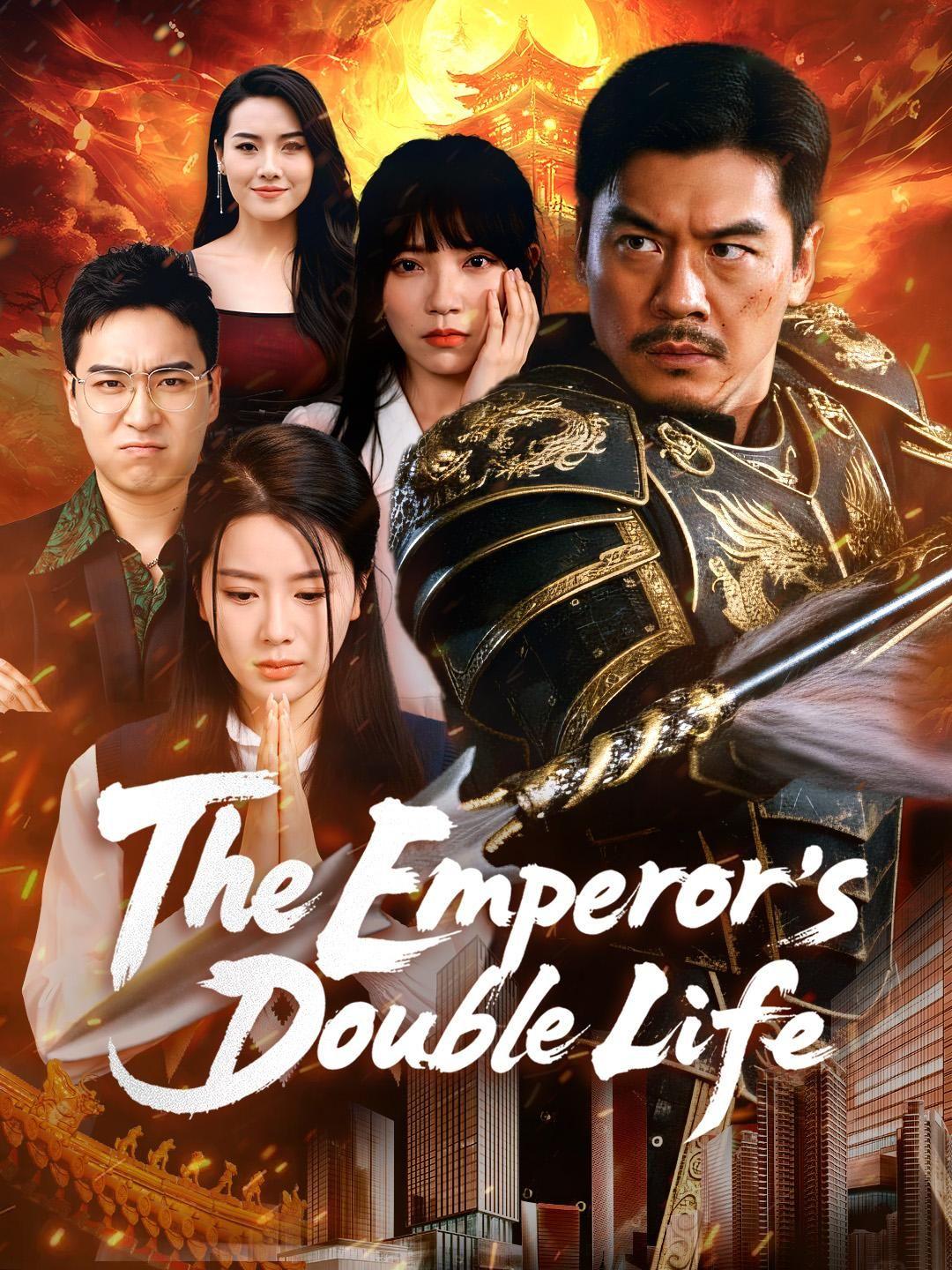
Princess Jennifer warns Prince James about an assassination plot against him, leading to a dangerous encounter where his guards must protect him.Who is behind the assassination attempt and will Prince James be able to trust Princess Jennifer?


Recommended for you


One and Only: When the Forest Holds Its Breath
There’s a specific kind of stillness that precedes violence—a suspended second where the world holds its breath, waiting to see if the storm will break. In the bamboo grove of One and Only, that stillness isn’t passive. It’s *active*. It’s the tension in Ling Feng’s shoulders as he rides forward, the way his horse’s hooves barely disturb the dust, the precise angle at which Jian Wei positions himself—left flank, slightly behind, sword angled downward but ready to rise in a heartbeat. This isn’t travel. It’s procession. A funeral march for something that hasn’t died yet. And then, like a ripple in still water, Yue Rong steps into the frame. Not from the path. From the *side*. From the green curtain of leaves. She doesn’t announce herself. She simply *is*, and the entire ecosystem of the scene recalibrates around her presence. What’s fascinating isn’t just her entrance—it’s what she’s wearing. Her robe isn’t just ornate; it’s a palimpsest. The ivory base is faded at the hem, stained faintly brown near the cuffs—not dirt, but old blood, carefully washed but never fully erased. The gold embroidery along the collar and sleeves isn’t merely decorative; it mirrors the patterns on Ling Feng’s own cape, though hers is softer, more floral, less martial. It’s a visual echo, a reminder of shared origins. Her hairpiece—a golden phoenix with a single pearl tear dangling from its beak—isn’t just jewelry. It’s a relic. In earlier episodes of One and Only, we saw her wear it during the coronation ceremony that never happened, the day her brother vanished and the throne was seized by shadow factions. That pearl? It’s said to be made from the last drop of her mother’s tears. She wears grief like armor, and today, it’s chipped. Ling Feng’s reaction is masterfully understated. He doesn’t stop the horse. He doesn’t draw his sword. He simply *turns his head*, just enough for the camera to catch the flicker in his eyes—surprise, yes, but deeper: resignation. He knew she’d come. He just didn’t know *when*. His grip on the reins loosens, then tightens again. A micro-expression, but it speaks volumes. This man, who commands armies and silences courts with a glance, is undone by the sight of a woman who once shared his breakfast porridge and whispered secrets into the hollow of his ear. Jian Wei notices. His jaw tightens. He knows the history. He also knows the price of sentiment in their world. So he does what he’s trained to do: he scans the trees, his body a shield between Yue Rong and the unknown. But his eyes keep flicking back to Ling Feng, waiting for the signal. None comes. Then—the arrows. Not a barrage, but a *sequence*. Three, spaced precisely: one thuds into the ground before Yue Rong, one whistles past Ling Feng’s ear, and the third embeds itself in the horse’s saddlebag, inches from his thigh. It’s not meant to kill. It’s meant to *interrupt*. To force a reaction. To expose weakness. And it works. Ling Feng dismounts in one fluid motion, his cape swirling like ink in water, and in the same breath, he grabs Yue Rong’s arm—not roughly, but with the urgency of someone pulling a drowning person from the current. She doesn’t resist. She *leans* into him, her forehead brushing his shoulder for half a second, a gesture so brief it could be accidental. But it’s not. It’s a reflex. A muscle memory from a time when his shoulder was her safest place. The fight that follows isn’t choreographed like a ballet. It’s messy. Jian Wei intercepts two attackers with brutal efficiency, his sword a blur of steel and shadow, but he takes a slash across his forearm—a wound that bleeds freely, staining his sleeve black. He doesn’t pause. He keeps moving, because hesitation here is death. Meanwhile, Ling Feng doesn’t engage the archers directly. He uses the terrain. He drags Yue Rong behind a cluster of young bamboo, using their flexibility to absorb the impact of a fourth arrow. The stalks bend, snap back, and for a moment, the world is reduced to the sound of her ragged breathing and the distant caw of a crow. She looks at him, really looks, and says, “You could have let me die in the capital.” His reply is quiet, almost lost in the wind: “I did. You refused.” That line—so simple, so devastating—is the core of One and Only. It reframes everything. Ling Feng didn’t save her out of duty. He saved her because she *chose* to survive. And in doing so, she forced him to confront the man he’d become. The man who trades lives like currency. The man who wears his guilt as a second skin. When they finally reach a small clearing, arrows littering the ground like fallen leaves, Yue Rong collapses to her knees. Not from injury—but from the weight of it all. Ling Feng kneels beside her, not to help her up, but to meet her at eye level. He doesn’t offer platitudes. He reaches into his sleeve and places something in her palm: a small, carved wooden bird, wings spread. She recognizes it instantly. It’s the one he whittled for her when they were children, the day she taught him how to skip stones across the lake. He’d lost it years ago. Or so she thought. “Some things,” he says, his voice rough, “they don’t get buried. They wait.” She turns the bird over in her hands, her fingers tracing the grain of the wood, the tiny imperfection on the left wing where he’d slipped with the knife. And then she sees it—the blood on her palms, mingling with the dust, and beneath it, the green cord. She hadn’t noticed it before. It’s wrapped around the bird’s neck, tied in the same knot. The *only* knot that can hold when everything else unravels. She looks up at him, and for the first time, there’s no anger in her eyes. Only sorrow. And understanding. “You kept it,” she whispers. He nods. “One and Only isn’t a title. It’s a sentence. And I’m serving mine.” The brilliance of this sequence lies in what’s *not* shown. We never see the attackers’ faces. We don’t learn their motives in this clip. The focus stays relentlessly on the trio—Ling Feng, Yue Rong, Jian Wei—and the emotional fault lines between them. Jian Wei’s loyalty is absolute, but it’s strained. He watches Ling Feng’s tenderness toward Yue Rong with the quiet unease of a man who knows love is the weakest link in their chain. His final action—standing guard while they speak, his sword planted in the earth like a marker—says everything: he’ll protect them, even if it means protecting them *from each other*. The bamboo forest, often a symbol of purity and flexibility in classical Chinese aesthetics, here becomes a metaphor for their relationship: tall, straight, seemingly unbreakable, yet vulnerable to the smallest shift in wind. Each stalk is isolated, yet they stand together, roots intertwined underground. That’s Ling Feng and Yue Rong. Separate. Bound. Unyielding, until the pressure becomes too great—and then, they bend, they splinter, they *change*. The arrows weren’t just weapons. They were catalysts. Forcing confession. Forcing choice. Forcing the question that haunts every episode of One and Only: When the world demands you choose between power and love, what do you sacrifice—and who pays the price? In the final frames, as Yue Rong closes her fist around the wooden bird and the cord, Ling Feng rises, offering her his hand. Not to pull her up, but to wait. To let her decide. She looks at his hand, then at the blood on her own, then back at him. And slowly, deliberately, she places the bird in his palm instead. “Keep it,” she says. “Until I’m ready to take it back.” He doesn’t argue. He closes his fingers around it, the wood warm from her touch. The camera pulls back, revealing the three of them—two standing, one kneeling, surrounded by arrows and silence—and for a moment, the forest seems to exhale. The storm hasn’t passed. It’s just paused. Waiting. Because in One and Only, the most dangerous moments aren’t the ones with swords drawn. They’re the ones where no one speaks, and the truth hangs in the air, sharp as an arrow’s tip, ready to pierce the heart before you even see it coming.
One and Only: The Arrow That Changed Everything
Let’s talk about that bamboo forest scene—where silence isn’t empty, it’s loaded. The moment opens with three figures moving like shadows down a sun-dappled path: two men in dark, layered robes flanking a horse, and atop it, the man known as Ling Feng—his black cape edged in gold filigree, his hair bound high with a delicate leaf-shaped crown. He doesn’t speak. He doesn’t need to. His posture is rigid, his gaze fixed ahead, but there’s something brittle beneath the composure—a tension that hums like a bowstring pulled too tight. His companions walk with swords at their hips, eyes scanning the trees, not out of paranoia, but habit. They’re not just guards; they’re extensions of his will, trained to anticipate danger before it breathes. And yet… none of them see her coming. Then she appears—Yue Rong—dressed in ivory silk embroidered with threads of gold and rust, her hair pinned with a phoenix headdress that catches the light like a warning flare. She doesn’t run toward them. She *emerges*, stepping from behind a cluster of slender bamboo stalks as if the forest itself had exhaled her into existence. Her expression isn’t fear. It’s resolve, laced with exhaustion. She’s been running—not just from pursuers, but from memory. From a past that clings to her like damp fabric. When she stops ten paces away, the air shifts. Ling Feng’s hand tightens on the reins. One of his men, Jian Wei, subtly shifts his stance, fingers brushing the hilt of his sword. But Ling Feng doesn’t give the order. He just watches. And in that watching, we see the first crack in his armor: recognition. Not just of her face, but of the weight she carries. The dialogue that follows is sparse, almost ritualistic. Yue Rong says only, “You still remember the oath.” Ling Feng doesn’t answer immediately. He looks past her, into the green depths of the grove, as if searching for the ghost of a younger version of himself—the one who swore under moonlight beside a riverbank, kneeling in mud, promising to protect her even if it meant becoming the very thing she feared. That oath was sealed with a token: a jade pendant strung on a green cord, tied with a knot only they knew how to untie. Now, as arrows suddenly whistle through the canopy—black fletching, iron tips glinting—Ling Feng moves faster than thought. He yanks Yue Rong behind him, spins, and draws his sword in one motion so fluid it blurs. An arrow embeds itself in the earth inches from her foot. Another grazes his sleeve. Jian Wei shouts a command, but Ling Feng is already calculating trajectories, angles, escape routes. He doesn’t retreat. He *advances*—pulling Yue Rong deeper into the forest, not away from danger, but toward its source. Because he knows this ambush wasn’t random. It was bait. And she was the lure. What follows is less a fight and more a dance of desperation. Arrows rain down—not in volleys, but in deliberate, spaced sequences, forcing movement, cutting off exits. Ling Feng blocks two with his blade, deflects a third with his forearm guard, and uses the recoil to pivot, shoving Yue Rong behind a thick bamboo trunk. She stumbles, gasping, and when she looks up, her eyes meet his—not with gratitude, but accusation. “You let them find me,” she whispers. He doesn’t deny it. Instead, he grabs her wrist, pulls her close, and murmurs, “I needed you to see what they’ve become.” In that moment, the camera lingers on her hands—trembling, blood already welling from a shallow cut on her palm where she’d gripped a broken arrow shaft. She doesn’t wipe it away. She stares at it, as if seeing something older than pain. Later, when the immediate threat recedes (the attackers vanish like smoke, leaving only spent arrows and disturbed leaves), Ling Feng kneels beside her. She’s slumped against the trunk, breathing hard, her robe torn at the shoulder. He doesn’t offer comfort. He offers truth. “They took the pendant,” he says quietly. “The one you wore the night your father died.” Her breath hitches. She reaches instinctively to her chest—where the pendant should be—and finds only empty silk. Then, slowly, she lifts her hands. Blood streaks her fingers. And nestled in her palm, half-buried in crimson, is the broken cord. The jade is gone. But the knot remains—tight, intricate, unbroken. She traces it with her thumb, tears finally spilling over. Ling Feng watches her, his expression unreadable, but his voice softens: “One and Only doesn’t mean you’re safe. It means you’re *chosen*. Even when you wish you weren’t.” This is where the genius of One and Only lies—not in the spectacle of arrows or the elegance of costumes, but in the quiet devastation of a single, unspoken history. Yue Rong isn’t just a damsel. She’s a woman who once held power in her hands and chose to surrender it—not out of weakness, but love. Ling Feng isn’t a cold warlord. He’s a man who sacrificed his conscience to keep a promise, and now must live with the cost. Their reunion isn’t joyful. It’s heavy. Like walking through wet sand. Every step sinks deeper. The bamboo forest, often used as a symbol of resilience in Eastern storytelling, here becomes a cage of memory—each stalk a reminder of time passed, each rustle a whisper of choices made. When Jian Wei finally approaches, sword lowered, asking, “Do we pursue?” Ling Feng shakes his head. “No. Let them think they won.” Because the real battle isn’t out there among the trees. It’s inside Yue Rong’s chest, where the pendant once rested. And inside Ling Feng’s mind, where the oath still burns, brighter than any flame. One and Only thrives on these micro-moments: the way Yue Rong’s earring catches the light as she turns her head, the frayed edge of Ling Feng’s sleeve where the arrow grazed him, the exact shade of rust on her robe’s embroidery—matching the blood on her hands. These aren’t details. They’re evidence. Proof that this world is lived-in, that every stitch has meaning. The show doesn’t explain the pendant’s origin or the political machinations behind the ambush. It trusts the audience to feel the weight of absence. To understand that sometimes, the most violent act isn’t drawing a sword—it’s choosing to stay silent when the truth would shatter everything. And that final shot—Yue Rong holding the broken cord, Ling Feng kneeling beside her, both framed by towering bamboo, sunlight filtering through like judgment—stays with you. Not because it’s beautiful (though it is), but because it’s honest. One and Only doesn’t promise redemption. It asks: What do you do when the person who swore to protect you becomes the reason you can’t breathe? When loyalty and love twist into the same rope, tightening around your throat? The answer, in this world, isn’t simple. It’s written in blood, in silk, in the stubborn persistence of a knot that refuses to unravel—even when everything else has fallen apart. That’s the real magic of One and Only: it makes you believe that some bonds are forged not in fire, but in the quiet, desperate space between two heartbeats… and that sometimes, the only thing stronger than betrayal is the memory of why you believed in the first place.