



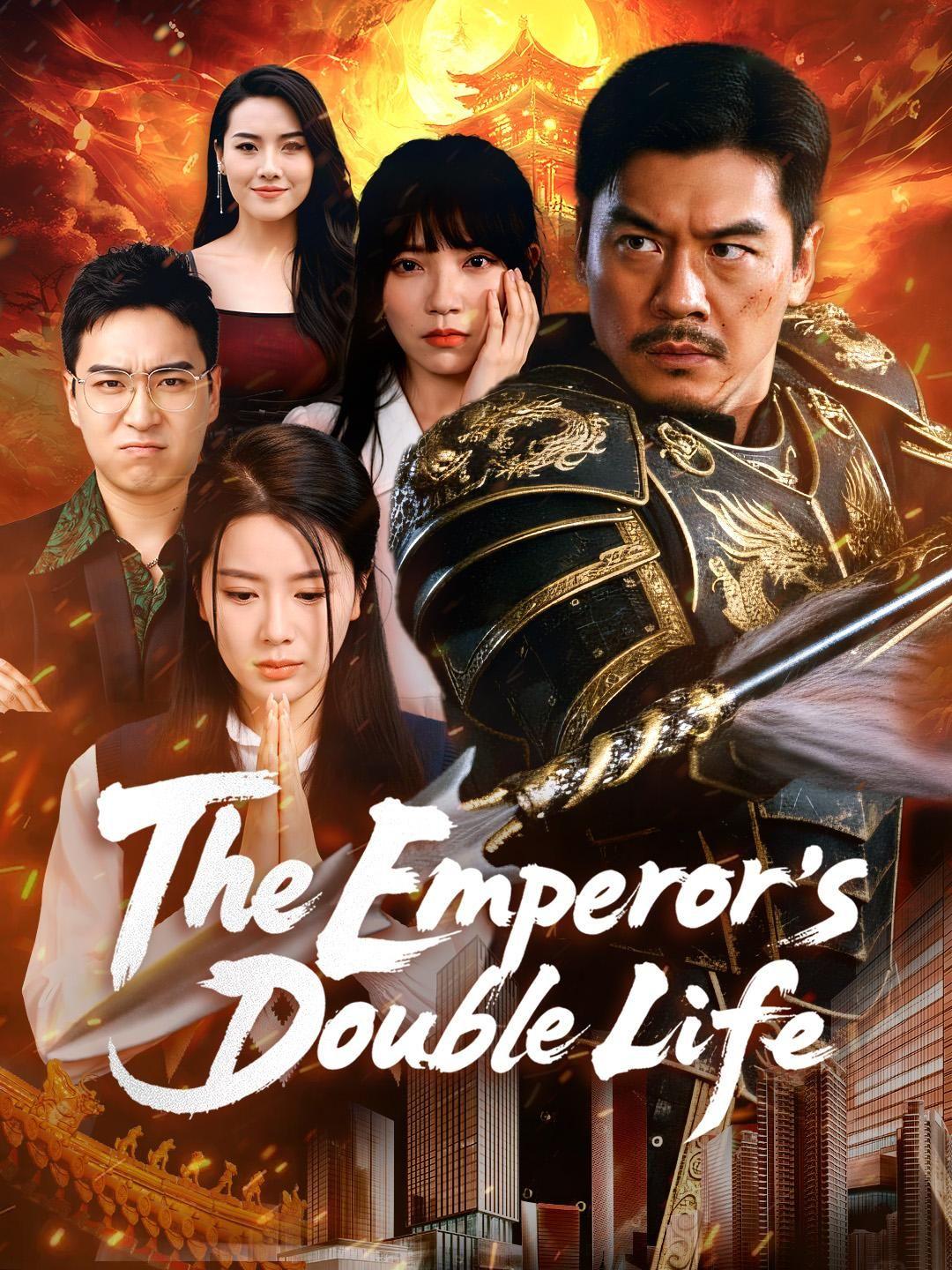
The Search for the Bell and the Snow Lotus
Prince Xiao is searching for a missing bell that Princess Consort last saw after returning from the Dreamland, hinting at a deeper mystery. Meanwhile, James learns about the rare Snow Lotus, which could cure Princess Consort's eyes, but acquiring it is complicated due to his strained relationship with the emperor. An alternative solution involving the Fire Reishi is proposed, but it comes with severe risks if not used carefully.Will Prince Xiao find the bell, and will James take the dangerous gamble with the Fire Reishi to save Princess Consort?


Recommended for you


One and Only: When Tea Ceremonies Hide Blood Oaths
Let’s be honest: if you walked into this scene blind, you’d think it was a tranquil tea gathering—serene, refined, steeped in tradition. Mist over the lake. Delicate porcelain. A man in black robes seated like a statue, his posture flawless, his expression unreadable. But *One and Only* doesn’t do tranquility. It does *tension*—the kind that coils in your chest like smoke before ignition. This isn’t a tea ceremony. It’s a tribunal. And everyone present has already been found guilty of something. Start with Zhou Yan—the man in black. His costume is a masterpiece of controlled aggression. The deep indigo under-robe, the black outer layer embroidered with coiled dragons in gold thread, the ornate belt cinching his waist like a vow he can’t break. His hair is pulled back with surgical precision, crowned by that slender golden ornament that looks less like jewelry and more like a brand. He doesn’t fidget. He doesn’t glance away. He *waits*. And in this world, waiting is the most aggressive thing you can do. When Xu Wei enters—white robes, fan in hand, hair tied with a ribbon that seems deliberately *too* loose—you can feel the air shift. Zhou Yan’s eyes don’t widen. They *focus*. Like a hawk locking onto prey it’s already decided to spare… or devour. That subtle tilt of his head? Not curiosity. It’s acknowledgment. *I see you. I know why you’re here. Let’s skip the pleasantries.* Xu Wei, meanwhile, plays the diplomat—but his diplomacy is edged with steel. His white robe is immaculate, yes, but the embroidery on the chest isn’t floral. It’s geometric, interlocking, like chains or binding spells. His fan isn’t just for cooling; it’s a shield, a pointer, a punctuation mark in his silent arguments. Watch how he holds it—not loosely, but with the grip of someone used to wielding tools that double as weapons. When he speaks (again, we don’t hear the words, but we see the cadence in his jaw, the slight lift of his chin), he doesn’t address Zhou Yan directly at first. He looks *past* him, toward the lake, as if speaking to the landscape itself. That’s the trick of power in *One and Only*: the most dangerous statements are made to empty air, knowing the intended recipient will feel them like a blade between the ribs. Then there’s Lingyun—the white-clad observer, the ghost in the garden. She doesn’t enter the pavilion. She *haunts* its edges. Her presence is felt before she’s seen: a flicker of feathered sleeve behind a bush, the faintest rustle as she shifts her weight near the stone lantern. Her costume is a study in contradiction. White, yes—but layered with textured fabrics, frayed feather trim, and a waistband carved with phoenix motifs that seem to writhe under the light. She’s not dressed for peace. She’s dressed for revelation. And her face? That’s where *One and Only* earns its title. Her expressions don’t shift—they *fracture*. One moment, grief. The next, fury. Then, chillingly, resolve. She’s not reacting to what’s happening *now*. She’s remembering what happened *before*. The way her fingers tighten on the branch she’s holding? That’s not nervousness. That’s memory taking physical form. The pink-robed woman—let’s call her Mei Lin—is the emotional fulcrum. She’s the only one who dares to look afraid. Her hands are clasped low, her shoulders slightly hunched, her eyes darting between Lingyun and the pavilion like a bird caught between two storms. She’s not a pawn. She’s the witness. The one who’ll have to live with what happens next. And her costume tells us everything: soft pink, embroidered with tiny cranes in flight—symbols of longevity, yes, but also of *escape*. She wants to fly away. But she can’t. Because in *One and Only*, loyalty isn’t chosen. It’s inherited. Like a debt passed down through bloodlines. Now, the box. Let’s talk about the box. It sits on the table like a ticking clock. Yellow and green lacquer, floral patterns that look cheerful until you notice the stems are too sharp, the petals too rigid. When Xu Wei opens it, the camera lingers—not on his face, but on the contents: two lingzhi mushrooms, dried and glossy, resting on red velvet. In Chinese tradition, lingzhi is the mushroom of immortality. But here? It’s ambiguous. Is it a cure? A curse? A symbol of a pact sealed in blood and silence? Zhou Yan doesn’t reach for it. He doesn’t need to. His silence *is* his acceptance. And that’s when the real horror sets in: he already knew what was inside. The meeting wasn’t to reveal. It was to confirm. To force Xu Wei to say it aloud, even if only in gesture. What makes *One and Only* so devastating is how it uses environment as psychological warfare. The pavilion isn’t shelter—it’s a cage with open doors. The lake behind them isn’t peaceful; it’s reflective, forcing them to see their own distortions. The wind doesn’t soothe; it carries whispers from unseen corners. Even the lanterns hanging above cast elongated shadows that stretch like fingers reaching for throats. This isn’t set design. It’s mood engineering. And the hair. Again, the hair. Lingyun’s twin braids, threaded with silver beads that catch the light like shrapnel. Zhou Yan’s severe topknot, the single strand escaping near his temple—a flaw in perfection, a crack in the facade. Xu Wei’s half-tied style, the white ribbon trailing like a banner of surrender or declaration, depending on who’s watching. In this world, how you wear your hair says more than any oath could. The climax isn’t a fight. It’s a departure. Xu Wei turns, walks toward the railing, fan still in hand, and for a heartbeat, he looks out at the water—not with longing, but with finality. He’s not leaving the scene. He’s leaving the *story*. And Zhou Yan watches him go, his expression unreadable… until the very last frame, when his lips twitch. Not a smile. A grimace of relief? Regret? Recognition? We don’t know. And that’s the point. *One and Only* refuses closure. It leaves you with the echo of what wasn’t said, the weight of what was implied. Lingyun, meanwhile, steps fully into view—not to confront, but to *bear witness*. Her eyes lock onto Zhou Yan’s, and in that exchange, decades of history pass between them. She knows what the box means. She knows what Xu Wei’s departure signifies. And she makes a choice: not to intervene, but to *remember*. To become the archive of this moment. Because in *One and Only*, truth isn’t spoken. It’s carried. In the silence after the tea cools. In the fold of a sleeve. In the way a woman stands alone, half-hidden by leaves, holding the world’s secret in her breath. This isn’t just drama. It’s archaeology. Every gesture is a layer of sediment, every glance a fossilized emotion. The show doesn’t tell you who’s right or wrong. It asks: *What would you do, if the only way to protect someone was to let them believe you betrayed them?* That’s the heart of *One and Only*. Not love. Not power. Sacrifice disguised as indifference. And the most haunting line of all? It’s never spoken. It’s in the way Lingyun touches her hair—just once—as if checking that the pins are still holding. As if ensuring her identity hasn’t already shattered.
One and Only: The Silent War of Glances
In the lush, mist-draped gardens of what feels like a forgotten imperial estate—somewhere between the poetic melancholy of *The Untamed* and the ornate restraint of *Eternal Love*—a quiet storm is brewing. Not with swords or thunder, but with eyes, silences, and the unbearable weight of unspoken truths. This isn’t just costume drama; it’s psychological theater dressed in silk and jade. Let’s talk about *One and Only*, because that phrase—repeated like a mantra in the script’s subtext—doesn’t refer to romance alone. It refers to identity, loyalty, and the terrifying fragility of being chosen… or discarded. The first woman we meet—let’s call her Lingyun, though her name isn’t spoken yet—is a vision of controlled devastation. Her white robes aren’t purity; they’re armor. The feathered trim on her sleeves flutters like wounded wings, and her hair, pinned high with silver blossoms and dangling teardrop pearls, frames a face that shifts from sorrow to suspicion in half a breath. She doesn’t speak much in these early frames, but her mouth tightens, her brows knit—not in anger, but in calculation. Every micro-expression is a ledger entry: *He lied. She knew. I was never meant to see this.* When she turns away from the second woman—the one in pale pink, whose hands clutch her waist as if bracing for impact—it’s not dismissal. It’s surrender. She walks off not because she’s defeated, but because she’s already begun the internal exile. That moment at the stone lantern, half-hidden by purple-leafed shrubs? That’s where the real story begins. She’s not eavesdropping. She’s *witnessing*. And witnessing, in this world, is the first step toward becoming a threat. Then there’s the man in black—Zhou Yan, perhaps? His robes are heavy with gold-threaded motifs, his crown a delicate filigree of bronze, sharp enough to draw blood if tilted wrong. He sits, composed, sipping tea beside a lacquered box painted in yellow and green, its lid slightly ajar. But his stillness is deceptive. Watch his eyes when the white-robed man approaches. They don’t flicker with surprise. They narrow, just so—like a predator recognizing a rival’s scent on the wind. He knows *exactly* who’s coming. And he’s been waiting. The way he lifts his gaze, slow and deliberate, isn’t courtesy. It’s assessment. He’s weighing whether this newcomer is a messenger, a spy, or something far more dangerous: a ghost from a past he thought buried. Ah, the white-robed man—Xu Wei, let’s say. He carries a fan, yes, but it’s not a prop. It’s a weapon disguised as elegance. The painted mountains on its surface aren’t scenery; they’re maps of power, of territory claimed and contested. When he speaks—his lips moving in silent sync with the subtitles we can’t read—we feel the tension in his jaw, the slight tremor in his wrist as he snaps the fan shut. He’s not here to negotiate. He’s here to deliver a verdict. And the most chilling part? He never raises his voice. His authority is in the pause between sentences, in the way he lets Zhou Yan’s silence stretch until it becomes suffocating. That moment when he turns his back, walking toward the lake, hair tied with a white ribbon fluttering like a flag of truce—or surrender?—is pure cinematic irony. He thinks he’s leaving. But Zhou Yan’s expression tells us otherwise. The game has just shifted. The board is still, but the pieces are moving underground. Now, let’s talk about the box. Oh, that box. When Xu Wei finally opens it—no grand flourish, just a quiet lift of the lid—we see it: two dried lingzhi mushrooms, resting on crimson velvet. Not jewels. Not scrolls. *Medicine.* Or poison. Or both. In this world, healing and harm wear the same robe. The fact that it’s presented without ceremony, almost casually, makes it more ominous. This isn’t a gift. It’s a test. A challenge wrapped in tradition. Zhou Yan’s reaction—barely a blink, then a slow exhale—is masterful acting. He’s not shocked. He’s *relieved*. Because now, at last, the ambiguity is gone. The mask has slipped. And that’s when the real danger begins. Lingyun watches all this from the garden’s edge, her fingers brushing a leaf as if seeking grounding. Her expression isn’t fear. It’s recognition. She sees the box. She sees the exchange. And in that instant, she understands: she’s not peripheral. She’s central. The One and Only isn’t just a title for the protagonist—it’s a curse whispered in court corridors. To be the One and Only means you’re the only one who can bear the truth. The only one who can carry the burden. The only one who will be sacrificed when the balance tips. What’s brilliant about *One and Only* is how it weaponizes stillness. No shouting matches. No sword clashes in these frames. Just three people, separated by space and silence, each holding a different version of the same lie. The pink-robed woman? She’s the emotional barometer—her wide eyes, her trembling lips, her hands clasped like she’s praying for someone to stop the train before it derails. She’s not weak; she’s the conscience of the group, the one who still believes in mercy. And that makes her the most vulnerable. The setting itself is a character. Those hanging lanterns, half-lit, casting soft shadows that dance like ghosts. The wooden railings worn smooth by generations of anxious footsteps. The lake, calm on the surface, hiding depths no one dares sound. Even the wind plays a role—ruffling Xu Wei’s sleeves, tugging at Lingyun’s hair, as if nature itself is unsettled by what’s unfolding. This isn’t background. It’s atmosphere as narrative device. Every rustle of fabric, every creak of the pavilion floor, adds to the pressure cooker effect. And let’s not ignore the hair. In *One and Only*, hair isn’t decoration. It’s biography. Lingyun’s long strands, parted and braided with silver threads, speak of discipline and lineage. Zhou Yan’s high topknot, secured with a golden phoenix, screams authority—but the slight looseness at the nape? That’s fatigue. That’s doubt. Xu Wei’s half-tied style, with the white ribbon trailing down his back, suggests transience. He’s not rooted. He’s passing through. Which makes his presence all the more destabilizing. The turning point comes when Xu Wei finally faces Zhou Yan directly—not from across the table, but standing toe-to-toe, fan lowered, voice low but cutting. We don’t hear the words, but we see Zhou Yan’s pupils contract. His hand, resting on the table, curls inward—not into a fist, but into a gesture of containment. He’s holding himself together. And in that moment, Lingyun steps forward—not toward them, but *past* the lantern, into clearer view. She doesn’t interrupt. She simply *appears*. Like a verdict delivered by fate itself. Her entrance changes everything. Because now, the triangle is complete. Three players. One truth. And only one can walk away unchanged. This is why *One and Only* lingers. It doesn’t rely on spectacle. It relies on the unbearable tension of what’s unsaid. The way a glance can sever a decade of trust. The way a single object—a box, a fan, a hairpin—can unravel an empire. These characters aren’t fighting for power. They’re fighting for the right to *mean* something in a world that keeps redefining the rules. And the most heartbreaking detail? Lingyun’s earrings. Those pale blue stones, shaped like falling tears. They don’t glitter. They *glisten*. As if they’ve been crying longer than she has. In the end, *One and Only* isn’t about who wins. It’s about who remembers. Who carries the weight after the dust settles. Because in this world, survival isn’t measured in years—it’s measured in silences endured, in truths swallowed, in the quiet courage of walking away… while still knowing exactly where the knife was hidden.