



Divorce Ultimatum
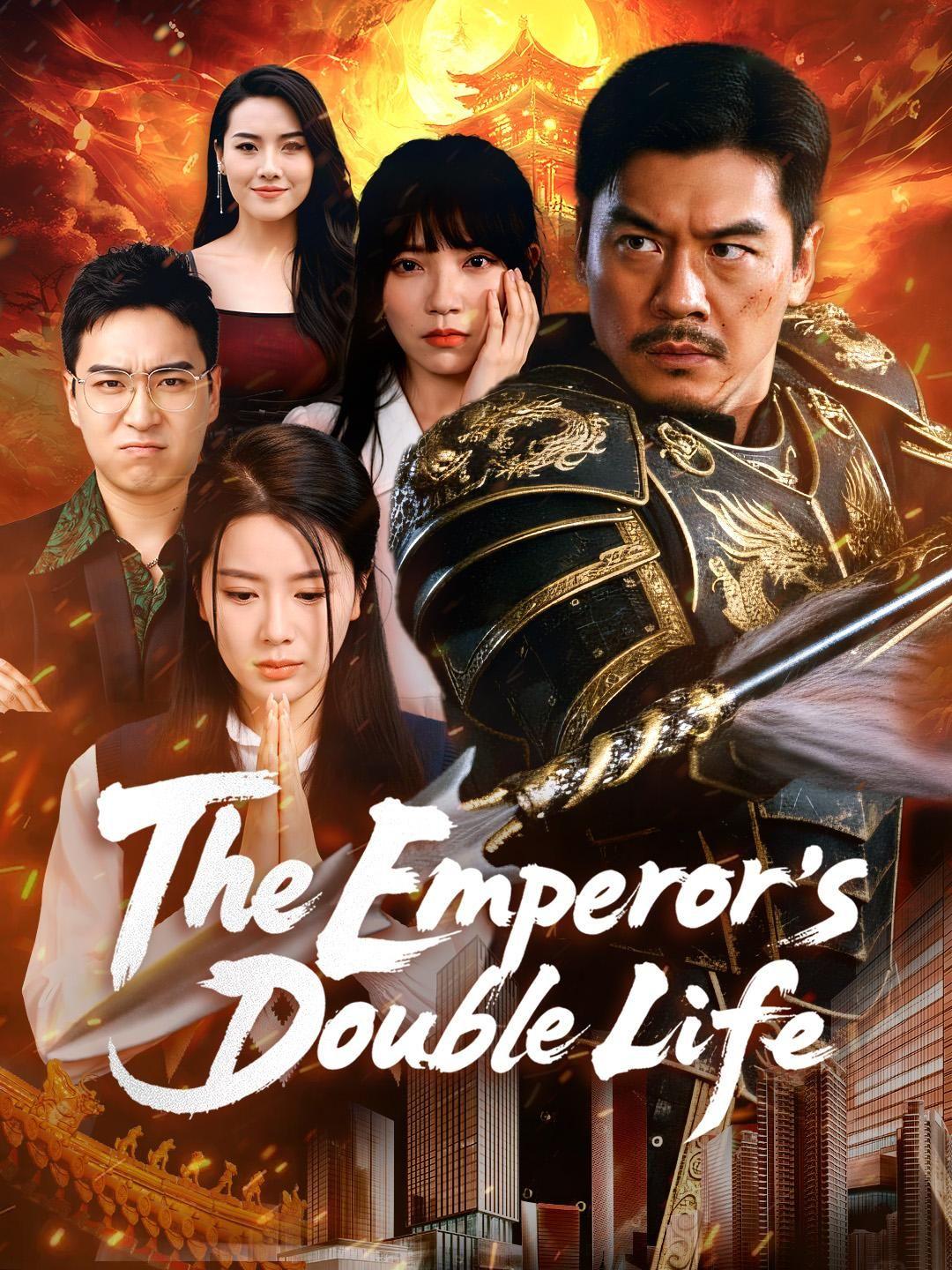
Five years ago, the Master of the Infinite Inferno Prison, Lee Frost, was saved by a beautiful woman called Nina Clinton. The two of them soon became married and gave birth to a daughter. Lee then hid his identity and became a construction worker. What would happen next and how would the story unfold?
EP 1: Lee Frost, a construction worker who once was the Master of the Infinite Inferno Prison, is confronted by his father-in-law with divorce papers, accusing him of being unworthy of his now-successful wife, Natalie. Despite Lee's protest and pride in his honest work, he is pressured to sign the papers, with even his daughter seemingly siding against him.Will Lee Frost reveal his true identity to fight for his family, or will he succumb to the pressure and sign the divorce papers?




Wrong Choice: When the Heiress Steps Out of the Alphard
Let’s talk about the van. Not just any van—the black Toyota Alphard, gleaming under the midday sun like an obsidian sarcophagus rolling onto a construction site. Its arrival isn’t incidental; it’s cinematic punctuation. The camera lingers on the side panel, where gold lettering—‘Fiona, Jonny’s Daughter’—is etched beside the rear wheel well, a subtle but devastating detail. This isn’t just transportation; it’s a mobile throne, a symbol of lineage, privilege, and the kind of inherited power that doesn’t ask for permission. When the sliding door opens, it’s not with a mechanical whirr, but with a soft, hydraulic sigh—as if the vehicle itself knows it’s about to deliver judgment. And out steps Natalie, the Heiress of the Clark family, dressed not for negotiation, but for annihilation. Her black mini-dress hugs her frame like a second skin, the lapels sharp enough to cut glass. Her diamond earrings catch the light like warning flares. She holds a pen—not a weapon, but worse: a tool of finality. In her world, signatures are sentences. Contracts are coffins. And today, she’s here to close one. But before Natalie, there’s Victoria Clark—Natalie’s mother, Fiona’s grandmother, and Jonny Lane’s former mother-in-law. She exits the van first, moving with the unhurried grace of someone who’s never had to rush for anything. Her black dress is sheer at the shoulders, revealing skin that’s seen decades of sunscreen and socialite brunches. The triple-strand pearls aren’t jewelry; they’re armor. She doesn’t glance at the sand pile, the bricks, the wheelbarrow—she walks straight to Jonny, who’s still mid-shovel, unaware that his life is about to be audited. The contrast is brutal: his torn jeans vs. her immaculate hemline; his dusty gloves vs. her manicured nails; his sweat-streaked tank top vs. her layered lace sleeves. He looks up. His face goes slack. Not fear—not yet—but the dawning horror of recognition. He knows what’s coming. He just didn’t think it would arrive in a luxury van, accompanied by the woman who once called him ‘son’. The exchange that follows is a masterclass in non-verbal storytelling. Victoria doesn’t shout. She doesn’t cry. She simply *presents* the envelope. Jonny takes it. His fingers, calloused and grimy, fumble with the seal. The camera zooms in—not on his face, but on the paper itself, where Chinese characters blur into English subtitles: ‘Divorce Settlement’. The irony is thick: he’s literally standing in a pile of raw material, building something from nothing, while the legal framework of his marriage crumbles in his hands. He stumbles. Falls. Lies back in the sand, staring at the sky as if searching for divine intervention. His breathing is ragged. His gloves are now stained with both dirt and something darker—maybe tears, maybe blood from a split knuckle. He reads the document twice. Three times. Each pass strips away another layer of self-deception. This is where Wrong Choice becomes tragic: not because the divorce is unexpected, but because Jonny still believes, deep down, that he can argue his way out of it. That love, or effort, or time, might override the cold logic of clauses and asset divisions. Then Fiona appears. She’s not a plot device—she’s the emotional detonator. Her polka-dot dress is bright, cheerful, utterly incongruous with the tension radiating from the adults. She steps out, blinking in the sunlight, and looks around as if she’s wandered onto the wrong film set. Her eyes land on Jonny. He’s on the ground. Covered in sand. Holding papers. She doesn’t run to him. She pauses. Her expression shifts—from curiosity to confusion to something quieter, sadder. She understands more than she should. Children always do. Jonny sees her. His entire demeanor changes. The defeated man vanishes. In his place is a father trying desperately to be worthy of her gaze. He pushes himself up, wipes his face with the back of his glove, forces a smile. It’s heartbreaking. He’s not hiding the truth from her—he’s hiding his shame. And in that moment, we realize: Wrong Choice isn’t just Jonny’s mistake. It’s Fiona’s inheritance. She’ll grow up knowing her father was reduced to rubble by a piece of paper, and her mother walked away in heels that never touched the dirt. Natalie’s entrance is the final blow. She doesn’t speak immediately. She lets the silence stretch, thick and suffocating. She studies Jonny—not with anger, but with something colder: disappointment. As if he’s failed a test she never told him he was taking. Her posture is regal, her gaze unwavering. When she finally speaks, her voice is low, controlled, devoid of tremor. Jonny reacts as if struck—he flinches, raises a gloved hand to his face, then lowers it slowly, as if weighing the cost of every gesture. His eyes dart between Natalie, Victoria, and Fiona. He’s triangulating his losses. The camera circles him, capturing the full scope of his isolation: the sand pile behind him, the van to his left, the women to his right. He’s surrounded, but utterly alone. What makes this sequence unforgettable is its refusal to moralize. We’re not told who’s right or wrong. Jonny isn’t a saint—he’s flawed, exhausted, possibly complicit in whatever led to this moment. Victoria isn’t a villain—she’s a mother protecting her daughter’s legacy, operating within a system that rewards detachment. Natalie isn’t cruel—she’s pragmatic, raised to view emotion as inefficiency. And Fiona? She’s just a child caught in the crossfire of adult decisions made long before she drew her first breath. The genius of Wrong Choice lies in its ambiguity: the divorce papers could contain fair terms or ruthless exploitation; Jonny’s labor could be noble or desperate; Natalie’s silence could be mercy or contempt. The audience is forced to sit with the discomfort, to ask: What would *I* have done? Where would *I* have drawn the line? The final shot lingers on Jonny’s face as Natalie turns away. His mouth moves, but no sound comes out. He’s been silenced—not by force, but by the sheer weight of consequence. The sand pile remains. The shovel lies half-buried. The Alphard’s door slides shut with a soft, definitive click. And somewhere, in the distance, a crane lifts a steel beam into the sky—a reminder that construction continues, even when lives are being deconstructed. This isn’t just a scene from a short drama; it’s a parable for our age, where identity is contractual, love is litigable, and the wrong choice isn’t always the dramatic one—it’s the quiet, everyday decision to believe you’re still in control when the ground has already shifted beneath you. Jonny Lane thought he was building a future. Turns out, he was just waiting for the wrecking ball. And Wrong Choice? It wasn’t signing the papers. It was thinking he had a say in the matter at all.
Wrong Choice: The Sandpile Confrontation That Shattered Jonny Lane
The opening frames of this sequence are deceptively mundane—a construction site under a merciless sun, two men in yellow helmets shoveling sand with the kind of weary rhythm that suggests this isn’t their first day, nor their last. One, Jonny Lane—identified by on-screen text as the ‘Supreme Ward of Ultimate Inferno’—wears a stained white tank top, rolled-up jeans with deliberate rips at the knees, and gloves so worn they’re nearly translucent. His posture is hunched but not broken; his movements efficient, almost mechanical. He’s not just laboring—he’s enduring. Beside him, another worker arranges bricks on a wheeled cart, his camouflage pants oddly formal against the raw earth. The contrast is immediate: this isn’t a set built for realism—it’s realism weaponized. The background reveals distant mountains, green reeds swaying like silent witnesses, and stadium-style floodlights looming like forgotten gods. There’s no music, only the scrape of metal on grit, the sigh of wind through foliage, and the occasional grunt of exertion. This is where Wrong Choice begins—not with a bang, but with a shovel biting into damp soil. Then comes the interruption. A black Toyota Alphard glides into frame, its polished surface reflecting the sky like a mirror refusing to lie. Out steps Victoria Clark—Natalie’s mother—dressed in black chiffon, triple-strand pearls resting like judgment on her collarbone, her hair pinned with a pearl-tipped clip that whispers wealth without shouting it. She carries a manila envelope, crisp and unyielding. Her sandals are beige, minimalist, expensive. She doesn’t walk toward Jonny; she *arrives*. And when she does, the air shifts. Jonny freezes mid-shovel, his breath catching—not from exhaustion, but from recognition. The camera lingers on his face: eyes wide, lips parted, a flicker of panic beneath the dust. He drops the shovel. It clatters. The sound echoes louder than any dialogue could. What follows is not a conversation—it’s an excavation. Victoria doesn’t raise her voice. She doesn’t need to. Her silence is a scalpel. She hands him the envelope. He takes it, fingers trembling slightly, and the moment he pulls out the document—‘Divorce Settlement’, the English subtitle confirms—the world tilts. He stumbles backward, knees buckling, and collapses onto the sand pile like a man who’s just been struck by invisible lightning. His back hits the mound, sending a small avalanche of grit down his chest. He lies there, staring upward, mouth open, as if trying to inhale meaning from the blue sky above. The paper flutters in his gloved hand. He reads it. Then he reads it again. His expression cycles through disbelief, fury, grief, and finally, a kind of hollow resignation. This isn’t just paperwork—it’s the demolition of a life he thought he understood. Victoria stands over him, arms crossed, one foot slightly ahead of the other—a pose of practiced authority. She speaks, and though we don’t hear the words directly, her facial micro-expressions tell the story: lips tight, brow furrowed, chin lifted just enough to signal contempt masked as concern. She gestures once—sharp, precise—with her index finger, and Jonny flinches as if struck. He tries to rise, but his legs betray him. He grabs the shovel for support, then lets go, wiping sweat and grime from his forehead with the back of his glove. His voice, when it finally comes, is hoarse, cracked—not from shouting, but from holding everything in. He argues, pleads, questions, but his words are swallowed by the sheer weight of her presence. She doesn’t blink. She doesn’t waver. In that moment, Jonny Lane isn’t the ‘Supreme Ward of Ultimate Inferno’—he’s just a man covered in dirt, holding a piece of paper that has rewritten his identity. Then, the second disruption. The van door slides open again, and Fiona—Jonny’s daughter—steps out. She’s eight or nine, wearing a white dress with navy polka dots, her hair in twin braids tied with ribbons. She looks around, confused, curious, innocent. Her entrance is like a splash of water on hot iron—sizzling, startling, transformative. Jonny’s face changes instantly. The anger evaporates. The despair softens. He scrambles to his feet, brushing sand off his jeans, trying to stand tall, to appear composed. But his hands shake. He crouches slightly, lowering himself to her eye level, and offers a smile that doesn’t reach his eyes. Fiona doesn’t run to him. She hesitates. She looks at Victoria, then back at Jonny, then at the envelope still clutched in his hand. There’s no dialogue between them—just a silent exchange of glances that carries more emotional freight than any monologue could. This is the heart of Wrong Choice: the collision of roles—father, husband, laborer, ward—and how quickly they can be stripped away when the wrong document arrives at the wrong time. Finally, Natalie appears. The Heiress of the Clark family. She steps out with the confidence of someone who’s never had to question her place in the world. Black blazer, diamond choker, thigh-high stockings, heels that click like gunshots on concrete. Her hair flows like ink spilled on silk. She doesn’t look at Jonny first. She looks at Fiona. Then, slowly, deliberately, she turns. Their eye contact is electric—not romantic, not hostile, but charged with history, betrayal, and something deeper: unresolved love. Jonny’s breath hitches again. He reaches up, not to wipe his face, but to touch his own cheek—as if confirming he’s still real, still here. His glove leaves a smudge of gray on his skin. Natalie says something. We see her lips move. Jonny’s shoulders slump. He bows his head, not in submission, but in surrender. The sand pile behind him seems to grow taller, heavier, as if the ground itself is judging him. This sequence is masterful in its restraint. There are no explosions, no car chases, no melodramatic music swells. Just sunlight, sweat, paper, and the unbearable weight of consequence. Wrong Choice isn’t about the divorce—it’s about the moment *before* the signature, when every option still feels possible, even as the world narrows to a single sheet of legal parchment. Jonny Lane thought he was building something—bricks, foundations, a future. Instead, he was standing on quicksand, and Victoria Clark handed him the shovel that dug his own grave. Fiona’s presence reminds us that children are always the collateral damage in adult wars waged with pens and notaries. Natalie’s arrival confirms that some endings aren’t final—they’re just the prelude to a new kind of suffering. The brilliance of this scene lies in what’s unsaid: Why did Jonny end up here? What did he sacrifice? Who really holds the power? The sand pile remains. The shovel lies abandoned. And Jonny Lane—once the Supreme Ward of Ultimate Inferno—now stands barefoot in the dirt, holding a document that proves he was never in control at all. That’s the true horror of Wrong Choice: realizing too late that you were never the protagonist of your own story.