



Engagement Announcement
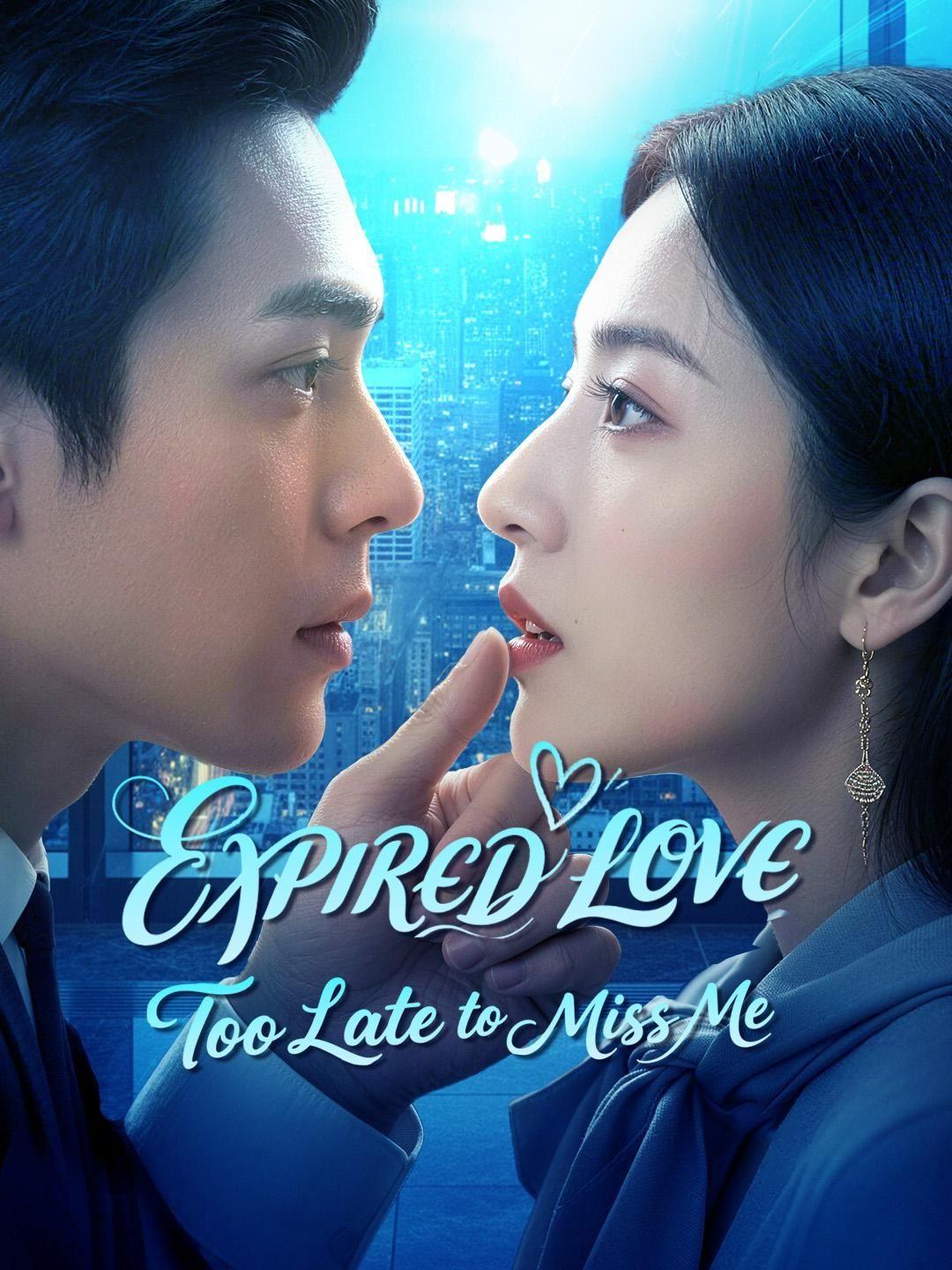
Fiona expresses her wish for her parents to reunite, while Lee Frost prepares for an engagement party in Cenville, leaving his subordinates curious about his future fiancée.Who will Lee Frost choose as his fiancée in the upcoming engagement party?


Recommended for you



Wrong Choice: When the Sofa Becomes a Battlefield
The white leather sofa isn’t furniture here—it’s a stage. A contested territory where power, desire, and denial perform daily without applause. At first glance, it’s luxurious: tufted backrest, gold-trimmed side tables, a fur throw casually draped like a royal mantle. But zoom in—the creases in the leather tell a different story. They’re not from use. They’re from tension. From bodies pressing too hard, too long, too unwilling to yield. Enter Mei Lin. She doesn’t sit. She *settles*. One boot planted firmly on the ottoman, the other leg crossed with deliberate grace, fingers splayed over Li Wei’s thigh—not caressing, not soothing, but anchoring. As if she fears he might vanish if she loosens her grip. Her dress clings, not because it’s tight, but because it’s designed to command attention—and she knows it. The choker bites slightly into her neck, a self-imposed collar, both restraint and declaration. She speaks in clipped tones, sentences short and edged, her Mandarin carrying the cadence of someone used to being obeyed. ‘You promised,’ she says. Not pleading. Stating fact. Li Wei, still in his black tee and tan jacket, doesn’t flinch. He exhales through his nose, eyes half-lidded, the pendant swinging faintly with each breath. He’s not resisting her touch. He’s tolerating it. There’s a difference. Tolerance is the precursor to surrender. And surrender, in this world, is the fourth Wrong Choice. Because what Mei Lin doesn’t know—and what Li Wei won’t say—is that the promise wasn’t to her. It was to Xiao Yu. Three days ago, in that same living room, Xiao Yu had pressed the pillow into his hands and whispered, ‘Promise you’ll tell me the truth.’ He’d nodded, fingers brushing hers, the pendant cool against his skin. He meant it. In that moment, he did. But promises, like pendants, tarnish when exposed to air and doubt. Now, as Mei Lin leans closer, her perfume—amber and smoke—clouding his senses, he feels the weight of that unkept vow like a stone in his gut. He doesn’t push her away. He doesn’t confess. He simply closes his eyes and lets her win. That’s the tragedy of Wrong Choice: it’s rarely a single act. It’s a series of surrenders, each smaller than the last, until the original self is unrecognizable. Cut to Elder Zhang. He watches from his armchair, teacup forgotten in his lap. His expression isn’t disapproval—it’s grief. He remembers Li Wei as a boy, kneeling beside him in the courtyard, learning to carve wood with steady hands and quieter questions. ‘Why do we make things that last?’ the boy had asked. ‘So they remember us when we’re gone,’ Zhang had replied. Now, Li Wei carries a pendant carved by Zhang’s own hands—years ago, after Li Wei’s mother passed. A symbol of continuity. Of legacy. And yet here he is, letting it hang idle while he trades authenticity for ease. Manager Chen, meanwhile, studies the dynamics like a chess master. He doesn’t intervene. He observes. When Mei Lin shifts her weight, subtly adjusting her position to block Li Wei’s line of sight toward the hallway—the direction Xiao Yu disappeared in—Chen’s lips twitch. Not amusement. Recognition. He’s seen this script before. The ambitious woman, the conflicted heir, the elder who knows too much but says too little. In his world, emotions are liabilities. Loyalty is transactional. And Li Wei? He’s making himself obsolete by choosing comfort over courage. The real drama isn’t in the shouting or the slamming doors. It’s in the silence after Mei Lin whispers, ‘You know what happens if you walk away.’ Li Wei opens his eyes. For the first time, he looks directly at her. Not with desire. Not with fear. With exhaustion. ‘I know,’ he says. Two words. No inflection. And in that flat delivery, the entire foundation cracks. Because he *does* know. He knows that walking away means losing Mei Lin’s influence, her connections, the safety net she’s woven around him like silk rope. He also knows that staying means betraying Xiao Yu—not just once, but every day, in a thousand tiny ways: the missed calls, the vague answers, the way he avoids her questions about ‘the old house’ or ‘Grandpa’s stories.’ The pendant feels heavier now. It’s not just stone. It’s accountability. And Li Wei is dropping it, piece by piece, onto the floor of his own making. Later, when the group reconvenes—Zhang standing, Chen rising smoothly, Mei Lin smoothing her dress as if preparing for performance—the air crackles. No one mentions the sofa. No one acknowledges the unspoken contract that just expired. Instead, Zhang clears his throat and says, ‘The tea’s gone cold.’ A simple statement. A devastating indictment. Because cold tea means time wasted. Opportunities missed. Hearts cooled. Li Wei stands, too, but his movement is stiff, mechanical. He doesn’t offer to refill the cup. He doesn’t apologize. He just… exists in the space, caught between identities: son, protector, lover, liar. Mei Lin catches his wrist as he passes. Not hard. Just enough to stop him. ‘Don’t,’ she says. Not ‘don’t go.’ Not ‘don’t think.’ Just ‘don’t.’ And in that single syllable, the fifth Wrong Choice crystallizes: he lets her stop him. He turns back. He sits. He accepts the refilled cup from Chen’s assistant, hands steady, eyes vacant. The pendant rests against his chest, unreadable. Meanwhile, off-screen, Xiao Yu stands in the kitchen, peering through the doorway, clutching the pillow so tightly the fox’s ear bends. She hears the murmur of adult voices, sees the way Mei Lin’s hand lingers on Li Wei’s forearm. She doesn’t cry. She doesn’t shout. She simply walks to the window, places the pillow on the sill, and watches the street below. A delivery bike passes. A dog barks. Life moves on. Hers doesn’t. Because Wrong Choice isn’t about dramatic betrayals. It’s about the quiet erosion of trust—the moment you choose convenience over candor, image over integrity, and convince yourself it’s for the best. Li Wei believes he’s protecting Xiao Yu by staying silent. He thinks the truth would hurt her more. But children aren’t fragile glass. They’re resilient clay. They reshape themselves around absence. And Xiao Yu is already hardening at the edges, learning to read silences better than speeches. The pendant, the sofa, the cold tea—they’re all symbols. But the real symbol is the pillow, left behind like an offering no one accepts. In the final frame, the camera pans slowly across the room: Mei Lin smiling faintly, Chen nodding approvingly, Zhang staring into his cup as if it holds the answers he’s too weary to seek. And Li Wei? He’s looking at his hands. Not at the pendant. Not at the woman beside him. At his hands—calloused, capable, now idle. The hands that could have held Xiao Yu’s, that could have reached for truth, that chose instead to rest quietly on his lap, accepting the weight of a lie. Wrong Choice isn’t a twist. It’s the slow drip of regret, accumulating in the hollows of a man who forgot how to say no. And the saddest part? He still thinks he’s doing the right thing. That’s the cruelest trick of all. The film doesn’t need a climax. It lives in the aftermath—the way Mei Lin adjusts her sleeve an extra time before leaving, the way Zhang’s teacup remains untouched for the rest of the evening, the way Li Wei, alone later, traces the edge of the pendant with his thumb, whispering a name he hasn’t said aloud in years. Xiao Yu. Not a victim. A witness. And witnesses remember everything. Even when no one asks them to. Especially then. So the next time you see a man on a sofa, a woman leaning in, a child holding a pillow—don’t assume it’s romance. Don’t assume it’s family. Look closer. Listen to what isn’t said. Because the most dangerous choices are never shouted. They’re swallowed. They’re silenced. They’re worn like a pendant, close to the heart, where no one else can see the rust forming beneath the surface. Wrong Choice isn’t about falling. It’s about refusing to stand back up. And Li Wei? He’s still sitting. Still choosing. Still losing.
Wrong Choice: The Pillow and the Pendant
In a softly lit living room, where beige walls whisper comfort and golden-framed art hangs like silent witnesses, a quiet tension simmers beneath the surface of what appears to be an ordinary family moment. A young girl—let’s call her Xiao Yu—clutches a peach-colored pillow with a white plush fox peeking out, her fingers gripping it as if it were both shield and lifeline. She wears a polka-dotted blouse, delicate lace trim at the collar, hair tied back with a pink clip that catches the light just so. Her eyes, wide and unblinking, lock onto the man beside her: Li Wei, mid-twenties, tousled black hair, wearing a plain black V-neck tee and a striking pendant—a carved stone amulet strung on a red cord, resting just above his sternum like a secret he hasn’t yet decided to share. The pendant is not merely decoration; it pulses with narrative weight, a relic perhaps inherited, or gifted under solemn circumstances. When Xiao Yu speaks—her voice small but clear—it’s not about school or snacks. It’s about something older, heavier. She tilts her head, lips parting slightly, and asks, ‘Did you really see it?’ Li Wei doesn’t answer right away. He exhales, slow and measured, his gaze drifting downward, then back up—not to her face, but to the space just above her left shoulder. That hesitation is the first Wrong Choice. He could have smiled, changed the subject, even laughed it off. Instead, he lets silence stretch, thick as the wool blanket draped over the arm of the sofa behind them. And in that silence, Xiao Yu’s expression shifts—from curiosity to something sharper, almost accusatory. She tightens her grip on the pillow. Her thumb strokes the fox’s ear, a nervous tic she’s had since she was five. This isn’t just a conversation; it’s a ritual. One they’ve performed before, in different rooms, under different lights. The camera lingers on their hands: hers, small and pale, resting atop the pillow; his, larger, veins faintly visible, fingers tapping once—just once—against his thigh. A micro-gesture. A tell. Later, when the scene cuts abruptly—darkness, then a new setting—the shift is jarring but intentional. We’re no longer in the safe cocoon of domesticity. Now, Li Wei reclines on a cream leather sofa, arms spread wide, eyes closed, wearing a tan utility jacket over the same black tee, the pendant still there, catching the ambient glow of recessed ceiling lights. Beside him sits Mei Lin, all sharp angles and glossy confidence: black patent mini-dress, sheer tights, combat boots kicked up on the coffee table, choker studded with silver stars, hair pulled into a high ponytail that sways when she leans forward. Her fingers trail lightly over his knee—not invasive, but possessive. Not comforting, but claiming. She murmurs something low, lips barely moving, and Li Wei’s eyelids flutter. He doesn’t open them. He doesn’t pull away. That’s the second Wrong Choice: passive complicity. He allows the proximity, the implication, the erasure of whatever truth Xiao Yu sought earlier. Meanwhile, across the room, two older men observe. Elder Zhang, silver-haired, dressed in a traditional black changshan with white frog closures, holds a porcelain teacup with trembling hands. His eyes are fixed on Li Wei—not with anger, but sorrow, the kind that settles deep in the bones. Beside him, Manager Chen, in a velvet tuxedo, twirls a cigar between his fingers, watching Mei Lin with the detached interest of a man who’s seen this dance before. He knows the rules. He knows the cost. When Li Wei finally rises—abruptly, as if startled from a dream—he doesn’t look at Mei Lin. He doesn’t glance at the elders. He walks toward the hallway, shoulders squared, jaw set. But his pace falters halfway. He glances back—just for a heartbeat—and Mei Lin meets his gaze, unblinking, a faint smile playing on her lips. Not triumphant. Not cruel. Just certain. Certain that he’ll return. Certain that the pendant, the pillow, the fox, the question Xiao Yu asked—they’re all already buried under layers of compromise. The third Wrong Choice isn’t spoken. It’s embodied in the way he pauses at the threshold, hand hovering over the doorknob, breath held. He could turn back. He could choose honesty. He could choose the girl with the polka dots and the plush fox. But instead, he steps through. The door clicks shut behind him. And somewhere, in another room, Xiao Yu is still holding that pillow, waiting. The pendant remains, heavy against Li Wei’s chest—not a talisman of protection, but a reminder of every path not taken. In the world of ‘The Silent Amulet’, choices aren’t made in grand declarations. They’re made in the half-second between breaths, in the weight of a hand on a knee, in the refusal to meet a child’s eyes. Wrong Choice isn’t a title. It’s a diagnosis. And Li Wei? He’s terminal. The film doesn’t need explosions or car chases. It thrives in the quiet devastation of a withheld truth, the slow erosion of trust, the way love can curdle into obligation when fear takes the wheel. Mei Lin isn’t the villain—she’s the consequence. Elder Zhang isn’t judging; he’s mourning the boy Li Wei used to be. And Xiao Yu? She’s the only one who still believes words mean something. That’s why the final shot lingers on the pillow, abandoned on the sofa, the white fox now facing the empty space where Li Wei sat. Its button eyes reflect the overhead light—cold, indifferent, watching. Just like us. Just like fate. Wrong Choice isn’t about picking the wrong person. It’s about refusing to see the right one clearly. Li Wei sees Mei Lin’s ambition, her allure, her control. He doesn’t see Xiao Yu’s quiet desperation, her need for certainty in a world that keeps shifting under her feet. He mistakes intensity for intimacy, possession for devotion. And so the cycle continues: another dinner, another silence, another unspoken apology folded into the crease of a sleeve. The pendant stays. The pillow waits. The fox keeps its secrets. Because some truths, once buried, don’t resurface—they fossilize. And fossilized truths make the hardest foundations for a life. Watch how Li Wei’s posture changes over the course of ten minutes: from relaxed slouch to rigid upright, from open palms to clenched fists hidden in pockets. Observe Mei Lin’s foot—how it taps once, twice, then stops, as if timing his indecision. Notice Elder Zhang’s teacup: he never drinks from it again after Li Wei stands. The liquid cools. Like hope. Wrong Choice isn’t a mistake. It’s a pattern. And patterns, once set, are nearly impossible to break—especially when the reward feels so immediate, so warm, so dangerously close to love. But love doesn’t leave a child clutching a pillow like a prayer. Love looks her in the eye and says, ‘I’m here.’ Li Wei doesn’t. So he walks away. Again. And the pendant swings gently against his ribs, a pendulum counting down the seconds until the next Wrong Choice.