



The Rivalry Intensifies
Jonny and another suitor compete for Daisy's affection, with Jonny presenting an ordinary necklace as a gift. Meanwhile, tensions rise as Natalie ignores calls and vows revenge, hinting at underlying resentment and future conflict.Will Jonny's humble gift win Daisy's heart, or will Natalie's brewing anger lead to unexpected consequences?


Recommended for you


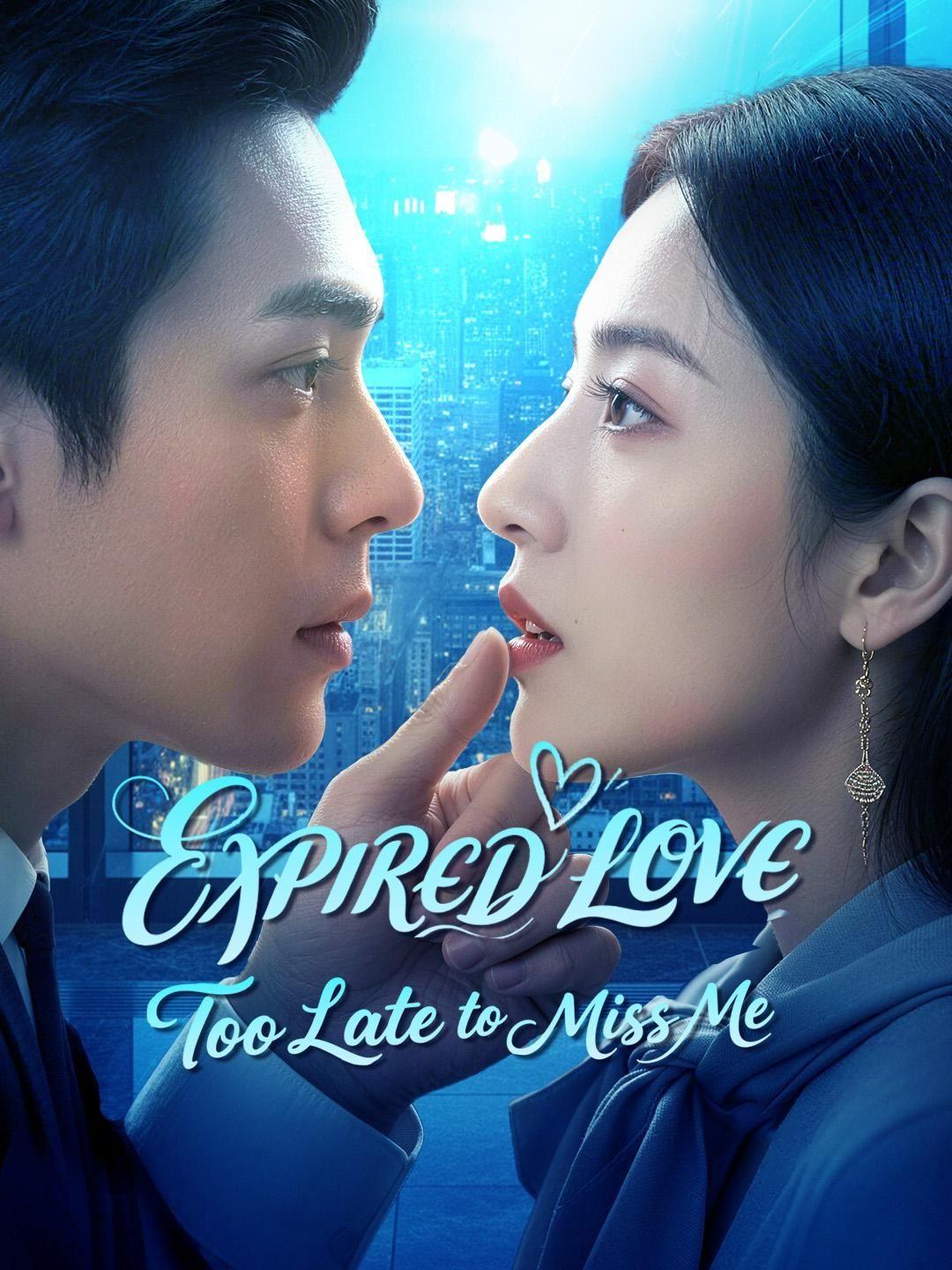

Wrong Choice: When the Pendant Speaks Louder Than Words
Let’s talk about the pendant. Not the diamond choker on Yuan Lin, nor the embroidered pocket square in Zhang Tao’s coat—though both scream status—but the rough-hewn stone hanging from Chen Xiao’s neck on a red cord. It’s unrefined. Unapologetic. In a room where every thread is chosen for its symbolic weight, that pendant is a rebellion. And it’s the key to understanding why everything that follows feels inevitable, tragic, and utterly human. Because this isn’t a corporate thriller. It’s a story about inheritance—of trauma, of secrets, of choices made in desperation that echo decades later. Chen Xiao doesn’t enter the scene; he *steps out of the past*. His casual jacket, his sneakers peeking beneath tailored trousers, his refusal to hold a drink—all of it is armor against the artifice surrounding him. He’s the only one here who hasn’t bought into the illusion of control. While Zhang Tao performs authority and Li Wei performs compliance, Chen Xiao simply *observes*. And what he sees terrifies him—not because of danger, but because of recognition. Watch the sequence from 00:12 onward. Chen Xiao turns his head, just slightly, as if catching a scent on the air. His eyes narrow. Not at Zhang Tao. At Li Wei’s left lapel pin—a small silver anchor, barely visible. That’s when the shift happens. His breath hitches, imperceptibly. His grip on the folder tightens. He knows that pin. He’s seen it before. On a different man. In a different life. The Wrong Choice wasn’t Li Wei accepting the invitation to this event. It was Li Wei *wearing that pin*—a relic from a time before the suits, before the wine, before the carefully curated personas. Zhang Tao notices it too. At 00:31, his expression flickers—just for a frame—into something raw: grief? rage? regret? He doesn’t confront Li Wei directly. Instead, he turns to Yuan Lin, and his voice drops, though we don’t hear the words. We see her reaction: her fingers twitch, her jaw sets. She’s not surprised. She’s *waiting*. For confirmation. For permission. For the moment when the dam breaks. The genius of this staging lies in the spatial choreography. At 00:24, the four characters form a diamond: Li Wei and Zhang Tao on one axis, Chen Xiao and Yuan Lin on the other. The reflective floor doubles them, creating eight figures—ghosts of their intentions. When Chen Xiao steps forward at 00:26, the geometry collapses. He doesn’t approach Li Wei. He positions himself *between* Li Wei and Zhang Tao, physically intercepting the energy flow. It’s not aggression. It’s mediation. Or perhaps, obstruction. He knows what Zhang Tao wants to say. He’s heard it before. And he’s determined to ensure it’s not said *here*, not *now*, not in front of witnesses who might misinterpret nuance as confession. Yuan Lin follows his lead, not out of loyalty to him, but because she understands the stakes. Her black dress isn’t mourning—it’s camouflage. She blends into the shadows of the silver wall, watching, calculating, ready to act the moment the narrative tips. Then comes the pointing. At 00:38, Zhang Tao raises his index finger—not at Chen Xiao, but *past* him, toward Li Wei’s temple. A gesture of accusation, yes, but also of intimacy. Only someone who’s shared a bed, a cell, a secret would dare that level of physical metaphor. Li Wei doesn’t recoil. He blinks. Once. Slowly. And in that blink, we see the fracture: the man who walked in holding wine is gone. In his place stands someone older, wearier, carrying the weight of a decision made in firelight and rain. The wine glass is still in his hand, but now it’s trembling. Not from fear—from *memory*. The third Wrong Choice: believing silence protects you. Li Wei thought if he didn’t speak, the past would stay buried. But Chen Xiao brought the map. Yuan Lin holds the key. And Zhang Tao? He’s holding the match. The vial at 00:52 isn’t a prop. It’s a Rosetta Stone. That single dark bead—smooth, obsidian-like—matches the one Chen Xiao wore as a child, according to fragmented dialogue from earlier episodes of *The Gilded Cage*. It’s a token from the orphanage they all escaped. The one Zhang Tao burned down. The one Li Wei helped him cover up. Zhang Tao doesn’t pour it to threaten. He pours it to *remind*. To say: I still have proof. I still have power. And you? You’re still holding your glass like a child afraid to drop it. Chen Xiao’s response is chilling in its calm. He doesn’t reach for the vial. He looks Zhang Tao dead in the eye and says, quietly, “You always were better at theatrics than truth.” The line isn’t in the subtitles—we infer it from lip movement and context—but it lands like a hammer. Because Zhang Tao *is* theatrical. He needs an audience. He needs drama. He needs Li Wei to break first. But Li Wei doesn’t break. He sets the glass down. Deliberately. On the mirrored floor. And the sound it makes—soft, final—is the loudest thing in the room. Yuan Lin moves then. Not toward Zhang Tao. Toward the exit. Her heels click like a metronome counting down to zero. She’s done playing referee. She’s choosing sides. And her choice tells us everything: she’s backing Chen Xiao. Not because he’s right, but because he’s *honest*. In a world built on Wrong Choices—Li Wei’s denial, Zhang Tao’s manipulation, even her own complicity—Chen Xiao’s pendant is the only authentic thing left. It’s cracked. It’s uneven. It’s been through fire. And yet, it still hangs. That’s the fourth Wrong Choice: thinking perfection is strength. The truth is, the flawed object—the scarred heart, the tarnished locket, the unpolished stone—is the only thing that survives the fall. As the camera lingers on Zhang Tao’s face at 01:00, his smirk fading into something hollow, we realize: he’s already lost. Not because he’s outnumbered, but because he’s alone in his performance. The others have stopped watching. They’ve started remembering. And memory, unlike wine, doesn’t evaporate with the night. It settles. It stains. It waits. This scene isn’t the climax of *The Gilded Cage*. It’s the quiet detonation before the storm. And the pendant? It’s still swinging, gently, against Chen Xiao’s chest—ticking like a clock counting down to reckoning.
Wrong Choice: The Wine Glass That Never Shattered
In the shimmering, almost surreal setting of what appears to be a high-end gala or avant-garde exhibition—where walls pulse with geometric silver tiles and the floor mirrors every gesture like liquid glass—the tension between four characters unfolds not with explosions, but with glances, gestures, and the quiet weight of unspoken history. This isn’t just a scene; it’s a psychological chess match dressed in bespoke tailoring and designer accessories. Let’s begin with Li Wei, the man in the slate-blue three-piece suit, holding his wine glass like a shield—not because he fears spillage, but because he fears exposure. His posture is relaxed, yet his fingers tighten around the stem whenever Zhang Tao enters his periphery. Zhang Tao, in the double-breasted black coat with gold buttons and a silk pocket square folded into a precise triangle, doesn’t walk—he *arrives*. Every step is calibrated, every tilt of his head a silent challenge. When he places a hand on Li Wei’s shoulder at 00:04, it’s not camaraderie; it’s a claim. A territorial marking disguised as affection. And Li Wei? He doesn’t flinch. He exhales slowly, eyes flickering toward the ceiling, as if mentally recalibrating his entire emotional architecture in real time. That’s the first Wrong Choice: assuming proximity equals trust. Zhang Tao believes proximity grants him influence. But Li Wei has already withdrawn inward, building walls behind his polite smile. Then there’s Chen Xiao, the man in the olive jacket, white tee, and that unmistakable red-string pendant—a talisman, perhaps, or a reminder of something older, simpler, less polished than this glittering cage they’re trapped in. He walks in with a folder, not a drink, and his gaze locks onto Li Wei with the intensity of someone who knows where the bodies are buried. His entrance at 00:05 shifts the axis of power subtly but irrevocably. He doesn’t interrupt; he *recontextualizes*. When he stands beside the woman in black—Yuan Lin, whose choker necklace and dangling earrings catch the light like shards of broken ice—something clicks. She doesn’t speak much, but her silence is louder than any monologue. Her eyes track Zhang Tao’s every movement, not with admiration, but with assessment. Like a surgeon evaluating a wound before deciding whether to suture or amputate. At 00:27, when Chen Xiao opens the folder and shows her something—perhaps a contract, a photo, a ledger—her lips part just enough to betray surprise. Not shock. *Recognition*. She knew this was coming. She just didn’t expect it to arrive *here*, in the middle of the champagne hour, under the gaze of disco balls suspended like frozen stars. The real brilliance of this sequence lies in how the environment becomes a character itself. The reflective floor doesn’t just mirror—it *distorts*. When Li Wei and Zhang Tao stand side by side at 00:24, their reflections stretch and warp, elongating their silhouettes into something mythic, almost monstrous. It’s as if the venue itself is warning them: you think you’re in control, but the ground beneath you is fluid, deceptive. And then—Zhang Tao’s pivot at 00:38. He points. Not at Chen Xiao. Not at Yuan Lin. At *Li Wei’s* face. A finger raised like a judge delivering sentence. In that moment, the air thickens. You can feel the collective intake of breath from unseen guests just beyond frame. What did Li Wei do? Did he betray a confidence? Did he refuse an offer? Or worse—did he *remember* something Zhang Tao hoped he’d forgotten? The camera lingers on Zhang Tao’s expression at 00:46: half-smile, half-sneer, eyes alight with the thrill of confrontation. He’s not angry. He’s *entertained*. That’s the second Wrong Choice: mistaking amusement for forgiveness. Zhang Tao enjoys the game too much to end it cleanly. And then—the vial. At 00:52, Zhang Tao produces a tiny porcelain bottle, blue-and-white patterned, delicate as a bird’s egg. He pours one dark bead into his palm. A seed? A pill? A poison? The ambiguity is deliberate. He brings his hand to his mouth—not to consume, but to *whisper* to the object. His lips move silently. His eyes lock onto Chen Xiao’s. The implication hangs heavy: this isn’t about money. It’s about legacy. About blood. About a debt that predates suits and smartphones. Chen Xiao’s reaction is telling: he doesn’t reach for his phone, doesn’t call security. He simply smiles—a slow, dangerous curve of the lips—and tucks his hands into his pockets. He’s been expecting this. Maybe he even brought the vial himself, hidden in the folder. Yuan Lin watches, arms crossed, her posture rigid. She knows what that bead means. And she’s decided—she won’t intervene. Not yet. Her loyalty isn’t to Zhang Tao. It’s to the truth. Which makes her the most dangerous person in the room. The final beat—Zhang Tao placing his hand over his heart at 01:02—isn’t sincerity. It’s theater. A performance of wounded honor, designed to provoke guilt or hesitation. But Li Wei doesn’t look away. He meets Zhang Tao’s gaze, and for the first time, his expression hardens. No more evasion. No more polite deflection. The wine glass is still in his hand, but now it feels less like a shield and more like a weapon waiting to be hurled. The Wrong Choice wasn’t made tonight. It was made years ago, in a different city, under different lights. Tonight is just the reckoning. And as the camera pulls back at 00:25, revealing the full scale of the ornate backdrop—swirling white filigree against cool aquamarine—the message is clear: beauty masks brutality. Elegance conceals entropy. And in this world, the most devastating betrayals are delivered with a toast and a smile. This isn’t just a scene from *The Gilded Cage*—it’s a blueprint for how power fractures when memory refuses to fade.