



The Divorce and the Billion-Dollar Betrayal
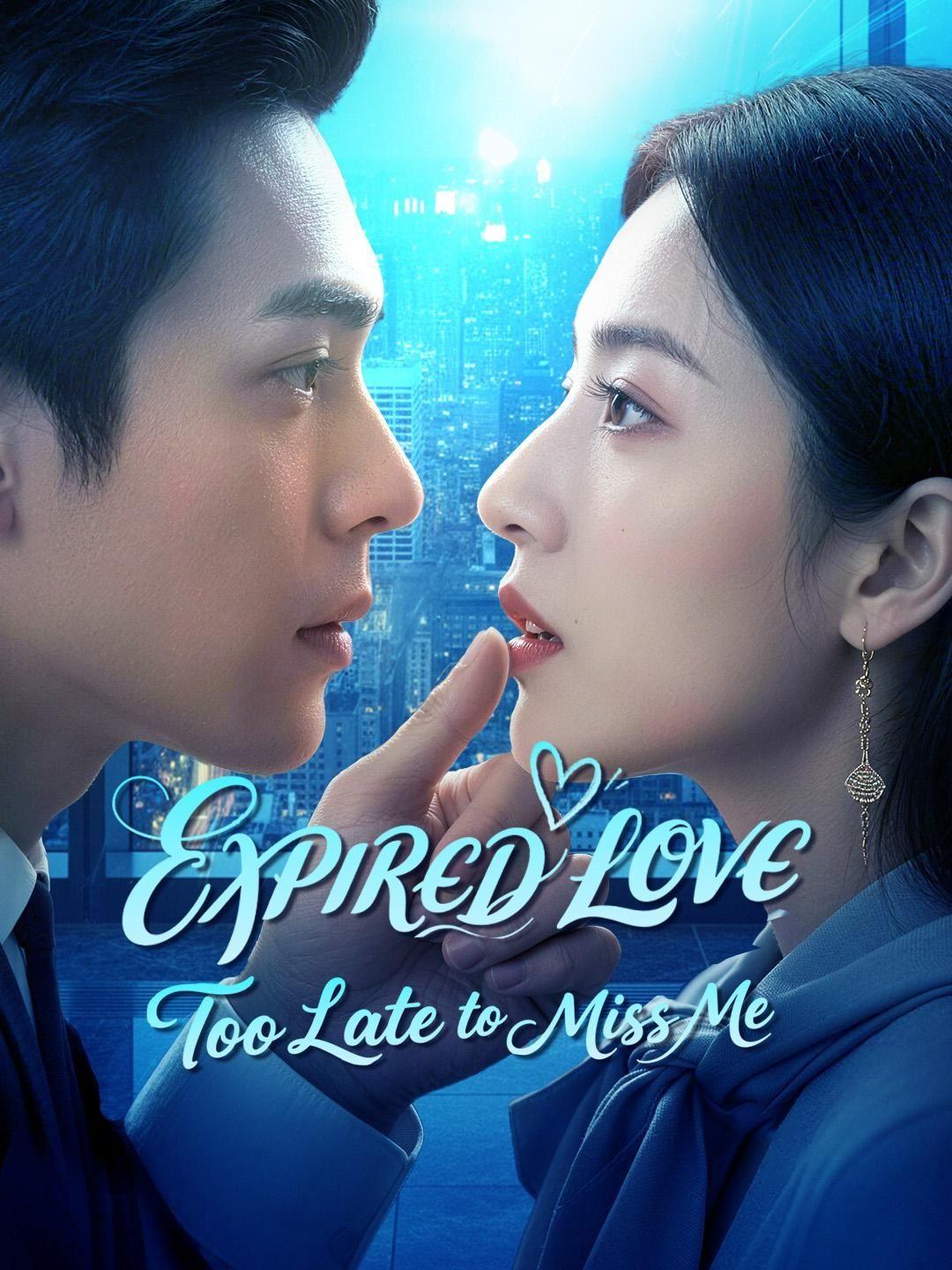
Natalie plans to divorce Lee Frost and marry Mattew Quinn, heir to the powerful Quinn family, believing he secured a lucrative contract for her company. Lee reveals he was the one behind the deal, but Natalie dismisses him due to his low income, leading to their divorce. Lee then calls Chairman Smith to cancel all contracts with Natalie's family, setting the stage for dramatic consequences.Will Natalie realize too late that Lee was the true power behind her success?


Recommended for you



Wrong Choice: When Pearls Meet Dust
There’s a particular kind of cruelty in sunlight. Not the harsh glare of interrogation lamps or the sterile glow of hospital rooms—but the open, indifferent brightness of a midday sky, where shadows shrink and secrets have nowhere to hide. That’s the stage for this devastating vignette from ‘The Last Signature’, where elegance and exhaustion collide like two trains on a single track, and the derailment is silent, internal, and utterly irreversible. Let’s talk about Madam Chen first—not as a stereotype, but as a woman whose identity is stitched into her attire. Three strands of pearls, each perfectly matched, resting against black chiffon with sequined cuffs. Her earrings? Minimalist, expensive. Her hair? Pulled back with a clip that costs more than Li Wei’s weekly wage. She doesn’t raise her voice. She doesn’t need to. Her power lies in the *pause*—the way she tilts her head just so, the slight narrowing of her eyes when Li Wei stammers, the way her lips press together like she’s tasting something bitter. She’s not angry. She’s *disappointed*. And in her world, disappointment is worse than rage. It means you’ve failed to meet the baseline. You’ve become background noise in a life curated for resonance. Li Wei, meanwhile, is a study in dissonance. His tank top is faded, speckled with concrete dust and dried sweat. His jeans are torn at the knee—not fashionably, but from kneeling too long on gravel. His gloves are worn thin at the knuckles, the fabric fraying like his resolve. Yet watch his hands when he holds the document. They don’t shake. They *steady*. Because beneath the fatigue, there’s a core of quiet defiance. He knows he’s being judged, but he also knows something they don’t: that dignity isn’t worn—it’s carried. And he’s carrying it, even as he signs his name in shaky script, the pen slipping slightly in his gloved grip. That slip isn’t incompetence. It’s resistance. A tiny rebellion against the neatness of their world. And then there’s Xiao Yu—the fulcrum of this entire collapse. Her black dress is structured, severe, the waist cinched like a corset of expectations. Her jewelry isn’t adornment; it’s armor. The diamond choker sits high, almost choking, as if to remind her: *you are valuable, therefore you must be controlled*. Her expressions shift like weather fronts—cool detachment, flickers of doubt, a flash of something raw when Li Wei looks at her not with pleading, but with sorrow. Not ‘please don’t leave me’, but ‘I see you choosing the lie’. That’s the knife twist. She doesn’t hate him. She pities him. And pity, in this context, is the ultimate dismissal. Wrong Choice appears again—not as a label, but as a rhythm. Every time Li Wei opens his mouth, he risks another wrong choice: speaking too much, too little, too honestly. When he glances at Xiao Yu and sees her looking past him, toward the car idling nearby, he makes a choice: he smiles. A small, broken thing. He lets her believe he’s okay. That’s the third wrong choice—complicity in his own erasure. Because in that moment, he chooses her peace over his truth. And the tragedy is, she doesn’t even notice. She’s already moved on, mentally filing him under ‘resolved’. The gold card exchange is pure cinematic irony. Xiao Yu extends it like a priest offering absolution. Li Wei accepts it like a man accepting his sentence. The card is branded—‘China Merchants Bank’, gold foil peeling at the edge. It’s not wealth. It’s severance pay for a relationship that was never legally binding, yet emotionally bankrupt. He turns it over in his hand, the metal cool against his calloused palm. For a heartbeat, he considers tossing it into the sand. But he doesn’t. Why? Because throwing it away would mean admitting it mattered. And admitting it mattered would mean admitting he lost. So he pockets it. Another wrong choice: preserving the illusion of closure, when all he really wants is to scream into the wind. Then—the phone. Not a smartphone. A flip phone. A relic. The kind you keep ‘just in case’. He pulls it out like a talisman, and for the first time, his posture shifts. He stands taller. His voice, when he answers, is calm. Too calm. ‘Yeah. I’m good.’ He lies with the ease of someone who’s practiced it daily. And as he speaks, the camera cuts to Xiao Yu’s face—not angry, not sad, but *relieved*. Relief is the most chilling emotion here. It means she never expected him to fight. She expected compliance. And he delivered. The final shot isn’t of faces. It’s of the phone, half-submerged in sand, screen dark, antenna bent. The wind lifts a few grains, settling over it like a shroud. No music. No dialogue. Just the sound of distant traffic and the faint creak of a wooden spool turning in the breeze. That’s where the real horror lives: in the aftermath. In the quiet. In the knowledge that none of them will ever speak of this again. Madam Chen will return to her tea circles, Xiao Yu to her next gala, and Li Wei to the site—where the dust will settle on his shoulders, and he’ll pour concrete like nothing happened. But something *did* happen. A line was crossed. Not legally, not officially—but existentially. Wrong Choice isn’t about one decision. It’s about the accumulation of small surrenders: the nod when you should’ve walked away, the signature when you should’ve burned the paper, the ‘I’m fine’ when you were drowning. ‘The Last Signature’ doesn’t ask who’s right. It asks: what do you become when you stop fighting for the version of yourself that believes love shouldn’t come with clauses? Li Wei doesn’t break down. He doesn’t rage. He simply folds the document, tucks the card into his pocket, and walks toward the pile of sand—where, moments later, he’ll kneel again, gloves sinking into grit, pretending the weight in his chest is just fatigue. That’s the true wrong choice: believing that survival is the same as living. Because in the end, the pearls stay pristine. The dust stays on his skin. And the signature? It’s not on the paper anymore. It’s etched into his silence—a permanent record, written not in ink, but in everything he no longer says aloud.
Wrong Choice: The Card That Shattered Three Lives
In the sun-bleached industrial lot—dust swirling around concrete slabs and rusted spools—the tension doesn’t just simmer; it *cracks*, like dry earth under a relentless sky. This isn’t a scene from a high-budget thriller, but a raw, unvarnished moment pulled straight from the short drama ‘The Last Signature’, where every glance carries weight, every gesture echoes consequence, and one wrong choice ripples outward like a stone dropped into still water—except here, the water is already poisoned. Let’s begin with Li Wei, the man in the stained white tank top, his clothes clinging to him like second skin, sweat-slicked and dust-flecked, fingers wrapped in frayed work gloves that have seen too many shifts, too many compromises. He stands not as a villain, but as a man cornered—not by law, but by expectation. His eyes dart, not with guilt, but with the frantic calculation of someone who knows he’s being measured against a standard he never signed up for. When the older woman—Madam Chen, draped in black silk and layered pearls, her hair pinned with a gold-and-pearl clasp that whispers ‘legacy’—speaks, her voice doesn’t rise. It *drops*, low and deliberate, like a judge reading sentence. She doesn’t shout. She *accuses* through inflection. And Li Wei flinches—not because he’s afraid of her, but because he recognizes the script she’s reciting. It’s the same one his father used when he lost the family shop. The same one his boss used when he cut his pay. The same one society uses when it decides a man in ripped jeans and a dirty tank top must be guilty of something, even if it’s only existing outside the frame. Then there’s Xiao Yu—the younger woman in the tailored black dress, diamond choker catching light like ice, earrings dangling like miniature cages. She watches Li Wei not with disdain, but with something far more dangerous: pity laced with impatience. Her posture is rigid, her hands clasped before her like she’s holding back a verdict. She’s not here to mediate. She’s here to *witness*. To confirm what she already believes: that love, when inconvenient, must be renegotiated—or erased. When she finally speaks, her tone is polished, almost clinical. ‘You knew the terms,’ she says, not accusing, but *stating*, as if reading from a contract drafted in marble. And in that moment, we see it: this isn’t about money or betrayal. It’s about control. About who gets to define the rules of the game—and who gets to walk away unscathed. Wrong Choice isn’t just a phrase here. It’s the title of the emotional detonator. Because the real wrong choice wasn’t Li Wei taking the job. It wasn’t Xiao Yu accepting the engagement. It wasn’t even Madam Chen insisting on the prenup. The wrong choice was believing that dignity could be outsourced—that love could be calibrated like a spreadsheet, that sacrifice could be quantified in credit cards and signed documents. Watch closely at 1:12: the document. Not a marriage license. A ‘Divorce Agreement’. Handwritten Chinese characters, ink slightly smudged, as if written in haste—or tears. The pen hovers. Li Wei’s gloved hand trembles, not from weakness, but from the sheer absurdity of it all: signing away a future he never truly owned, while standing in a place that smells of cement and regret. And then—Xiao Yu offers the gold card. Not as generosity. As *evidence*. Proof that she’s done her part. That she’s paid the price of severance. The card gleams under the sun, absurdly bright against the grime of his gloves. He takes it. Not because he wants it. But because refusing it would be another wrong choice—one that brands him as ungrateful, unstable, unworthy. That’s when the phone rings. A cheap flip phone, silver casing dented, pulled from his pocket like a relic. He answers. His face shifts—not relief, not anger, but *recognition*. Someone on the other end knows. Someone who saw him leave the site that morning, who heard the argument over the fence, who understands that this isn’t about divorce—it’s about survival. And in that split second, Li Wei makes his final wrong choice: he lies. Softly. Smiling. ‘Everything’s fine.’ The smile doesn’t reach his eyes. It’s the kind of smile you wear when you’re burying something alive. The camera lingers on the phone after he drops it—not dramatically, but carelessly—into the pile of loose sand. It sinks slightly, half-buried, screen dark. A tombstone for truth. And as the wind lifts a few grains of dust, we realize: no one here is innocent. Madam Chen isn’t just protecting her daughter; she’s protecting the illusion of order. Xiao Yu isn’t just choosing stability; she’s choosing the version of herself that fits in glossy magazines and boardroom photos. And Li Wei? He’s not the victim. He’s the mirror. He reflects back the cost of living in a world where love is transactional, where class is armor, and where the most dangerous wrong choice isn’t saying no—it’s saying yes, when your soul is screaming otherwise. This scene, barely two minutes long, does what great micro-drama does best: it doesn’t tell you how to feel. It forces you to stand in the dust beside them, breathing the same thick air, wondering which of *you* would sign the paper. Would you take the card? Would you lie on the phone? Would you let the sand swallow the proof? Wrong Choice isn’t a mistake. It’s a pattern. And in ‘The Last Signature’, every character is trapped in its loop—repeating the same decision, over and over, until one day, the ground gives way beneath them. The tragedy isn’t that they chose poorly. It’s that they never realized they had a choice at all. What haunts me isn’t the shouting or the tears. It’s the silence after Xiao Yu walks away, head high, heels clicking on concrete like a metronome counting down to emptiness. And Li Wei, alone now, staring at the buried phone, whispering something too quiet for the mic to catch—but we see his lips move: ‘I’m sorry.’ Not to her. Not to his mother. To the man he used to be, before the world taught him that dignity has a price tag, and sometimes, the cheapest thing you can sell is yourself. That’s the genius of this sequence. It doesn’t need explosions. It doesn’t need music swells. It needs only three people, a piece of paper, a gold card, and the unbearable weight of ordinary compromise. In a world obsessed with grand betrayals, ‘The Last Signature’ reminds us that the deepest wounds are often inflicted with polite sentences, pearl necklaces, and the quiet click of a pen on paper. Wrong Choice isn’t the headline. It’s the footnote no one reads—until it’s too late.