



Rejection and Proposal
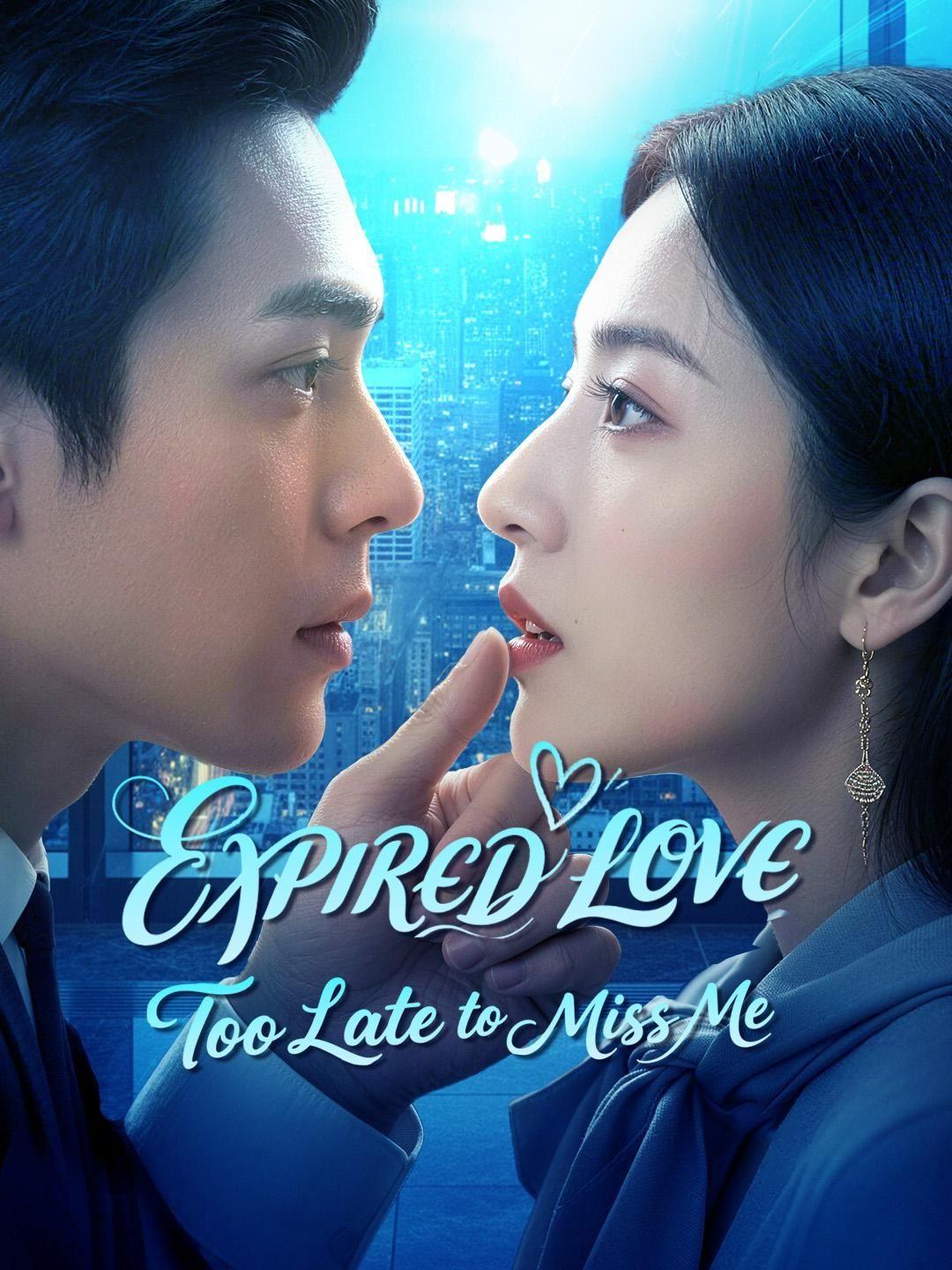
Jonny faces harsh criticism and rejection from Mattew Quinn, who belittles him for his past marriage and current social standing, only to have Miss Smith unexpectedly propose to Jonny.Will Jonny accept Miss Smith's sudden proposal despite the odds?


Recommended for you



Wrong Choice: When the Ring Was Never Meant to Be Found
There’s a specific kind of silence that settles over a room when four people realize they’re all holding different versions of the same lie. That silence is the opening chord of *The Gilded Mirage*’s most electric sequence—a ten-minute masterclass in subtext, staging, and the unbearable weight of unspoken history. We begin with Lin Xiao, radiant and brittle, adjusting a necklace that costs more than most people’s annual rent. Her fingers linger on the pendant—not because it’s precious, but because it’s a tether. To what? To who? We don’t know yet. But the way she glances sideways, toward Chen Wei, tells us this isn’t just jewelry. It’s a confession she hasn’t voiced. Chen Wei stands beside her, dressed like a man who forgot he was invited to a gala and showed up anyway—olive jacket, white tee, red cord necklace with a stone amulet that looks older than the building. He doesn’t belong here. And yet, he’s the only one who seems to understand the rules of the game. While others perform, he observes. While others react, he waits. His stillness is louder than Zhou Jian’s grand entrances. Zhou Jian—the man in the navy double-breasted suit with the pocket square folded into a perfect crane—is the architect of this chaos. He doesn’t walk into the scene; he *unfolds* into it, arms spreading like wings, voice presumably booming (though audio is absent, his mouth shape suggests declarative sentences, not questions). He holds the red box like a priest holding a relic. And when he presents it—not to Lin Xiao, but to the group—he’s not offering a gift. He’s issuing a challenge. Li Na, standing just behind Chen Wei, is the ghost in the machine. Her black blazer is tailored to intimidate, her diamond choker a cage of light around her throat. She watches Lin Xiao with the focus of a predator assessing prey—not because she wants to harm her, but because she’s calculating how much damage Lin Xiao might do to herself. There’s grief in Li Na’s eyes, yes, but also resignation. She’s seen this play before. She knows the script. And she knows the Wrong Choice is coming. It always does. In this world, love isn’t found—it’s mislaid, mistaken, or stolen in plain sight. Then comes the pivot: Lin Xiao kneels. Not dramatically. Not theatrically. With the quiet inevitability of a clock striking midnight. She reaches for Chen Wei’s hand, not to hold it, but to place something in it—the ring. A simple platinum band, solitaire cut, no frills. The kind of ring that says *I choose you*, not *I own you*. But Chen Wei doesn’t take it. He stares at it, then at her, then at Zhou Jian—who is now smiling, slow and serpentine, as if he’s just been handed the final piece of a puzzle he’s been assembling for years. That’s when Kai, the man in the light blue suit, finally speaks—or rather, reacts. His face cycles through shock, confusion, dawning horror. He’s the moral compass of the group, the one who still believes in fairness, in closure, in *answers*. He doesn’t realize yet that in *The Gilded Mirage*, answers are traps. Every revelation leads to three new questions, each more dangerous than the last. His repeated glances upward—toward the disco balls, the ceiling, the void—are not prayers. They’re pleas for someone to intervene. To stop this. But no one does. Because no one wants to be the one who breaks the spell. The environment itself is complicit. The mirrored floor doesn’t just reflect—it *multiplies* tension. Lin Xiao’s kneeling form appears twice, then thrice, as the camera circles. Each reflection is slightly off-kilter, suggesting instability, fragmentation. The white sculptural wall behind them resembles frozen smoke or shattered glass—beauty born of violence. Even the lighting is manipulative: cool blue tones dominate, but warm spotlights isolate faces, casting long shadows that stretch toward each other like grasping hands. What’s never stated, but screams from every frame, is this: the ring wasn’t lost. It was *left*. Planted. For Lin Xiao to find. At the exact moment Zhou Jian decided the game needed a new rule. The Wrong Choice isn’t Lin Xiao kneeling. It’s Chen Wei hesitating. It’s Li Na not stepping in. It’s Kai still believing this can end cleanly. And most of all—it’s Zhou Jian smiling as he watches them all drown in the meaning he’s assigned to a single piece of metal. In the final shot, Lin Xiao stands, the ring now held loosely in her palm, her expression shifting from hope to hollow realization. She looks at Chen Wei. He looks at the ring. Li Na looks at Zhou Jian. And Zhou Jian? He’s already turning away, already moving toward the next table, the next audience, the next lie he’ll polish until it shines. The necklace remains. The ring remains. But something fundamental has cracked. Not between them—but *within* them. Because the true Wrong Choice wasn’t made in this room. It was made years ago, in a quieter place, when someone decided love was worth risking everything for… and no one told them the price would be paid in reflections, not reality. This is *The Gilded Mirage* at its most ruthless: a story where the most dangerous objects aren’t weapons or secrets, but symbols. And the most devastating betrayals aren’t spoken—they’re held in the space between a breath and a blink.
Wrong Choice: The Diamond Necklace That Shattered Four Lives
Let’s talk about the kind of scene that doesn’t just unfold—it detonates. In this tightly wound sequence from *The Gilded Mirage*, we’re dropped into a gala so polished it gleams like a blade under studio lights. The setting is surreal: a floor of liquid mirror, walls carved with swirling white filigree, disco balls suspended like frozen stars—luxury as both backdrop and weapon. And in the center of it all? A necklace. Not just any necklace. A cascade of diamonds, layered like frost on midnight glass, worn by Lin Xiao, whose off-shoulder black gown is punctuated by fuchsia ruched sleeves—a visual scream of contradiction: elegance laced with desperation. She clutches her chest, fingers trembling—not from cold, but from the weight of performance. Her smile is calibrated, her eyes darting just enough to suggest she’s rehearsing lines in her head while pretending to be present. This isn’t nerves. It’s calculation. She knows she’s being watched. By everyone. Especially by Chen Wei, the man in the olive jacket, who stands beside her like a quiet storm. His red-string pendant—a traditional charm, rough-hewn stone against modern fabric—feels like an anchor in a sea of artifice. He doesn’t touch her. Doesn’t speak. Just watches. And when he does finally turn his gaze toward her, it’s not admiration—it’s recognition. Recognition of something broken, or perhaps something deliberately hidden. Then there’s Zhou Jian, the man in the navy double-breasted suit, who enters like a conductor stepping onto stage mid-overture. His entrance isn’t loud, but it shifts the air. He holds a crimson box—small, lacquered, ominous—and his smile is too wide, too practiced. He doesn’t address Lin Xiao directly at first. Instead, he gestures broadly, arms outstretched, as if presenting a tableau: Lin Xiao, Chen Wei, himself, and Li Na—the woman in the black blazer, diamond choker, and eyes that flick between suspicion and sorrow. Li Na’s posture is rigid, her hands clasped low, but her wristwatch glints with expensive indifference. She’s not here to celebrate. She’s here to audit. What makes this sequence so devastating is how little is said—and how much is screamed through gesture. When Lin Xiao kneels before Chen Wei, not in supplication, but in sudden, shocking intimacy, the camera lingers on her hands: one holding a ring, the other reaching for his sleeve. The ring is simple—platinum, solitaire, unadorned. A stark contrast to the necklace she wears, which now feels less like adornment and more like armor. Chen Wei doesn’t pull away. He looks down at her, then past her, his expression unreadable—but his jaw tightens. That’s the moment the Wrong Choice crystallizes. Not the ring. Not the necklace. The choice to believe that love can survive in a room built for spectacle. Zhou Jian’s reaction is pure theater. He laughs—once, sharply—then steps forward, placing a hand on Lin Xiao’s shoulder. Not comforting. Claiming. His dialogue (though unheard in the clip) is implied in his body language: he’s rewriting the narrative in real time. He wants the ring. Or the story behind it. Or the power that comes from controlling who gets to wear what, and when. Meanwhile, the man in the light blue three-piece suit—let’s call him Kai—stands slightly apart, mouth agape, eyes wide with disbelief. He’s the audience surrogate, the one who still believes in linear cause-and-effect. He thinks someone will explain. They won’t. In *The Gilded Mirage*, explanations are currency, and no one’s handing them out for free. The lighting plays tricks. Every reflection on the mirrored floor doubles the tension—Lin Xiao’s kneeling form appears twice, once real, once distorted. Li Na’s silhouette stretches long and sharp behind her, like a shadow waiting to swallow her whole. Chen Wei’s pendant catches the light at odd angles, flashing like a warning signal. And the disco balls? They don’t twinkle. They pulse. Like a heartbeat under pressure. This isn’t just a love triangle. It’s a quadrilateral of betrayal, where loyalty is measured in millimeters of eye contact and the angle of a wrist tilt. Lin Xiao’s final gesture—holding up the ring, not to propose, but to display—is the ultimate Wrong Choice. She thinks she’s revealing truth. But in this world, truth is just another accessory. And accessories can be taken away. Or repurposed. Or sold to the highest bidder. The most chilling detail? No one touches the ring. Not even Lin Xiao, once she lifts it. Her fingers hover. As if afraid of what happens when skin meets metal. As if she already knows: the moment she lets go, everything changes. And the worst part? None of them want to be the one who drops it first. Because whoever does… becomes the villain. And in *The Gilded Mirage*, the villain never gets a second act.