



Shocking Confession
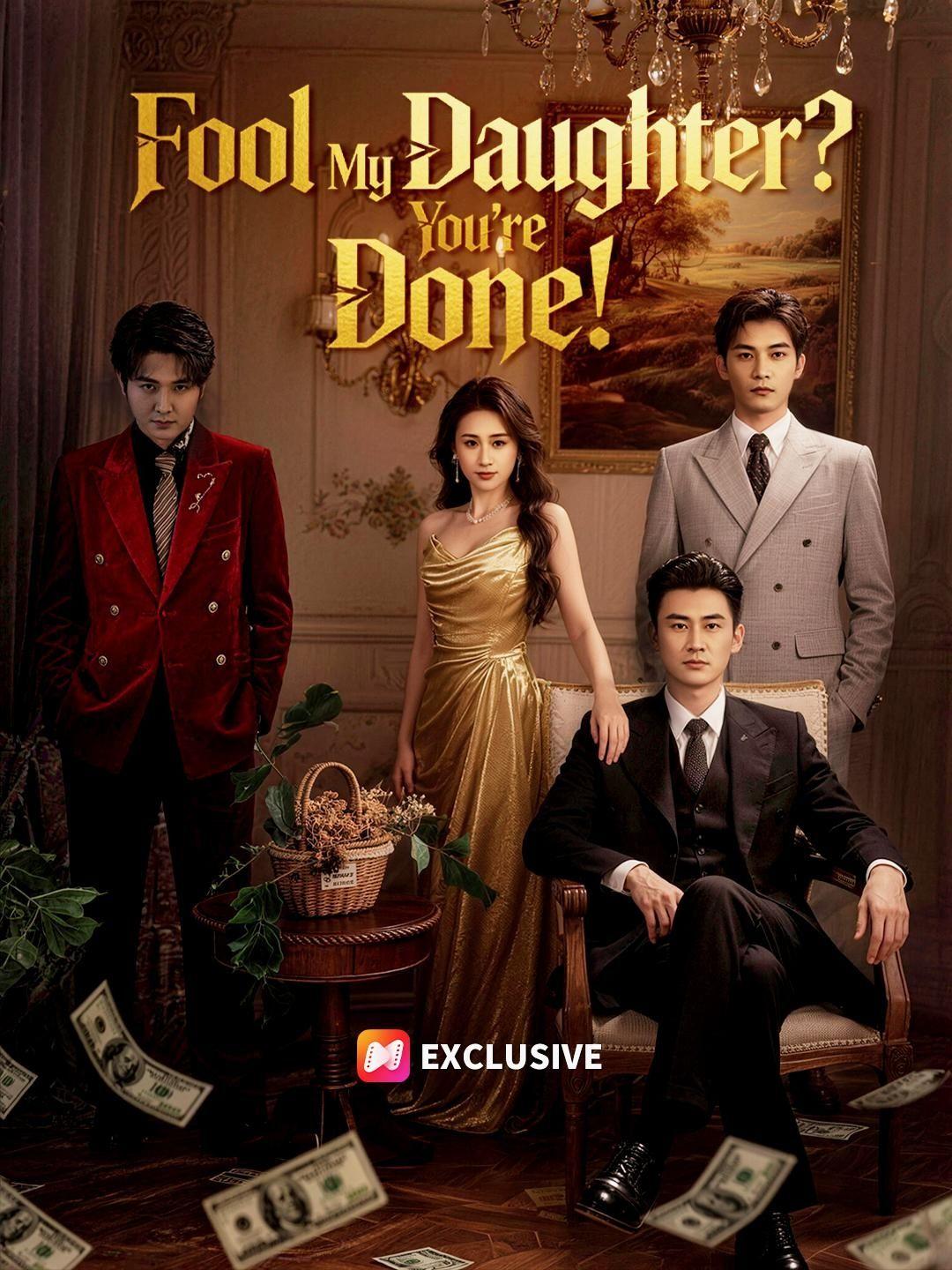
Lorraine shocks everyone by confessing her love for Quinn Carter, revealing she has secretly loved him for ten years and dreams of marrying him, despite her father's disapproval and the crowd's disbelief.Will Quinn accept Lorraine's heartfelt confession, or will outside forces tear them apart?


Recommended for you


Divorced, but a Tycoon: When Gowns Speak Louder Than Vows
Let’s talk about the dress. Not just *a* dress—but *the* dress. The silver halter gown worn by Xiao Yu in Divorced, but a Tycoon isn’t costume design. It’s testimony. Every sequin is a bullet point in an indictment she never filed, every sheer panel a window into a truth others have spent years boarding up. The gown plunges just enough to suggest vulnerability, but the structured bodice—rigid, almost architectural—says: *I am not broken*. And those pink feathers? They’re not frivolous. They’re camouflage. Soft, fluffy, seemingly harmless—until you realize they’re positioned to obscure her hands, which, in several frames, are tightly clasped, nails biting into her own palms. She’s not nervous. She’s *contained*. And the way the light hits her—especially during the pivotal exchange with Li Wei—creates a halo effect around her hair, pulled back in a severe, elegant knot. It’s not divine. It’s defiant. She’s not asking for forgiveness. She’s demanding acknowledgment. And the room? The room is complicit. Look closely at the background guests during her monologue: a man in a navy blazer subtly adjusts his cufflink, avoiding eye contact; a woman in a lavender mermaid gown grips her clutch so hard the rhinestones dig into her palm; another, older, in a sheer silver overlay, mouths the word *finally* without sound. They’ve all heard rumors. They’ve all placed bets. Now, they’re watching the payout. Li Wei, meanwhile, is a study in controlled collapse. His white suit—custom, no doubt, with mother-of-pearl buttons and a chain-linked lapel pin that reads like a secret code—is pristine, but his posture tells a different story. His shoulders are slightly hunched, not from age, but from the weight of expectation. When he speaks, his voice is low, measured, the kind of tone used to negotiate hostile takeovers—not to address a daughter-in-law who’s just dropped a truth bomb in the middle of a charity gala. His wife, Mrs. Chen, is the true tragedy here. She doesn’t cry. She doesn’t scream. She *stares*—not at Xiao Yu, but at her husband’s profile, as if trying to reconcile the man she married with the stranger standing before her. Her hand remains on his sleeve, but her fingers have gone slack. She’s not holding him up anymore. She’s just… remembering how to let go. And when she finally speaks—her voice cracking only once, like fine porcelain under pressure—she doesn’t say *how could you?* She says *what did you promise her that you never promised me?* That line, delivered with quiet devastation, lands harder than any slap. Because it reframes everything. This isn’t about infidelity. It’s about broken contracts. Unspoken vows. The silent agreements that hold families together—and how easily they dissolve when one party decides the terms were never fair to begin with. Then there’s Zhou Lin. Oh, Zhou Lin. The quiet son. The overlooked heir. While everyone else is shouting or weeping, he stands apart, hands in pockets, gaze fixed on Xiao Yu with an intensity that borders on reverence. His gray plaid three-piece suit is understated, but the floral tie—navy with tiny white blossoms—and the delicate gold-and-emerald lapel pin suggest a man who values subtlety over spectacle. He doesn’t interrupt. He doesn’t defend. He simply *witnesses*. And in doing so, he becomes the moral center of the chaos. When Xiao Yu’s voice wavers—just for a fraction of a second—he shifts his weight, imperceptibly, as if bracing himself to catch her if she falls. Later, when the tension peaks and Li Wei takes a step back, Zhou Lin steps *forward*, not toward his father, but beside Xiao Yu. He doesn’t speak. He doesn’t need to. His presence is the counterpoint to every lie that’s been told tonight. And the camera lingers on their proximity—not touching, but aligned. Parallel. Unified. In that moment, Divorced, but a Tycoon reveals its core thesis: sometimes, the strongest bonds aren’t forged in marriage, but in shared silence, in mutual recognition, in the quiet courage of standing beside someone when the world expects you to turn away. The supporting cast elevates this from melodrama to myth. Consider the woman in the gold-sequined off-the-shoulder gown—let’s call her Mei Ling—who watches the confrontation with wide, unblinking eyes. Her expression isn’t shock. It’s *recognition*. She knows Xiao Yu. Not as a rival, but as an ally. Later, she pulls another guest aside—this one in a floral strapless number with violet sleeves—and whispers something that makes the other woman’s face go pale. Their exchange is brief, but the subtext screams: *She’s not who you think she is.* And then there’s the man in the beige double-breasted coat, laughing too loudly, gesturing wildly—clearly trying to defuse the situation, but his eyes are darting, calculating. He’s not a friend. He’s a broker. A dealmaker. And he’s already drafting the terms of the next chapter in this saga. The film understands that in high-society circles, every interaction is a transaction, every smile a negotiation, every tear a potential leverage point. What makes Divorced, but a Tycoon so gripping isn’t the plot twists—it’s the *texture* of the emotions. The way Xiao Yu’s earrings catch the light when she tilts her head, turning her face into a mosaic of reflected truth. The way Li Wei’s cufflink glints when he raises his hand to silence the room—not with authority, but with exhaustion. The way Mrs. Chen’s pearl necklace seems heavier with every passing second, as if the weight of decades of silence is finally pressing down on her collarbone. This isn’t just a story about divorce. It’s about the architecture of power within families—how love is weaponized, how loyalty is priced, how dignity is the last thing people are willing to surrender. And Xiao Yu? She doesn’t want revenge. She wants *accountability*. She wants the room to see what they’ve chosen to ignore. And by the end of the sequence—when she turns, not away from Zhou Lin, but *toward* him, her smile returning, softer this time, tinged with hope—the audience realizes: the divorce wasn’t the end. It was the ignition. The real story begins now. With two people who refused to be collateral damage. With a gown that spoke louder than vows ever could. And with a title—Divorced, but a Tycoon—that isn’t irony. It’s prophecy.
Divorced, but a Tycoon: The Red Carpet Betrayal
In the glittering, marble-clad lobby of what appears to be a five-star hotel—its chandelier shaped like a flock of silver cranes suspended mid-flight—the air hums with tension thicker than the perfume wafting from sequined gowns. This isn’t just a gala; it’s a battlefield disguised as elegance, and every glance, every tremor of the lip, every clenched fist hidden behind a feathered stole tells a story far more intricate than any script could dictate. At the center stands Li Wei, the man in the white double-breasted suit—impeccable, ostentatious, yet visibly fraying at the seams. His lapel pin, a sapphire-encrusted brooch, glints like a warning beacon, while the black silk pocket square, folded with military precision, seems less like an accessory and more like a shield. Beside him, his wife—let’s call her Mrs. Chen—clutches his arm not with affection, but with the desperation of someone holding onto a sinking raft. Her navy qipao, adorned with Fendi’s iconic FF motif in gold-brown wool, is both armor and albatross: traditional enough to signal legitimacy, bold enough to scream defiance. Her pearl necklace, heavy and unyielding, sits like a collar around her throat. She doesn’t speak much, but when she does—her voice tight, lips painted crimson—she doesn’t plead. She *accuses*. And the crowd feels it. Every guest within earshot stiffens, eyes darting between Li Wei’s furrowed brow and the young woman in the silver halter gown who stands opposite them like a comet about to collide with the sun. That young woman—Xiao Yu—is the fulcrum of this entire spectacle. Her dress, encrusted with thousands of hand-sewn crystals, catches light like shattered mirrors, reflecting not just the chandeliers above, but the fractured expectations of everyone present. She wears pink ostrich feathers draped over her arms—not for warmth, but as a visual metaphor: soft on the outside, fiercely protective underneath. Her earrings, long and cascading, sway with each subtle tilt of her head, as if even her jewelry is engaged in the performance. When she speaks, her tone is deceptively sweet, almost melodic—but there’s steel beneath the sugar. She doesn’t raise her voice. She doesn’t need to. Her words land like dropped coins in a silent well: clear, resonant, and impossible to ignore. In one moment, she smiles—a genuine, dimpled thing that disarms the room—only to pivot seconds later into a look of wounded disbelief, her lower lip trembling just enough to make the audience lean forward. This isn’t acting. It’s *revelation*. And the camera knows it. Close-ups linger on her knuckles, pale where they grip the edge of her shawl; on the slight dilation of her pupils when Li Wei’s son—Zhou Lin, the quiet man in the charcoal-gray double-breasted suit with the paisley tie—steps forward, hands in pockets, expression unreadable. Zhou Lin watches Xiao Yu not with lust or resentment, but with something far more dangerous: recognition. He sees her not as a threat to his family, but as the missing piece he never knew was absent. His stillness is louder than anyone’s outburst. Meanwhile, the secondary players are anything but background. Behind Xiao Yu, two women in iridescent gowns—one in holographic lavender, the other in sheer silver—exchange glances that speak volumes. Their fingers brush, not in comfort, but in conspiracy. One whispers something sharp into the other’s ear, and the recipient’s eyes widen, not with shock, but with dawning comprehension. They’re not just guests. They’re witnesses—and possibly co-conspirators. Then there’s the woman in the white gown with gold-sequin shoulders, who enters late, smiling serenely as if she’s just stepped off a runway rather than into a warzone. Her entrance shifts the gravity of the room. People part for her. Li Wei’s posture straightens involuntarily. Even Xiao Yu’s breath hitches. Who is she? A former lover? A business partner? A sister no one knew existed? The film—Divorced, but a Tycoon—deliberately withholds her identity, letting ambiguity do the heavy lifting. Her smile is polite, but her eyes are calculating. She doesn’t join the confrontation. She *oversees* it. Like a queen observing a duel among courtiers. The real genius of Divorced, but a Tycoon lies not in the dialogue—though the lines are razor-sharp—but in the silences. When Li Wei finally turns away from Xiao Yu, his jaw set, his hand tightening on Mrs. Chen’s wrist until her knuckles whiten, the camera holds on her face. Not his. Hers. Because the betrayal isn’t just hers—it’s *hers*, too. She knew. Or suspected. And she stayed. Why? Power? Fear? Love twisted beyond recognition? The film refuses to answer. Instead, it cuts to Zhou Lin, who finally moves—not toward his father, but toward Xiao Yu. He doesn’t touch her. He simply stands beside her, shoulder to shoulder, and says three words: “I believe you.” And in that moment, the red carpet beneath them doesn’t feel like a path to ceremony anymore. It feels like a fault line. The guests murmur. Someone drops a champagne flute. The sound echoes like a gunshot. The lighting, warm and golden just moments ago, now casts long, jagged shadows across the marble floor. This isn’t a divorce drama. It’s a detonation disguised as dinner theater. And the most chilling detail? No one leaves. They stay. They watch. They record. Because in the world of Divorced, but a Tycoon, truth isn’t whispered in private rooms—it’s performed under spotlights, for an audience that’s already complicit. Xiao Yu’s final look—half-smile, half-warning—as she glances past Zhou Lin toward the entrance, where a new figure has just appeared… that’s when you realize: this isn’t the climax. It’s the overture. The real game hasn’t even begun. And we, the viewers, are already seated in the front row, breath held, waiting for the next act to drop.