



Painful Divorce
Quinn Carter finalizes his divorce with Sophie Lynn, leaving with nothing as he refuses to continue a marriage devoid of love and dignity, despite Sophie's desperate pleas to reconsider.Will Quinn's departure lead to a dramatic revelation of his true identity?


Recommended for you


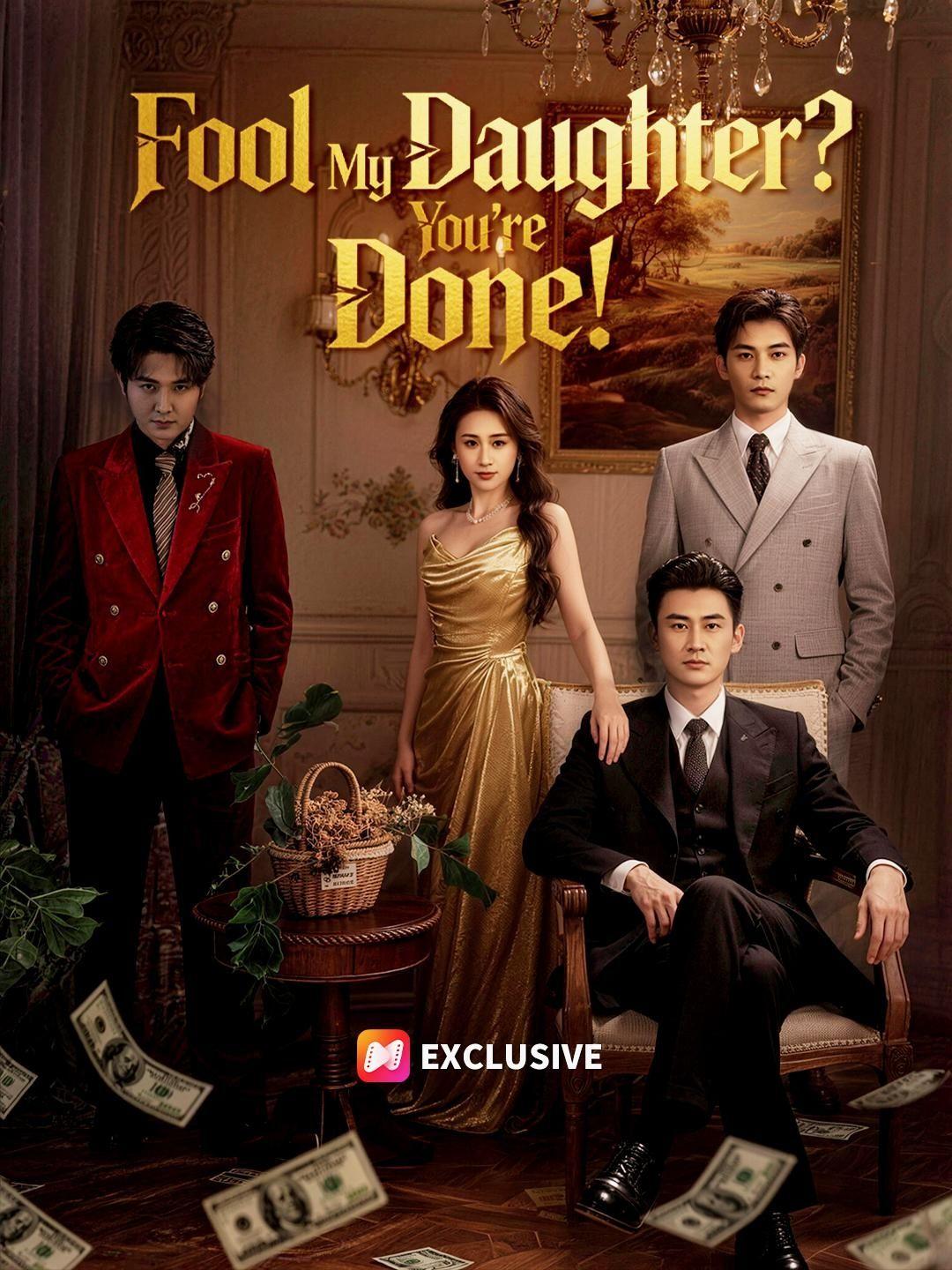
Divorced, but a Tycoon: When White Coats Meet White Lies
Let’s talk about the white coat. Not the lab kind. The *Lin Xiao* kind—long, double-breasted, adorned with a single pearl-embellished camellia brooch pinned precisely over the left breastbone, as if marking the location of a heart she’s decided to quarantine. In *Divorced, but a Tycoon*, clothing isn’t costume. It’s confession. That coat isn’t fashion; it’s armor. And when she steps into the frame beside Chen Wei—his camel overcoat warm, his tie patterned like a map of old battles—we don’t see a couple. We see two diplomats negotiating surrender terms in a neutral zone: the snow-dusted sidewalk outside the Civil Affairs Bureau. The irony is thick enough to choke on: the sign reads ‘Marriage Registration Office,’ yet what unfolds is a ritual of dissolution, performed with the solemnity of a state funeral. Chen Wei offers the file folder—not with hesitation, but with the weary precision of a man handing over keys to a house he no longer lives in. The red double happiness seals are still vivid, still hopeful, still *wrong*. Lin Xiao takes it. Her fingers don’t tremble. Her voice, when she speaks, is low, modulated, almost clinical—‘You kept the original copy?’ Not ‘Why?’ Not ‘How could you?’ Just a factual inquiry, as if verifying inventory. That’s the chilling brilliance of *Divorced, but a Tycoon*: it strips romance of its glitter and reveals the machinery underneath. Love, here, is a contract with clauses nobody read until it was too late. The camera cuts between their faces—not in rapid succession, but in slow, deliberate pulses, like a heartbeat slowing down. Lin Xiao’s eyes narrow slightly when Chen Wei mentions ‘the lawyer’s draft.’ She doesn’t flinch. She *calculates*. Her lips part, not to argue, but to dissect: ‘Clause 7B—alimony tied to quarterly dividends. You knew I’d reject that.’ And he does. He nods, once, a gesture so small it might be missed, but it’s everything. He *knew*. He filed it anyway. Because in their world, fairness isn’t emotional—it’s actuarial. Later, the scene shifts. Not to a courtroom, not to a therapist’s office, but to a high-end hotel corridor, where marble reflects the glow of recessed lighting like liquid gold. Chen Wei stands with Su Mian, her fur stole draped like a crown, her smile calibrated for Instagram and inheritance lawyers alike. She leans into him, murmuring something about ‘tonight’s gala,’ and he responds with a polite nod—but his eyes are elsewhere. Specifically, they’re tracking Lin Xiao, who enters moments later in a mustard-yellow dress, pearls framing her collar like a halo of restraint. This time, she’s with Li Zhe, whose white suit is less ‘business’ and more ‘I’ve already won, so I can afford to be kind.’ He doesn’t touch her waist. He doesn’t steer her. He simply walks beside her, his presence a quiet counterpoint to Chen Wei’s performative confidence. And then—the collision. Not physical. Emotional. Lin Xiao sees Chen Wei. Her breath catches—not in pain, but in recognition. Like spotting a familiar landmark in a city you’ve sworn never to revisit. She doesn’t look away. She holds his gaze, and for three full seconds, the film holds its breath. In that silence, we learn everything: she’s not bitter. She’s *free*. Her expression isn’t triumphant; it’s peaceful. The kind of peace that comes after you’ve stopped begging the universe for a different ending. Chen Wei, meanwhile, looks like a man who’s just been served papers he didn’t know were pending. His hand drifts toward his pocket—where his phone, his watch, his power reside—and then stops. He doesn’t reach. He *retracts*. That’s the moment *Divorced, but a Tycoon* transcends melodrama. It becomes anthropology. We’re not watching a breakup. We’re watching the autopsy of a marriage that died not with a bang, but with a series of perfectly reasonable compromises. The film’s genius is in its refusal to villainize. Chen Wei isn’t evil. He’s efficient. Lin Xiao isn’t saintly. She’s strategic. And Su Mian? She’s not the ‘other woman’—she’s the logical next step in a life optimized for stability, not spark. When Li Zhe places a hand on Lin Xiao’s elbow—not possessively, but as if steadying her against an invisible current—Chen Wei’s knuckles whiten. Not out of jealousy. Out of dawning horror: he realizes he never learned how to *hold* someone without owning them. The final shot of the sequence isn’t of Lin Xiao walking away. It’s of Chen Wei, alone in the elevator, staring at his reflection in the brushed steel wall. His tie is slightly crooked. His hair, usually immaculate, has a stray strand falling over his forehead. For the first time, he looks human. Flawed. *Small*. And that’s when the title hits you—not as irony, but as truth: *Divorced, but a Tycoon*. He has everything except the one thing money can’t buy: the courage to be uncertain. The film doesn’t end with reconciliation or revenge. It ends with possibility. Lin Xiao steps into the elevator with Li Zhe, her back straight, her chin lifted—not defiant, but resolved. Behind her, the doors close, sealing Chen Wei in a box of his own making. Outside, the city gleams, indifferent. *Divorced, but a Tycoon* isn’t about losing love. It’s about realizing you were never really holding it to begin with. You were just afraid to admit the vase was empty all along. The snow outside the bureau has melted by now. But some frost, once settled deep in the bones, takes longer to thaw. And that—*that*—is where the real story begins.
Divorced, but a Tycoon: The Snowfall That Shattered Their Vows
The opening shot of *Divorced, but a Tycoon* is deceptively serene—a man in a camel coat stands alone outside the Civil Affairs Bureau Marriage Registration Office, snow dusting the pavement like powdered sugar on a broken cake. His posture is rigid, hands buried in pockets, eyes fixed on the revolving door as if waiting for judgment rather than a spouse. Then she arrives: Lin Xiao, draped in white wool, her long black hair cascading over one shoulder like ink spilled across parchment. She doesn’t smile. She doesn’t rush. She walks with the quiet certainty of someone who’s already made up her mind—and that decision isn’t love. When he extends the file folder—its surface stamped with three red double happiness characters, a cruel irony—the camera lingers on her fingers as they brush his palm. Not a handshake. Not a rejection. A transaction. The folder isn’t just paperwork; it’s a relic of a marriage that never truly lived. In that moment, the snow stops falling, and the world narrows to the space between their breaths. Lin Xiao’s expression shifts from stoic to stunned—not because she’s surprised, but because she’s remembering how he used to hold her hand when they walked past this same building two years ago, before the boardroom meetings replaced dinner dates and silence became their native tongue. Her earrings, delicate pearl-and-crystal drops, catch the weak winter light as she blinks back tears she refuses to shed. He watches her, mouth slightly open, as if trying to recall the last time he heard her laugh without rehearsing it first. There’s no shouting. No dramatic collapse. Just two people standing in the cold, holding the ghost of a promise they both signed but neither believed in anymore. The film’s genius lies in what it *doesn’t* show: no flashback montage, no tearful confession in a rain-soaked alley. Instead, we get micro-expressions—the way Lin Xiao’s thumb rubs the edge of the folder like she’s smoothing a wound, the way Chen Wei (his name finally spoken aloud by a passing clerk) flinches when she touches his sleeve, not to stop him, but to anchor herself as she says, ‘I’m not signing today.’ Not ‘I won’t.’ Not ‘Never.’ Just ‘Not today.’ That tiny linguistic pivot is the entire emotional architecture of *Divorced, but a Tycoon*. It’s not about divorce. It’s about the unbearable weight of choosing *not* to end something that’s already dead. Later, inside a luxury hotel lobby—marble floors gleaming under golden chandeliers—we see Chen Wei again, now in a tailored black double-breasted suit, standing beside a different woman: Su Mian, radiant in ivory fur, her smile polished like a museum artifact. She glances at his wristwatch, then at him, then back at the elevator doors, her eyes bright with anticipation. But Chen Wei’s gaze drifts—not toward the elevator, but toward the entrance, where Lin Xiao once stood. His jaw tightens. A flicker of something raw crosses his face: regret? Longing? Or just the dull ache of habit? Meanwhile, Lin Xiao reappears—not in white this time, but in mustard yellow silk, pearls lining her collar like a necklace of unspoken truths. She’s with another man, Li Zhe, younger, sharper, his white suit crisp as a freshly printed contract. He places a hand on her arm—not possessive, but protective—as if shielding her from the very air around Chen Wei. And here’s where *Divorced, but a Tycoon* reveals its true texture: the tension isn’t between exes. It’s between versions of oneself. Lin Xiao isn’t angry. She’s *relieved*. Her voice, when she speaks to Li Zhe, is steady, warm, almost amused—as if she’s finally stepped out of a fog she didn’t realize she’d been breathing for years. Chen Wei, meanwhile, looks less like a tycoon and more like a man who’s just realized he’s been living in a house built on sand. The film’s title isn’t ironic. It’s diagnostic. ‘Divorced, but a Tycoon’ isn’t a punchline—it’s a diagnosis of modern love: we accumulate wealth, status, even children, while quietly divorcing our capacity for vulnerability. The 30-day cooling-off period text flashing on screen isn’t bureaucratic filler; it’s the film’s central metaphor. Thirty days to decide whether to burn the bridge or walk back across it—knowing full well the fire has already consumed the middle. What makes this sequence unforgettable is how it weaponizes stillness. No music swells. No camera shakes. Just the soft crunch of snow under boots, the hum of an elevator ascending, the faint clink of Su Mian’s bracelet as she adjusts her sleeve. In those silences, we hear everything: the echo of arguments never had, the weight of apologies never given, the terrifying freedom of walking away from a life you built but never loved. Lin Xiao doesn’t look back as she leaves the bureau. But Chen Wei does. And in that glance—brief, involuntary, devastating—we understand the tragedy isn’t that they’re divorced. It’s that he still thinks she’s the only one who could’ve saved him from himself. *Divorced, but a Tycoon* doesn’t ask whether love can survive success. It asks whether success ever let love in the door to begin with.