



A Mother's Mistake
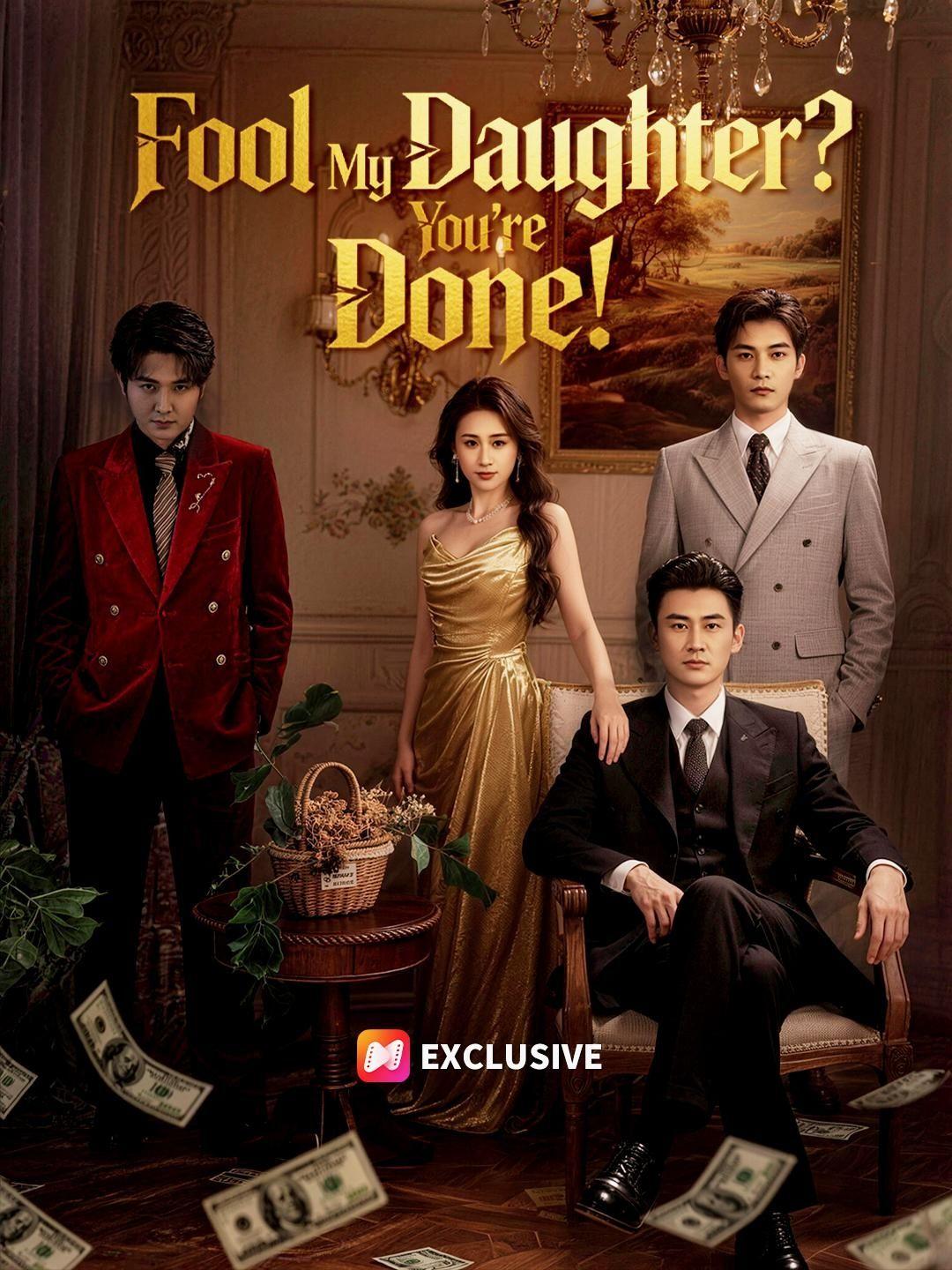
Sophie Lynn's ignorance of her daughter's lactose intolerance leads to a dangerous situation when she feeds her gold-leaf ice cream, causing a health scare and revealing her lack of care. This incident prompts her daughter to express her longing for Quinn, leaving Sophie regretful of her past actions.Will Sophie be able to mend her relationship with her daughter and Quinn?


Recommended for you


Divorced, but a Tycoon: When a Phone Call Rewrites the Script
Let’s talk about the phone. Not just any phone—but the sleek, dark rectangle held in Lin Xiao’s trembling fingers as she sits beside her daughter’s hospital bed, the blue sheets stark against her ivory dress. That phone isn’t a device; it’s a detonator. And the name on the screen—Quinn Carter—isn’t just a contact. It’s a confession, a lifeline, a betrayal, all wrapped in three syllables. In *Divorced, but a Tycoon*, technology doesn’t distract from emotion; it amplifies it. The way Lin Xiao’s thumb hovers before tapping ‘accept’—that half-second of hesitation—is worth more than ten pages of dialogue. Her lips part slightly, her breath catches, and for the first time since the hallway confrontation, her eyes soften. Not with hope, exactly. With recognition. As if she’s finally allowed herself to remember who Quinn Carter *is*, beyond the title ‘ex-husband’ or the label ‘absent father’. But rewind. Before the phone, there was the corridor. Before the corridor, there was the door. Room 307. Dr. Chen Wei emerges, clipboard in hand, face tight with professional composure—but his knuckles are white. Lin Xiao stands waiting, not pacing, not fidgeting—just *being*, like a statue carved from regret and resilience. Their conversation unfolds in fragments: he says ‘prognosis is guarded’; she replies ‘I know what guarded means’; he glances at the door behind him, and she follows his gaze—not with suspicion, but with sorrow. Because she knows what’s behind that door isn’t just a patient. It’s her past, her present, and possibly her future—all lying still under a hospital blanket. The genius of *Divorced, but a Tycoon* lies in how it refuses to villainize anyone. Dr. Chen Wei isn’t cold; he’s trapped. Lin Xiao isn’t bitter; she’s exhausted. And the real tension isn’t between them—it’s between what they say and what they *withhold*. Then comes the pivot: the little girl, Mei Ling, who appears not as a prop, but as the narrative’s moral compass. Dressed in that navy pinafore with oversized lace collar—childhood innocence armored against adult chaos—she walks into a room where Qin Yu kneels, his expression shifting from paternal warmth to stunned realization. He’s not the tycoon yet. Not in this scene. He’s just a man who thought he’d moved on, until a child’s question—‘Why does Mommy cry when she looks at your picture?’—shatters his curated reality. The camera lingers on his hands: one resting on his knee, the other unconsciously tracing the edge of his cardigan pocket, where a folded photo might still reside. Meanwhile, Lin Xiao watches from the doorway, arms crossed, posture rigid—not defensive, but *waiting*. Waiting for him to choose. Waiting for the world to tip. And it does. Back in the hospital room, Mei Ling’s voice is small but unwavering: ‘You promised you’d tell me when he came back.’ Lin Xiao doesn’t answer immediately. Instead, she strokes her daughter’s hair, her thumb brushing the temple—so tender, so practiced. Then she reaches for the phone. The screen lights up. ‘Quinn Carter’. No ‘Mr.’, no ‘Dad’, just the name, raw and unadorned. When the call connects, Lin Xiao doesn’t speak first. She listens. And in that silence, we hear everything: the rustle of hospital curtains, the beep of the IV pump, the distant murmur of nurses, and beneath it all, the echo of a marriage that ended not with fireworks, but with a signed document and a suitcase left by the door. *Divorced, but a Tycoon* understands that divorce isn’t an endpoint—it’s a comma. A pause before the next clause of a life that refuses to be edited. What elevates this sequence isn’t the plot twist—it’s the texture. The way Lin Xiao’s dress catches the light as she leans forward, the faint smudge of mascara under her eye she hasn’t bothered to fix, the way Dr. Chen Wei’s tie is slightly crooked, as if he rushed here straight from another crisis. These details scream authenticity. This isn’t soap opera; it’s psychological realism draped in high-fashion minimalism. And Quinn Carter’s voice on the other end of the line? We don’t hear it. We don’t need to. Lin Xiao’s expression tells us everything: a slow exhale, a blink held a beat too long, then the faintest upward curve of her lips—not happiness, but acknowledgment. He’s coming. And when he arrives, the hospital won’t just treat a sick child. It will witness the reassembly of a family—one fractured piece at a time. *Divorced, but a Tycoon* doesn’t ask if love can be rebuilt. It asks: what happens when the people who broke it are the only ones who know how to fix it?
Divorced, but a Tycoon: The Hospital Corridor That Changed Everything
The opening aerial shot of the hospital—its white facade punctuated by red Chinese characters and a bold red cross—sets the stage not just for medical drama, but for emotional reckoning. This isn’t just any hospital; it’s the kind where reputations are dissected as carefully as lab samples, and where a single hallway conversation can unravel years of silence. Enter Lin Xiao, dressed in an ivory wrap dress with a delicate crystal brooch at the waist—a garment that whispers elegance but screams vulnerability. Her posture is poised, yet her fingers twist subtly at her sides, betraying the storm beneath. She walks down the corridor like someone who’s rehearsed every step, only to be intercepted by Dr. Chen Wei, whose white coat is crisp, his stethoscope dangling like a badge of authority—and perhaps, guilt. Their exchange is a masterclass in subtext. No shouting, no melodrama—just clipped sentences, micro-expressions, and the unbearable weight of what’s left unsaid. Dr. Chen Wei holds a black folder like a shield, his eyes darting between Lin Xiao’s face and the door marked ‘307’. He speaks quickly, defensively, gesturing with his free hand as if trying to physically push back the truth. Lin Xiao listens, lips parted, breath shallow—not because she’s shocked, but because she’s been waiting for this moment. Her silence isn’t passive; it’s strategic. Every blink, every slight tilt of her head, signals she already knows more than he thinks. When he says, ‘It’s not what you think,’ she doesn’t flinch. Instead, she exhales—softly, deliberately—as if releasing a burden she’s carried too long. That’s when the camera lingers on her eyes: glistening, but not crying. Not yet. What makes *Divorced, but a Tycoon* so compelling here is how it weaponizes clinical sterility against raw humanity. The hallway gleams under fluorescent lights, polished floors reflecting distorted versions of the two figures—like their relationship, fractured and refracted. Behind them, a framed board reads ‘Medical Team’, but the real team is invisible: the child, the ex-husband, the secret diagnosis. And then—the cut. A sudden shift to a different setting: warm lighting, soft textures, a little girl in a navy pinafore with lace collar, standing before a man in a beige cardigan—Qin Yu, the quiet storm of the series. His expression shifts from gentle concern to stunned disbelief as the girl tugs his sleeve, whispering something that makes his jaw lock. In the background, blurred but unmistakable, stands Lin Xiao—now in a white coat of her own, observing like a ghost haunting her own life. Is she a doctor? A mother? A former wife returning to claim what was never truly hers? The ambiguity is deliberate. *Divorced, but a Tycoon* thrives in these liminal spaces—between roles, between truths, between love and duty. Later, we see Lin Xiao in the hospital room, kneeling beside the bed where the same little girl lies, pale but alert, wearing striped pajamas and an IV line taped to her wrist. Lin Xiao’s hands cradle the child’s—gentle, reverent, almost ritualistic. The girl looks up, voice small but clear: ‘Did Daddy come?’ Lin Xiao hesitates. Not a lie, not quite the truth—just a pause heavy enough to fill the room. Then, she pulls out her phone. The screen glows: ‘Contact: Quinn Carter’. A name that rings with foreignness, with distance, with possibility. She taps once. The call connects. Her expression shifts—not relief, not joy, but something sharper: resolve. As golden sparkles flicker across the frame (a stylistic flourish unique to *Divorced, but a Tycoon*’s visual language), we realize this isn’t just about illness. It’s about inheritance—of blood, of secrets, of power. Quinn Carter isn’t just a contact; he’s the variable no one anticipated. The man who walked away, now summoned not by love, but by necessity. And Lin Xiao? She’s no longer the woman in the hallway. She’s the architect of the next act. The hospital was never just a setting—it was the battlefield where identities are stripped bare, and where *Divorced, but a Tycoon* proves that sometimes, the most dangerous diagnoses aren’t written in medical charts, but in the silences between heartbeats.