



Divorce Ultimatum
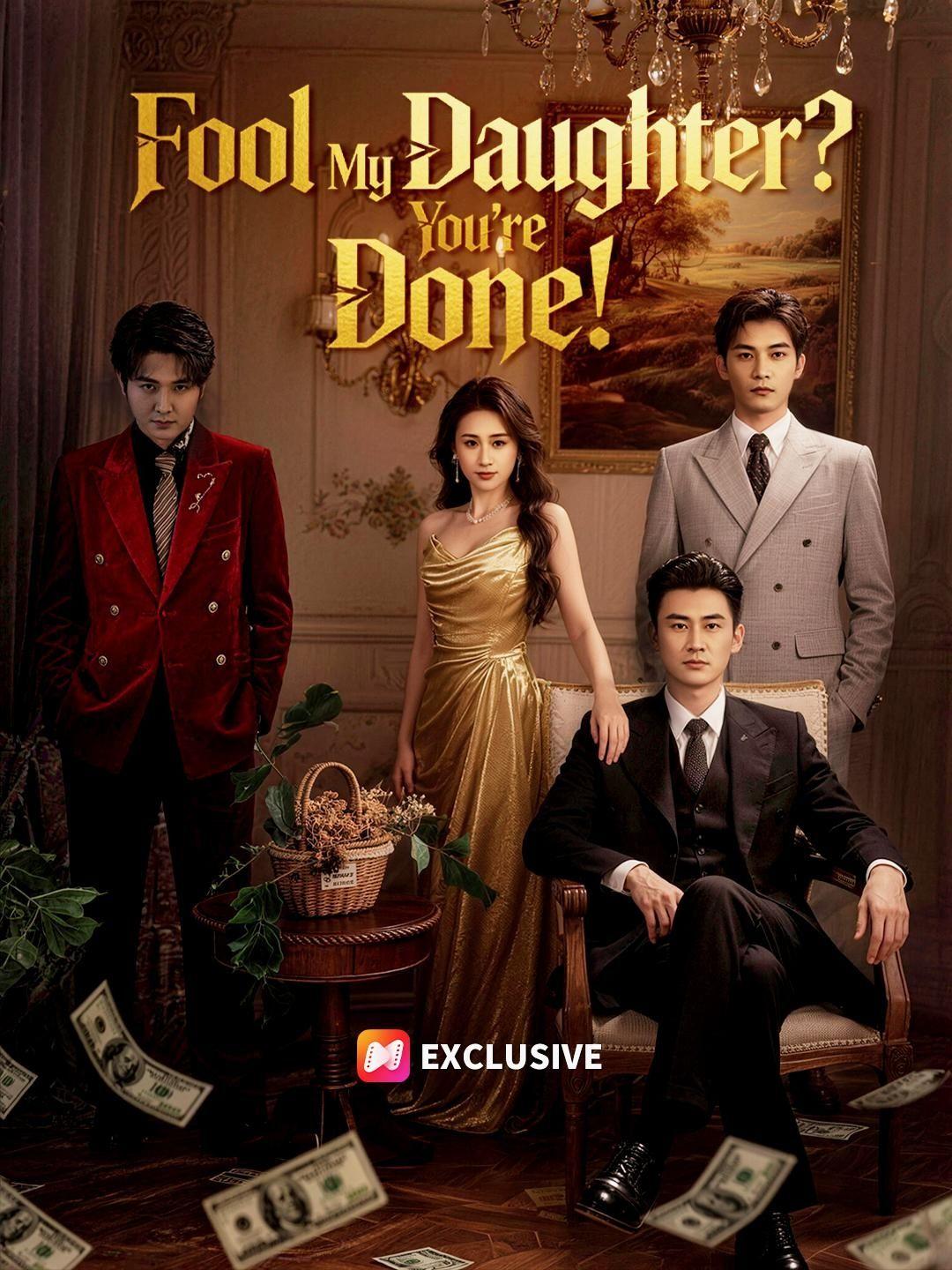
Sophie pleads with Quinn not to divorce her, fearing she will lose custody of Celina. Quinn remains firm on divorcing, revealing his readiness to move on and love someone new. Meanwhile, Simon manipulates Sophie into meeting him under the pretense of cutting ties, raising suspicions about his true intentions.Will Sophie fall into Simon's trap at Pearl Restaurant?


Recommended for you


Divorced, but a Tycoon: When the Certificate Isn’t Red—It’s Ash
Let’s talk about the color red. Not the crimson of passion, nor the scarlet of shame—but the specific, bureaucratic red of a Chinese divorce certificate, held aloft like a surrender flag in the frozen courtyard of the Civil Affairs Bureau. In *Divorced, but a Tycoon*, that little booklet isn’t just paperwork; it’s a detonator. And the explosion? It doesn’t roar. It whispers—through Lin Xiao’s choked breath, through Chen Wei’s clipped syllables, through the way Aunt Li’s knuckles whiten around her scarf as if strangling a memory. The genius of this scene lies not in what’s said, but in what’s withheld: the unsaid history, the unspoken debts, the love that curdled into obligation before anyone noticed the mold. Lin Xiao doesn’t scream when Chen Wei turns away. She exhales—long, slow, like releasing a lungful of poison—and that’s when the real tragedy begins. Because screaming means you still believe the world is listening. Silence means you’ve already accepted its indifference. Watch her hands. Always her hands. At 00:22, she clutches the green box—not tightly, but desperately, as if it contains the last working piece of her old life. By 01:18, she’s flipping through the divorce papers with clinical precision, her nails painted a muted taupe, no chipping, no tremor. This isn’t breakdown; it’s deconstruction. She’s dismantling the marriage like an engineer disassembling a faulty machine, searching for the defective component. Was it Chen Wei’s ambition, which grew louder than his affection? Was it Aunt Li’s constant commentary, served with steamed buns and judgment? Or was it Lin Xiao herself—her quiet endurance, mistaken for consent? The film refuses to answer. Instead, it offers micro-expressions: the way Chen Wei’s left eyebrow lifts when Lin Xiao mentions ‘the apartment,’ the flicker of guilt in his throat when he avoids her gaze, the way Jiang Tao’s smile tightens at the corners when he realizes Lin Xiao isn’t collapsing. He expected tears. He got resolve. And that terrifies him more than any outburst ever could. Zhou Mei’s scarf—gray, monogrammed, impossibly expensive—is a character in itself. It wraps around her neck like a question mark. Is she here to support Lin Xiao? To gloat? To document? Her eyes dart between the couple and her phone screen, capturing angles, framing shots, already editing the narrative for her WeChat Moments. She’s not a friend; she’s a curator of trauma. And Aunt Li—oh, Aunt Li. Her Miu Miu brooch gleams under the winter sun, a tiny monument to bourgeois morality. Her tears aren’t for Lin Xiao’s pain; they’re for the disruption of order. In her worldview, marriage is a contract signed in blood and rice wine, and divorce is a breach so severe it demands public penance. When she shouts, “You think you’re better than us?”, it’s not anger—it’s panic. Panic that the script has changed, and she hasn’t been given her lines. Her performance is flawless, but hollow. Lin Xiao hears it all, nods once, and walks toward the revolving door—not fleeing, but exiting. The symbolism is heavy, but earned: the door spins, reflecting fractured versions of her, until she steps through and becomes whole again, alone. Then—the phone call. At 01:22, Lin Xiao lifts her phone, and the world narrows to that silver rectangle. Her voice, when it comes, is calm. Too calm. “I’m outside. It’s over.” No embellishment. No drama. Just fact. And in that moment, *Divorced, but a Tycoon* reveals its true thesis: the most revolutionary act a woman can commit in a society that measures her worth by marital status is to state her reality without apology. Chen Wei, meanwhile, stares at the divorce certificate like it’s a foreign currency he can’t exchange. He flips it, checks the seal, mutters something about ‘finality,’ but his body language betrays him—he keeps glancing back, not at Lin Xiao, but at the entrance, as if expecting someone else to walk out and fix this. He’s not grieving the relationship; he’s mourning the convenience of it. The man who wore his suit like armor now looks exposed, vulnerable—not because he loved her, but because he relied on her silence. The final shot—Lin Xiao walking away, snow crunching under her boots, the green box tucked under her arm like a secret weapon—isn’t hopeful. It’s defiant. Hope implies waiting for rescue. Defiance means you’ve already built your own raft. The title *Divorced, but a Tycoon* isn’t ironic; it’s prophetic. Lin Xiao isn’t rich in cash (yet), but she’s wealthy in self-knowledge, in boundaries, in the terrifying freedom of choosing yourself. The snow will thaw. The city will forget this scene by next week. But Lin Xiao? She’ll remember the exact shade of red on that certificate—the color of endings, yes, but also the first brushstroke of a new canvas. And somewhere, Jiang Tao is already texting Zhou Mei: “She didn’t cry. What do we do now?” The answer, of course, is nothing. Some women don’t need saving. They just need space. And in *Divorced, but a Tycoon*, that space is paved with snow, lit by winter sun, and guarded by a woman who finally understands: the strongest marriages aren’t the ones that last forever. They’re the ones you walk away from, intact. The certificate may say ‘divorced,’ but her posture says ‘unbroken.’ And that, dear viewers, is the kind of plot twist no scriptwriter can fake—it’s lived. Real. Raw. And utterly, devastatingly beautiful.
Divorced, but a Tycoon: The Green Box That Shattered a Winter Promise
The snow-dusted pavement outside the Civil Affairs Bureau Marriage Registration Office isn’t just a backdrop—it’s a silent witness to emotional detonation. In *Divorced, but a Tycoon*, the opening sequence doesn’t begin with paperwork or legal jargon; it begins with a green box, held like a grenade by Lin Xiao, her fingers trembling not from cold, but from the weight of betrayal. She stands beside Chen Wei, impeccably dressed in his black overcoat and patterned tie—a man who looks like he’s attending a board meeting, not a divorce filing. His posture is rigid, his gaze fixed somewhere beyond her shoulder, as if already mentally relocating to his next penthouse. The contrast is brutal: Lin Xiao’s charcoal wool coat, lined with plush black fur, glitters faintly under the winter sun—like frost on broken glass—while her earrings, delicate pearl-and-crystal drops, catch the light each time she flinches. Her mouth opens, closes, then opens again—not in speech, but in disbelief. She’s not arguing; she’s trying to reconcile the man before her with the one who whispered ‘forever’ into her ear last spring. The camera lingers on her hands: one clutching the green box (a gift? A contract? A final gesture?), the other gripping the strap of her Louis Vuitton bag, knuckles white. This isn’t just a breakup. It’s an autopsy performed in broad daylight. Behind them, the secondary ensemble—Zhou Mei in her monogrammed gray scarf, eyes wide with performative shock, and Aunt Li, whose face contorts into a mask of righteous fury—adds layers of social theater. Zhou Mei’s scarf, draped with conspicuous luxury, isn’t just fashion; it’s armor. She watches Lin Xiao not with empathy, but with the detached curiosity of someone observing a malfunctioning appliance. When Aunt Li finally erupts—her voice cracking like thin ice, teeth bared in a grimace that suggests years of suppressed resentment—the scene shifts from private grief to public spectacle. Her coat bears a Miu Miu brooch, glittering like a badge of moral authority, yet her tears are theatrical, timed perfectly between Chen Wei’s dismissive sighs. She doesn’t cry for Lin Xiao; she cries for the narrative she’s been sold—that loyalty should be rewarded, that love should be transactional, that a woman who dares to leave must be punished. Meanwhile, the third man, Jiang Tao, in his camel coat and crossed arms, observes with the smirk of a man who’s seen this script play out before. He’s not part of the core conflict—he’s the audience surrogate, the cynical commentator who knows the real drama isn’t in the documents, but in the silences between them. The turning point arrives not with shouting, but with stillness. After the storm, Lin Xiao stands alone, snowflakes catching in her hair like misplaced stars. She pulls out her phone—not to call a friend, not to scream into voicemail—but to dial a number she’s memorized since college. Her voice, when it comes, is low, steady, almost serene: “It’s done.” No sobbing. No accusations. Just three words that land heavier than any legal clause. The camera zooms in on her face: her eyes, red-rimmed but dry, reflect not defeat, but recalibration. She’s not shattered; she’s reassembling. And then—Chen Wei walks away, holding the red divorce certificate like a receipt for a bad investment. He glances back once, not with regret, but with mild irritation, as if annoyed that the process took longer than scheduled. The irony is thick: he holds the proof of dissolution, while Lin Xiao holds the phone, the lifeline to whatever comes next. In *Divorced, but a Tycoon*, the real power shift isn’t signed on paper—it’s whispered into a receiver, in the quiet aftermath of a public collapse. The snow keeps falling, indifferent. The building’s glass facade reflects their fractured images, multiplying them into ghosts of what was. And somewhere, unseen, Jiang Tao chuckles into his coffee cup, already drafting the next chapter in his mental screenplay. Because in this world, heartbreak isn’t tragedy—it’s content. And Lin Xiao? She’s just beginning to understand that the most dangerous divorces aren’t the ones filed at the bureau… they’re the ones you survive alone, in the silence after the crowd disperses. The green box remains unopened. Maybe it never needed to be. Some truths are heavier than gifts. Some endings don’t require closure—they demand reinvention. And as the camera pans up to the sky, where clouds drift like forgotten promises, we realize: this isn’t the end of Lin Xiao’s story. It’s the first frame of her solo lead. *Divorced, but a Tycoon* isn’t about losing love—it’s about reclaiming agency, one icy step at a time. The snow will melt. The scars will fade. But the moment she chose herself? That stays forever.