



Humiliated and Cast Out
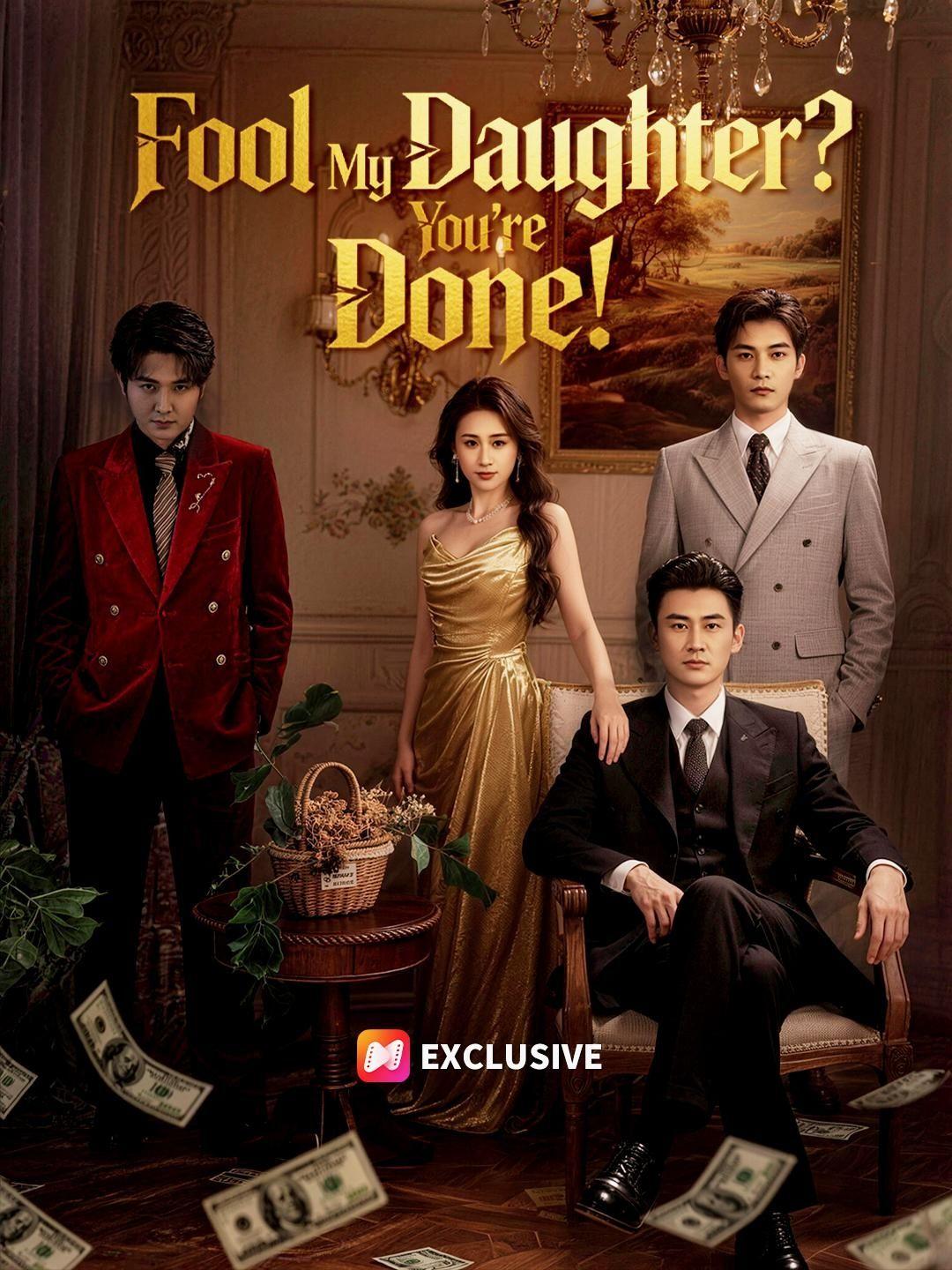
Quinn Carter is publicly humiliated and cast out by his wife Sophie Lynn's family, falsely accused of theft and told to leave. Despite attempts by some to apologize and reconcile, Quinn decides to walk away, revealing his deep hurt and determination to move on.Will Quinn ever return to face those who wronged him?


Recommended for you


Divorced, but a Tycoon: When the Boa Drops
The most potent weapon in the arsenal of high-society warfare isn’t a legal document or a stock portfolio—it’s a pink feather boa. In the meticulously staged chaos of *Divorced, but a Tycoon*, that single, fluffy accessory becomes the fulcrum upon which the entire narrative teeters. We see it first draped over Lin Xiao’s arm, a frivolous flourish against the stark geometry of her silver gown. But as the scene unfolds, its significance deepens, transforming from mere fashion into a psychological barometer, a shield, and finally, a banner of surrender. The video captures a sequence where the boa isn’t just worn; it’s *used*. Lin Xiao’s fingers, manicured and precise, tighten around its soft feathers, then loosen, then tighten again—a physical manifestation of her internal oscillation between rage and resignation. The camera, in a stroke of genius, focuses not on her face, but on that hand, the delicate pink plumes trembling in time with her pulse. It’s a detail that screams louder than any shouted dialogue could. This is the language of *Divorced, but a Tycoon*: the unspoken, the micro-gestures that reveal the seismic shifts happening beneath the surface of polished marble and forced smiles. The men in the room operate on a different frequency, their power expressed through the cut of a jacket, the weight of a watch, the deliberate placement of a pocket square. Mr. Zhang’s white coat is a fortress, its pristine whiteness a visual lie masking the complex, often ugly, realities of his world. His watch, a classic chronograph with a leather strap, is visible as he gestures, a constant reminder of time—time he believes he controls, time he has used to build his empire, time he now seeks to manipulate to dictate the future of Chen Wei and, by extension, Lin Xiao. His rings—two large, ornate stones, one emerald, one sapphire—are not adornments; they are signets, stamps of authority. When he places his hand on Chen Wei’s shoulder in a gesture meant to be paternal, it feels less like comfort and more like a claim of ownership, a physical assertion of his role as the architect of this painful tableau. Chen Wei, for his part, is a study in contained panic. His grey suit, while elegant, feels slightly too tight, as if his body is struggling to contain the emotional pressure building within. His eyes dart between Lin Xiao, Li Na, and Mr. Zhang, a silent triage of damage assessment. He is the nexus, the man whose choices have set this entire machine in motion, and the weight of it is visibly crushing him. His attempts at composure are admirable, but the slight tremor in his hand as he adjusts his cufflink betrays the fault lines running through his carefully constructed persona. Li Na’s presence is the emotional counterweight to the male posturing. Her gold gown is radiant, yes, but it’s the *way* she inhabits it that breaks the heart. She doesn’t command the space; she haunts it. Her posture is slightly stooped, not from weakness, but from the sheer exhaustion of carrying a grief that no amount of designer fabric can conceal. Her earrings, long and sparkling, seem to catch the light with a desperate urgency, as if trying to draw attention away from the hollow ache in her eyes. When she speaks—her voice, though unheard, is conveyed through the subtle movements of her lips and the quiver of her lower lip—it’s not with accusation, but with a bewildered sorrow. She’s not asking ‘Why?’; she’s asking ‘How could you let this happen?’ Her entire being radiates the quiet devastation of a woman who believed in the fairy tale, only to find herself standing alone on the red carpet, watching the prince walk away with the new princess. Her story in *Divorced, but a Tycoon* is the tragic subplot that gives the main conflict its moral gravity. She is the cost of the ambition that fuels Mr. Zhang and the indecision that paralyzes Chen Wei. The environment itself is a character. The Grand Celestial Hotel lobby is a monument to excess, its soaring ceilings and marble columns designed to dwarf the individual. Yet, in this context, it feels claustrophobic, the opulence becoming a gilded prison. The red carpet isn’t a path to glory; it’s a line in the sand, a demarcation between the ‘before’ and the ‘after’. Guests stand in carefully curated groups, their conversations hushed, their gazes sharp and analytical. They are not attendees; they are jurors, their collective judgment hanging in the air like incense smoke. The lighting is deliberately theatrical, casting dramatic shadows that elongate the figures, making them appear larger-than-life, yet simultaneously more isolated. A single, out-of-focus bouquet of white lilies on a nearby table serves as a cruel irony—a symbol of purity and new beginnings, placed amidst a scene of profound rupture. The true climax of this sequence isn’t a shout or a slap; it’s the moment Lin Xiao’s hand, still clutching the pink boa, slowly opens. The feathers spill outward, a cascade of softness against the hard lines of the room. It’s a release. A surrender of the last vestige of the performance. Her face, previously a mask of icy composure, finally allows the raw emotion to surface—a flash of anguish, a tear that doesn’t fall, but glistens on the edge of her lashes. This is the turning point. The boa, once a shield, is now discarded, leaving her exposed, vulnerable, and terrifyingly powerful in her authenticity. The camera pulls back, showing her standing alone on the red carpet, the epicenter of the storm, while the others—Mr. Zhang, Chen Wei, Li Na—remain locked in their own orbits of denial and despair. *Divorced, but a Tycoon* understands that the most revolutionary act in a world built on facades is not to fight, but to simply stop pretending. To let the boa drop. To stand, unadorned, in the wreckage of what was, and dare to imagine what could be. The final frame isn’t of a victory, but of a beginning. Lin Xiao doesn’t walk away; she *steps forward*, her gaze fixed not on the past, but on a horizon only she can see. The tycoon may be divorced, but the woman who emerges from this crucible? She’s no longer defined by his title. She’s forging her own.
Divorced, but a Tycoon: The Red Carpet Betrayal
The grand ballroom of the Grand Celestial Hotel hums with the low thrum of champagne flutes and whispered alliances. Crystal chandeliers shaped like frozen swans cast fractured light across marble floors, illuminating a scene that feels less like celebration and more like a battlefield dressed in sequins. At the center of it all, standing rigid on the crimson runner like a statue awaiting judgment, is Lin Xiao—her silver halter gown a masterpiece of controlled glitter, each sequin catching the light like a tiny, accusing eye. Her hair, swept into an elegant knot, frames a face that’s mastered the art of stillness, yet her eyes betray her: wide, dark, flickering between disbelief and a quiet, simmering fury. She holds a pink feather boa like a shield, its softness a cruel contrast to the tension coiling in her shoulders. This isn’t just a party; it’s the opening act of *Divorced, but a Tycoon*, where every smile hides a ledger entry and every handshake is a potential landmine. Across the aisle, Chen Wei stands with the practiced ease of a man who owns the room—or believes he does. His grey plaid three-piece suit is impeccable, the floral tie a subtle nod to old-world charm, the lapel pin—a delicate gold chain holding a green gem—whispering of inherited wealth and unspoken obligations. His expression is one of polite confusion, a mask so well-worn it might be part of his skin. He glances toward Lin Xiao, then away, his jaw tightening almost imperceptibly. He’s not the aggressor here; he’s the pivot point, the man caught between two tectonic plates of family expectation and personal desire. The air between them crackles, thick with the unsaid words of a marriage dissolved not with a bang, but with a series of cold, calculated silences. The camera lingers on his hands, clasped loosely in front of him, as if he’s trying to physically contain the storm brewing within. Then there’s Mr. Zhang, the patriarch, a force of nature in a blinding white double-breasted coat. His presence doesn’t fill the room; it *redefines* it. The blue sapphire brooch at his throat isn’t jewelry; it’s a declaration of sovereignty. His gestures are expansive, theatrical, his voice—though we hear no sound, his mouth forms the shapes of pronouncements—carrying the weight of decades of accumulated power. He speaks to Chen Wei, then turns to address the gathering, his eyes sweeping over the assembled guests like a general surveying his troops before battle. His wife, Madame Zhang, stands beside him, draped in a Fendi-patterned shawl over a navy dress, her pearl necklace a perfect circle of restraint. Her expressions are a masterclass in performative concern: a slight tilt of the head, a hand pressed to her chest, lips parted in mock shock. Yet, in the split-second when the camera catches her profile, a flicker of something sharper—perhaps vindication, perhaps fear—crosses her features. She knows the script of *Divorced, but a Tycoon* better than anyone. She’s not just a spectator; she’s the stage manager, ensuring the drama unfolds exactly as scripted for maximum social impact. The true emotional detonation, however, comes from Li Na. Her entrance is a study in controlled vulnerability. Dressed in a shimmering gold off-the-shoulder gown that hugs her form like liquid light, she moves with a hesitant grace. Her long, dark hair cascades down her back, framing a face etched with a sorrow so profound it borders on physical pain. Her earrings, intricate silver filigree, catch the light with every tremor of her chin. She doesn’t speak much, but her silence is deafening. When she looks at Chen Wei, it’s not with anger, but with a devastating, hollow grief—the look of someone who has loved deeply and been utterly erased. Her fingers clutch the fabric of her dress, knuckles white, a silent scream trapped behind perfectly applied lipstick. She is the ghost of the marriage past, haunting the present with her quiet devastation. The camera zooms in on her hand, trembling slightly, as she reaches out—not to touch Chen Wei, but to adjust the sleeve of her gown, a futile attempt to regain control over a world that has spun violently off its axis. This moment, this single, trembling gesture, encapsulates the entire tragedy of *Divorced, but a Tycoon*: the loss of identity, the erasure of shared history, the unbearable weight of being the ‘ex’ in a world that only recognizes the current title. The wider shot reveals the full tableau: the red carpet bisecting the opulent hall, guests forming two distinct clusters like opposing armies, their faces a mosaic of curiosity, pity, and predatory interest. A young man in a vibrant blue velvet tuxedo—perhaps a rival, perhaps a confidant—watches the scene unfold with the detached fascination of a scientist observing a rare chemical reaction. Another older gentleman, sporting a floral tie and a goatee, leans in to murmur something to Mr. Zhang, his expression one of grim amusement. The setting is a gilded cage, and every character is both prisoner and warden. The lighting is warm, inviting, yet it casts long, distorted shadows that seem to reach for the central figures, threatening to pull them under. The music, though unheard, can be felt in the rhythm of the cuts: staccato for the arguments, legato for the moments of silent despair, a sudden, jarring dissonance when Li Na’s face crumples. What makes *Divorced, but a Tycoon* so compelling isn’t the spectacle of wealth—it’s the brutal honesty of human frailty laid bare beneath the sequins. It’s the way Lin Xiao’s initial defiance melts into a terrifying, silent resolve, her eyes hardening into chips of ice as she processes the betrayal. It’s the way Chen Wei’s confusion curdles into a dawning horror, realizing he’s not the protagonist of this story, but merely a pawn moved by forces far older and more ruthless than he imagined. And it’s Li Na’s quiet collapse, a testament to the fact that sometimes, the loudest heartbreak is the one that makes no sound at all. The feather boa she clutches isn’t just an accessory; it’s a symbol of the fragile, artificial beauty they’ve all constructed, ready to be shredded the moment the truth steps onto the red carpet. This isn’t just a divorce; it’s a reckoning, a public autopsy of a love that died not with passion, but with the slow, suffocating weight of ambition and legacy. The final shot, lingering on Lin Xiao’s face as she turns away, her back straight, her chin high, tells us everything: the game has changed. The tycoon may be divorced, but the woman who walks away from him? She’s just beginning to claim her own empire.