



Regret and Blame
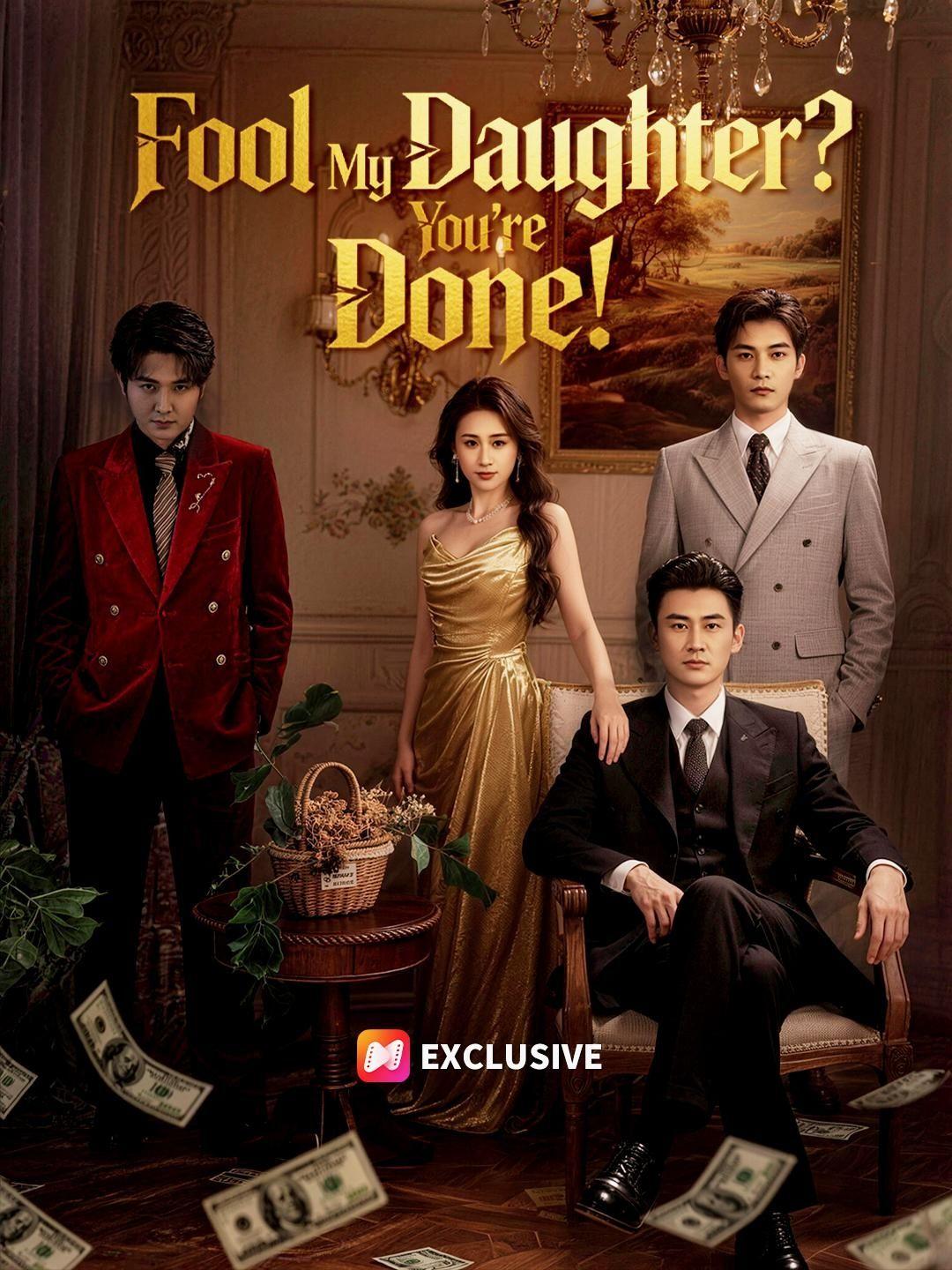
Sophie Lynn deeply regrets divorcing Quinn Carter, who was falsely accused and humiliated by her family. She and her daughter express their longing for him, but Quinn refuses to respond to their attempts to reconcile. The family's argument escalates as they blame each other for driving Quinn away, revealing their guilt and desperation.Will Sophie find a way to win back Quinn, or has he already moved on for good?


Recommended for you


Divorced, but a Tycoon: When a Child’s Voice Shatters Generational Silence
The opening frame of *Divorced, but a Tycoon* is deceptively serene: a grand foyer, sunlight filtering through sheer curtains, a vase of fresh peonies on a side table. Then—cut to Lin Xinyue, collapsed inward on the sofa, one hand pressed to her temple, the other dangling limply beside her thigh. A smartphone lies forgotten on the cushion. Her silver-embellished flats are scuffed at the toe—proof she’s been pacing, or perhaps kneeling, for longer than the camera lets on. This isn’t grief. It’s surrender. And yet, within minutes, that surrender transforms into something far more volatile: righteous fury, masked as brokenness. The brilliance of this sequence lies not in the spectacle of tears, but in the precise choreography of emotional escalation—how a single child’s intervention rewires the entire dynamic of power, guilt, and memory in a room full of adults who’ve long forgotten how to listen. Madame Su enters with the practiced poise of someone accustomed to managing crises—financial, social, familial. Her beige coat is impeccably pressed, her hair pinned with surgical precision, her brooch (a black camellia studded with pearls) a silent declaration of taste and tradition. She doesn’t rush to comfort Lin Xinyue. She pauses. Assesses. Her eyes flick to the floor—where a small golden object lies half-hidden beneath the sofa: a locket, perhaps, or a token from happier days. She doesn’t pick it up. She lets it stay there, a silent accusation. Then she turns to Xiao Mei, her granddaughter, and murmurs something soft, something only the child hears. Xiao Mei nods, solemn, and steps forward—not toward her mother, but *into* the emotional breach. That’s the pivot. The moment the script flips. Because in *Divorced, but a Tycoon*, children aren’t passive witnesses. They’re strategists, interpreters, and sometimes, the only ones brave enough to name the elephant in the room. Xiao Mei’s dialogue is minimal, but devastating. “Mama,” she says, voice small but unwavering, “why are you crying?” Not “stop crying.” Not “I’m scared.” Just: *why*. That question—so simple, so profound—forces Lin Xinyue to articulate what she’s been too ashamed, too exhausted, to say aloud. And when she does, it’s not about money, or betrayal, or even the divorce decree. It’s about erasure. “They told you I left,” she whispers, looking not at Madame Su, but at Xiao Mei, “but they never told you *why* I stayed so long.” The camera tightens on Xiao Mei’s face—her brow furrows, her lips part slightly. She’s processing not just the words, but the subtext: *I was trapped. I was silenced. I loved you more than I loved myself.* That’s the real tragedy of *Divorced, but a Tycoon*—not the separation, but the years of curated silence that made the separation inevitable. Madame Su’s reaction is masterfully layered. At first, she stiffens—her posture rigid, her jaw clenched. Then, almost imperceptibly, her hand moves to her chest, where the brooch sits. She touches it, as if grounding herself in identity, in legacy. When she speaks, her voice is measured, but her eyes betray her: “Xinyue, you know how fragile this family is. One misstep, and everything crumbles.” It’s not a threat. It’s a confession. She’s not defending Jiang Yiran or the new arrangement—she’s defending the illusion of stability she’s spent decades constructing. And Xiao Mei, standing between them, suddenly understands: her grandmother isn’t protecting *her*. She’s protecting the story she needs to believe—that the family is intact, that love is transactional, that pain is best buried under layers of etiquette and expensive fabric. Then comes the physical rupture. Lin Xinyue, rising abruptly, doesn’t shout. She *points*—not at Madame Su, but at Xiao Mei’s hands, still clasped around her wrist. “She’s eight years old,” Lin Xinyue says, voice cracking but clear, “and she already knows how to placate you. How to smile when she’s terrified. How to say ‘yes, Grandma’ even when her heart is screaming *no*.” The accusation lands like a stone in still water. Madame Su flinches—not because she’s guilty, but because she’s *seen*. For the first time, her carefully constructed persona cracks, revealing the fear beneath: that she’s failed not just Lin Xinyue, but her own granddaughter. And Xiao Mei? She doesn’t let go. She tightens her grip, her eyes locking onto her mother’s, and in that exchange, something shifts. A covenant forms—not spoken, not signed, but felt in the tremor of their joined hands. *I see you. I remember you. I won’t let them rewrite you.* The arrival of Jiang Yiran is less an interruption and more a confirmation. She doesn’t enter dramatically; she appears in the doorway, framed by light, her presence a quiet indictment of everything that came before. Her burgundy top contrasts sharply with Lin Xinyue’s ivory—fire against ice, ambition against endurance. She doesn’t speak immediately. She watches. And in that watching, we see her calculation: *How much damage has already been done? Can I still position myself as the reasonable one?* When she finally steps forward, her tone is gentle, almost maternal: “Xinyue, please. Let’s talk somewhere quieter.” But Lin Xinyue doesn’t take the bait. Instead, she turns fully to Xiao Mei and says, softly, “Do you remember the day we planted the cherry tree in the garden? You were five. You said it would grow tall enough to touch the sky.” Xiao Mei’s eyes widen. A memory surfaces—not of conflict, but of tenderness. Of *her* mother, alive, present, hopeful. That’s the weapon Lin Xinyue wields: not anger, but authenticity. Not demands, but recollection. What elevates *Divorced, but a Tycoon* beyond typical domestic drama is its refusal to offer catharsis. There’s no grand reconciliation. No tearful apology from Madame Su. No triumphant exit for Lin Xinyue. Instead, the scene ends with Jiang Yiran placing a hand on Madame Su’s shoulder—a gesture of solidarity, or perhaps ownership—and Xiao Mei stepping back, her expression unreadable, her hands now folded in front of her like a child preparing for inspection. The camera pulls back, revealing the full tableau: three women, one child, a shattered locket on the floor, and the chandelier above them, still glowing, still indifferent. The message is clear: in the world of *Divorced, but a Tycoon*, healing doesn’t happen in grand gestures. It happens in stolen moments—in a child’s question, a mother’s memory, a grandmother’s hesitation. The real revolution isn’t in leaving the marriage. It’s in refusing to let the next generation inherit the same silences. And as the screen fades, we’re left with one haunting image: Xiao Mei, alone in the hallway later, picking up the golden locket, turning it over in her small hands, her reflection distorted in its polished surface. She doesn’t open it. Not yet. But she holds it close. Because in *Divorced, but a Tycoon*, the most dangerous thing a child can possess isn’t power or privilege—it’s the truth. And once you know it, you can never un-know it.
Divorced, but a Tycoon: The Tearful Confrontation That Shattered the Living Room
In the opulent yet emotionally sterile interior of a high-end villa—marble floors gleaming under a cascading crystal chandelier, pastel walls adorned with tasteful abstract art—the tension in *Divorced, but a Tycoon* reaches its first boiling point. What begins as a quiet moment of despair quickly escalates into a multi-generational emotional detonation, where every gesture, every glance, and every tear carries the weight of unspoken history. The central figure, Lin Xinyue, dressed in an immaculate ivory silk ensemble with a pearl-embellished neckline and delicate drop earrings, sits slumped on a tufted beige sofa, her posture radiating exhaustion and grief. Her hair is elegantly coiled, but strands have escaped—like fragments of composure she can no longer hold. She isn’t just crying; she’s unraveling. Her mouth opens in silent sobs, then in choked pleas, then in raw accusation. This isn’t melodrama—it’s psychological realism captured in slow-motion close-ups that linger just long enough to make the viewer flinch. Enter Madame Su, Lin Xinyue’s mother-in-law—or perhaps, more accurately, her former mother-in-law, given the title’s implication. Dressed in a tailored beige coat with a black floral brooch pinned over a sky-blue blouse, Madame Su enters not with urgency, but with deliberate control. Her red lipstick is perfectly applied, her expression unreadable at first—then shifts, ever so slightly, into something colder: disappointment laced with authority. She holds a designer handbag like a shield, and beside her stands Xiao Mei, the young girl—Lin Xinyue’s daughter—wearing a pink-and-blue tweed jacket with a scalloped white collar and a blue headband. Xiao Mei’s eyes are wide, observant, intelligent beyond her years. She doesn’t cry. She watches. And in that watching lies the true horror of the scene: the child is already learning how to survive emotional warfare. The turning point arrives when Xiao Mei steps forward—not toward her mother, but *between* her mother and grandmother. She places her small hands on Lin Xinyue’s knee, then tugs gently, her voice trembling but clear: “Mama, don’t cry.” It’s not a plea for comfort; it’s a demand for dignity. In that instant, Lin Xinyue’s tears pause, her breath catches, and her gaze locks onto her daughter—not with gratitude, but with dawning realization: *She sees me. She knows.* That moment is the heart of *Divorced, but a Tycoon*—not the divorce itself, but the aftermath, the inheritance of trauma, the way children become emotional translators in households where adults refuse to speak plainly. Madame Su reacts instantly. She moves to pull Xiao Mei back, her grip firm, her tone sharp but hushed—“Let go, dear, this is adult business.” But Xiao Mei resists, planting her feet, her jaw set. The camera circles them like a predator circling prey, emphasizing how tiny the girl is against the towering emotional architecture of the two women. When Lin Xinyue finally rises, her movement is not graceful—it’s jagged, desperate. She points at Madame Su, her finger shaking, her voice rising from a whisper to a near-scream: “You taught her to hate me before she could even speak!” The accusation hangs in the air, thick as the perfume lingering on the shelves behind them. It’s not just about custody or money; it’s about narrative control—who gets to define Xiao Mei’s memory of her mother? Then, the second act of the confrontation: the entrance of Jiang Yiran, Lin Xinyue’s ex-husband’s new partner—or perhaps, more precisely, the woman who now occupies the space Lin Xinyue once claimed. Jiang Yiran strides in wearing a burgundy off-shoulder top, gold chain choker, diamond earrings, hair swept back in a sleek half-up style. She doesn’t rush. She observes. Her entrance is less interruption, more punctuation—a full stop to the chaos. She says nothing at first. Just stands, arms loose at her sides, eyes scanning the tableau: Lin Xinyue standing, trembling; Madame Su clutching Xiao Mei protectively; the girl staring at Jiang Yiran with a mixture of curiosity and suspicion. Jiang Yiran’s silence is louder than any scream. When she finally speaks, her voice is calm, almost clinical: “Xinyue, you’re making a scene. The neighbors can hear.” That line—so banal, so devastating—is the knife twist. It reduces Lin Xinyue’s anguish to mere noise, a nuisance to be managed. And yet, in that moment, Lin Xinyue doesn’t collapse. She straightens. Her tears dry mid-fall. Her lips press into a thin line. She looks at Jiang Yiran—not with jealousy, but with pity. “You think this is a scene?” she asks, voice low, steady. “This is just the beginning.” What makes *Divorced, but a Tycoon* so compelling is how it refuses to villainize any single character. Madame Su isn’t evil—she’s a product of generational conditioning, raised to believe a woman’s worth is tied to her ability to maintain harmony, even if that harmony is built on silence and sacrifice. Lin Xinyue isn’t a victim—she’s a woman who has spent years performing grace while drowning inside. Xiao Mei isn’t a prop—she’s the moral compass of the entire series, the one who will ultimately decide whether the cycle breaks or continues. And Jiang Yiran? She’s the mirror held up to Lin Xinyue’s past choices—the woman who benefits from the wreckage, yes, but also the one who now must live with the consequences of being chosen *after* the storm. The cinematography reinforces this complexity. Wide shots emphasize the vastness of the space—how isolated each character feels despite being physically close. Close-ups capture micro-expressions: the flicker of guilt in Madame Su’s eyes when Xiao Mei winces; the way Lin Xinyue’s knuckles whiten as she grips the sofa arm; the subtle tilt of Jiang Yiran’s head as she assesses the power dynamics shifting in real time. Even the lighting plays a role—the chandelier casts fractured reflections on the marble floor, symbolizing how truth splinters when viewed through different lenses. By the end, no resolution is offered. Lin Xinyue doesn’t storm out. Madame Su doesn’t apologize. Xiao Mei doesn’t run to either woman. Instead, the three women stand in a triangle of unresolved tension, Jiang Yiran hovering at the edge like a ghost of future conflict. The final shot lingers on Xiao Mei’s face—her expression unreadable, her fingers still curled around her mother’s sleeve. That ambiguity is the genius of *Divorced, but a Tycoon*. It doesn’t tell us who’s right. It forces us to ask: what would *we* do, if we were her? If we were Lin Xinyue, holding onto love like a lifeline in a sinking ship? If we were Madame Su, trying to preserve a legacy that may already be rotten at the core? The show understands that divorce isn’t the end of a story—it’s the moment the real plot begins. And in this world, where wealth masks vulnerability and elegance conceals desperation, the most dangerous weapon isn’t money or status. It’s the silence between words. The pause before the scream. The look a child gives her mother when she realizes love isn’t always enough to keep the wolves away. *Divorced, but a Tycoon* doesn’t just depict a breakup—it dissects the anatomy of emotional inheritance, one trembling breath at a time.
When the Aunt Steps In—Chaos Meets Couture
That beige coat with the floral brooch? Iconic armor. In *Divorced, but a Tycoon*, the aunt doesn’t just mediate—she *orchestrates* the meltdown. Her sharp glances, the way she pulls the girl close while side-eyeing the weeper? Pure narrative control. And then—enter the red-dress rival. 🔥 Tension so thick, you need a knife to slice it.
The Tearful Confession That Shook the Mansion
In *Divorced, but a Tycoon*, the white-dressed woman’s raw sobs aren’t just drama—they’re emotional landmines. Her trembling hands, pearl collar catching light like tears… every detail screams suppressed pain. The girl’s sudden outburst? A masterstroke of generational tension. This isn’t soap—it’s psychological warfare in silk. 🌸 #ShortFilmGold