



Watch Dubbed
Unmasking the Pretender
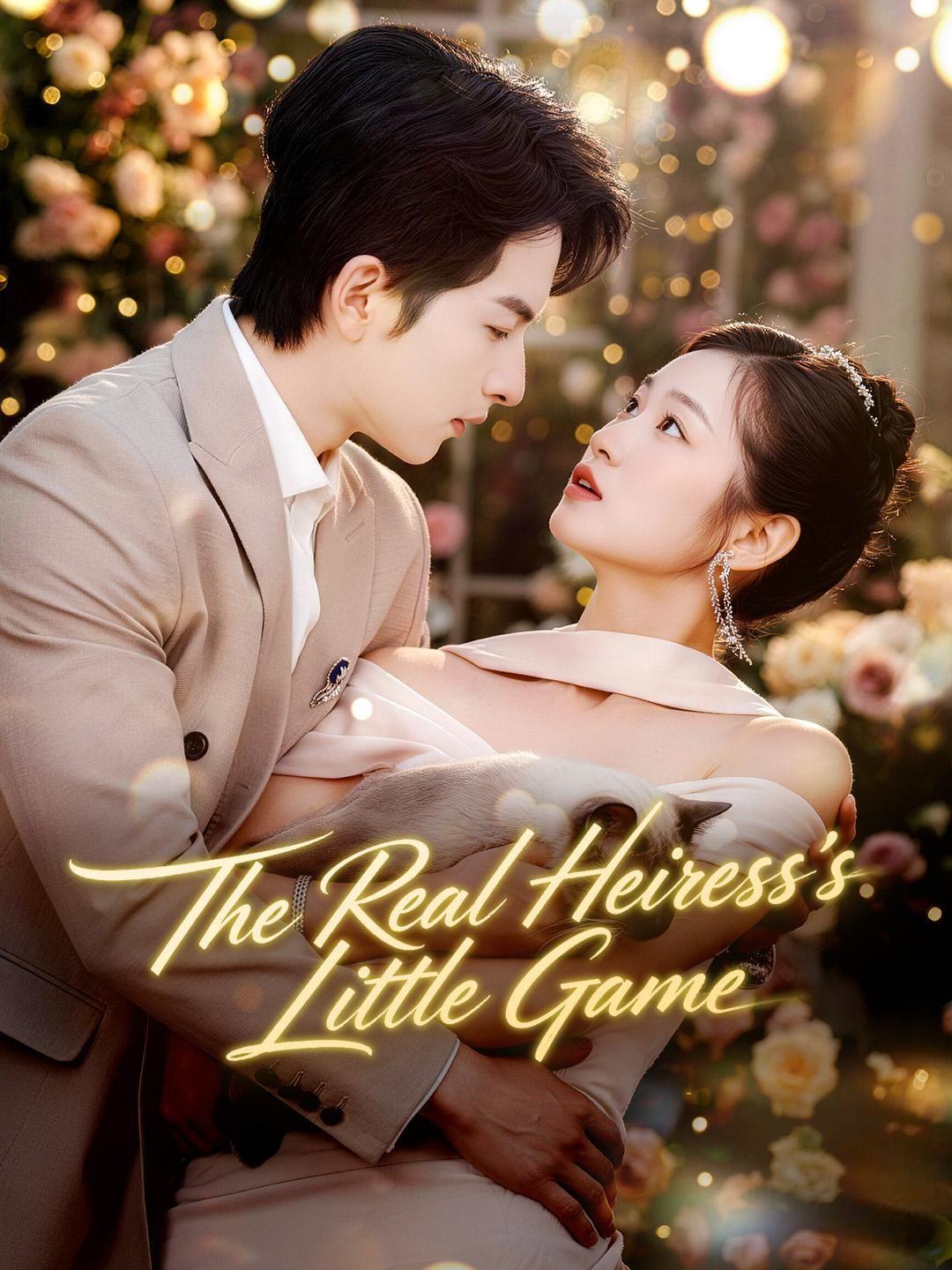
Shirley Shaw publicly humiliates Ray Perry, revealing his true status as the chauffeur's son and challenging the false narrative he's been spreading about their relationship.Will Shirley's bold move force Ray to reveal his secrets or push him to retaliate?


Recommended for you



Reborn to Crowned Love: The Girl Who Rewrote Her Script
Let’s talk about the girl who didn’t wait for the prince. Let’s talk about Su Mian—the kind of woman who doesn’t need a rescue, but might still pause to let you try. In *Reborn to Crowned Love*, she doesn’t walk into scenes; she *enters* them, like a sentence that changes the meaning of the paragraph. The first time we see her, she’s stepping out of a Porsche, dressed in cream and brown, her hair braided with the precision of someone who’s rehearsed every detail of her life. But here’s the thing: her eyes don’t match the outfit. They’re restless. Curious. Slightly bored. As if the car, the driver, the entire performance—none of it is *hers*. It’s just the current setting. And she’s already scanning for the next act. Jiang Tao, on the other hand, arrives like a storm front—unannounced, uninvited, and utterly convinced he belongs. He doesn’t knock. He doesn’t wait. He *leans*, pressing his forehead against the window, his breath fogging the glass, his voice cracking just enough to betray how much this moment costs him. He’s not asking for forgiveness. He’s asking for *acknowledgment*. And Su Mian gives it—not with words, but with a glance that holds centuries of unspoken history. She sees the boy who shared his lunch with her in middle school, the teenager who defended her when others whispered, the young man who vanished the day she got accepted into the elite academy. She sees all of him. And she chooses, deliberately, to let him see *her*—not the polished version, but the one who still bites her lip when she’s thinking too hard. The car scene is genius in its restraint. No shouting. No melodrama. Just hands on glass, voices muffled, emotions raw but contained. When Jiang Tao finally gets the door open, Su Mian doesn’t recoil. She doesn’t lean in. She simply turns her head, letting the light catch the delicate chain of her earring—a gift, we later learn, from him, years ago. He notices. Of course he does. And for a split second, the world narrows to that single detail: a piece of jewelry, forgotten, rediscovered, still holding weight. That’s the heart of *Reborn to Crowned Love*—not grand gestures, but tiny relics of who we used to be, carried into who we’ve become. Then comes the fall. Not metaphorical. Literal. Jiang Tao trips, sprawls onto the pavement, dust clinging to his jeans, his pride scattered like pebbles. The camera lingers—not to humiliate him, but to honor the vulnerability. Because in that moment, he’s not the guy in the jacket. He’s just a man who loved someone too fiercely to let go, even when she’d already moved on. And Su Mian? She watches him from the window, her expression unreadable—until she exhales, slow and steady, and closes her eyes. Not in dismissal. In release. She’s not angry. She’s *done*. Done with the past. Done with the guilt. Done with pretending she doesn’t remember how his laugh sounded when they were sixteen. The shift to the campus is seamless, almost cinematic in its contrast. Sunlight filters through autumn trees, students chatter, laughter rings out—but Jiang Tao walks alone, hands shoved deep in his pockets, shoulders hunched like he’s carrying something invisible. He checks his watch again, not because he’s late, but because time feels slippery now. How long has it been? Five years? Seven? Long enough for her to become someone he barely recognizes. And yet—when she appears, wearing a school uniform that somehow makes her look younger, softer, *more* herself—he stops breathing. Her hair is down, her earrings simpler, her smile hesitant but real. She doesn’t run to him. She walks toward him, step by measured step, and says, “You’re late.” Not accusing. Just stating fact. As if time had bent just for them. Their conversation in the courtyard is where *Reborn to Crowned Love* reveals its true texture. Jiang Tao talks fast, words tumbling out like he’s afraid silence will swallow him whole. He mentions the scholarship, the move to the city, the nights he spent wondering if she ever thought of him. Su Mian listens, nodding, her fingers tracing the edge of her notebook. Then she says, quietly, “I thought about you every day. But not the way you think.” That line—so simple, so devastating—is the core of the entire series. Love isn’t always reciprocal. Growth isn’t always shared. And sometimes, the person who leaves isn’t running *from* you—they’re running *toward* themselves. Later, in the classroom, the dynamic flips again. Su Mian is no longer the girl in the car or the student in the courtyard. She’s *present*. Alert. Unapologetic. When Liu Xinyi confronts her—accusing her of arrogance, of forgetting her roots—Su Mian doesn’t defend herself. She asks a question: “When you say I’ve changed… do you mean I’m different, or that I’m finally honest?” The room falls silent. Even the teacher pauses mid-sentence. Because Liu Xinyi, for all her lace and floral prints, is still playing a role. Su Mian? She’s stopped auditioning. What makes *Reborn to Crowned Love* so compelling is how it refuses easy binaries. Su Mian isn’t “cold” or “heartless.” She’s *intentional*. Jiang Tao isn’t “desperate” or “clueless.” He’s *loyal*, even when loyalty no longer serves him. Their reunion isn’t about reigniting romance—it’s about closing loops. About acknowledging that some relationships aren’t meant to last, but are essential to who we become. The final shot—Su Mian walking away from the classroom, Jiang Tao watching her from the doorway, a faint smile on his lips—doesn’t promise reconciliation. It promises peace. The kind that comes not from getting what you want, but from understanding why you wanted it in the first place. And that’s the real magic of *Reborn to Crowned Love*: it doesn’t ask us to root for one character over the other. It asks us to root for *truth*. For the courage to rewrite your script, even if the old version had beautiful lines. Su Mian didn’t need the Porsche. She needed the space to decide who she’d be when the engine stopped. Jiang Tao didn’t need her forgiveness. He needed to see her—truly see her—and realize that loving her didn’t require possession. It required witness. And in the end, that’s all either of them really asked for: to be seen, fully, finally, without judgment. The door closed. But the story? That’s just beginning.
Reborn to Crowned Love: The Door That Never Closed
There’s a certain kind of tension that only exists in the liminal space between intention and execution—between reaching for something and actually grasping it. In *Reborn to Crowned Love*, that tension is crystallized in the opening sequence where a white Porsche Panamera glides down a quiet residential lane, flanked by European-style townhouses and manicured hedges. The car isn’t just transportation; it’s a statement. A symbol of status, control, and distance. And yet, the moment it stops, everything begins to unravel—not with a crash, but with a whisper of a hand on a door handle. The man in the black suit—let’s call him Lin Wei, though his name isn’t spoken yet—opens the rear passenger door with practiced precision. His posture is rigid, his gaze fixed ahead, as if he’s already mentally moved on to the next task. He’s not here for connection. He’s here for protocol. Then she steps out: Su Mian, her hair coiled into an elegant braid, one strand escaping like a secret, her cream-colored blouse cinched at the waist with a leather belt, her skirt falling just above the knee, her black block heels clicking softly against the pavement. She doesn’t look at him. She doesn’t need to. Her silence speaks louder than any rebuke. She moves with the grace of someone who knows she’s being watched—and doesn’t care. But then, the intrusion. A second man appears—Jiang Tao, the one in the olive jacket and faded jeans, sneakers scuffed from real life, not curated aesthetics. He doesn’t approach the car like Lin Wei does. He *stumbles* toward it, breathless, eyes wide, fingers twitching as if trying to remember how to speak. He leans in, pressing his palm against the window, not to knock, but to *hold*—as if the glass were the only thing keeping him from falling into her orbit. His expression shifts rapidly: desperation, hope, disbelief, then something sharper—recognition. Not just of her face, but of the weight of what she represents. In that moment, the car becomes less a vehicle and more a cage. A gilded barrier between two worlds that were never meant to intersect. Su Mian watches him through the tinted glass. Her lips part slightly—not in surprise, but in calculation. She adjusts the bow at her collar, a small, deliberate gesture. It’s not nervousness. It’s armor. She knows Jiang Tao. Or at least, she remembers him. The way her eyes flicker when he says something—his voice muffled, distorted by the window—suggests a history buried under layers of time and class. When he finally manages to open the door (not with Lin Wei’s smooth motion, but with a tug, a scrape of metal), she doesn’t flinch. She tilts her head, just enough to let the light catch the crystal drops of her earrings. And then she smiles. Not warmly. Not cruelly. But *knowingly*. As if she’s just been handed a puzzle she’s solved before. What follows is not dialogue—it’s punctuation. Jiang Tao stumbles back, trips over his own feet, lands hard on the asphalt with a grunt that echoes too loudly in the quiet street. He sits there, dazed, staring up at the car as it begins to pull away. His hand still rests on the door frame, fingers curled like he’s trying to hold onto something that’s already gone. The camera lingers on his face—not for pity, but for irony. This is the man who once walked beside her, maybe even held her hand in a different lifetime. Now he’s reduced to a footnote in her departure. The transition to the city skyline at sunset—traffic flowing like molten gold—isn’t just aesthetic. It’s thematic. *Reborn to Crowned Love* isn’t about wealth or power in the traditional sense. It’s about the *cost* of reinvention. Su Mian didn’t just change her clothes or her address. She changed her gravity. And Jiang Tao, for all his earnestness, can’t seem to recalibrate his trajectory. Later, we see him running—not toward anything specific, but *away* from the memory of that car, that door, that smile. He checks his watch, not because he’s late, but because he’s trying to locate himself in time again. When Su Mian reappears, now in a school uniform layered over a pinafore dress—her hair loose, her earrings smaller, her demeanor softer—he freezes. For a heartbeat, he’s not the man who fell on the street. He’s the boy who used to sit behind her in class, passing notes she never read. Their conversation in the courtyard is masterfully understated. No grand declarations. Just pauses, glances, the rustle of leaves overhead. Jiang Tao speaks first, voice low, almost apologetic—but not for what he did. For what he *is*. Su Mian listens, nodding slightly, her expression unreadable until she laughs—a soft, unexpected sound that disarms him completely. It’s not mockery. It’s relief. She sees him. Truly sees him. And for the first time since the car pulled away, he feels visible again. But the real twist comes later, inside the classroom. Su Mian is no longer the poised woman in the Porsche. She’s a student—or is she? Her posture is confident, her gaze sharp, but her hands tremble slightly when another girl—Liu Xinyi, in lace and floral print—confronts her. The accusation hangs in the air, unspoken but heavy: *You think you’re better now?* Su Mian doesn’t raise her voice. She doesn’t need to. She simply stands, shoulders squared, and says, “I’m not trying to be better. I’m trying to be *free*.” The room goes silent. Even Liu Xinyi blinks, caught off guard. Because freedom, in *Reborn to Crowned Love*, isn’t about escaping poverty or climbing ladders. It’s about refusing to let anyone define your worth based on where you started. Jiang Tao watches from the back row, unnoticed. He sees the way Su Mian’s jaw tightens when Liu Xinyi leans in, the way her fingers curl around the edge of her desk—not in fear, but in resolve. And he understands, finally, why she left. It wasn’t about him. It wasn’t about the car. It was about becoming someone who could stand in a room full of judgment and still breathe without permission. The final shot of the sequence—Su Mian walking down the hallway, sunlight catching the braid at her neck, her shadow stretching long behind her—isn’t triumphant. It’s quiet. Resolute. *Reborn to Crowned Love* doesn’t promise happy endings. It promises *choices*. And every choice has a cost. Jiang Tao paid his in asphalt and embarrassment. Su Mian paid hers in silence and solitude. But as the camera pulls back, revealing the school’s banner—“Where Dreams Are Forged, Not Given”—we realize this isn’t just their story. It’s a blueprint. A reminder that sometimes, the most radical act isn’t chasing love or power. It’s deciding who you’ll be when no one’s watching. And who you’ll become when the door finally closes—for good.