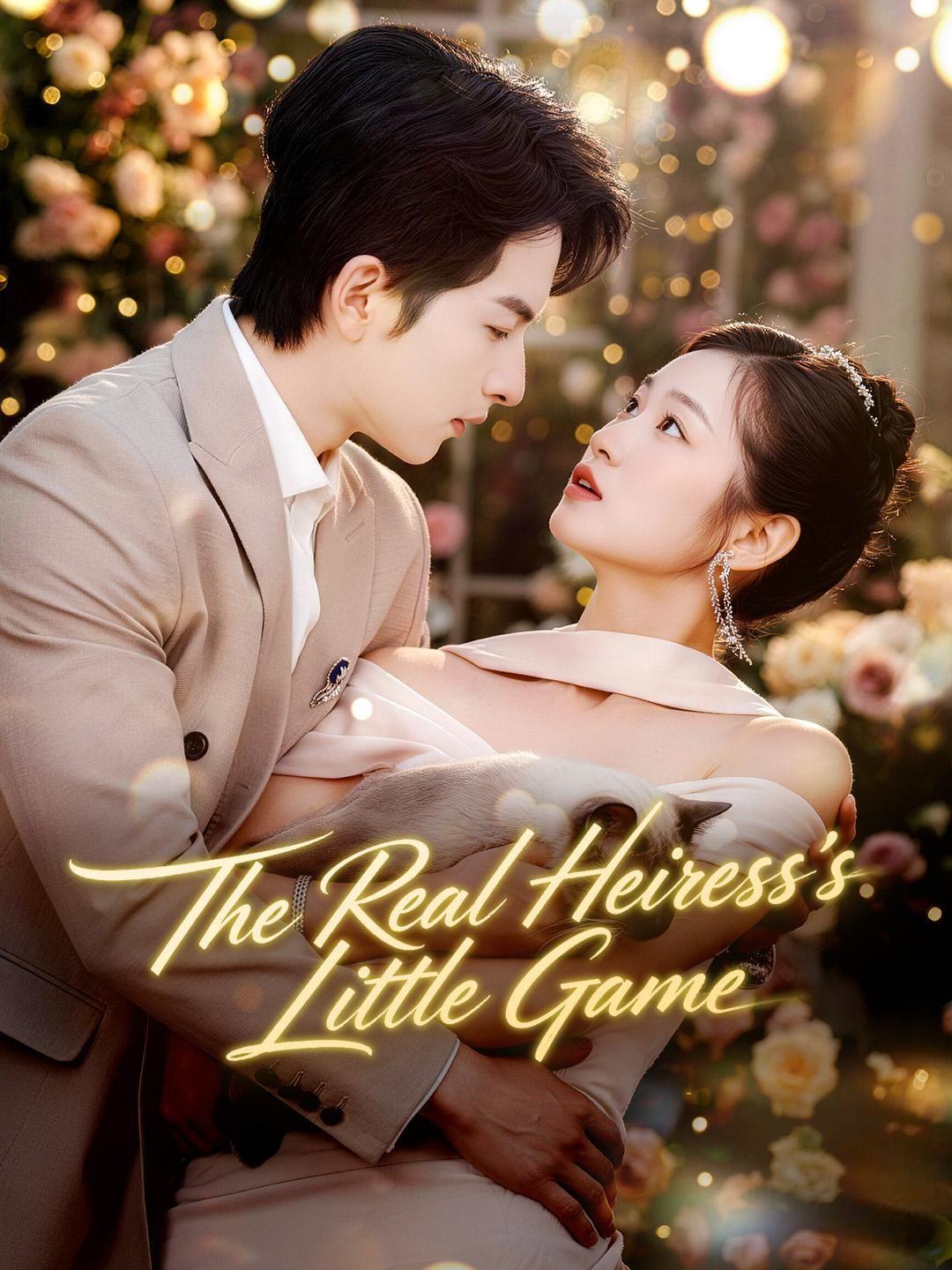
Shirley confronts Ray at his birthday party, revealing her past humiliation and refusing to apologize, setting the stage for her revenge.Will Shirley's bold confrontation lead to Ray's downfall?
Reborn to Crowned Love: When the Phone Glows and the World Stills
Let’s talk about the phone. Not the device itself—the sleek, silver-edged iPhone held in manicured hands—but the *moment* it glows. In *Reborn to Crowned Love*, that screen isn’t just a tool; it’s a detonator. The first five seconds of the video are silent except for the faint hum of city air and the click of Lin Xiao’s heels on polished stone. She stands against a warm-toned wall, sunlight pooling at her feet like liquid gold, and her attention is entirely consumed by the rectangle in her palms. The camera zooms in—not to read the text, but to capture the *act* of typing: her thumb pressing keys with deliberate slowness, each tap a heartbeat. The keyboard layout is visible—Pinyin input, suggesting she’s composing in Mandarin—but the meaning is universal. She’s choosing her words like bullets, loading them one by one. The green message bubble that finally appears—‘I’ve booked a table at Cloud Nine. Bring your opinion.’—isn’t casual. It’s a challenge wrapped in civility. And the name ‘Terrence’ floating above the chat window? That’s the ghost in the machine. He’s not present, but he’s *felt*. His absence is the pressure behind her ribs, the reason her smile doesn’t reach her eyes when she looks up. She’s not smiling *at* anyone. She’s smiling *through* the fear. That’s the genius of *Reborn to Crowned Love*: it understands that modern conflict isn’t shouted in public squares—it’s whispered in encrypted chats, sent at 2:17 a.m., and answered with a single emoji that carries the weight of a thousand unsaid regrets.
Then she walks. Through the revolving door, into the lobby, where the architecture itself feels like a character—dark marble, vertical wood slats, a chandelier that looks less like decoration and more like a constellation of surveillance cameras. The other women are already there, positioned like chess pieces on a board only they can see. Their outfits are curated: the tweed ensemble (Yan Li, let’s call her) speaks of old money and older grudges; the beige knit (Mei Ling) radiates performative warmth, the kind that masks cold calculation; the third, in black with pearl hairpins (Jia Ning), watches with the stillness of a predator who knows the prey has already stepped into the trap. But Lin Xiao doesn’t register them as individuals. She registers them as *variables*. Her gaze flicks left, right, center—not scanning faces, but assessing angles, exits, blind spots. Her handbag remains clutched at waist level, not for vanity, but for balance. She’s bracing. And when Chen Wei enters—late, disheveled, jacket slightly rumpled—he doesn’t apologize for being late. He apologizes for *her being here*. ‘You shouldn’t have come alone,’ he says, and the subtext vibrates louder than the words: *I told you not to trust them. I told you they’d turn on you.* His voice cracks, just once, on the word ‘alone’, and Lin Xiao’s breath catches. Not because she’s hurt. Because she’s *seen*. Seen the truth he’s been hiding: that he tried to stop this. That he knew what would happen. That he loves her enough to want to shield her—and hates himself for failing.
The confrontation that follows isn’t loud. There are no raised voices, no dramatic slaps. Just silence, thick and suffocating, broken only by the rustle of fabric as Lin Xiao crosses her arms—not defensively, but *deliberately*, as if sealing a contract with herself. Her eyes lock onto Mei Ling’s, and for three full seconds, neither blinks. Then Mei Ling smiles—a slow, dangerous thing—and says, ‘You look tired.’ Not ‘How are you?’ Not ‘What happened?’ Just: *You’re faltering.* And Lin Xiao replies, not with words, but with a tilt of her chin, a slight lift of her eyebrow—the universal language of ‘Try me.’ That’s when Chen Wei moves. Not toward Mei Ling. Toward *Lin Xiao*. He steps into her space, close enough that his sleeve brushes her forearm, and he takes her wrist. Not roughly. Not possessively. Like he’s anchoring her to reality. ‘Let me handle this,’ he murmurs, and the plea in his voice is raw, stripped bare. Lin Xiao doesn’t nod. She doesn’t speak. She just *holds* his gaze—and in that exchange, the entire dynamic shifts. The women behind them stiffen. Yan Li’s jaw tightens. Jia Ning’s fingers twitch toward her phone, as if recording evidence. But Lin Xiao doesn’t care. Because in that moment, she realizes something crucial: Chen Wei isn’t trying to protect her *from* the truth. He’s trying to protect her *until* she’s ready to wield it. And she *is* ready. The white dress, which seemed so fragile at first, now looks like a banner. The ruffles aren’t frills—they’re folds in a flag being raised. The scene ends not with a resolution, but with a question hanging in the air, heavier than the chandelier above them: What happens when the woman who was supposed to be the pawn decides to become the queen? In *Reborn to Crowned Love*, power isn’t seized in grand speeches. It’s reclaimed in the quiet seconds between breaths, in the way a woman chooses to stand when the world expects her to kneel. Lin Xiao doesn’t need a crown. She *is* the coronation. And Chen Wei? He’s not her savior. He’s her witness. The one who saw her fall, and stayed long enough to see her rise. The phone is silent now. The messages are sent. The game has begun. And in *Reborn to Crowned Love*, the most dangerous weapon isn’t a knife or a lie—it’s a woman who finally remembers her own name.
Reborn to Crowned Love: The White Dress That Walked Into a Storm
There’s something almost mythic about the way she enters—white dress flowing like a surrender, yet her posture rigid as a vow. In *Reborn to Crowned Love*, the opening sequence isn’t just visual poetry; it’s psychological warfare disguised as elegance. She walks down that corridor, fingers tracing the edge of her phone screen, thumb hovering over a message she’s already typed three times. The text bubble reads: ‘I’ve booked a table at Cloud Nine. Bring your opinion.’ Not ‘your thoughts’. Not ‘your advice’. *Opinion*. A subtle but lethal distinction—one that signals she’s not seeking consensus, but confrontation. Her earrings, long and crystalline, catch the ambient light like shards of broken glass, each facet reflecting a different version of her intent: vulnerability, defiance, calculation. The dress itself—a cream-colored ruffled confection with asymmetrical hemlines and sheer bell sleeves—isn’t merely fashion; it’s armor woven from lace and silence. It says: I am soft, but do not mistake me for weak. She pauses before the revolving door, not because she’s hesitant, but because she’s recalibrating. The camera lingers on her knuckles, white where they grip the strap of her matching handbag—a minimalist design with a single sculptural clasp, echoing the tension in her jaw. When she steps through, the world shifts. Inside the lobby of what appears to be a high-end boutique hotel or private club, marble floors gleam under a chandelier composed of dozens of suspended orbs—each one a tiny sun, casting fractured shadows across the faces of the women waiting for her. They’re not random bystanders. They’re an audience. And they’ve been briefed.
The group forms a loose semicircle, their expressions calibrated like instruments in a symphony of judgment. One woman—wearing a charcoal tweed suit with gold-thread trim—stands slightly ahead, arms folded, eyes narrowed just enough to suggest she’s already decided the verdict. Beside her, another in beige ribbed knit, lips painted coral, smirks—not openly, but with the corner of her mouth, the kind of smirk that implies she knows something the protagonist doesn’t. Behind them, two more lean in, whispering, fingers brushing shoulders like conspirators sealing a pact. This is not a reunion. It’s an ambush dressed in silk and good lighting. The protagonist—let’s call her Lin Xiao for now, though the script never names her outright—doesn’t flinch. She stops mid-stride, head tilted, gaze sweeping the group like a scanner reading barcodes of betrayal. Her breath hitches, imperceptibly, but the camera catches it: a micro-tremor in her collarbone, the slight dilation of her pupils. She’s not surprised. She’s *waiting*. For what? For the first lie to be spoken. For the first accusation to be veiled as concern. For the man who arrives minutes later—Chen Wei, his jacket unzipped, chain glinting against black cotton—to step between them and say the words that will fracture everything.
When he does appear, it’s not with fanfare, but with the quiet inevitability of a storm front rolling in. He raises a hand—not in greeting, but in interruption. His voice, when it comes, is low, measured, but edged with something raw: ‘You shouldn’t have come here alone.’ Not ‘I’m glad you’re here.’ Not ‘What’s going on?’ Just a warning, wrapped in care. Lin Xiao turns toward him, and for the first time, her mask slips—not into tears, but into something sharper: recognition. She sees him. Truly sees him. Not the boy she once knew, not the man the others think he is, but the one who stood beside her when the world went dark. Her lips part, and she begins to speak, but the words don’t land cleanly. They stutter, break, reform. ‘I didn’t come alone,’ she says, voice trembling only at the end, ‘I came prepared.’ And then—here’s the pivot—the man reaches out, not to comfort, but to *restrain*. His fingers close around her wrist, gentle but firm, and she doesn’t pull away. Instead, she leans into the contact, just slightly, as if drawing strength from the heat of his skin. The onlookers exhale in unison, their expressions shifting from smug to startled. The woman in beige gasps, hand flying to her mouth—not in shock, but in dawning horror. Because she realizes, too late, that Lin Xiao didn’t walk into this room to be judged. She walked in to reset the board. To reclaim the narrative. To prove that in *Reborn to Crowned Love*, resurrection isn’t about returning to who you were—it’s about becoming someone no one expected you to be. The final shot lingers on Lin Xiao’s face, half-lit by the chandelier’s glow, her eyes no longer searching, but *seeing*. She knows what comes next. And for the first time, she’s not afraid of it. She’s ready. The white dress, once a symbol of purity, now reads as a declaration: I am reborn. And I will be crowned—not by grace, but by grit. The real tragedy isn’t that she was betrayed. It’s that they thought she’d stay broken. In *Reborn to Crowned Love*, every stitch in that dress holds a secret. Every ruffle hides a weapon. And every glance she exchanges with Chen Wei isn’t just love—it’s strategy. The audience leaves wondering: Who *really* orchestrated this meeting? Was it Lin Xiao? Or was it Chen Wei, pulling strings from the shadows, using her presence as the catalyst for a reckoning none of them saw coming? The beauty of *Reborn to Crowned Love* lies not in its plot twists, but in its emotional precision—the way a single touch, a withheld word, a shift in posture can rewrite an entire relationship in real time. This isn’t just drama. It’s anatomy of power, dissected under studio lighting. And Lin Xiao? She’s not the victim. She’s the surgeon.
When the Guy in the Brown Jacket Walked In…
He didn’t shout—he just *reached*. And suddenly, the whole room froze. Reborn to Crowned Love nails tension like a scalpel: one touch, two breaths, and the power shift was complete. No dialogue needed. Just raw, messy humanity. 💔🔥
The White Dress That Said Everything
Her ivory ruffles trembled with every glance—Reborn to Crowned Love isn’t about grand gestures, but the quiet war in her eyes as she walked into that lobby. The crowd’s whispers? Just background noise to her silent rebellion. 🌸 #EleganceUnderFire





Reborn to Crowned Love: When the Phone Glows and the World Stills
Let’s talk about the phone. Not the device itself—the sleek, silver-edged iPhone held in manicured hands—but the *moment* it glows. In *Reborn to Crowned Love*, that screen isn’t just a tool; it’s a detonator. The first five seconds of the video are silent except for the faint hum of city air and the click of Lin Xiao’s heels on polished stone. She stands against a warm-toned wall, sunlight pooling at her feet like liquid gold, and her attention is entirely consumed by the rectangle in her palms. The camera zooms in—not to read the text, but to capture the *act* of typing: her thumb pressing keys with deliberate slowness, each tap a heartbeat. The keyboard layout is visible—Pinyin input, suggesting she’s composing in Mandarin—but the meaning is universal. She’s choosing her words like bullets, loading them one by one. The green message bubble that finally appears—‘I’ve booked a table at Cloud Nine. Bring your opinion.’—isn’t casual. It’s a challenge wrapped in civility. And the name ‘Terrence’ floating above the chat window? That’s the ghost in the machine. He’s not present, but he’s *felt*. His absence is the pressure behind her ribs, the reason her smile doesn’t reach her eyes when she looks up. She’s not smiling *at* anyone. She’s smiling *through* the fear. That’s the genius of *Reborn to Crowned Love*: it understands that modern conflict isn’t shouted in public squares—it’s whispered in encrypted chats, sent at 2:17 a.m., and answered with a single emoji that carries the weight of a thousand unsaid regrets. Then she walks. Through the revolving door, into the lobby, where the architecture itself feels like a character—dark marble, vertical wood slats, a chandelier that looks less like decoration and more like a constellation of surveillance cameras. The other women are already there, positioned like chess pieces on a board only they can see. Their outfits are curated: the tweed ensemble (Yan Li, let’s call her) speaks of old money and older grudges; the beige knit (Mei Ling) radiates performative warmth, the kind that masks cold calculation; the third, in black with pearl hairpins (Jia Ning), watches with the stillness of a predator who knows the prey has already stepped into the trap. But Lin Xiao doesn’t register them as individuals. She registers them as *variables*. Her gaze flicks left, right, center—not scanning faces, but assessing angles, exits, blind spots. Her handbag remains clutched at waist level, not for vanity, but for balance. She’s bracing. And when Chen Wei enters—late, disheveled, jacket slightly rumpled—he doesn’t apologize for being late. He apologizes for *her being here*. ‘You shouldn’t have come alone,’ he says, and the subtext vibrates louder than the words: *I told you not to trust them. I told you they’d turn on you.* His voice cracks, just once, on the word ‘alone’, and Lin Xiao’s breath catches. Not because she’s hurt. Because she’s *seen*. Seen the truth he’s been hiding: that he tried to stop this. That he knew what would happen. That he loves her enough to want to shield her—and hates himself for failing. The confrontation that follows isn’t loud. There are no raised voices, no dramatic slaps. Just silence, thick and suffocating, broken only by the rustle of fabric as Lin Xiao crosses her arms—not defensively, but *deliberately*, as if sealing a contract with herself. Her eyes lock onto Mei Ling’s, and for three full seconds, neither blinks. Then Mei Ling smiles—a slow, dangerous thing—and says, ‘You look tired.’ Not ‘How are you?’ Not ‘What happened?’ Just: *You’re faltering.* And Lin Xiao replies, not with words, but with a tilt of her chin, a slight lift of her eyebrow—the universal language of ‘Try me.’ That’s when Chen Wei moves. Not toward Mei Ling. Toward *Lin Xiao*. He steps into her space, close enough that his sleeve brushes her forearm, and he takes her wrist. Not roughly. Not possessively. Like he’s anchoring her to reality. ‘Let me handle this,’ he murmurs, and the plea in his voice is raw, stripped bare. Lin Xiao doesn’t nod. She doesn’t speak. She just *holds* his gaze—and in that exchange, the entire dynamic shifts. The women behind them stiffen. Yan Li’s jaw tightens. Jia Ning’s fingers twitch toward her phone, as if recording evidence. But Lin Xiao doesn’t care. Because in that moment, she realizes something crucial: Chen Wei isn’t trying to protect her *from* the truth. He’s trying to protect her *until* she’s ready to wield it. And she *is* ready. The white dress, which seemed so fragile at first, now looks like a banner. The ruffles aren’t frills—they’re folds in a flag being raised. The scene ends not with a resolution, but with a question hanging in the air, heavier than the chandelier above them: What happens when the woman who was supposed to be the pawn decides to become the queen? In *Reborn to Crowned Love*, power isn’t seized in grand speeches. It’s reclaimed in the quiet seconds between breaths, in the way a woman chooses to stand when the world expects her to kneel. Lin Xiao doesn’t need a crown. She *is* the coronation. And Chen Wei? He’s not her savior. He’s her witness. The one who saw her fall, and stayed long enough to see her rise. The phone is silent now. The messages are sent. The game has begun. And in *Reborn to Crowned Love*, the most dangerous weapon isn’t a knife or a lie—it’s a woman who finally remembers her own name.
Reborn to Crowned Love: The White Dress That Walked Into a Storm
There’s something almost mythic about the way she enters—white dress flowing like a surrender, yet her posture rigid as a vow. In *Reborn to Crowned Love*, the opening sequence isn’t just visual poetry; it’s psychological warfare disguised as elegance. She walks down that corridor, fingers tracing the edge of her phone screen, thumb hovering over a message she’s already typed three times. The text bubble reads: ‘I’ve booked a table at Cloud Nine. Bring your opinion.’ Not ‘your thoughts’. Not ‘your advice’. *Opinion*. A subtle but lethal distinction—one that signals she’s not seeking consensus, but confrontation. Her earrings, long and crystalline, catch the ambient light like shards of broken glass, each facet reflecting a different version of her intent: vulnerability, defiance, calculation. The dress itself—a cream-colored ruffled confection with asymmetrical hemlines and sheer bell sleeves—isn’t merely fashion; it’s armor woven from lace and silence. It says: I am soft, but do not mistake me for weak. She pauses before the revolving door, not because she’s hesitant, but because she’s recalibrating. The camera lingers on her knuckles, white where they grip the strap of her matching handbag—a minimalist design with a single sculptural clasp, echoing the tension in her jaw. When she steps through, the world shifts. Inside the lobby of what appears to be a high-end boutique hotel or private club, marble floors gleam under a chandelier composed of dozens of suspended orbs—each one a tiny sun, casting fractured shadows across the faces of the women waiting for her. They’re not random bystanders. They’re an audience. And they’ve been briefed. The group forms a loose semicircle, their expressions calibrated like instruments in a symphony of judgment. One woman—wearing a charcoal tweed suit with gold-thread trim—stands slightly ahead, arms folded, eyes narrowed just enough to suggest she’s already decided the verdict. Beside her, another in beige ribbed knit, lips painted coral, smirks—not openly, but with the corner of her mouth, the kind of smirk that implies she knows something the protagonist doesn’t. Behind them, two more lean in, whispering, fingers brushing shoulders like conspirators sealing a pact. This is not a reunion. It’s an ambush dressed in silk and good lighting. The protagonist—let’s call her Lin Xiao for now, though the script never names her outright—doesn’t flinch. She stops mid-stride, head tilted, gaze sweeping the group like a scanner reading barcodes of betrayal. Her breath hitches, imperceptibly, but the camera catches it: a micro-tremor in her collarbone, the slight dilation of her pupils. She’s not surprised. She’s *waiting*. For what? For the first lie to be spoken. For the first accusation to be veiled as concern. For the man who arrives minutes later—Chen Wei, his jacket unzipped, chain glinting against black cotton—to step between them and say the words that will fracture everything. When he does appear, it’s not with fanfare, but with the quiet inevitability of a storm front rolling in. He raises a hand—not in greeting, but in interruption. His voice, when it comes, is low, measured, but edged with something raw: ‘You shouldn’t have come here alone.’ Not ‘I’m glad you’re here.’ Not ‘What’s going on?’ Just a warning, wrapped in care. Lin Xiao turns toward him, and for the first time, her mask slips—not into tears, but into something sharper: recognition. She sees him. Truly sees him. Not the boy she once knew, not the man the others think he is, but the one who stood beside her when the world went dark. Her lips part, and she begins to speak, but the words don’t land cleanly. They stutter, break, reform. ‘I didn’t come alone,’ she says, voice trembling only at the end, ‘I came prepared.’ And then—here’s the pivot—the man reaches out, not to comfort, but to *restrain*. His fingers close around her wrist, gentle but firm, and she doesn’t pull away. Instead, she leans into the contact, just slightly, as if drawing strength from the heat of his skin. The onlookers exhale in unison, their expressions shifting from smug to startled. The woman in beige gasps, hand flying to her mouth—not in shock, but in dawning horror. Because she realizes, too late, that Lin Xiao didn’t walk into this room to be judged. She walked in to reset the board. To reclaim the narrative. To prove that in *Reborn to Crowned Love*, resurrection isn’t about returning to who you were—it’s about becoming someone no one expected you to be. The final shot lingers on Lin Xiao’s face, half-lit by the chandelier’s glow, her eyes no longer searching, but *seeing*. She knows what comes next. And for the first time, she’s not afraid of it. She’s ready. The white dress, once a symbol of purity, now reads as a declaration: I am reborn. And I will be crowned—not by grace, but by grit. The real tragedy isn’t that she was betrayed. It’s that they thought she’d stay broken. In *Reborn to Crowned Love*, every stitch in that dress holds a secret. Every ruffle hides a weapon. And every glance she exchanges with Chen Wei isn’t just love—it’s strategy. The audience leaves wondering: Who *really* orchestrated this meeting? Was it Lin Xiao? Or was it Chen Wei, pulling strings from the shadows, using her presence as the catalyst for a reckoning none of them saw coming? The beauty of *Reborn to Crowned Love* lies not in its plot twists, but in its emotional precision—the way a single touch, a withheld word, a shift in posture can rewrite an entire relationship in real time. This isn’t just drama. It’s anatomy of power, dissected under studio lighting. And Lin Xiao? She’s not the victim. She’s the surgeon.
When the Guy in the Brown Jacket Walked In…
He didn’t shout—he just *reached*. And suddenly, the whole room froze. Reborn to Crowned Love nails tension like a scalpel: one touch, two breaths, and the power shift was complete. No dialogue needed. Just raw, messy humanity. 💔🔥
The White Dress That Said Everything
Her ivory ruffles trembled with every glance—Reborn to Crowned Love isn’t about grand gestures, but the quiet war in her eyes as she walked into that lobby. The crowd’s whispers? Just background noise to her silent rebellion. 🌸 #EleganceUnderFire