



Watch Dubbed
A New Beginning
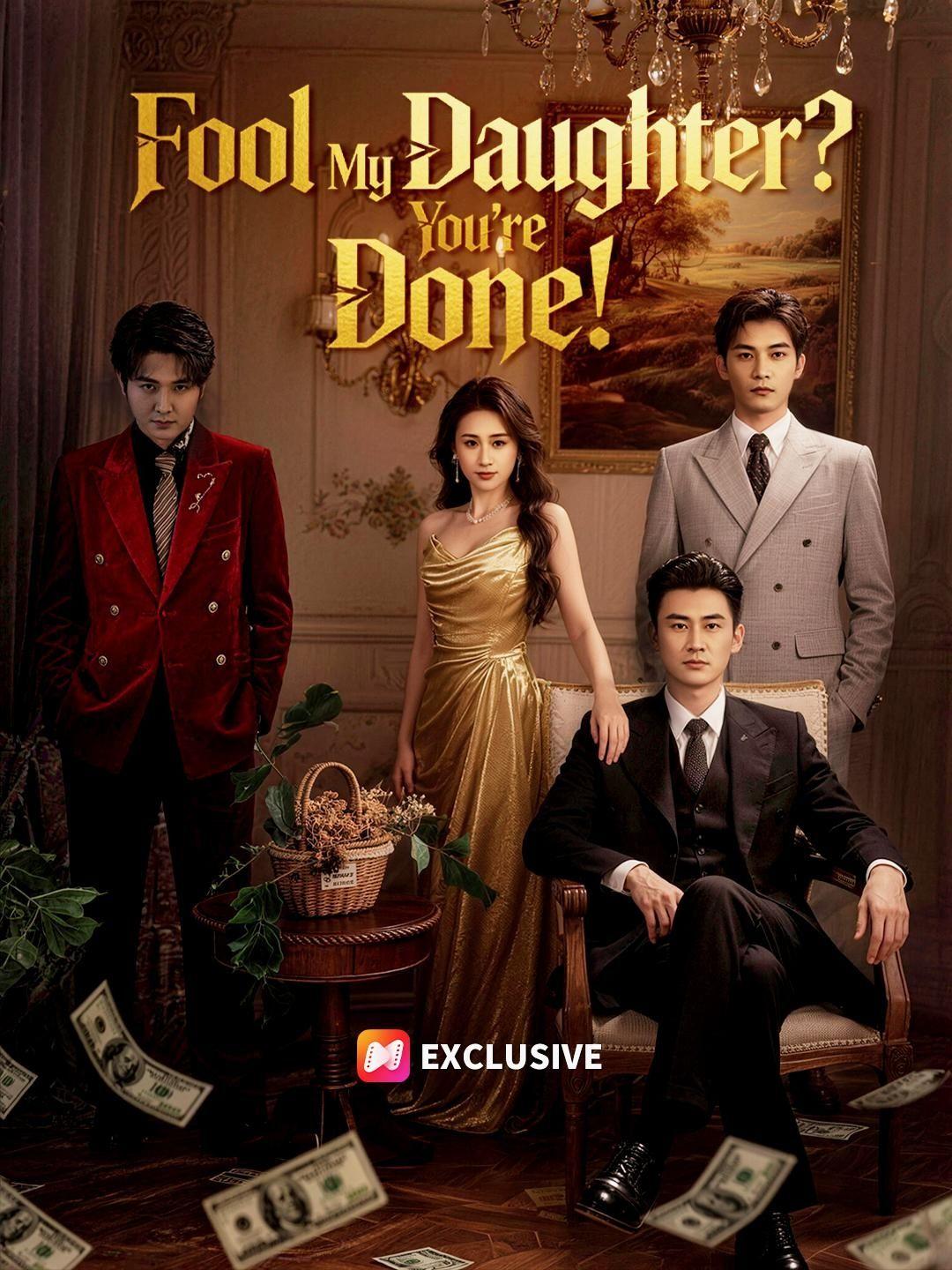
Shirley Shaw, who had a tragic past due to betrayal, is given a second chance at life. This time, she decides to cherish Terrence Cho, who was always there for her but overlooked in her previous life. Their relationship begins to blossom as they share a heartfelt moment on her birthday, marking a new chapter in her life. However, the past resurfaces when Ray confronts her about firing his father, hinting at unresolved conflicts.Will Shirley's newfound relationship with Terrence withstand the challenges from her past?


Recommended for you


Reborn to Crowned Love: When a Dog Wears a Sailor Collar and Truth Wears White
Let’s talk about the dog. Not as prop. Not as cute filler. As *character*. In *Reborn to Crowned Love*, the Pomeranian—let’s call him Pip, because he deserves a name—is the only being in the entire narrative who doesn’t lie. He wears a tiny sailor collar, striped like Li Xinyue’s blouse, a visual echo that’s too deliberate to ignore. When Zhou Yichen kneels to greet him, the camera lingers on their interaction: Pip stands on hind legs, paws on Zhou Yichen’s knee, tongue out, eyes bright with uncomplicated joy. Zhou Yichen laughs—a real laugh, warm and unguarded. His watch gleams in the sunlight, but his posture is soft. No armor. No agenda. Just presence. And yet, within minutes, that same man is gripping Li Xinyue’s throat in a dim warehouse, firelight licking the edges of their faces like judgment. The dissonance isn’t accidental. It’s the spine of the story. *Reborn to Crowned Love* forces us to ask: Who is the real Zhou Yichen? The man who coos at a dog? Or the man who holds a woman’s neck like a vow? Li Xinyue’s entrance is cinematic in its restraint. She walks down a stone path, shoulders squared, gaze fixed ahead—but her fingers twitch at her sides. Not nervous. *Contained*. Her outfit is a study in duality: cold navy fabric over soft stripes, exposed shoulders suggesting vulnerability, yet the structured collar and ruffles signaling control. She’s dressed for a meeting she didn’t request. When she finally sees Zhou Yichen crouched by the potted plants, she doesn’t rush. She stops. Breathes. The edit gives us three full seconds of her face—no music, no cutaways—just her processing. That’s where the genius lives. In the pause. In the milliseconds before reaction. Her lips part, not to speak, but to let air in. To steady herself. Because she knows what comes next. Not the gift. Not the dog. The reckoning. The gift box—‘HAVING YOUR CAKE’—isn’t whimsy. It’s accusation disguised as affection. The dollhouse design isn’t childish; it’s nostalgic, evoking childhood homes, family dinners, the kind of stability Zhou Yichen once promised and failed to deliver. The red ribbon? Blood ties. Binding. Sacrifice. When Zhou Yichen offers it, his hands are steady, but his eyes flicker—just once—to her left wrist, where a faint scar peeks from beneath her sleeve. We don’t see how it got there. We don’t need to. The scar is enough. Li Xinyue’s hesitation isn’t about the cake. It’s about whether she’s willing to accept a peace offering from the man who broke her. And when she finally takes the box, her fingers close around the ribbon—not to untie, but to *feel*. Texture as truth. Weight as evidence. She doesn’t look at the cake inside. She looks at him. And in that look, *Reborn to Crowned Love* delivers its quiet revolution: healing doesn’t begin with forgiveness. It begins with witnessing. Their dialogue—though silent in the clip—is written in gesture. Zhou Yichen leans in slightly when she speaks, not to dominate, but to listen. His eyebrows lift in genuine surprise when she smiles—not the polite smile of obligation, but the one that starts in the eyes and creeps down, reluctant but real. Li Xinyue, for her part, doesn’t soften instantly. She questions. She tilts her head. She lets silence stretch until it becomes a question itself. That’s the power of *Reborn to Crowned Love*: it trusts the audience to read the subtext. We know she’s remembering the warehouse. We know he’s remembering the night he walked away. And yet—here they are, standing in daylight, a dog circling their ankles, a cake box between them like a truce flag. The interior scene is where the emotional architecture solidifies. Modern, airy, expensive—but sterile. The marble table reflects their faces back at them, fragmented. They sit. Not too close. Not too far. The vase of sunflowers on the table isn’t decoration; it’s contrast. Bright, alive, defiantly cheerful against the gravity of their history. When Li Xinyue places her hand over Zhou Yichen’s, it’s not romantic. It’s declarative. *I am here. I choose to be here.* His response? He doesn’t squeeze back. He covers her hand with his other one—slow, deliberate, like sealing a pact. No words. Just pressure. Just warmth. And then Chen Wei enters. Not with fanfare. With confusion. His expression isn’t anger. It’s betrayal—not of Li Xinyue, but of the narrative he thought he understood. He believed he was the stabilizer, the safe harbor. He didn’t know the storm had already passed, and the two people he loved had rebuilt on the wreckage. His entrance isn’t a plot twist. It’s a mirror. Forcing Li Xinyue and Zhou Yichen to confront: Is this new thing between us strong enough to withstand the weight of the past—and the people who still live in it? What makes *Reborn to Crowned Love* unforgettable isn’t the fire or the gift or even the dog. It’s the refusal to simplify. Zhou Yichen isn’t redeemed by a grand gesture. Li Xinyue isn’t healed by a single conversation. They’re rebuilding—brick by brick, touch by touch—in real time, in front of us. The final shot: Li Xinyue walking toward the kitchen, cake box in hand, Pip trotting beside her, Zhou Yichen a step behind, watching her back with the quiet intensity of a man who finally understands that love isn’t possession. It’s permission. Permission to remember. To grieve. To choose again. And in that choice, *Reborn to Crowned Love* offers something rare: hope that doesn’t erase pain, but walks beside it, hand in hand, toward a future neither of them can yet see—but are willing to build anyway. The sailor collar on the dog? It’s still there. Clean. Intact. A reminder that some truths remain unchanged, even when everything else burns.
Reborn to Crowned Love: The Gift That Unlocked a Fractured Heart
In the opening frames of *Reborn to Crowned Love*, we’re dropped into a world where silence speaks louder than dialogue—where every glance, every hesitation, carries the weight of unspoken history. The woman, Li Xinyue, stands poised on a sun-dappled courtyard step, her navy pinafore dress layered over a striped blouse with delicate ruffles and gold buttons—a costume that whispers ‘refined restraint’. Her hair is neatly pinned back, pearl earrings catching light like tiny anchors of composure. Yet her eyes betray her: they flick downward, then sideways, never quite meeting the camera’s gaze. She isn’t avoiding us; she’s avoiding memory. This isn’t just a fashion shot—it’s a psychological tableau. The blurred foreground hints at someone kneeling, perhaps unseen, perhaps forgotten. And then—cut. A man, Zhou Yichen, crouches in soft-focus greenery, hands cradling a small white Pomeranian dressed in a miniature sailor collar. His smile is gentle, almost reverent. Sunlight flares behind him like divine backlighting. He wears all white—shirt, trousers, sneakers—as if purity were his uniform. But here’s the twist: this isn’t innocence. It’s performance. The dog licks his chin, he chuckles softly, and for a moment, the world feels safe. Too safe. Because *Reborn to Crowned Love* doesn’t deal in safety. It deals in rupture. The editing cuts back to Li Xinyue—not with a dissolve, but with a jarring crossfade that overlays Zhou Yichen’s smiling face onto her solemn one. A visual echo. A ghost in the machine. Then—suddenly—the tone shifts. Darkness swallows the frame. We’re inside a derelict warehouse, firelight flickering across rusted beams. Zhou Yichen, now in a black suit, grips Li Xinyue’s neck—not violently, but possessively. Her white T-shirt is smudged with soot; her expression isn’t fear, but resignation, as if she’s seen this script before. His thumb strokes her jawline while his other hand holds her wrist. She doesn’t struggle. She watches him, eyes wide, lips parted—not in plea, but in recognition. This isn’t assault. It’s intimacy weaponized. The fire behind them roars, casting long shadows that dance like specters of past betrayals. In that moment, *Reborn to Crowned Love* reveals its core thesis: love isn’t reborn from forgiveness. It’s reborn from confrontation—with the self, with the lie you’ve lived, with the person who knows your darkest version and still chooses to hold your face. Later, back in daylight, the gift box appears. Not wrapped in paper, but housed in a transparent wooden case shaped like a dollhouse—pink façade, tiny windows, a miniature van painted on the side. ‘HAVING YOUR CAKE’ is printed in playful font. Zhou Yichen presents it with both hands, palms up, as if offering communion. Li Xinyue hesitates. Her fingers brush the red ribbon—not to untie it, but to feel its texture. She looks at him, really looks, for the first time since the video began. And something cracks. Not a sob. Not a scream. Just a slow exhale, a tilt of the head, a faint upward curve at the corner of her mouth. That’s when we realize: the cake isn’t literal. It’s metaphor. The dollhouse? A symbol of the life they once imagined—cozy, curated, contained. The ribbon? The binding contract of their old relationship. When she finally takes the box, her grip is firm. Not grateful. Not accepting. *Claiming*. What follows is a masterclass in micro-expression choreography. Zhou Yichen’s eyes—dark, intelligent, restless—track every shift in her posture. He doesn’t speak much. He doesn’t need to. His body language does the talking: shoulders relaxed but alert, one hand tucked casually in his pocket, the other resting near his thigh, ready to move. When Li Xinyue glances away, he doesn’t chase her gaze. He waits. And in that waiting, we see the evolution of his character: from the boy who played with dogs in sunlight to the man who learned that tenderness must be earned, not assumed. Their conversation—though unheard—is written in the space between them. A half-step forward. A shared breath. The way her sleeve brushes his forearm as she turns toward the house. The dog, now at her feet, sniffs curiously at the box, tail wagging—innocence as witness. Inside the modernist living room, marble tables, minimalist stairs, floor-to-ceiling windows framing city trees—they sit side by side on a leather sofa. The cake box rests between them, untouched. Li Xinyue places her hand over his—not to stop him, but to say: I’m here now. Not the girl who ran. Not the woman who froze. *This* one. Zhou Yichen turns to her, and for the first time, his smile reaches his eyes without irony. It’s quiet. It’s earned. And then—enter Chen Wei. Another man. Black blazer, silver chain, expression caught mid-sentence: mouth open, brows raised, eyes wide with disbelief. He doesn’t walk in. He *stumbles* into the scene, as if the universe itself has just pulled the rug out from under him. The camera lingers on his face—not to vilify, but to humanize. Because in *Reborn to Crowned Love*, no one is purely antagonist. Chen Wei isn’t the ‘other man’. He’s the echo of what could have been. The path not taken. The friend who stayed when Zhou Yichen disappeared. His shock isn’t jealousy. It’s grief—for the friendship, for the timeline, for the fact that Li Xinyue and Zhou Yichen are sitting there, holding hands, with a cake box like a peace treaty on the coffee table. The brilliance of *Reborn to Crowned Love* lies in its refusal to resolve. The final shot isn’t a kiss. It’s Li Xinyue looking at Zhou Yichen, then at Chen Wei, then back at Zhou Yichen—and smiling. Not the smile of closure. The smile of choice. Of agency. She picks up the box. Not to open it. To carry it. To decide, later, whether the cake is worth eating. Whether the dollhouse is still standing. Whether love, once shattered, can be reassembled—or if it must be built anew, brick by fragile brick. The dog trots beside her as she walks toward the kitchen, tail high, tongue lolling. Zhou Yichen rises, follows, silent. Chen Wei remains frozen in the doorway, watching them go. And in that stillness, we understand: rebirth isn’t about returning to the beginning. It’s about walking forward with the scars visible, the past acknowledged, and the future unwritten—but held, carefully, in both hands. *Reborn to Crowned Love* doesn’t promise happily ever after. It promises honesty. And in a world drowning in performative romance, that’s the most radical ending of all.