



Watch Dubbed
The Truth Unveiled
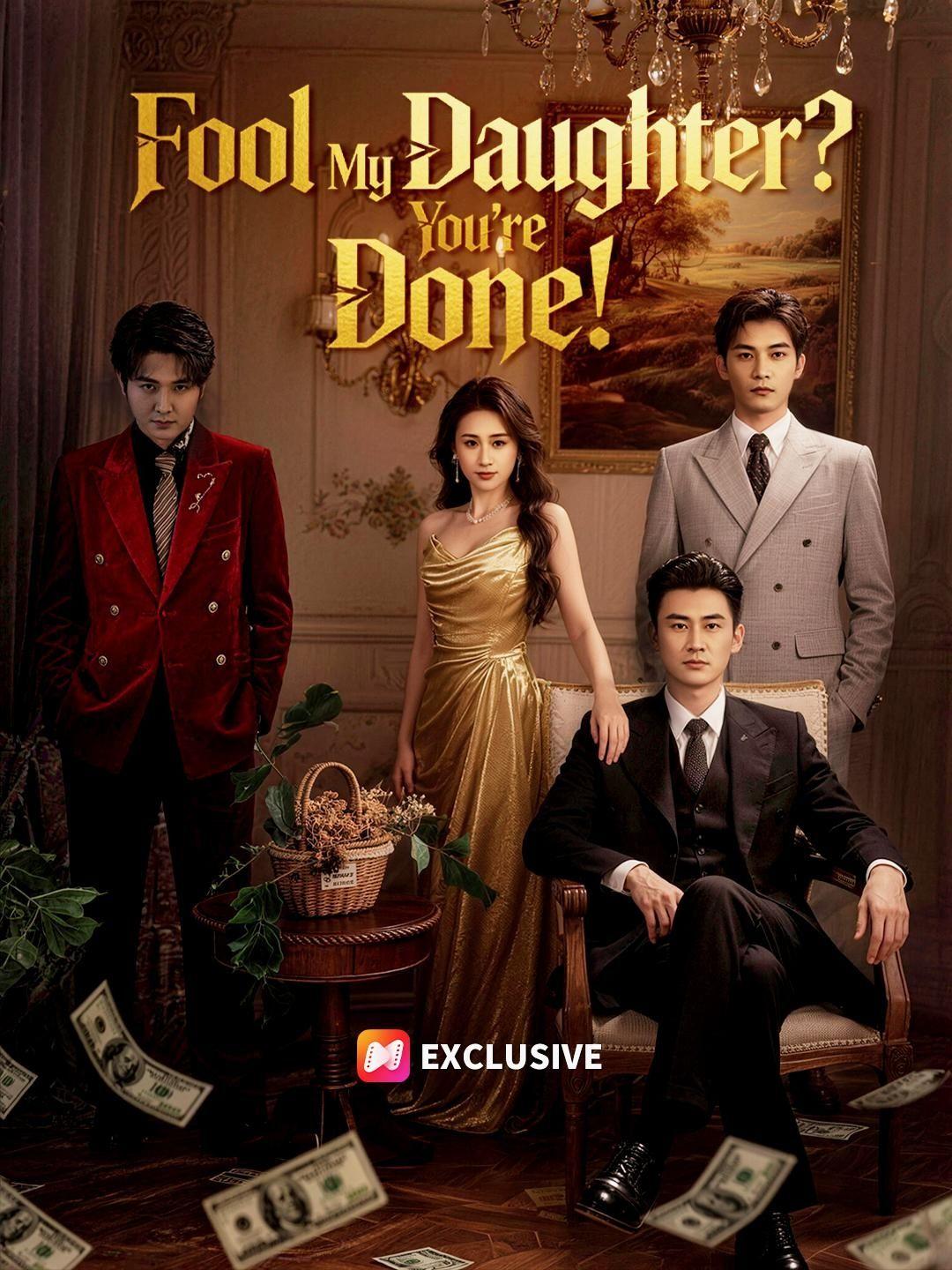
Shirley exposes Ray's fraudulent behavior and his lack of wealth, leading to a heated confrontation where she firmly declares her independence and refusal to be deceived again.Will Ray pay back the 860 thousand he owes Shirley, or will he try to escape his debts?


Recommended for you


Reborn to Crowned Love: When a Handbag Holds More Than Keys
Let’s talk about the white handbag. Not the designer label—though it’s clearly high-end, structured, with a gold clasp that catches the light like a promise—but the *way* Lin Xiao holds it. In the first act of *Reborn to Crowned Love*, that bag isn’t an accessory. It’s a shield. A tether. A silent scream wrapped in leather. Watch closely: when Chen Wei confronts her in the lounge, her fingers don’t clutch the strap. They *anchor* it. Her knuckles whiten, her thumb presses into the seam, as if the bag is the only thing keeping her from dissolving into the polished floor beneath her. She’s wearing a dress that screams ‘I belong here,’ but her grip on that bag whispers, ‘I’m barely holding on.’ It’s a brilliant piece of visual storytelling—no dialogue needed. Just a woman, a bag, and the weight of unspoken history. Meanwhile, Su Yan moves through the same space like smoke—fluid, insubstantial, yet impossible to ignore. Her beige dress flows with her, her earrings sway with each step, and her hands? They’re always *doing* something. Adjusting a sleeve. Touching Lin Xiao’s arm. Gesturing toward Chen Wei with open palms, as if offering peace while subtly drawing lines in the sand. She doesn’t carry a bag. She doesn’t need one. Her power lies in her lack of baggage—literal and metaphorical. She’s unburdened. Uncomplicated. Or so she wants everyone to believe. But *Reborn to Crowned Love* is too smart to let that stand. The moment Lin Xiao walks away—her back straight, her pace deliberate—the camera lingers on the bag swinging slightly at her side. It’s not swinging freely. It’s *controlled*. Every motion is calculated. Even her escape is choreographed. And that’s when we realize: Lin Xiao isn’t running. She’s repositioning. She’s buying time. She’s gathering herself for the next move. The shift to the car is where the symbolism deepens. Inside the Mercedes, the bag rests on her lap, no longer a shield, but a companion. Jian Yu notices it. Of course he does. He notices *everything* about her—the way she tucks a stray strand of hair behind her ear, the slight hitch in her breath when he leans closer, the way her ring finger flexes when she’s nervous. When he reaches over—not to take the bag, but to gently lift her hand from it—that’s the moment the narrative pivots. He’s not asking for possession. He’s offering release. And Lin Xiao? She lets go. Not all at once. First, her fingers loosen. Then, her wrist relaxes. Finally, her palm opens, and the bag slides silently onto the seat beside her. It’s a small gesture. A quiet surrender. But in the world of *Reborn to Crowned Love*, where every glance carries consequence, this is seismic. She’s not just letting go of the bag. She’s letting go of the persona she’s worn for years—the dutiful girlfriend, the composed professional, the woman who always puts others first. Jian Yu doesn’t rush her. He waits. He watches. And when she finally turns to him, her eyes glistening not with tears, but with something sharper—relief, maybe, or resolve—he doesn’t kiss her. Not yet. He touches her cheek. Just once. A brush of knuckles against skin. And in that touch, we understand: this isn’t about replacing Chen Wei. It’s about *reclaiming* herself. Jian Yu isn’t her savior. He’s her mirror. He reflects back the woman she’s been hiding from—even from herself. The contrast between the two men is stark, and *Reborn to Crowned Love* exploits it with surgical precision. Chen Wei, in his brown jacket and silver chain, is all surface tension. His arms cross, his brow furrows, his voice rises—not in anger, but in desperation. He’s trying to fix what’s broken, but he doesn’t know how to fix *her*. He keeps talking, circling the issue, missing the point entirely. He sees the fight. He doesn’t see the fracture. Jian Yu, in his crisp white shirt, is different. He doesn’t argue. He observes. He listens—not just to words, but to silences, to pauses, to the way Lin Xiao’s foot taps against the floor when she’s anxious. When he finally speaks, his voice is low, steady, unhurried. “You don’t have to explain yourself to me,” he says. And in that sentence, he dismantles years of conditioning. He gives her permission to exist without justification. The near-kiss in the car isn’t romanticized. It’s raw. Intimate. Human. Their faces are close, yes, but what’s more striking is the way Lin Xiao’s hand rests on Jian Yu’s chest—not pushing him away, but *feeling* him. His heartbeat. His warmth. His presence. She’s not kissing him; she’s confirming he’s real. That *she’s* real. That this moment isn’t another performance. And then—the pullback. She draws away, not with regret, but with clarity. Her eyes meet his, and for the first time, there’s no hesitation. No doubt. Just recognition. She sees him. And in that seeing, she sees herself again. *Reborn to Crowned Love* understands that love isn’t found in grand gestures. It’s found in the quiet moments—the way someone holds your hand when you’re trembling, the way they notice you’ve stopped wearing your favorite earrings, the way they let you set down your bag without asking why it was so heavy to carry. The final frames—Jian Yu driving, Lin Xiao staring out the window, the city blurring past—leave us with a question: What happens when the woman who spent her life holding onto things finally learns to let go? *Reborn to Crowned Love* doesn’t give us the answer. It gives us the courage to ask the question. And in doing so, it transforms a simple handbag into a symbol of liberation. Because sometimes, the heaviest things we carry aren’t in our hands. They’re in our hearts. And the bravest thing we can do is set them down—slowly, deliberately, with someone who promises to hold them for us, just long enough to remember who we are without them.
Reborn to Crowned Love: The Silent Tug-of-War in a Sunlit Lounge
In the opening frames of *Reborn to Crowned Love*, the tension doesn’t erupt—it simmers, like tea left too long on the stove. The setting is a modern, minimalist lounge with soft daylight spilling through floor-to-ceiling windows, casting gentle shadows across polished wood and muted beige carpeting. It’s the kind of space designed for elegance, not confrontation—yet here we are, watching a quiet war unfold between three central figures: Lin Xiao, Chen Wei, and the enigmatic newcomer, Su Yan. Lin Xiao stands at the center—not by choice, but by circumstance. Dressed in a cream-colored mini-dress adorned with delicate black trim and gold buttons, her posture is rigid, her eyes darting between Chen Wei and Su Yan like a chess player calculating her next move. Her hair, long and glossy, is pinned back with a single silver barrette—a detail that speaks volumes about her restraint. She isn’t shouting; she isn’t crying. She’s *holding*. Holding her breath, holding her hands clasped before her, holding onto dignity as if it were a fraying rope. When Su Yan reaches out—gently, almost tenderly—to touch her arm, Lin Xiao flinches. Not violently, but with the subtle recoil of someone who’s been burned before. That micro-expression tells us everything: this isn’t the first time she’s been caught in this triangle. Chen Wei, meanwhile, wears his confusion like a second skin. His brown suede jacket—slightly oversized, slightly worn—contrasts sharply with the crispness of the room and the precision of Lin Xiao’s outfit. He’s not dressed for a showdown; he’s dressed for a coffee run. Yet his body language betrays him: shoulders squared, jaw tight, fingers twitching at his sides. When he finally speaks—his voice low, measured, but edged with something raw—he doesn’t address Lin Xiao directly. He addresses *her silence*. “You’re not even looking at me,” he says, and the line lands like a stone dropped into still water. It’s not an accusation; it’s a plea. A man realizing too late that the person he thought he knew has become a stranger in her own skin. Su Yan, the third pillar of this unstable structure, is the most fascinating. Her beige ribbed dress hugs her frame with quiet confidence, and her earrings—long, dangling pearls with floral motifs—catch the light every time she turns her head. She doesn’t dominate the scene; she *occupies* it. When she steps forward, placing a hand on Lin Xiao’s elbow, it’s not aggressive—it’s performative. A gesture meant to be seen, to be interpreted. Her expression shifts fluidly: concern, then surprise, then a flicker of triumph. She knows exactly how this looks. And she’s banking on it. What makes *Reborn to Crowned Love* so compelling in these early moments is its refusal to simplify. There’s no clear villain. No obvious hero. Lin Xiao isn’t weak; she’s exhausted. Chen Wei isn’t unfaithful; he’s conflicted. Su Yan isn’t manipulative; she’s strategic. The camera lingers on their faces—not just their eyes, but the tiny creases around them, the way Lin Xiao’s lips press together when she’s suppressing emotion, how Chen Wei’s Adam’s apple bobs when he swallows hard. These aren’t actors reciting lines; they’re people trapped in the aftermath of choices they didn’t fully understand when they made them. The background characters—the woman in black, the man in the charcoal suit—serve as silent witnesses, their expressions shifting from curiosity to discomfort to outright judgment. They’re the audience within the scene, reminding us that love, in this world, is never private. It’s always performed. Always observed. Always judged. Later, when Lin Xiao walks away—her heels clicking against the floor like a metronome counting down to disaster—the camera follows her not from behind, but from the side, capturing the slight tremor in her wrist as she grips her white handbag. She doesn’t look back. But we see Chen Wei do it. Twice. His gaze lingers on her retreating figure, then snaps toward Su Yan, who offers him a small, knowing smile. That smile is the real turning point. It’s not malicious. It’s *certain*. She believes she’s won. And maybe she has. But *Reborn to Crowned Love* teaches us early: victory in love is rarely final. It’s just the calm before the next storm. The transition to the car sequence is masterful. One moment, we’re in the sterile elegance of the lounge; the next, we’re inside a sleek black Mercedes, sunlight filtering through the tinted windows, turning the interior into a golden cage. Here, the dynamic shifts again—not because the players have changed, but because the stage has. In the car, there’s no audience. No decorum. Just two people, inches apart, breathing the same air. And then there’s *him*: Jian Yu. The man in the white shirt, standing beside Lin Xiao in the lounge, now seated beside her in the backseat. His presence is understated but undeniable. Where Chen Wei radiates anxiety, Jian Yu exudes calm. Where Chen Wei fumbles for words, Jian Yu listens—really listens—with his whole face. When he leans in, his hand brushing Lin Xiao’s temple, it’s not possessive. It’s reverent. He doesn’t speak much in these frames, but his silence speaks louder than any monologue. He sees her—not the role she’s playing, not the expectations placed upon her, but *her*. The woman who flinches when touched, who holds her breath when spoken to, who still carries the weight of every unspoken word. The near-kiss—their noses almost touching, her eyelids fluttering shut, his thumb resting just below her jawline—isn’t about lust. It’s about recognition. For the first time in what feels like years, Lin Xiao isn’t performing. She’s *present*. And Jian Yu, in that suspended moment, gives her permission to be. *Reborn to Crowned Love* doesn’t rush this intimacy. It lets the silence stretch, lets the tension coil tighter, until the inevitable happens: she pulls back. Not out of fear, but out of self-preservation. She knows what comes after the kiss. The consequences. The choices. The fallout. And yet—when Jian Yu smiles at her, that quiet, crooked smile that reaches his eyes—she doesn’t look away. She *holds* his gaze. And in that exchange, we understand: this isn’t just a romance. It’s a rebirth. A second chance at being seen, truly seen, without armor or artifice. The final shot—Jian Yu gripping the steering wheel, his knuckles white, his expression unreadable—leaves us hanging. Is he driving her home? To safety? To danger? To a future where Lin Xiao no longer has to choose between loyalty and truth? *Reborn to Crowned Love* refuses to answer. It simply invites us to keep watching. Because in love, as in life, the most powerful moments aren’t the declarations—they’re the silences between them.